Your Search Results

      • Trusted Partner
        Humanities & Social Sciences
        July 2026

        Unruly subjects

        Migration, solidarity and resistance in Greece

        by Ludek Stavinoha

        Unruly Subjects takes readers to the epicentre of Europe's intensifying border struggles-the Aegean islands in Greece, where thousands of 'undesirable' migrants have been warehoused and violently abandoned in EU-funded refugee camps. Drawing on nearly a decade of research, Ludek Stavinoha reveals the subterranean corners in which resistance brews and solidarity takes hold, tracing migrants' everyday struggles for dignity and their rights, alongside grassroots volunteers who have built vital infrastructures of support. At the heart of the book are the creative, if precarious and ambivalent, solidarities forged between volunteers and refugees, citizens and non-citizens, as they unsettle racialised boundaries and logics of control, in defiance of state-sanctioned violence, criminalisation, and neglect. Urgent and compelling, Unruly Subjects illuminates how people navigate and subvert Europe's increasingly hostile border regime, and the alternative imaginaries of more just futures their struggles embody.

      • Trusted Partner
      • Trusted Partner
        Humanities & Social Sciences
        September 2024

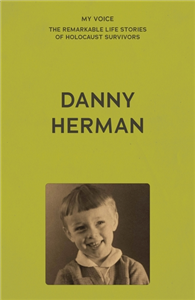
        My Voice: Danny Herman

        by Danny Herman

        Danny Herman was born in 1935 in Königsberg in East Prussia. As the Nazis were rounding up Jews, Danny's father managed to escape to England in July 1939. He travelled to the Kitchener Camp in Kent, which helped refugees secure visas for safer places. Danny and his mother arrived in England just three days before war was declared in 1939, and his father was later sent to an internment camp on the Isle of Man. Danny went on to become a successful runner, competing in many international athletics events and volunteering in many roles, including at the 2002 Commonwealth Games. Danny's detailed memories of arriving in England, initially at the seaside in Kent and then moving to Manchester, create a vivid picture of life-changing events as experienced by a young child. Danny's book is part of the My Voice book collection, a stand-alone project of The Fed, the leading Jewish social care charity in Manchester, dedicated to preserving the life stories of Holocaust survivors and refugees from Nazi persecution who settled in the UK. The oral history, which is recorded and transcribed, captures their entire lives from before, during and after the war years. The books are written in the words of the survivor so that future generations can always hear their voice. The My Voice book collection is a valuable resource for Holocaust awareness and education.

      • Trusted Partner
        Humanities & Social Sciences
        May 2025

        Statelessness after Arendt

        European refugees in China and the Pacific during the Second World War

        by Kolleen Guy, Jay Winter

        This book is a study of statelessness in the period of the Second World War. It breaks new ground by focusing not on Europe, but on the Asian and Pacific theatres of the conflict. This perspective enables us to go beyond Hannah Arendt's classic account of statelessness in her Origins of Totalitarianism. To her, statelessness was the product of a failed European nation-state system. We find a very different story when we examine the history of stateless people, many of them Jews, fleeing to Asia from Europe. In Asia, we see that being stateless was not a uniform experience, but a variety of possibilities reflecting the political structure of the states and cities in which refugees found shelter. We find too that stateless people managed to enter the political realm long before they reached the threshold of citizenship.

      • Trusted Partner
      • Trusted Partner
        November 1996

        Romane und Erzählungen. 8 Bände

        Reise in den Orient

        by Gustave Flaubert, André Stoll, Maxime Du Camp, André Stoll, Reinhold Werner, André Stoll

        Unter dem Eindruck der sinnlichen Welt des Orients findet Flaubert im Tagebuch seiner Reise nach Ägypten und Palästina zur ästhetischen Intensität seiner großen Romanwerke.

      • Trusted Partner
        April 2024

        Schmerz Camp

        by Patty Kim Hamilton

        Sieben Frauen in einer renommierten, surrealen Schmerzklinik: Im ewigen Kreislauf von Therapien und Gesprächen mit den Ärzt:innen probieren die Patientinnen Medikamente aus, töpfern, meditieren, treiben Sport – der Schmerz aber bleibt. Scheinbar geschieht mit den Frauen in der Klinik nichts und doch ist alles in ständiger, minimaler Bewegung. Zeit vergeht hier anders. Dabei ist der alternde, weiblich gelesene Körper ein zentrales Motiv. Sprache und Dialoge basieren auf realen Gesprächen und Klinikfragebögen – werden bereichert von chorischen Passagen, Lyrik und performativen Naturbildern, die eine neue Dimension aufmachen: Wo finden wir Trost und wie kann ein Weg durch den Schmerz aussehen? Das Theaterstück Schmerz Camp ist ein Plädoyer für das ehrliche Zuhören, für mehr Achtsamkeit und eine solidarische Gemeinschaft. Patty Kim Hamilton sucht darin nach dem Alltäglichen, dem Humor, der Zärtlichkeit, dem Einfachen vor dem dunklen Abgrund und findet dabei eine virtuose Sprache für etwas, das sich mit Worten kaum fassen lässt.

      • Trusted Partner
        Science & Mathematics
        April 2021

        Medicalising borders

        Selection, containment and quarantine since 1800

        by Sevasti Trubeta, Christian Promitzer, Paul Weindling, Hastings Donnan

        The research of pandemics, epidemics, and pathogens like COVID-19 reaches far beyond the scope of biomedicine. It is not only an objective for the health, political and social sciences, but epidemics and pandemics are a matter of geography: foci and vectors of communicable diseases continue to test the efficacy of medical control at state borders. This volume illuminates these issues from various disciplinary viewpoints. It starts by exploring historical models of quarantine, spatial isolation and detention as precautionary means against the dissemination of disease and contagion by border crossers, migrants and refugees. Besides the patterns of prejudice with which these groups are confronted, the book also deals with various kinds of fear of contamination from outside of the nation state. The contributors address the implementation of medical techniques at state borders in the twentieth and early twenty-first centuries, as well as the presently practiced measures of medical and biometric screening of migrants and refugees. Uniquely, this volume shows that the current border security regimes of Western states exhibit a high share of medicalised techniques of power, which originate both in European modernity and in the medical and biological disciplines developed during the last quarter of the millennium. Drawing on the collective expertise of a network of international researchers, this interdisciplinary volume is essential reading for those wishing to understand the medicalisation of borders across the globe, from the early eighteenth century up to the present day.

      • Trusted Partner
        Humanities & Social Sciences
        January 2021

        Displacement

        by Silvia Pasquetti, Romola Sanyal

      • Trusted Partner
      • Trusted Partner
        Humanities & Social Sciences
        May 2026

        AngloGerman Manchester

        Refuge and Reparation

        by Janet Wolff

        The essays in this book discuss the lives of Germans living in Manchester, from the mid-nineteenth century to the present, combining historical study with personal and autobiographical material. Chapters are devoted to Frederick Engels, Fanny Lewald, Rabbi Felix Carlebach and W. G. Sebald, with additional discussion of Elizabeth Gaskell and the Manchester writer Geraldine Jewsbury. One chapter focuses on Jewish refugees from Nazism who set up new industries in Manchester, including the author's father. The final chapter takes up the theme of reparation, which runs through the book, relating the work of non-Jewish Germans engaged in the project of 'making amends' in their own country for the crimes of an earlier generation.

      • Trusted Partner
        Humanities & Social Sciences
        June 2019

        Europe on the move

        Refugees in the era of the Great War

        by Peter Gatrell, Liubov Zhvanko, Penny Summerfield

        Mass population displacement affected millions of Europe's civilians across the different theatres of war in 1914-18. At the end of the war, a senior Red Cross official wrote 'there were refugees everywhere. It was as if the entire world had to move or was waiting to move'. Europe on the move is the first attempt to understand their experiences as a whole and to establish the political, social and cultural significance and ramifications of the wartime refugee crisis. Drawing on original research by leading specialists from more than a dozen countries, it will become the definitive work on the subject and will appeal to anyone who wishes to understand how governments and public opinion responded to refugees a century ago.

      • Trusted Partner
        Humanities & Social Sciences
        January 2026

        The tragedy of the border

        Asylum, destitution and homelessness

        by Mark Rainey

        Amid the global migration crisis, the UK has created and increasingly hostile policy environment for asylum seekers that has pushed many into unnecessary hardship and homelessness. This volume is an ethnographic study alongside refused asylum seekers and refugees living destitute in Manchester, UK. Based on over three years of research in emergency night shelters and on the streets of the city, it draws on the stories and experiences of those who have been driven into destitution by an antagonistic immigration system. The book not only explores how legal and temporal uncertainty shapes the daily lives of those who have had their asylum claims refused, but also attends to the experiences of volunteers and activists working on the frontline of the crisis. While the work is rich in detail, it also extends outwards and offers new insights into our understanding of borders and the need to rethink the grand notions of justice and hospitality.

      • Trusted Partner
        Humanities & Social Sciences
        November 2025

        Humanitarian mobilisation in Central and Eastern Europe

        Local, national, and international perspectives

        by Doina Anca Cretu, Michal Frankl

        By focusing on aid Central and Eastern Europe, the volume adds to the existent scholarly explorations of modern humanitarianism, its actors and practices. In the twentieth century, aid workers assisted victims of war and earthquakes, delivered food, supported health care, provided childcare, or sheltered refugees. The contributors not only reconstruct these diverse histories and their protagonists, but also bring international, national, and local actors together: from grassroots activists to private associations to state-driven "socialist humanitarians" to large Western aid organizations. In doing so, they challenge the often unidirectional, from West-to-East, and asymmetrical perspective on donor-recipient relationships in humanitarian processes.

      • Trusted Partner
        Humanities & Social Sciences
        September 2018

        Race and the Yugoslav region

        Postsocialist, post-conflict, postcolonial?

        by Catherine Baker, Gurminder Bhambra

        This is the first book to situate the territories and collective identities of former Yugoslavia within the politics of race - not just ethnicity - and the history of how ideas of racialised difference have been translated globally. The book connects critical race scholarship, global historical sociologies of 'race in translation' and south-east European cultural critique to show that the Yugoslav region is deeply embedded in global formations of race. In doing this, it considers the everyday geopolitical imagination of popular culture; the history of ethnicity, nationhood and migration; transnational formations of race before and during state socialism, including the Non-Aligned Movement; and post-Yugoslav discourses of security, migration, terrorism and international intervention, including the War on Terror and the present refugee crisis.

      • Trusted Partner
        The Arts
        February 2006

        Digging up stories

        Applied theatre, performance and war

        by James Thompson, Martin Hargreaves

        In 'Digging up stories', James Thompson explores the problems of theatre practice in communities affected by war and exclusion. Each chapter or 'story' is written in a lively and accessible style and draws on a range of contemporary performance theories. The chapters discuss: - participatory theatre in refugee camps - theatre workshop and stories of a massacre - traditional dance-dramas in an insurgent controlled village - 'Forum' theatre with the Mahabharata - ethical issues - the struggle to teach the author to dance 'Digging up stories' documents a range of theatre practice and includes project reports, ethnographic accounts, performance analysis and diary-style reflection. Taken from Thompson's research and practice in Sri Lanka, these diverse examples question the link between applied theatre, traditional performance and performances in everyday life. The book blurs lines between research and travel writing to create rich and provocative accounts of applying theatre in a troubled setting. ;

      • Trusted Partner
        Medicine

        Humanitarian Aid

        Encounters with People in Need

        by Joachim Gardemann

        Joachim Gardemann outlines his encounters and experiences as a pediatrician in crisis zones while working for the Red Cross all over the world. He describes people in existential emergency situations, who have been traumatized but survived a genocide on the border with Rwanda. People who have fled from civil wars in Congo or escaped from the Kosovo war. He traces the suffering of people in Iran, China and Haiti after losing their relatives and all their possessions in severe earthquakes. At their moments of greatest vulnerability, in the shelters and dirt of a refugee camp in Jordan, he meets people who have fled from the turmoil of the civil wars in Sudan and Syria. He sketches poignant portraits of the victims of the tsunami disaster in Sri Lanka. He gives a striking account of the devastation wrought by the Ebola epidemic in Sierra Leone. He creates a worthy memorial to those who died of Ebola, who lost their lives as doctors and nurses in the fight against Ebola as well as to those who survived.

      • Trusted Partner
        Humanities & Social Sciences
        October 2006

        Remembering refugees

        by Tony Kushner, Rebecca Mortimer

      Subscribe to our

      newsletter