
EDGE Science Fiction and Fantasy Publishing
Livres Canada Books
View Rights Portal
 Trusted Partner

Chile is Guest of Honour at Frankfurter Buchmesse 2027. At the Chilean organiser’s invitation, an open call was conducted among Chilean publishers to find out which titles they would recommend for translation. This is the result. The Chilean Ministry of Foreign Affairs supports the translation and production of Chilean books through the programmeTranslating Chile. Next call for all languages 2026-2027: November 2025 More information:https://www.dirac.gob.cl/open-call-2026-for-translating-chilean-literature
View Rights Portal

Penny politics offers a new way to read early Victorian popular fiction such as Jack Sheppard, Sweeney Todd, and The Mysteries of London. It locates forms of radical discourse in the popular literature that emerged simultaneously with Brittan's longest and most significant people's movement. It listens for echoes of Chartist fiction in popular fiction. The book rethinks the relationship between the popular and political, understanding that radical politics had popular appeal and that the lines separating a genuine radicalism from commercial success are complicated and never absolute. With archival work into Newgate calendars and Chartist periodicals, as well as media history and culture, it brings together histories of the popular and political so as to rewrite the radical canon.

Do dogs belong with humans? Scientific accounts of dogs' 'species story,' in which contemporary dog-human relations are naturalised with reference to dogs' evolutionary becoming, suggest that they do. Dog politics dissects this story. This book offers a rich empirical analysis and critique of the development and consolidation of dogs' species story in science, asking what evidence exists to support it, and what practical consequences, for dogs, follow from it. It explores how this story is woven into broader scientific shifts in understandings of species, animals, and animal behaviours, and how such shifts were informed by and informed transformative political events, including slavery and colonialism, the Second World War and its aftermath, and the emergence of anti-racist movements in the twentieth and twenty-first centuries. The book pays particular attention to how species-thinking bears on 'race,' racism, and individuals.
Trusted Partner

This electronic version has been made available under a Creative Commons (BY-NC-ND) open access license. This book is about science in theatre and performance. It explores how theatre and performance engage with emerging scientific themes from artificial intelligence to genetics and climate change. The book covers a wide range of performance forms from Broadway musicals to educational theatre, from Somali drama to grime videos. It features work by pioneering companies including Gob Squad, Headlong Theatre and Theatre of Debate as well as offering fresh analysis of global blockbusters such as Wicked and Urinetown. The book offers detailed description and analysis of theatre and performance practices as well as broader commentary on the politics of theatre as public engagement with science. Science in performance is essential reading for researchers, students and practitioners working between science and the arts within fields such as theatre and performance studies, science communication, interdisciplinary arts and health humanities.
Trusted Partner
The politics of Middle English parables examines the dynamic intersection of fiction, theology and social practice in late-medieval England. Parables occupy a prominent place in Middle English literature, appearing in dream visions and story collections as well as in lives of Christ and devotional treatises. While most scholarship approaches the translated stories as stable vehicles of Christian teaching, this book highlights the many variations and points of conflict across Middle English renditions of the same story. In parables related to labour, social inequality, charity and penance, the book locates a creative theological discourse through which writers attempted to re-construct Christian belief and practice. Analysis of these diverse retellings reveals not what a given parable meant in a definitive sense but rather how Middle English parables inscribe the ideologies, power structures and cultural debates of late-medieval Christianity.
Trusted Partner
How might our friendships shape our politics? This book examines how contemporary American fiction has rediscovered the concept of civic friendship and revived a long tradition of imagining male friendship as interlinked with the promises and paradoxes of democracy in the United States. Bringing into dialogue the work of a wide range of authors - including Philip Roth, Paul Auster, Michael Chabon, Jonathan Lethem, Dinaw Mengestu, and Teju Cole - this innovative study advances a compelling new account of the political and intellectual fabric of the American novel today.
Trusted Partner

This important book provides new understandings of how the politics of memory impacts peace in societies transitioning from a violent past. It does so by developing a theoretical approach focusing on the intersection of sites, agency, narratives, and events in memory-making. Drawing on rich empirical studies of mnemonic formations in Cyprus, Bosnia and Herzegovina, Rwanda, South Africa and Cambodia, the book speaks to a broad audience. The in-depth, cross-case analysis shows that inclusivity, pluralism, and dignity in memory politics are key to the construction of a just peace. The book contributes crucial and timely knowledge about societies that grapple with the painful legacies of the past and advances the study of memory and peace.
Trusted Partner
This book explores radical dissent from orthodox mainstream economics, and sets out a theoretically grounded vision for the emerging paradigm of social ecological economics. At the heart of this paradigmatic shift lies an acknowledgement of the inextricable embeddedness of economies in biophysical reality and social structure. The struggle for this transformative vision unfolds through a critical examination of mainstream environmental thought, followed by a nuanced evaluation of contributions from Marxists, socialists, critical institutionalists, feminists and Post-Keynesians grappling with the urgent environmental crisis. Synthesising insights from these diverse and heterodox schools, the book navigates the philosophical underpinnings of science, embracing a critical realist approach that challenges not only mainstream economic thought but also eclectic pluralism, relativism and strong constructionism. The question of what constitutes revolutionary science is explored in light of works by Kuhn, Schumpeter and Neurath, emphasising the pivotal role of values and ideology in works from Marx to Gramsci. Building on these radical and philosophical foundations, the book articulates a preanalytic vision of social ecological economics, dismantling entrenched notions of growth and efficiency in favour of a framework centered on social provisioning and needs embedded in ethics. In a thought-provoking conclusion, the book applies its analytical lens to the multiple crises of modernity within industrialised capital-accumulating economies. An agenda for social ecological transformation toward diverse alternative economies emerges, providing a compelling call to action in the face of contemporary challenges.
Trusted Partner
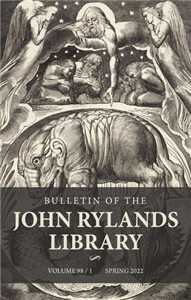
This special issue of the Bulletin of the John Rylands Library is devoted to William Blake. It explores the British and European reception of Blake's work from the late nineteenth century to the present day, with a particular focus on the counterculture. Opening with two articles by the late Michael Horovitz, an important figure in the 'Blake Renaissance' of the 1960s, the issue goes on to investigate the ideological struggle over Blake in the early part of the twentieth century, with particular reference to W. B. Yeats. This is followed by articles on the artistic avant-garde and underground of the 1960s and on Blake's significance for science fiction authors of the 1970s. The issue closes with an article on the contemporary Belgian art collective maelstrÖm reEvolution.
Trusted Partner
Trusted Partner


— Astute analysis of the relationship between politics and the natural sciences — Danger of undermining democratic processes Today, political decision-making processes are closely intertwined with processes of scientific knowledge generation. The natural sciences play a central role in politics. This became particularly clear during the corona pandemic and in the regular press conferences in which politicians largely narrowed their course to scientific findings. The consequence of this maxim is that the rationalisation of politics is accompanied by a politicisation of science. Science is exploited, and sometimes allows itself to be exploited. In his equally brilliant and sharp analysis, Klaus Ferdinand Gärditz explains the consequences of this development for the democratic process in particular.
Trusted Partner
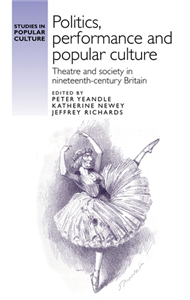
This collection brings together studies of popular performance and politics across the nineteenth century, offering a fresh perspective from an archivally grounded research base. It works with the concept that politics is performative and performance is political. The book is organised into three parts in dialogue regarding specific approaches to popular performance and politics. Part I offers a series of conceptual studies using popular culture as an analytical category for social and political history. Part II explores the ways that performance represents and constructs contemporary ideologies of race, nation and empire. Part III investigates the performance techniques of specific politicians - including Robert Peel, Keir Hardie and Henry Hyndman - and analyses the performative elements of collective movements.
Trusted Partner


Marcus Hammerschmitt schreibt Science-fiction-Erzählungen, die technologische Phantasie, psychologische Einsicht, Lust am gedanklichen Experiment und poetische Erfindungskraft vereinen. Wie Herbert W. Franke oder Peter Schattschneider basiert er seine Geschichten auf einer soliden Grundlage, entwickelt seine Szenarios und Fabeln spielerisch, verknüpft sie aber dramatisch mit den größeren Problemen von Ökologie einerseits und den Zweifeln und inneren Konflikten des einzelnen andererseits.
Trusted Partner

Invasions is an ambitious, new and authoritative study of one of the defining cultural products of the Victorian and Edwardian eras. By the outbreak of war in 1914 invasion-scare fiction had profoundly changed British society, becoming not just a vibrant part of popular culture, but a reference point among military planners, advertisers, and politicians. This intersection between politics and culture, between entertainment and war planning, sets invasion-scare stories apart as one of the most versatile and interesting fictional products in modern British history. Building on recent work in both history and literature studies, Invasions is the first study of invasion-scare fiction to examine both the form (that is, fiction) and the function (the political argument) of the genre.
Trusted Partner

This book is a study of the ambitions, activities and achievements of Methodist missionaries in northern Burma from 1887-1966 and the expulsion of the last missionaries by Ne Win. The story is told through painstaking original research in archives which contain thousands of hitherto unpublished documents and eyewitness accounts meticulously recorded by the Methodist missionaries. This accessible study constitutes a significant contribution to a very little-known area of missionary history. Leigh pulls together the themes of conflict, politics and proselytisation in to a fascinating study of great breadth. The historical nuances of the relationship between religion and governance in Burma are traced in an accessible style. This book will appeal to those teaching or studying colonial and postcolonial history, Burmese politics, and the history of missionary work.
Trusted Partner

A short but comprehensive textbook for students of British politics which interprets changes over the last thirty years and analyses institutions within the context of British society and economics. ;
Trusted Partner
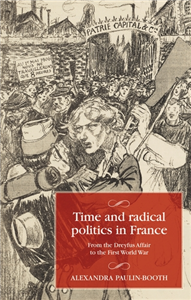
This book investigates how people have thought about and experienced time, and how their ideas about time have shaped their political views and actions. Using French thinkers and activists of the radical left and right between the Dreyfus Affair and the First World War as a case study, it argues that time provides an important means of exploring how concepts such as nationalism, revolution and social change were understood at the turn of the century. Attending to different experiences of time - the speed at which it was perceived to move, the extent to which the future was near and graspable, the ways in which the past was seen to impinge on the present - opens up exciting new possibilities for analysing politics, ideologies and worldviews.
Trusted Partner
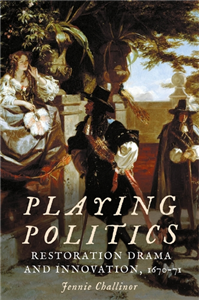
This study focuses on the 1670-71 season in the Restoration playhouses, an exciting and formative moment in theatrical and political history. The year proved to be difficult and damaging to King Charles II, as political, religious, and personal matters provoked controversy and disquiet, and the country teetered on the brink of major constitutional problems. My research sets drama against this backdrop. Theatrical records for this period are patchy and, for the most part, frustratingly incomplete: this book does not attempt to reconstruct the day-to-day operations of the playhouses, but rather it uses the available evidence of the extant new and revived plays we know (or believe) to have been performed in the 1670-71 theatrical season, and argues that this was the period in which serious and far-reaching political and dramatic questions began to be seriously asked and (tentatively) answered.
Trusted Partner

Provides a comprehensive introduction to the political system and processes of western Europe. Demonstrates clearly that political decisions are made in the context of specific historical developments, geographical constraints and social demands. Fully updated to take account of the recent French, British and Italian general elections as well as the momentous changes that have taken place in global politics as a result of the September 11 terrorist attacks, and the preparations for EU enlargement. Chapters on the European Union and democracy in western Europe have been substantially revised to take account of globalisation and recent political corruption issues. ;
Trusted Partner

This introductory text, written by an established authority on communist and post-communist politics, describes how Vladimir Putin has turned to those with backgrounds in the military and security structures to provide stability in today's Russian Federation, following the democratising reforms of Gorbachev and the ensuing instability of the Yeltsin presidency. Against the background of an increasing authoritarianism, which has restored features of the Soviet political system, it examines the attempts by social and economic groups to assert themselves against the state using embryonic democratic forms that fall far short of pluralism. The book's fourteen chapters offer an exceptionally broad coverage. It will appeal to first- and second-year students in higher education, but its deliberately accessible style will also make it attractive to sixth-form students and the general reader. ;
Trusted Partner

What does it mean to say that modern politics is personalised? To what extent is it more personalised than in the past, what is distinctive about contemporary forms of personalisation and are these changes enduring? This book addresses these questions. It re-thinks the concept of personalisation and develops an analytical framework for its study, in the process challenging current theorisation and bridging the political science and media studies approaches to the subject. Moreover, it presents new, rich and rigorous empirical data about how personalisation has developed over time in the UK, from 1945 to 2009. Its conceptual depth and empirical range makes the book a must-read for anyone researching the phenomenon of personalisation internationally, and a benchmark for future studies. It is also highly accessible to undergraduate and graduate students in political communication, British politics and media studies. ;


