Your Search Results

      • Second Story Press

        Our books are sold around the world, have been translated into over 50 languages, won many awards, and have been adapted for film and stage.   We publish stories that feature strong female characters and explore themes of social justice, human rights, equality, and ability issues. Our list spans adult fiction and nonfiction; children’s fiction, nonfiction and picture books; and young adult fiction and nonfiction.

        View Rights Portal
      • Cassava Republic Press

        Cassava Republic Presswas founded with the aim of bringing high quality fiction and non-fiction for adults and children alike to a global audience.

        View Rights Portal
      • Trusted Partner
        June 2021

        Leselöwen 1. Klasse - Die verborgene Unterwasser-Stadt (Großbuchstabenausgabe)

        Erstlesebuch für Kinder ab 6 Jahren

        by THiLO, , Patrick Fix

        Mit seinem selbst gebauten U-Boot taucht Kalle hinab in den Schatzsee. Kann er das Geheimnis des Sees aufdecken? Plötzlich wird er von einem riesigen Kraken in die Tiefe gezogen und landet in der verborgenen Stadt von König Atlan. Mit den Leselöwen für die erste Klasse können Kinder schon ganz allein ihr erstes eigenes Buch lesen. In jedem Buch wartet eine spannende Geschichte zu einem beliebten Thema mit vielen bunten Bildern, kurzen Sätzen und kleinen Texteinheiten, die jeweils in Sinnschritte unterteilt sind. Die große Fibelschrift erleichtert das Lesenlernen und mit Rätseln und Sachwissen am Ende der Geschichte können die Kinder spielend leicht überprüfen, ob sie den Text richtig verstanden haben. So macht Lesenlernen Spaß!

      • Trusted Partner
        June 2000

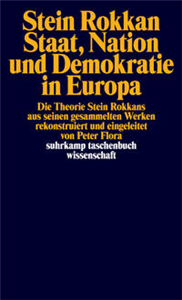
        Staat, Nation und Demokratie in Europa

        by Stein Rokkan, Elisabeth Fix, Paul Flora

        Im Mittelpunkt des Werks steht der Versuch, ein »Makromodell der politischen Entwicklung Europas« zu entwerfen. Das Ziel ist, die Vielgestalt Europas aus den unterschiedlichen historischen Prozessen der Staaten- und Nationenbildung und der Demokratisierung zu erklären. Flora fügt veröffentlichte und unveröffentlichte Schriften Rokkans zu einem konsistenten Ganzen zusammen und präsentiert mit dieser Ausgabe einen der wichtigsten Beiträge zum Verständnis des heutigen Europa und seiner zukünftigen Entwicklungsmöglichkeiten.

      • Trusted Partner
        2024

        The second half of your life - a manual

        Tips and strategies for successful ageing

        by Dr. Petra Kiedaisch

        In the middle of our lives, the cards are reshuffled: marriages are divorced, careers are questioned, friendships are ended, questions of meaning are asked, bodies change - and not just hormonally. At the same time, children leave home and parents become carers. From the age of 45, the majority of our population is at the centre of a second upheaval that affects all facets of our lives and leaves us at a loss in many ways. Not only in our daily lives, but also when it comes to planning for our own old age. This guide is designed to help us find our way. It presents the most important information from all areas relevant to a good life after 45. Leading experts from the fields of medicine, nutrition, philosophy, theology, psychology, care, law and finance give recommendations on what to look out for and what tools are needed to get through these challenging years unscathed. Useful checklists round off the articles. The book shows us the unique opportunity to see these challenges not as a crisis but as a source of strength. Not only can we come through this period of our lives healthy and happy, but we can also shape it so that the next age threshold is no longer frightening. During the second phase of adolescence, we lay the foundations for whether and how we will grow older. Be it in terms of health or living together with family and friends. With contributions from: Prof. Dr. Martin Gessmann (philosophy), Dipl. Psych. Claudia Kühner (psychology), Dr Suso Lederle (medicine), Dr Petra Forster (nutrition), Christian Hald, Anja Heine (law), Prof Dr Philipp Schreiber (finance), Prof Dr Thomas Klie (nursing care insurance), Georg Eberhardt (religion).

      • Trusted Partner
        Humanities & Social Sciences
        March 2023

        Socialist republic

        Remaking the British left in 1980s Sheffield

        by Daisy Payling

        Socialist republic is a timely account of 1980s left-wing politics in South Yorkshire. It explores how Sheffield City Council set out to renew the British Left. Through careful analysis of the Council's agenda and how it interacted with trade unions, women's groups, lesbian and gay rights groups and acted on issues such as peace, environmentalism, anti-apartheid and anti-racism, the book draws out the complexities involved in building a broad-based politics which aimed unite class and identity politics. Running counter to 1980s narratives dominated by Thatcherism, the book examines the persistence of social democracy locally, demonstrating how grassroots local histories can enrich our understanding of political developments on a national and international level. The book is essential reading for students, scholars, and activists with an interest in left-wing politics and history.

      • Trusted Partner
        Humanities & Social Sciences
        April 2026

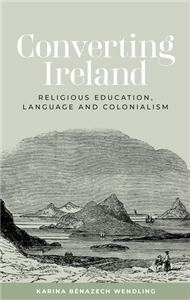
        Converting Ireland

        Religious education, language and colonialism

        by Karina Bénazech Wendling

        Karina Bénazech Wendling offers a re-assessment of 'souperism'-the long-debated claim that food was used to convert Irish Catholics to Protestantism during the Great Famine. Focusing on the Irish Society for Promoting the Education of the Native Irish through their Own Language, the first group labeled 'soupers' in 1841, she uncovers a more complex picture. Rather than a mere tool of British cultural imperialism, the Society had a deep engagement with the Irish language and Bible translation, while also encouraging religious conversions in the West. The book explores the Society's role in Ireland's religious and political landscape, the rise of Catholic counter-missions, and nationalist resistance. Offering fresh insights into Ireland's religious history and global missionary movements, this book is essential for scholars of Irish studies, interdenominational relations, and education in Ireland.

      • Trusted Partner
        Humanities & Social Sciences
        January 2007

        Failed Imagination? -second edition

        The Anglo-American new world order from Wilson to Bush

        by Andrew Williams

        The main purpose of this book is to explain how (mainly) American, but also British and other Western, policy makers have planned and largely managed to create an international order in their own image, the so-called 'New World Order'. It shows how this seismic shift in international relations has developed through the major global wars of the twentieth and twenty-first centuries. It uses a wide variety of historical archival material to give the background to the current and historical American obsession with creating the world order, one that both reflects the American national interest but also can be said to have established the major security, economic, organisational and normative pillars of our epoch. In addition it provides excellent background reading for the current debate about American foreign policy and the origins of 'neo-conservatism' in international relations. This edition updates a very successful first edition of the title, with additional material to take into account changes in the global order since 2001 and the beginning of the 'War on Terror'. ;

      • Trusted Partner
        Humanities & Social Sciences
        January 2012

        The Second Labour Government

        A reappraisal

        by John Shepherd

        This new edited collection of essays focuses on the history of Labour's second period in office during the 1929-1931 global financial crisis. Contributions by leading historians and younger academics bring fresh perspectives to Labour's domestic problems, electoral and party matters, relations with the Soviet Union and ideological questions. An important range of new historical research provides a much-needed reappraisal of Ramsay MacDonald's second Labour government, which impressed few with its conventional policies for tackling mass unemployment. Oswald Mosley, John Maynard Keynes and Ernest Bevin's alternative economic strategies are critically studied in key essays. A more positive side of the government's policies is also adeptly revealed on consumerism and agriculture. Significant new light is adroitly shed on the 1929 general election, the first fought on a universal franchise. The intricate politics of the Parliamentary Labour Party and the disaffiliation of the Independent Labour Party are convincingly explored. The influence of the Soviet Union on Labour's thoughts and actions is analysed in valuable accounts of Labour's foreign policy and Labour's turn to socialism after 1931. An important fresh account of opposition politics breaks new ground on the reaction of Tory politicians, including Harold Macmillan, to MacDonald's government. The volume concludes with an absorbing analysis of the myths surrounding '1931' in Labour history. This timely volume makes accessible a major reassessment of existing knowledge and new scholarship that will appeal to students and teachers of British political and social history. It is essential reading for sixth form and university courses on twentieth-century history. ;

      • Trusted Partner
        Literature & Literary Studies
        December 2000

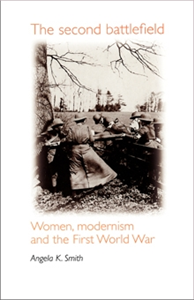
        The second battlefield

        Women, modernism and the First World War

        by Angela Smith

        Explores written representations of First World War experience, produced by a variety of different women. Drawing on a wealth of unpublished material, in the form of diaries and letters, the book examines the way in which the variety of new roles undertaken by women triggered a search, conscious or otherwise, for appropriate new forms of expression. Through the twin approaches of literary criticism and historical exploration, the book contributes an important new strand to the scholarship of women and war. Expands current notions of how modernisms should be defined. This volume compliments Angela K. Smith's 1999 publication, Women's writing of the First World War: An anthology (MUP). ;

      • Trusted Partner
        2024

        Where is Russia Heading?

        by Jens Siegert

        Vladimir Putin has been ruling Russia for 25 years. There is no end in sight to his dictatorship. He relies on repression at home and is waging a war of destruction against a neighbouring country. The conflict with the West has long become a systemic conflict between an illiberal-autocratic ideology and liberal-democratic principles. Nothing will change as long as Putin remains in power. Nevertheless, as far as can be ascertained under unfree conditions, the majority of the population seems to be supporting Putin. Does this mean that too many people in Russia do not want democracy or peace? Will everything remain the same after Putin? Or is there a chance that Russia will eventually take a different, more democratic path? Whatever the outcome of the war in Ukraine, Russia is not going to disappear. We will still have to deal with our big neighbour in the east. This makes it all the more important to focus on longer-term developments. As a recognised expert on Russian history and society, the author outlines what the post-Putin era might look like. His in-depth analysis makes it clear that Russia is partly Putin, but Putin is not everything about Russia.

      • Trusted Partner
        International relations
        January 2013

        Failed Imagination? -second edition

        by Andrew Williams

      • Trusted Partner
        The Arts
        March 2017

        Images of the army

        The military in British art, 1815-1914

        by J. W. M. Hichberger

        In an age when engraving and photography were making artistic images available to a much wider public, artists were able to influence public attitudes more powerfully than ever before. This book examines works of art on military themes in relation to ruling-class ideologies about the army, war and the empire. The first part of the book is devoted to a chronological survey of battle painting, integrated with a study of contemporary military and political history. The chapters link the debate over the status and importance of battle painting to contemporary debates over the role of the army and its function at home and abroad. The second part discusses the intersection of ideologies about the army and military art, but is concerned with an examination of genre representations of soldiers. Another important theme which runs through the book is the relation of English to French military art. During the first eighty years of the period under review France was the cynosure of military artists, the school against which British critics measured their own, and the place from which innovations were imported and modified. In every generation after Waterloo battle painters visited France and often trained there. The book shows that military art, or the 'absence' of it, was one of the ways in which nationalist commentators articulated Britain's moral superiority. The final theme which underlies much of the book is the shifts which took place in the perception of heroes and hero-worship.

      • Trusted Partner
        Humanities & Social Sciences
        March 2017

        The French empire at War, 1940–1945

        by Martin Thomas

        The French empire at war draws on original research in France and Britain to investigate the history of the divided French empire - the Vichy and the Free French empires - during the Second World War. What emerges is a fascinating story. While it is clear that both the Vichy and Free French colonial authorities were only rarely masters of their own destiny during the war, preservation of limited imperial control served them both in different ways. The Vichy government exploited the empire in an effort to withstand German-Italian pressure for concessions in metropolitan France and it was key to its claim to be more than the mouthpiece of a defeated nation. For Free France too, the empire acquired a political and symbolic importance which far outweighed its material significance to the Gaullist war effort. As the war progressed, the Vichy empire lost ground to that of the Free French, something which has often been attributed to the attraction of the Gaullist mystique and the spirit of resistance in the colonies. In this radical new interpretation, Thomas argues that it was neither of these. The course of the war itself, and the initiatives of the major combatant powers, played the greatest part in the rise of the Gaullist empire and the demise of Vichy colonial control.

      • Trusted Partner
        Humanities & Social Sciences
        March 2017

        Britain in China

        by Robert Bickers

        This is a study of Britain's presence in China both at its peak, and during its inter-war dissolution in the face of assertive Chinese nationalism and declining British diplomatic support. Using archival materials from China and records in Britain and the United States, the author paints a portrait of the traders, missionaries, businessmen, diplomats and settlers who constituted "Britain-in-China", challenging our understanding of British imperialism there. Bickers argues that the British presence in China was dominated by urban settlers whose primary allegiance lay not with any grand imperial design, but with their own communities and precarious livelihoods. This brought them into conflict not only with the Chinese population, but with the British imperial government. The book also analyzes the formation and maintenance of settler identities, and then investigates how the British state and its allies brought an end to the reign of freelance, settler imperialism on the China coast. At the same time, other British sectors, missionary and business, renegotiated their own relationship with their Chinese markets and the Chinese state and distanced themselves from the settler British.

      • Trusted Partner
        Humanities & Social Sciences
        September 2025

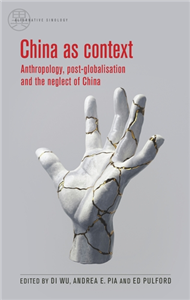
        China as context

        Anthropology, post-globalisation and the neglect of China

        by Di Wu, Andrea E. Pia, Ed Pulford

        Decades-old calls to promote the significance of China for anthropological theory and the social sciences more generally ring more urgently today given China's importance to social, political and economic life globally. Yet Chinese-grounded ideas remain marginal to the discipline, and scholarly discussions retain a sense of China as an 'Other' apart from the 'real' world, and thus unsuitable or generating widely applicable theoretical ideas. Inspired by East Asian postcolonial scholarship, this volume tackles this unsettling situation head-on, arguing that without taking China seriously as a powerful agent, a locus of knowledge production, and a new discursive topos of an emerging post-global imaginary, anthropologists and other social scientists may fail to adequately analyse the global present and make sense of both the material and immaterial forces that animate it, wherever and however they work. Amid the end of Western globalisation and shifting anthropological understandings of relations between ethnography and theory, we show how 'China' must be understood as the ordinary 'context' for anthropological research practices worldwide.

      • Trusted Partner
        Society & culture: general

        A TIME OF WOLVES: GERMANY AND THE GERMANS 1945 - 1955

        by Harald Jähner

        A dance among the ruins: Harald Jähner’s major new portrait of Germany’s post-war societyCountless former soldiers drift through the towns and cities; countless children grow up without a father. The old order has been destroyed and although the streets seem eerily empty, the traditional annual street carnivals are soon back in full swing, jazz can be heard among the ruins, intellectuals rekindle a culture of discussion and debate.Harald Jähner’s book is the first history of Germany’s national mentality in the immediate post-war period. It focusses on the German people in all their diversity: the “re-educators” Alfred Döblin and Rudolf Herrnstadt, who tried in two different zones of occupation to win the trust of their fellow Germans; Beate Uhse, owner of a mail order company for “marital hygiene”, who questioned the old moral code governing what was deemed proper; the many nameless black market traders, pockets stuffed with Lucky Strike cigarettes; stylish housewives sitting at kidney-shaped coffee tables that were to become emblematic for a freer and affordable world. Using major political developments as a backdrop, this book weaves a series of life stories into a nuanced panorama that makes the monumental changes affecting the nation tangible for its readers. 1945 to 1955 was a raw, wild decade poised between two eras, portrayed here as a period that proved decisive for Germany’s future development – and one starkly different to how most Germans imagine it today.

      • Trusted Partner
        September 2021

        Tolerating Democracy!

        About arguing in a society of indignation

        by Karoline M. Preisler

        Are we all still only moving around in our bubbles, unwilling and unprepared to engage in the positions of "the others"? Will only someone be heard who polarises and defames loudly enough, who ignores facts, denies them, twists them, who even calls for violence? The debate over the corona measures has given a new urgency as we address the question of how democracy can be lived and protected in times of an erosion of the centre and social cohesion. Karoline M. Preisler asks herself these questions and, as a passionate democrat, advocates creating new tools and meeting places for the necessary dialogue on controversial topics such as the limits of freedom, religion, climate crisis, immigration and the family.

      • Trusted Partner
        Humanities & Social Sciences
        May 2023

        Time and radical politics in France

        From the Dreyfus Affair to the First World War

        by Alexandra Paulin-Booth

        This book investigates how people have thought about and experienced time, and how their ideas about time have shaped their political views and actions. Using French thinkers and activists of the radical left and right between the Dreyfus Affair and the First World War as a case study, it argues that time provides an important means of exploring how concepts such as nationalism, revolution and social change were understood at the turn of the century. Attending to different experiences of time - the speed at which it was perceived to move, the extent to which the future was near and graspable, the ways in which the past was seen to impinge on the present - opens up exciting new possibilities for analysing politics, ideologies and worldviews.

      • Trusted Partner
        Humanities & Social Sciences
        October 2025

        Social democracy and the urban scene

        Party responses to the diversifying centre-left

        by Nik. Brandal, Øivind Bratberg

        Social democratic parties struggle to appeal to a divided electorate. Particularly prescient is the clash between working-class voters thatare socially conservative and middle-class voters who are liberally inclined but economicallyleft. Are politics and policies that appeal to both even a possibility? Nowhere is thatdebate more acute than in European cities, yet in no other political space are answers more likely to be found.Where urban voters turn left, they are increasingly attracted by radical and green alternatives to social democracy.Social democracy and urban politicsdelves into the changing relationship between these three party families on the urban scene. Mapping electoral geography, governing strategies and the interface between parties and social movements on the left, the authors reflect upon the formation and dilemmas of a broader progressive alliance.

      Subscribe to our

      newsletter