
Self-Counsel Press
Livres Canada Books
View Rights Portal

Award Publications is an award-winning independent children’s publisher, producing exciting, creative and best-selling books for children from birth to 12 in more than 70 countries around the world since 1972. From picture books to board books, junior learning to activity, gift to reference, our aim is to bring joy, and to encourage, entertain and inspire children, and those who read with them, to build a life-long love of books and reading
View Rights Portal


Minor illness or a serious disease ? Through systematic questioning, pharmacists or pharmaceutical technicians can establish the possibilities and limits of self-medication. Each monograph on the over 100 indications for self-medication includes: - A flow chart: basis for the structured consultation - A brief description: additional information about the symptoms - Recommended medications/groups of medications: the treatment options - Additional advice: individual supportive and alternative treatment options - Specific knowledge for advising particular patient groups: e.g. pregnant women, children and senior citizens New for the 7th edition: Monographs that explore the possibilities of supportive self-medication for indications such as hypertension and diabetes. Information about what to do in the case of poisoning, scabies or inflammation of the nail bed (paronychia) is also provided! The details about active substances, products and additional tips have been updated. The pocket guide has long been the standard for providing advice on self-medication – a “must-have”!
 Trusted Partner
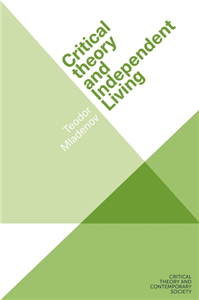
Critical theory and Independent Living explores intersections between contemporary critical theory and disabled people's struggle for self-determination. The book highlights the affinities between the Independent Living movement and studies of epistemic injustice, biopower, and psychopower. It discusses in depth the activists' critical engagement with welfare-state paternalism, neoliberal marketisation, and familialism. This helps develop a pioneering comparison between various welfare regimes grounded in Independent Living advocacy. The book draws on the activism of disabled people from the European Network on Independent Living (ENIL) by developing case studies of the ENIL's campaigning for deinstitutionalisation and personal assistance. It is argued that this work helps rethink independence as a form of interdependence, and that this reframing is pivotal for critical theorising in the twenty-first century.
Trusted Partner

Cough, hay fever or herpes are at least as troublesome during pregnancy and breast-feeding as under normal “conditions” - and yet everything is different. Physiological changes to the body in pregnancy and lactation, together with the vulnerability of the unborn baby or infant, set particular requirements when selecting the correct, safe medication. Especially in the area of self-medication, the needs of pregnant and breast-feeding women for information are great and call for competent advice! This comprehensive handbook is the key: General information about pharmacotherapy, supplementary measures, vaccinations, questions about diet and infections in pregnancy and lactation creates a broad knowledge base. The core feature of the book are the traffic light tables, with precise recommendations for medicinal products for all types of treatment. All the important indications for selfmedication in pregnancy and lactation are listed and the tables are supported by detailed explanations of the individual assessments. The sections “Advice from medical specialists” are particularly useful, with additional tips from gynaecologists and “Footnotes” with relevant information on the use of prescription- only medicines – and as the ultimate practical tool: the enclosed sales counter leaflets with all traffic light tables to enable quick reference for first-class advice!
Trusted Partner
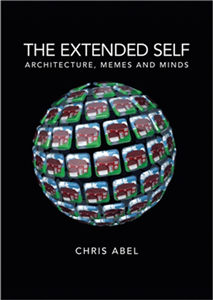
In his wide-ranging study of architecture and cultural evolution, Chris Abel argues that, despite progress in sustainable development and design, resistance to changing personal and social identities shaped by a technology-based and energy-hungry culture is impeding efforts to avert drastic climate change. The book traces the roots of that culture to the coevolution of Homo sapiens and technology, from the first use of tools as artificial extensions to the human body, to the motorized cities spreading around the world, whose uncontrolled effects are changing the planet itself. Advancing a new concept of the meme, called the 'technical meme,' as the primary agent of cognitive extension and technical embodiment, Abel proposes a theory of the 'extended self' encompassing material and spatial as well as psychological and social elements. Drawing upon research from philosophy, psychology and the neurosciences, the book presents a new approach to environmental and cultural studies that will appeal to a broad readership searching for insights into the origins of the crisis.
Trusted Partner

This book explores the ways in which the two leading sensation authors of the 1860s, Mary Elizabeth Braddon and Wilkie Collins, engaged with nineteenth-century ideas about personality formation and the extent to which it can be influenced either by the subject or by others. Innovative readings of seven sensation novels explore how they employ and challenge Victorian theories of heredity, degeneration, inherent constitution, education, upbringing and social circumstance. Far from presenting a reductive depiction of 'nature' versus 'nurture', Braddon and Collins show the creation of character to be a complex interplay of internal and external factors. Drawing on material ranging from medical textbooks, to sociological treatises, to popular periodicals, Creating character shows how sensation authors situated themselves at the intersections of established and developing, conservative and radical, learned and sensationalist thought about how identity could be made and modified.
Trusted Partner
Suicide and the Gothic is the first protracted study of how the act of self-destruction recurs and functions within one of the most enduring and popular forms of fiction. Comprising eleven original essays and an authoritative introduction, this collection explores how the act of suicide has been portrayed, interrogated and pathologised from the eighteenth century to the present. The featured fictions embrace both canonical and the less-studied texts and examine the crisis of suicide - a crisis that has personal, familial, religious, legal and medical implications - in European, American and Asian contexts. Featuring detailed interventions into the understanding of texts as temporally distant as Thomas Percy's Reliques and Patricia Highsmith's crime fictions, and movements as diverse as Wertherism, Romanticism and fin-de-siècle decadence, Suicide and the Gothic provides a comprehensive and compelling overview of this recurrent crisis in fiction and culture.
Trusted Partner


What makes children truly happy? The answer to that question is simple, but challenging: their social-emotional competences. Socially competent kids feel good and are more successful in different aspects of life. One of the most important tasks of a parent is therefore to support their children in developing social skills. This book shows parents how to encourage the social-emotional development of their children. It distinguishes eight skills: awareness of the self, social awareness, self-management, goal oriented behaviour, relational skills, personal responsibility, decision making, and positive thinking. After giving a clear introduction on social-emotional development, the author explains these skills in more detail in eight chapters. Each chapter contains a detailed real-life example, psychological background information, and practical interventions ready for use by parents, teachers and other caretakers. The interventions and examples are aimed at four to twelve year olds.
Trusted Partner
Trusted Partner
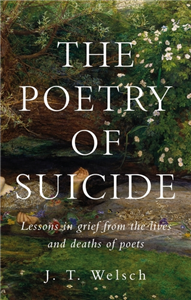
A profound exploration of the connection between poetry and suicide. 'Suicides have a special language,' Anne Sexton wrote in her 1964 poem 'Wanting to Die'. But is it a language we can learn to read? In The poetry of suicide, J. T. Welsch interweaves stories of poets who took their own lives with the long history of suicide in his own family, searching for a new way of understanding these difficult deaths. Beginning with Hamlet's 'To be or not to be?', he delves into the work of Dante, Sylvia Plath, Vladimir Mayakovsky and others, asking what it can teach us about suicide's messy reality. Suicide is more like poetry than we realise, Welsch argues. Both are filled with ambiguities, contradictions and unknowable intentions. Both demand and resist interpretation. Recovering the personal dimension often lost in our medicalised public discourse, Welsch finds practical ways of confronting suicide's poem-like difficulties.
Trusted Partner
The moral problem of authority is the challenge of reconciling legitimate authority (the right to rule) with the demands of freedom and rationality. In this book, I argue that authority can have legitimacy, but when it does it generates a moral dilemma, where the obligation to obey comes at some cost to freedom and reason. Hence, not only do I depart from the views of those who insist that authority can never have legitimacy, but also those who maintain that insofar as authority is legitimate it simply satisfies the demands of freedom or rationality. My focus here will be on both what it is that justifies authority (in particular focusing on membership, and the goods of membership) as well what type of reason an authoritative directive is, how it can come into conflict with others reasons, and how those conflicts are resolved.
Trusted Partner
Trusted Partner
Trusted Partner
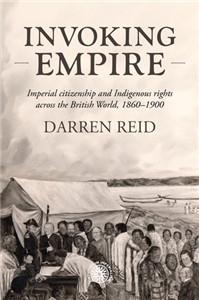
Invoking Empire examines the histories of Canada, South Africa, Australia, and New Zealand during the transitional decades between 1860-1900, when each gained some degree of self-government yet still remained within the sovereignty of the British Empire. It applies the conceptual framework of imperial citizenship to nine case studies of settlers and Indigenous peoples who lived through these decades to make two main arguments. It argues that colonial subjects adapted imperial citizenship to both support and challenge settler sovereignty, revealing the continuing importance of imperial authority in self-governing settler spaces. It also posits that imperial citizenship was rendered inoperable by a combination of factors in both Britian and the colonies, highlighting the contingency of settler colonialism on imperial governmental structures and challenging teleological assumptions that the rise of settler nation states was an inevitable result of settler self-government.
Trusted Partner
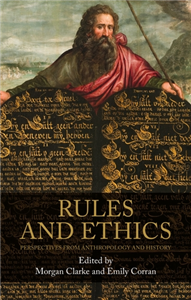
This book investigates the pronounced enthusiasm that many traditions display for codes of ethics characterised by a multitude of rules. Recent anthropological interest in ethics and historical explorations of 'self-fashioning' have led to extensive study of the virtuous self, but existing scholarship tends to pass over the kind of morality that involves legalistic reasoning. Rules and ethics corrects that omission by demonstrating the importance of rules in everyday moral life in a variety of contexts. In a nutshell, it argues that legalistic moral rules are not necessarily an obstruction to a rounded ethical self, but can be an integral part of it. An extended introduction first sets out the theoretical basis for studies of ethical systems that are characterised by detailed rules. This is followed by a series of empirical studies of rule-oriented moral traditions in a comparative perspective.
Trusted Partner
 Trusted Partner

The amazing story of the home studio that helped launch some of Britain's most beloved bands. The Sheffield space age began in 1961, when local mechanic Ken Patten won a tape-recording competition by recreating the sound of a rocket launch using a pencil and a bicycle pump. In the decades that followed, the makeshift home studio he constructed became the launch pad for a group of young musicians who would shape the futuristic sound of 1980s pop. The Human League, Heaven 17, Pulp, ABC and others made their early recordings with Ken, whose DIY ethic was the perfect fit for a city facing industrial decline but teeming with ideas. Studio Electrophonique tells the story of a generation seeking new frontiers in music, using everything they could lay their hands on - from science fiction novels to glam rock, Dada art and cheap electronics - to get there. Drawing on original interviews with Jarvis Cocker, Martyn Ware, Mark White and others, it brings to light a world of humour, charm, creativity and unfounded yet undaunted self-belief.
Trusted Partner

This title helps people with autism to effectively cope with anger, frustration, and injustice. This practical book offers a training-program which can be completed alone, based on scientifically examined treatment methods. It is especially suited to be used together with a caretaker. The first part of the book clearly describes the connection between autism and self-control issues. The second part offers practical exercises which explain how to recognize anger in time and how strong emotions such as anger and frustration. Numerous tips, exercises and relatable examples help the reader to experience more direction and control. Target Group: Adults with autism and involved caretakers
Trusted Partner


In "Know you again" kehrt Kian aus Sydney in seine Heimatstadt Bath zurück, getrieben von dem Wunsch, sein altes Leben hinter sich zu lassen und neu zu beginnen, insbesondere mit June, seiner Jugendliebe. Doch schnell wird ihm bewusst, dass die Schatten der Vergangenheit ihn einholen und eine Flucht unmöglich ist. Vor allem, weil er merkt, dass June, trotz ihrer tiefen Verbindung, ihre eigenen Geheimnisse hat und er sich ihr gegenüber nicht verschließen darf. Die Dynamik zwischen den beiden ist geprägt von Missverständnissen, dem Versuch, einander wieder wirklich zu verstehen, und der schmerzhaften Erkenntnis, dass Liebe allein nicht ausreicht, um die Wunden der Vergangenheit zu heilen. Der Roman taucht tief in die emotionalen Turbulenzen ein, die Kian und June durchleben, als sie versuchen, ihre Beziehung inmitten persönlicher Dämonen und externer Einflüsse neu zu definieren. Kian erkennt, dass seine Liebe zu June stärker ist als sein Bedürfnis nach Ruhm und Anerkennung, und dass wahre Zufriedenheit nur gefunden werden kann, wenn man sich seinen Ängsten stellt und echte Offenheit und Vertrauen in der Beziehung zulässt. "Know you again" ist eine Geschichte über den Mut, sich seinen dunkelsten Erinnerungen zu stellen, die Bedeutung von Vergebung und die unerschütterliche Kraft der Liebe, die selbst die tiefsten Gräben überbrücken kann. Emotionale Fortsetzung der Geschichte von Kian und June, erzählt aus Kians Perspektive, die tiefe Einblicke in seine Vergangenheit und die Herausforderungen bietet, denen er sich stellen muss, um seine Beziehung zu June zu bewahren. Die Dynamik zwischen den Charakteren offenbart eine authentische Auseinandersetzung mit der Vergangenheit, die Leser*innen auf eine Reise der Selbstfindung und der Wiederentdeckung alter Bande mitnimmt. Perfekt geeignet für Fans von New Adult-Romanen und romantischen Dramen. Kians Konflikt zwischen Liebe und Ruhm wird meisterhaft dargestellt, indem seine innere Zerrissenheit beleuchtet wird, was die Geschichte für Leser*innen, die sich für die komplexen Entscheidungen im Leben interessieren, umso faszinierender macht. Eine packende Reise nach Sydney bringt nicht nur Wendungen und Geheimnisse ans Licht, sondern auch dramatische Ereignisse, die die Beziehung zwischen June und Kian auf die Probe stellen. Emotionale Tiefe und Authentizität der Charaktere und ihrer Beziehungen fesseln Leser*innen von der ersten bis zur letzten Seite. Neue, überraschende Elemente, die die Handlung bereichern und gleichzeitig zum Nachdenken über wichtige Lebensfragen anregen, machen "Know You Again" zu einem Muss für Fans emotionaler Liebesgeschichten. Spannende Erkundung der Themen Selbstfindung und Überwindung von Lebenshürden, was dem Buch eine zusätzliche Ebene verleiht und es zu einer inspirierenden Lektüre für alle macht, die sich für Geschichten über persönliches Wachstum und die Kraft der Liebe interessieren.
Trusted Partner

In "Know Our Love", dem dritten Band der "Know us"-Reihe, wird die Geschichte um Ella, Simon und den geheimnisvollen Dilan entfaltet. Ella, ein geschätztes Mitglied ihrer eng verbundenen Freundesgruppe, stellt ihren neuen Freund Dilan vor, was unerwartete Gefühlsverwirrungen auslöst. Simon, der heimlich Gefühle für Ella hegt, spürt eine unerklärliche Anziehung zu Dilan. Diese sofortige, tiefgreifende Verbindung zu Dilan wirft bei Simon Fragen auf, zumal auch Dilan scheinbar mehr über Simon weiß, als es den Anschein hat. Die unerwartete Vertrautheit zwischen den beiden und Ellas Wahl führen zu einem Gefühlschaos, das Simon zwingt, seine eigenen Vorstellungen von Liebe und Beziehung zu hinterfragen. Als Simon schließlich Dilans Geheimnis aufdeckt, steht er vor einer Zerreißprobe, die ihn alles, was er über Liebe zu wissen glaubte, in Frage stellen lässt. Die Entdeckung wirft nicht nur seine Gefühle für Ella und Dilan durcheinander, sondern konfrontiert ihn auch mit tiefen Wahrheiten über sich selbst und die Natur der Liebe. Diese Dreiecksgeschichte, gewürzt mit Elementen der Selbstfindung, des Vertrauens und der Akzeptanz, verspricht eine emotionale Achterbahnfahrt. "Know Our Love" erkundet die Vielschichtigkeit menschlicher Beziehungen und die Bedeutung von echtem Vertrauen und tiefer Verbundenheit, was den Roman zu einem unvergesslichen Leseerlebnis innerhalb der beliebten "Know us"-Reihe macht. Beleuchtet intensiv die Herausforderungen und emotionalen Turbulenzen einer Dreiecksbeziehung, in der traditionelle Partnerschaftsgrenzen durchbrochen werden, und bietet tiefe Einblicke in die Polyamorie. Authentische Charakterentwicklung und vielschichtige Gefühlswelten der Protagonisten werden einfühlsam dargestellt, während sie ihre Beziehungen in einer Welt voller gesellschaftlicher Erwartungen navigieren. Durchgängig spannend mit einem unvorhersehbaren Finale, das die Leser*innen bis zur letzten Seite fesselt. Moderne Themen wie die Queerbewegung und Fridays for Future werden geschickt in die Handlung integriert, was dem Roman eine zusätzliche aktuelle Relevanz verleiht. Lebendige Nebencharaktere bereichern die Handlung mit ihrer Vielfalt und sorgen für zusätzliche Tiefe im Erzähluniversum. Feiert die Vielfalt der Liebe und bietet eine Plattform für eine offene Auseinandersetzung mit alternativen Beziehungsformen und der Akzeptanz verschiedener Lebensmodelle.



