
Teacher Created Materials
Teacher Created Materials publishes innovative, imaginative, and award-winning resources for teachers, parents, and students in all subjects for ages 4-18 worldwide.
View Rights Portal
Teacher Created Materials publishes innovative, imaginative, and award-winning resources for teachers, parents, and students in all subjects for ages 4-18 worldwide.
View Rights Portal
For over 40 years, Teacher Created Materials (TCM) has published innovative and imaginative resources for teachers and students, bringing exceptional curriculum content to classrooms worldwide. Our award-winning resources are sold and licensed in 89 countries. Everything we publish is created and approved by teachers. All our leveled reading books and curriculum kits are designed to engage students, improve literacy and reading comprehension, build content knowledge, and develop critical-thinking skills.
View Rights Portal
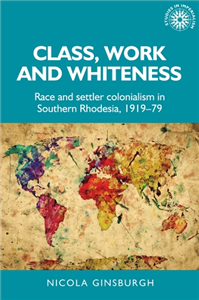
This book offers the first comprehensive history of white workers from the end of the First World War to Zimbabwean independence in 1980. It reveals how white worker identity was constituted, examines the white labouring class as an ethnically and nationally heterogeneous formation comprised of both men and women, and emphasises the active participation of white workers in the ongoing and contested production of race. White wage labourers' experiences, both as exploited workers and as part of the privileged white minority, offer insight into how race and class co-produced one another and how boundaries fundamental to settler colonialism were regulated and policed. Based on original research conducted in Zimbabwe, South Africa and the UK, this book offers a unique theoretical synthesis of work on gender, whiteness studies, labour histories, settler colonialism, Marxism, emotions and the New African Economic History.

 Trusted Partner
Trusted Partner
Trusted Partner
 Trusted Partner

Designed to introduce the student or general reader to a largely unfamiliar area of Elizabethan theatrical activity, Five Elizabethan progress entertainments focuses on a group of entertainments mounted for the monarch in the closing years of her reign. Richly annotated, and prefaced by a substantial introduction, the texts enable an understanding of the motives underlying not only the progress itself, but the choice of locations the monarch elected to visit and the personal and political preoccupations of those with whom she determined to stay. Selected for their diversity, the entertainments exhibit the tensions underlying some royal visits, the lavish expenditure entailed for the monarch's hosts and the overlap in terms of both material and authorship between the progress entertainments and the more widely studied products of the sixteenth-century stage.
Trusted Partner

Designed to introduce the student or general reader to a largely unfamiliar area of Elizabethan theatrical activity, Five Elizabethan progress entertainments focuses on a group of entertainments mounted for the monarch in the closing years of her reign. Richly annotated, and prefaced by a substantial introduction, the texts enable an understanding of the motives underlying not only the progress itself, but the choice of locations the monarch elected to visit and the personal and political preoccupations of those with whom she determined to stay. Selected for their diversity, the entertainments exhibit the tensions underlying some royal visits, the lavish expenditure entailed for the monarch's hosts and the overlap in terms of both material and authorship between the progress entertainments and the more widely studied products of the sixteenth-century stage.
Trusted Partner


Die gelungenste Weltausstellung aller Zeiten war die Exposition Universelle de Paris von 1889. Weit über 32 Millionen Menschen besuchten das gigantische Spektakel mit knapp 62.000 Ausstellern aus 54 Nationen und 17 französischen Kolonien. Das Wahrzeichen der Schau, der Eiffelturm, blieb Paris bis heute erhalten. Einen legendären Ruf erwarb sich auch das offizielle, wöchentlich erscheinende Journal der Weltausstellung. Auf großformatigen, mit Stahlstichen üppig illustrierten Seiten berichtete es von den Sensationen vor Ort, von dreirädrigen selbstfahrenden Karren und ethnologischen Dörfern, in denen es Kamelreiten für die Kinder und Bauchtänze für die Herren gab. Der Schweizer Kunsthistoriker Beat Wyss hat die hundert originellsten Abbildungen ausgewählt. Sie illustrieren, wie die Expo den Erdball auf ein »Weltdorf« zwischen Trocadéro und Champ de Mars schrumpfen lässt, wie räumliche Distanzen abgebaut und dabei kulturelle Differenzen freigelegt werden. Das späte 20. Jahrhundert wird dafür den Begriff der Globalisierung prägen. Beat Wyss zeigt, wie die Gesellschaften seit dem 19. Jahrhundert mit diesem Prozeß umgehen und mit der Verwestlichung der Welt eine Orientalisierung des Westens einhergeht. Dem Leser als Flaneur über die Bühne der Weltausstellung wird klar: Die Expo 1889 belegt nicht nur den aktuellen Zustand einer Zeit, sondern bietet über die spektakuläre Anordnung ihrer Exponate den Vorschein einer gesellschaftlichen Utopie.
Trusted Partner


Peter Weiss wurde am 8. November 1916 in Nowawes bei Berlin geboren und starb am 10. Mai 1982 in Stockholm. Zwischen 1918 und 1929 lebte er in Bremen, wo er das Gymnasium besuchte. 1929 kehrte die Familie Weiss nach Berlin zurück, musste jedoch 1934 emigrieren. Die erste Station bildete London, darauf folgte 1936 die SR. In diesen Jahren widmete sich Peter Weiss vorwiegend der Malerei – 1937/1938 studierte er Malerei an der Kunstakademie in Prag. In dieser Zeit besuchte er Hermann Hesse während zweier längerer Aufenthalte in der Schweiz. Die dritte und letzte Emigrationsstation bildete 1939 Schweden, wo Peter Weiss zunächst in Alingsås, ab 1940 in Stockholm wohnte. Hier setzte er seine Tätigkeit als Maler fort. 1947 hielt er sich als Korrespondent einer schwedischen Tagesszeitung in Berlin auf. Seine Artikel versammelte er 1948 zu seiner ersten Buchpublikation. Der Band erschien posthum 1985 unter dem Titel Die Besiegten. Ab diesem Zeitraum entstanden, in schwedischer Sprache, die ersten Prosaarbeiten, Gedichte, und Dramen. Zu den wichtigsten Erzählungen aus dieser Schaffensperiode zählen Die Situation aus dem Jahre 1956 sowie das 1980 unter dem Autorenpseudonym Sinclair veröffentlichte Buch Der Fremde. Keines seiner Manuskripte wurde jedoch von einem schwedischen Verlag zur Publikation angenommen. Mitte der fünfziger Jahre begann Peter Weiss in deutscher Sprache zu schreiben. 1960 erschien sein erstes Prosabuch Der Schatten des Körpers des Kutschers. Zu Beginn der siebziger Jahre wand sich Peter Weiss wieder der Prosa zu. Zwischen 1975 und 1981 erschien der dreibändige Roman Die Ästhetik des Widerstands, deren letzter Band begleitet wird von Notizbücher 1971 – 1980. Ihm wurde posthum der Georg-Büchner-Preis für das Jahr 1982 zuerkannt. Beat Mazenauer, geboren 1958, Germanist und Historiker, lebt als Literaturkritiker und freier Autor in Luzern.
Trusted Partner
 Trusted Partner
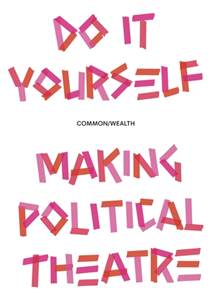
A unique guide to creating political theatre, produced by one of the UK's most exciting companies. Do It Yourself is a vital resource for anyone interested in exploring theatre culture grounded in and produced by working-class, multi-racial communities. Designed for artists, activists and community organisers, the book offers a step-by-step guide to creating political theatre that is relevant, impactful and rooted in the lives of everyday people. Common Wealth have spent fifteen years working at the cutting edge of political theatre. In Do It Yourself, they share their experimental and activist approach to performance-making, based on DIY principles and the belief that ground-breaking theatre can be made with anyone, anywhere, in ways that truly resonate with the communities it serves. Do It Yourself introduces Common Wealth's artistic and political ethos, provides unique insights into their most significant performances and offers practical exercises for creating your own work. But this is not just a manual. It is a celebration of culture as a collective endeavour, one that can challenge the status quo and inspire change.
Trusted Partner
Trusted Partner
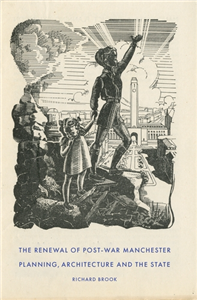
A compelling account of the project to transform post-war Manchester, revealing the clash between utopian vision and compromised reality. Urban renewal in Britain was thrilling in its vision, yet partial and incomplete in its implementation. For the first time, this deep study of a renewal city reveals the complex networks of actors behind physical change and stagnation in post-war Britain. Using the nested scales of region, city and case-study sites, the book explores the relationships between Whitehall legislation, its interpretation by local government planning officers and the on-the-ground impact through urban architectural projects. Each chapter highlights the connections between policy goals, global narratives and the design and construction of cities. The Cold War, decolonialisation, rising consumerism and the oil crisis all feature in a richly illustrated account of architecture and planning in post-war Manchester.
Trusted Partner


Media reports often praise movement as a cure-all. But apart from its undisputed positive effect on health, does movement really make us smarter? Consider a national football team, for example – are these excessively sports-driven players automatically the smartest people? Should we simply replace all school subjects with sports? The authors provide a detailed summary of the latest scientific findings on the influence of movement on cognitive ability. They describe the effects of movement, on old age, embodiment, emotion, school as well as other factors that influence cognition. Target Group: teachers, lecturers, psychologists, psychiatrists, neurologists, psychotherapists, movement therapists.
Trusted Partner
 Trusted Partner

 Trusted Partner
Medicine for the relief of pain has made little progress in the last 50 years. 16% of our population claim to suffer from chronic pain, for which no lasting help can be found, despite years of treatment by different doctors. Trigger point therapy experts have integrated myofascial techniques into their everyday therapy in recent decades and through this they have achieved good results even with complex and chronic problems. In this book, instructors from the Interest Group for Myofascial Trigger Point Therapy (IMTT) in Switzerland present 33 complex cases of patients with chronic pain, whose pain they were able to relieve permanently with manual trigger point therapy and dry needling. Using these case studies, doublepage spreads with an educational, uniform layout clearly present the diagnosis, pathophysiology and chronifcation of myofascial pain syndromes and, in conclusion, describe encouraging and surprising successes despite previous therapy resistance.
Trusted Partner
Trusted Partner
Trusted Partner
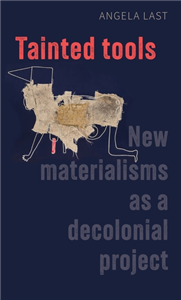
Tainted Tools makes a provocative intervention into the fraught intersection between new materialist and decolonial approaches. Despite a common project of challenging European philosophical and social categories and hierarchies, the discourses are considered incompatible. Most prominently, new materialisms have been accused of harbouring a White vision of the human while disregarding the racist resonances of the 'nonhuman'. The book traces this conflict to an earlier meeting point of new materialist and decolonial projects, which came about through the experimental combination of Marx and Nietzsche. Used to fight fascism, Stalinism and colonialism, this politically contentious fusion gradually became depoliticised, leading to unaddressed tensions today. While the book does not argue for a revival of these early 'new materialisms', it brings their strategies into dialogue with today's new materialisms and decolonial approaches to develop greater theoretical solidarity in times of crisis.
Trusted Partner
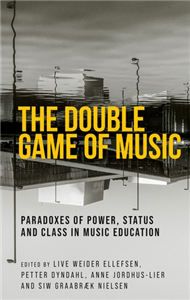
The double game of music imagines music education as a series of games - each with its own rules, play currency and players - to challenge readers to rethink the significance of music and musical upbringing in shaping social structures. Drawing on their own empirical research and a wide range of international contributions, the authors unravel the intertwining of social positioning and power hierarchies with players beliefs in the pure values and virtues of their games, whether these relate to parenting, children's play, schooling, academic pursuits, musical leisure activities or the television and music industries. In a world where music is often celebrated as an important tool for inclusion and democratisation, this groundbreaking book offers a timely critique, revealing complexities and contradictions that tend to be overlooked by teachers, researchers, politicians and others interested in the powers of music education.



