
S&P Literary - Publishing Division of Sosia & Pistoia SRL
Chiara Melloni Irene Pepiciello
View Rights Portal
Chiara Melloni Irene Pepiciello
View Rights Portal
Great Plains Publications Ltd. is an independent publisher based in Winnipeg, Manitoba, Canada and committed to bringing you the very best books from the Prairies – a region we believe has an abundance of quality writers. We also publish fiction from authors across the country in our imprints, Enfield & Wizenty and Yellow Dog.
View Rights Portal

In the mid-ninth century, Francia was rocked by the first royal divorce scandal of the Middle Ages: the attempt by King Lothar II of Lotharingia to rid himself of his queen, Theutberga and remarry. Even 'women in their weaving sheds' were allegedly gossiping about the lurid accusations made. Kings and bishops from neighbouring kingdoms, and several popes, were gradually drawn into a crisis affecting the fate of an entire kingdom. This is the first professionally published translation of a key source for this extraordinary episode: Archbishop Hincmar of Rheims's De divortio Lotharii regis et Theutbergae reginae. This text offers eye-opening insight both on the political wrangling of the time and on early medieval attitudes towards magic, penance, gender, the ordeal, marriage, sodomy, the role of bishops, and kingship.The translation includes a substantial introduction and annotations, putting the case into its early medieval context and explaining Hincmar's sometimes-dubious methods of argument.
 Trusted Partner
 Trusted Partner
Trusted Partner
Trusted Partner
Trusted Partner
Trusted Partner
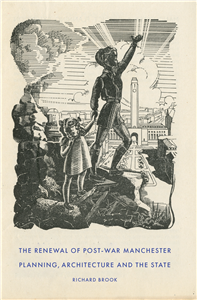
A compelling account of the project to transform post-war Manchester, revealing the clash between utopian vision and compromised reality. Urban renewal in Britain was thrilling in its vision, yet partial and incomplete in its implementation. For the first time, this deep study of a renewal city reveals the complex networks of actors behind physical change and stagnation in post-war Britain. Using the nested scales of region, city and case-study sites, the book explores the relationships between Whitehall legislation, its interpretation by local government planning officers and the on-the-ground impact through urban architectural projects. Each chapter highlights the connections between policy goals, global narratives and the design and construction of cities. The Cold War, decolonialisation, rising consumerism and the oil crisis all feature in a richly illustrated account of architecture and planning in post-war Manchester.
Trusted Partner
Trusted Partner


Media reports often praise movement as a cure-all. But apart from its undisputed positive effect on health, does movement really make us smarter? Consider a national football team, for example – are these excessively sports-driven players automatically the smartest people? Should we simply replace all school subjects with sports? The authors provide a detailed summary of the latest scientific findings on the influence of movement on cognitive ability. They describe the effects of movement, on old age, embodiment, emotion, school as well as other factors that influence cognition. Target Group: teachers, lecturers, psychologists, psychiatrists, neurologists, psychotherapists, movement therapists.
Trusted Partner


Chaos flourishes beneath the surface – a deep fissure runs through our society Inside the pressure-cooker of the coronavirus pandemic, we see more clearly the volatile status of how we live together. Why were we unprepared, in spite of the numerous warnings over the years? Jean-Pierre Wils speculates that our society, which is already marked by tension and hectic stalemate, is riven by a deep division. In this case, the reality of the crisis triggered by the pandemic is only the prelude to a much deeper crisis: climate change. But how can we manage it? To do so Wils advocates for a “culture of interim solutions” – a culture of thoughtfulness, soul-searching, slowing down and reorienting towards social and ecological sustainability ...
Trusted Partner


Kaum eine Familie spiegelt die Geschichte der deutschen Juden des 19. und 20. Jahrhunderts in allen ihren Facetten, vom Glanz des Aufstiegs ins Bürgertum bis zur Verfolgung und Ermordung der europäischen Juden so deutlich wie die der Scholems. Ihre Geschichte beginnt in Schlesien: Von dort zogen die Scholems Mitte des 19. Jahrhunderts nach Berlin und eröffneten eine Druckerei, die es zu einigem Wohlstand brachten. Arthur und Betty Scholem hatten vier Söhne, die alle einen unterschiedlichen Weg einschlugen: Reinhold, 1891 geboren, wurde im Kaiserreich zum deutsch-nationalen Juden; Erich, Jahrgang 1893, zum nationalliberalen, assimilierten Juden; Werner Scholem, 1985 in Berlin geboren, wurde zu einem prominenten Vertreter eines linken Sozialismus und saß in der Weimarer Republik für die KPD im Reichstag. Gerhard Scholem schließlich, 1897 geboren, bekannte sich früh zum Zionismus, lernte Hebräisch und wanderte 1923 nach Palästina aus, wo er als Gershom Scholem einer der bedeutendsten Forscher jüdischer Mystik wurde.Jay Geller zeigt hier zum ersten Mal, wie sich in einer Familie sich vier ganz unterschiedliche Ausprägungen der deutsch-jüdischen Geschichte versammeln: Nationalismus wie Liberalismus, Sozialismus wie Zionismus.
Trusted Partner
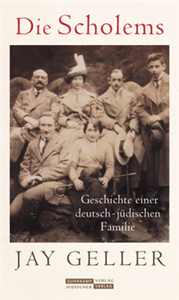
Kaum eine Familie spiegelt die Geschichte der deutschen Juden des 19. und 20. Jahrhunderts in allen ihren Facetten, vom Glanz des Aufstiegs ins Bürgertum bis zur Verfolgung und Ermordung der europäischen Juden so deutlich wie die der Scholems. Ihre Geschichte beginnt in Schlesien: Von dort zogen die Scholems Mitte des 19. Jahrhunderts nach Berlin und eröffneten eine Druckerei, die es zu einigem Wohlstand brachten. Arthur und Betty Scholem hatten vier Söhne, die alle einen unterschiedlichen Weg einschlugen: Reinhold, 1891 geboren, wurde im Kaiserreich zum deutsch-nationalen Juden; Erich, Jahrgang 1893, zum nationalliberalen, assimilierten Juden; Werner Scholem, 1985 in Berlin geboren, wurde zu einem prominenten Vertreter eines linken Sozialismus und saß in der Weimarer Republik für die KPD im Reichstag. Gerhard Scholem schließlich, 1897 geboren, bekannte sich früh zum Zionismus, lernte Hebräisch und wanderte 1923 nach Palästina aus, wo er als Gershom Scholem einer der bedeutendsten Forscher jüdischer Mystik wurde.Jay Geller zeigt hier zum ersten Mal, wie sich in einer Familie sich vier ganz unterschiedliche Ausprägungen der deutsch-jüdischen Geschichte versammeln: Nationalismus wie Liberalismus, Sozialismus wie Zionismus.
Trusted Partner
Trusted Partner
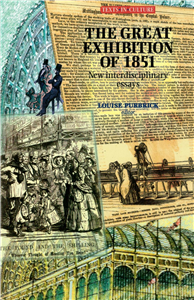
The Great Exhibition of 1851 has become a touchstone for the nineteenth century. The Crystal Palace produced a commodity world, an imperial spectacle, a picture of capitalism, a liberal dream, a vision of modern life. Historians have saturated the Great Exhibition with meanings. This collection of essays exposes how meaning has been produced around the Great Exhibition. It contains a series of critical readings of the official and popular historical record of the Exhibition. Critics and historians of art, culture, design and literature have been brought together to examine the objects, the images, the documents and the fictions of 1851. Their essays explore the determined use of industrial knowledge, the contested definitions of nation and colony, and the actual control of the space of the Crystal Palace after the Great Exhibition closed. The Great Exhibition of 1851 presents new interpretations of one of the most significant exhibitions in the nineteenth century and will be essential reading for anyone studying cultural history, design history, art history and literature.
Trusted Partner
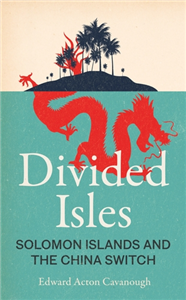
In 2019, Solomon Islands made international headlines when the country severed its decades-old alliance with Taiwan in exchange for a partnership with Beijing. The decision prompted international condemnation and terrified Australian security experts, who feared Australia's historical Pacific advantage would come unstuck. This development is often framed as another example of China's inevitable capture of the region - but this misrepresents how and why the decision was made, and how Solomon Islanders have skilfully leveraged global angst over China to achieve extraordinary gains. Despite Solomon Islands' importance to Australia, local readers know little about the country, a fragile island-nation stretching over a thousand islands and speaking seventy indigenous languages. In Divided Isles, Edward Cavanough explains how the switch played out on the ground and its extraordinary potential consequences. He speaks with the dissidents and politicians who shape Solomon Islands' politics, and to the ordinary people whose lives have been upended by a decision that has changed the country - and the region - forever.
Trusted Partner
Trusted Partner

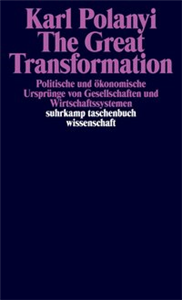
The Great Transformation, 1944 erschienen, geht von der These aus, daß erst die Herausbildung einer liberalen Marktwirtschaft mit ihrem »freien Spiel der Kräfte« zu jener charakteristischen »Herauslösung« und Verselbständigung der Ökonomie gegenüber der Gesellschaft geführt hat, die historisch ein Novum darstellt und die bürgerliche Gesellschaft von allen anderen Gesellschaftsformationen unterscheidet. The Great Transformation - das bezeichnet den Übergang von »integrierten« Gesellschaften, in denen die wirtschaftlichen Aktivitäten der Individuen in einen übergreifenden kulturellen Zusammenhang eingebettet waren, zur nicht integrierten Gesellschaft vom Typ der freien Marktwirtschaft.
Trusted Partner
Trusted Partner
 Trusted Partner
Trusted Partner
Trusted Partner



