
Armin Lear Press
Armin Lear Press is home to award-winning editorial and design talent.
View Rights Portal
Armin Lear Press is home to award-winning editorial and design talent.
View Rights Portal

In an age when engraving and photography were making artistic images available to a much wider public, artists were able to influence public attitudes more powerfully than ever before. This book examines works of art on military themes in relation to ruling-class ideologies about the army, war and the empire. The first part of the book is devoted to a chronological survey of battle painting, integrated with a study of contemporary military and political history. The chapters link the debate over the status and importance of battle painting to contemporary debates over the role of the army and its function at home and abroad. The second part discusses the intersection of ideologies about the army and military art, but is concerned with an examination of genre representations of soldiers. Another important theme which runs through the book is the relation of English to French military art. During the first eighty years of the period under review France was the cynosure of military artists, the school against which British critics measured their own, and the place from which innovations were imported and modified. In every generation after Waterloo battle painters visited France and often trained there. The book shows that military art, or the 'absence' of it, was one of the ways in which nationalist commentators articulated Britain's moral superiority. The final theme which underlies much of the book is the shifts which took place in the perception of heroes and hero-worship.

This is a study of Britain's presence in China both at its peak, and during its inter-war dissolution in the face of assertive Chinese nationalism and declining British diplomatic support. Using archival materials from China and records in Britain and the United States, the author paints a portrait of the traders, missionaries, businessmen, diplomats and settlers who constituted "Britain-in-China", challenging our understanding of British imperialism there. Bickers argues that the British presence in China was dominated by urban settlers whose primary allegiance lay not with any grand imperial design, but with their own communities and precarious livelihoods. This brought them into conflict not only with the Chinese population, but with the British imperial government. The book also analyzes the formation and maintenance of settler identities, and then investigates how the British state and its allies brought an end to the reign of freelance, settler imperialism on the China coast. At the same time, other British sectors, missionary and business, renegotiated their own relationship with their Chinese markets and the Chinese state and distanced themselves from the settler British.
 Trusted Partner
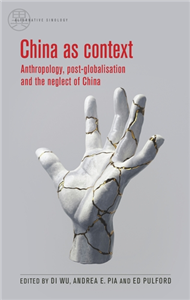
Decades-old calls to promote the significance of China for anthropological theory and the social sciences more generally ring more urgently today given China's importance to social, political and economic life globally. Yet Chinese-grounded ideas remain marginal to the discipline, and scholarly discussions retain a sense of China as an 'Other' apart from the 'real' world, and thus unsuitable or generating widely applicable theoretical ideas. Inspired by East Asian postcolonial scholarship, this volume tackles this unsettling situation head-on, arguing that without taking China seriously as a powerful agent, a locus of knowledge production, and a new discursive topos of an emerging post-global imaginary, anthropologists and other social scientists may fail to adequately analyse the global present and make sense of both the material and immaterial forces that animate it, wherever and however they work. Amid the end of Western globalisation and shifting anthropological understandings of relations between ethnography and theory, we show how 'China' must be understood as the ordinary 'context' for anthropological research practices worldwide.
Trusted Partner

The Russian Revolution of 1917 was not just a world-historical event in its own right, but also struck powerful blows against racism and imperialism, and so inspired many black radicals internationally. This edited collection explores the implications of the creation of the Soviet Union and the Communist International for black and colonial liberation struggles across the African diaspora. It examines the critical intellectual influence of Marxism and Bolshevism on the current of revolutionary 'black internationalism' and analyses how 'Red October' was viewed within the contested articulations of different struggles against racism and colonialism. Challenging European-centred understandings of the Russian Revolution and the global left, The Red and the Black offers new insights on the relations between Communism, various lefts and anti-colonialisms across the Black Atlantic - including Garveyism and various other strands of Pan-Africanism. The volume makes a major and original intellectual contribution by making the relations between the Russian Revolution and the Black Atlantic central to debates on questions relating to racism, resistance and social change.
Trusted Partner
 Trusted Partner
Democratizing AI offers a powerful rethinking of how artificial intelligence should be governed. Challenging the dominance of tech elites in shaping AI's future, Zimmermann argues that AI deployment is a political act-one that must be subject to democratic control. She proposes a practical "playbook" for reclaiming agenda-setting power through civic participation, public ownership, and institutional reform. Engaging with leading critics, Zimmermann defends a risk-sensitive proceduralist approach while acknowledging the deeper structural challenges posed by capitalism, inequality, and democratic fatigue. This book is a call to action: to resist learned helplessness, confront techno-authoritarianism, and shape AI's trajectory in line with democratic values. Thoughtful, urgent, and visionary, the book is essential reading for anyone concerned with the future of technology and democracy.
Trusted Partner
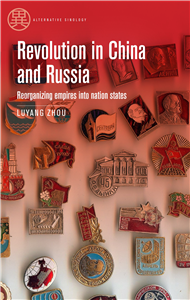
Most scholars believe that China's nationality policy, like that of other socialist states, imitated the Soviet nationality model, a system which has been termed an "affirmative action empire." This book offers two contributions to the literature which run counter to this convention. First, it argues that the People's Republic of China (PRC) and the Soviet Union (USSR) were different; while the PRC was aimed to build an ideal-typical nation-state, the USSR was an open union of nation-states that was only temporarily confined to a physical territory. Second, while scholars who have noted this difference attribute it to contextual factors, such as ethnic structure, geopolitical status, and Russia's intervention into the Chinese Revolution, this book contends that context shaped the Sino-Soviet difference, yet it did not determine it. Rather, there was significant leeway between the implications of the contextual factors, and what the policy-designers ultimately established. This book probes who held agency, and how these individuals bridged this gap.
Trusted Partner

A Vision of Battlements is the first novel by the writer and composer Anthony Burgess, who was born in Manchester in 1917. Set in Gibraltar during the Second World War, the book follows the fortunes of Richard Ennis, an army sergeant and incipient composer who dreams of composing great music and building a new cultural world after the end of the war. Following the example of his literary hero, James Joyce, Burgess takes the structure of his book from Virgil's Aeneid. The result is, like Joyce's Ulysses, a comic rewriting of a classical epic, whose critique of the Army and the postwar settlement is sharp and assured. The Irwell Edition is the first publication of Burgess's forgotten masterpiece since 1965. This new edition includes an introduction and notes by Andrew Biswell, author of a prize-winning biography of Anthony Burgess.
Trusted Partner
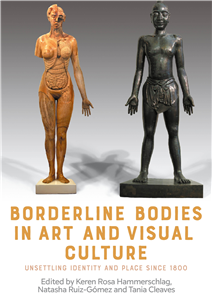
Borderline bodies offers original interpretations of visual representations of human bodies as bounded and unbounded, fortified and permeable, mobile and static-subject to borders and able to traverse and challenge them. It also takes as its focus images and objects that might be considered 'borderline' because they sit at the intersection of disciplines or sit outside accepted notions of what constitutes serious 'art.' By mapping the ways human bodies traverse borders and straddle-even dismantle-categories, this volume's essays approach afresh the relationship of bodies to traditional modes of representation, especially in art and medicine, and encourage us to think anew about how we understand the relationship between human corporeality, identity and place. Critical transdisciplinary and transnational analyses of objects and images from a range of geographies shed new light on the themes of: bodies and identity; typologies of the body; racialised bodies; 'normal' and 'abnormal' bodies; encounters between bodies; bodies in transition; bodies and mobility; and the bounded and unbounded human body. The outcome is a fresh approach to depictions of the human body produced for the purposes of artistic and medical education, aesthetic edification, and scientific and professional advancement, which disrupts assumptions about the normative human body perpetuated through Western image-making traditions.
Trusted Partner

Februar 2017. Ein Nordkoreaner wird am helllichten Tag am Flughafen von Kuala Lumpur Weise vergiftet. Ein hochrangiger russischer Geheimdienstoffizier stirbt unter mysteriösen Umständen in einem Hotel in Washington. Und ein Reality-TV-Star zieht ins Weiße Haus ein. Zufall? Oder Auftakt zu etwas Größerem? Während sich die Machtzentren der Welt gefährlich neu sortieren und bizarre Gipfeltreffen die Schlagzeilen beherrschen, geraten drei Menschen ins Fadenkreuz: Jenna, eine CIA-Agentin, gejagt vom russischen Geheimdienst und vom nordkoreanischen Regime. Ljoscha, ein Moskauer Student, der es wagt, Putin live im Fernsehen herauszufordern, und nun seine Rache fürchten muss. Und Eric, ein nordkoreanischer Spion im Herzen des Weißen Hauses, der fasziniert ist von dem Mann, den er zu untergraben versucht ... In einer Welt aus brüchigen Allianzen, Verrat und verdeckten Kriegen ist Red Star Down ein packender globaler Thriller über Macht, Manipulation und den Moment, in dem die Welt aus den Fugen zu geraten droht.
Trusted Partner
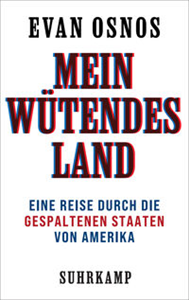
»Osnos erzählt die bewegende Geschichte düsterer Zeiten mit einer Menschlichkeit, die Hoffnung auf etwas Besseres verspricht.« Michael J. Sandel Nach zehn Jahren als Korrespondent im Nahen Osten und in China zieht Evan Osnos 2013 zurück in die USA. Doch das Land, in das er heimkehrt, ist kaum wiederzuerkennen. Chancengleichheit, Rechtsstaatlichkeit, der Glaube an die Macht der Wahrheit – die fundamentalen Prinzipien der ältesten Demokratie der Welt scheinen ihre Selbstverständlichkeit eingebüßt zu haben. 2016 wird Donald Trump zum Präsidenten gewählt, vier Jahre später stürmen seine Unterstützer das Kapitol. Aus den vereinigten sind die gespaltenen Staaten von Amerika geworden. Evan Osnos hat diese Entwicklungen über Jahre beobachtet. Er versucht zu verstehen und zu erklären: warum im reichen Greenwich an der Ostküste, wo er aufgewachsen ist, aus gemäßigten Konservativen eingefleischte Trump-Anhänger wurden. Wie sich in Clarksburg, West Virginia, wo er seinen ersten Job bei einer Zeitung annahm, die Opioid-Krise zur nationalen Katastrophe ausweiten konnte. Und was die Ursachen sind für den Rassismus, die Waffengewalt und die Ungleichheit in Chicago, wo er selbst zu einem gefragten Journalisten aufstieg. Aus eindringlichen Porträts entsteht eine große Erzählung, die vom 11. September 2001 bis zum 6. Januar 2021 reicht. Der Pulitzer-Preisträger zeichnet nach, wie die USA den moralischen Kompass verloren, der einst aus einer Vereinigung von Staaten die Vereinigten Staaten machte.
Trusted Partner
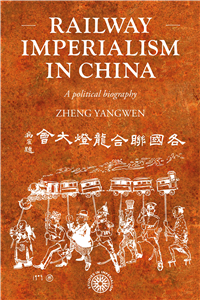
Railway Imperialism in China: a Political Biography is the first and most comprehensive book on history and politics of all major railways in China from the late Qing to the post-Mao era. It investigates the transformation of railways from a bête noire within discussions about reform to the emblematic "engines for empire" as foreign powers used it to carve outspheres of control and exploit the late Qing, and as an instrument of nation making for Chinese regimes. The book introduces new archival sources and a wide range of secondary materials. Boldly conceived, it situates the making of modern China in the context of British, Russian, German, Japanese, American expansion. It traces China's transformation from a victim of railway imperialism in the Age of Empireto a railway expansionist in the twenty-first century.
Trusted Partner
Trusted Partner
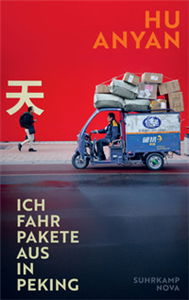
In den zwanzig Jahren nach seinem Highschool-Abschluss hatte Hu Anyan neunzehn verschiedene Jobs. Er arbeitete unter anderem als Verkäufer im 24h-Markt, als Fahrradmechaniker, Pakete-Kurier, Sicherheitsmann, im Logistikzentrum, der Tankstelle, der Kantinenküche. Er zog von einer chinesischen Großstadt zur nächsten, jedes Mal weiter, wenn die Arbeit unerträglich und der Boss zu bossy wurde, und richtete sich wieder in einem winzigen Zimmer ein, mit nicht mehr als seinen zerlesenen Ausgaben von Tschechow und Carver. Von der Psychologie der Hackordnung in einer gigantischen Sortierhalle für Pakete über die kafkaeske Bürokratie der Personalabteilungen bis hin zur idealen Gestaltung einer Lieferroute – mit aufrichtiger Neugier und trockenem Humor erzählt Hu Anyan unerhörte Geschichten der Menschlichkeit vor dem Hintergrund größter Schinderei. Ich fahr Pakete aus in Peking ist ein intimer Bericht über ein Leben als Niedriglohnarbeiter in den anonymen Megastädten des heutigen China. Und gibt zum ersten Mal den Blick frei auf die Massen, die von den gesellschaftlichen Realitäten, von der Art des Wirtschaftens, von der Staatsgewalt, an den Rand, in die Armut, ins Vergessen gedrängt werden.
Trusted Partner

What is it like to live next door to a British Army base? England's military heartland provides an eye-opening account of the sprawling military presence on Salisbury Plain, drawing on a wide range of voices from both sides of the divide. Targeted for expansion under government plans to reorganise the UK's global defence estate, the Salisbury 'super garrison' offers a unique opportunity to explore the impact of the military footprint in a particular place. But this is no ordinary environment: as well as being the world-famous site of Stonehenge, the grasslands of Salisbury Plain are home to rare plants and wildlife. How does the army take responsibility for conserving this unique landscape as it trains young men and women to use lethal weapons? Are its claims that its presence is a positive for the environment anything more than propaganda? This book investigates these questions against the backdrop of a historic landscape inscribed with the legacy of perpetual war.
Trusted Partner

A considered investigation of a long-standing army base's impact on the British countryside. What is it like to live next door to a British Army base? Beyond the barracks provides an eye-opening account of the sprawling military presence on Salisbury Plain, drawing on a wide range of voices from both sides of the divide. Targeted for expansion under government plans to reorganise the UK's global defence estate, the Salisbury 'super garrison' offers a unique opportunity to explore the impact of the military footprint in a particular place. But this is no ordinary environment: as well as being the world-famous site of Stonehenge, the grasslands of Salisbury Plain are home to rare plants and wildlife. How does the army take responsibility for conserving this unique landscape as it trains young men and women to use lethal weapons? Are its claims that its presence is a positive for the environment anything more than propaganda? Beyond the barracks investigates these questions against the backdrop of a historic landscape inscribed with the legacy of perpetual war.
Trusted Partner
Trusted Partner
Trusted Partner


+++Aufwendig gestaltete limitierte Erstauflage mit Farbschnitt, nur solange der Vorrat reicht+++ Die achtzehnjährige Poppy hatte noch nie eine richtige Beziehung. Bislang hat jeder Junge ihre hohen Erwartungen enttäuscht. Zu einem zweiten Date kommt es nie, denn Poppy hat noch bei jedem einen Fehler gefunden. Auch Cams Beziehungen halten nie lange, denn immer wenn es ernst werden könnte, ergreift der Achtzehnjährige die Flucht. Als Poppys Freunde sie auffordern, zwei Monate lang jemandem eine Chance zu geben, beschließt sie, es mit Cam, ihrem Crush aus dem Bus, zu versuchen. Auch Cam hat sich etwas vorgenommen: Er wird dieses Mal nicht derjenige sein, der Schluss macht. Schon beim ersten Date sehen beide Red Flags, bei denen sie normalerweise sofort davonlaufen würden. Doch so einfach will keiner von beiden aufgeben – und dann kommen auch noch die Gefühle dazwischen …
Trusted Partner
For imperialists, the concept of guardian is specifically to the armed forces that kept watch on the frontiers and in the heartlands of imperial territories. Large parts of Asia and Africa, and the islands of the Pacific and the Caribbean were imperial possessions. This book discusses how military requirements and North Indian military culture, shaped the cantonments and considers the problems posed by venereal diseases and alcohol, and the sanitary strategies pursued to combat them. The trans-border Pathan tribes remained an insistent problem in Indian defence between 1849 and 1947. The book examines the process by which the Dutch elite recruited military allies, and the contribution of Indonesian soldiers to the actual fighting. The idea of naval guardianship as expressed in the campaign against the South Pacific labour trade is examined. The book reveals the extent of military influence of the Schutztruppen on the political developments in the German protectorates in German South-West Africa and German East Africa. The U.S. Army, charged with defending the Pacific possessions of the Philippines and Hawaii, encountered a predicament similar to that of the mythological Cerberus. The regimentation of military families linked access to women with reliable service, and enabled the King's African Rifles to inspire a high level of discipline in its African soldiers, askaris. The book explains the political and military pressures which drove successive French governments to widen the scope of French military operations in Algeria between 1954 and 1958. It also explores gender issues and African colonial armies.



