
Mark Allen Group
The Mark Allen Group is a dynamic media company which delivers high-quality content through market-leading journals, magazines, books, events, exhibitions and websites.
View Rights Portal
The Mark Allen Group is a dynamic media company which delivers high-quality content through market-leading journals, magazines, books, events, exhibitions and websites.
View Rights Portal
Topical, authentic and high quality books under the Marshall Cavendish Editions imprint provide general interest content that informs, entertains and engages readers.
View Rights Portal

 Trusted Partner

 Trusted Partner
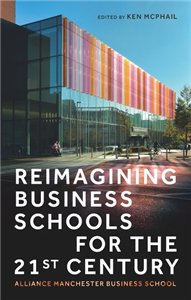
Whether it's dealing with regional economic disparities, global geopolitical upheaval, climate change, or the impact of new technologies such as artificial intelligence, we are living in pivotal times. To mark its 60th anniversary in 2025, this accessible book from Alliance Manchester Business School outlines in detail how business schools can play a significant role in confronting these huge challenges, and equip the next generation of business leaders with the skills they need to embrace them. Informing public and political debate on the role of business in both the causes and solutions to our biggest challenges the book offers a rethinking of the role of business in society. It will also discuss specific examples of how collaborations with business are leading to impact and change in society. Featuring a range of thought-provoking essays co-authored by eminent academics and business leaders, this collection will challenge the status quo and outline how business and management research is helping address grand challenges, generate economic growth, inform policy development, and define business thinking over the next generation.
Trusted Partner

This book offers an original interpretation of Britain's relationship with Europe over a 25 year period: 1959-84 and advances the argument that the current problems over EU membership resulted from much earlier political machinations. This evidence based account of the seminal period analyses the applications for EEC membership, the 1975 referendum, and the role of the press. Was the British public misled over the true aims of the European project? How significant was the role of the press in changing public opinion from anti, to pro Common Market membership? Why, after over 40 years since Britain became a member of the European community, does the issue continue to deeply divide not only the political elite, but also the British public? These, and other pertinent questions are answered in this timely book on a subject that remains topical and highly controversial.
Trusted Partner

This book examines how Ireland's relationship with the EU was affected by a succession of crises in both the Republic of Ireland and Northern Ireland. The financial crisis, the Brexit crisis and the migration crisis were not of equal significance on the island of Ireland. The financial crisis was a huge issue for the Republic but not Northern Ireland, Brexit had a major impact in both polities, the migration and populism issues were less controversial, while foreign policy challenges had a minimal impact. The book provides a summary of the main features of each of the crises to be considered, from both the EU and the Irish perspective. Ireland and the European Union is the first volume of its kind to provide a comprehensive analysis on British-Irish relations in the context of Brexit. It assesses the Withdrawal Agreement and Protocol on Ireland/Northern Ireland, the devolution settlement and the 1998 Agreement, as well as the European dimension to Northern Ireland's peace process. The contributors explore a number of policy areas that are central to the understanding of each of the crises and the impact of each for Ireland. Chapters examine issues such as security, migration and taxation as well as protest politics, political parties, the media, public opinion and the economic impact of each of these crises on Ireland's relationship with the EU.
Trusted Partner
This highly original book constitutes one of the first attempts to examine the problem of distributive justice in the European Union in a systematic manner. João Labareda argues that the set of shared political institutions at EU level, including the European Parliament and the Court of Justice of the EU, generate democratic duties of redistribution among EU citizens. Furthermore, the economic structure of the EU, comprising a common market, a common currency and a free-movement area, triggers duties of reciprocity among member states. The responsibilities to fulfil these duties, Labareda argues, should be shared by the local, national and supranational levels of government. Not only should the EU act as a safety net to the national welfare systems, applying the principle of subsidiarity, but common market and Eurozone regulations should balance their efficiency targets with fair cooperation terms. The concrete policy proposals presented in this book include a threshold of basic goods for all EU citizens, an EU labour code, a minimum EU corporate tax rate and an EU fund for competitiveness. Labarada argues that his proposals match the political culture of the member states, are economically feasible, can be translated into functioning institutions and policies and are consistent with the limited degree of social solidarity in Europe. This book is a major contribution to the understanding of what a just Europe would look like and what it might take to get us there. This book is relevant to United Nations Sustainable Development Goal 10, Reduced inequalities
Trusted Partner

An electronic version of this book is also available under a Creative Commons (CC-BY-NC-ND) license, thanks to the support of the Wellcome Trust. The Industrial Revolution produced injury, illness and disablement on a large scale and nowhere was this more visible than in coalmining. Disability in the Industrial Revolution sheds new light on the human cost of industrialisation by examining the lives and experiences of those disabled in an industry that was vital to Britain's economic growth. Although it is commonly assumed that industrialisation led to increasing marginalisation of people with impairments from the workforce, disabled mineworkers were expected to return to work wherever possible, and new medical services developed to assist in this endeavour. This book explores the working lives of disabled miners and analyses the medical, welfare and community responses to disablement in the coalfields. It shows how disability affected industrial relations and shaped the class identity of mineworkers. The book will appeal to students and academics interested in disability, occupational health and social history.
Trusted Partner

This book examines Turkey's integration with Europe within structural dynamics of globalisation from a critical political economy perspective. Critical approaches have been sidelined within European Studies. Turkish enlargement is not an exemption. The analyses are based on original data generated by 109 interviews conducted in 2010, 2017 and 2023 with five categories of actors: representatives of capital and labour, political parties, state officials, and struggles around ecology, patriarchy and migration. It argues that the pro-membership was hegemonic in the 2000s which was contested by two rival class strategies, Ha-vet and neo-mercantilism. In the 2010s, pro-membership is no longer hegemonic within rising critical tone of social forces supporting rival class strategies. Unevenness of Turkey's trajectory of integration to Europe is likely to be consolidated through market integration and management of migration through transactional approach.
Trusted Partner
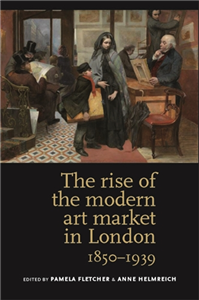
Now available in paperback for the first time, this study of the modern London art market establishes the central importance of London for the development of the modern retail market in fine art. Leading experts track the emergence and development of the structures and practices that have come to characterize the commercial art system, including the commercial art gallery, the professional dealer, the exhibition cycle and its accompanying rhetoric of press coverage and publicity, and an international network for the circulation of goods. This new commercial system involved a massive transformation of the experience of viewing art; of the relationships between artists, dealers, collectors, art objects and audiences; and of the very criteria of aesthetic value itself. Its history is thus a vital part of the history of modern art, and this anthology will be of interest to art historians as well as scholars of Victorian Studies, Museum Studies, and Social History.
Trusted Partner
 Trusted Partner
In this book, the complexity and the significance of the foods we eat are analysed from a variety of perspectives, by sociologists, economists, geographers and anthropologists. Chapters address a number of intriguing questions: how do people make judgments about taste? How do such judgments come to be shared by groups of people?; what social and organisational processes result in foods being certified as of decent or proper quality? How has dissatisfaction with the food system been expressed? What alternatives are thought to be possible? The multi-disciplinary analysis of this book explores many different answers to such questions. The first part of the book focuses on theoretical and conceptual issues, the second part considers processes of formal and informal regulation, while the third part examines social and political responses to industrialised food production and mass consumption. Qualities of food will be of interest to researchers and students in all the social science disciplines that are concerned with food, whether marketing, sociology, cultural studies, anthropology, human nutrition or economics.
Trusted Partner

The documents in this stimulating volume span from 1245 to 1424 but focus on the 'contagion of rebellion' from 1355 to 1382 that followed in the wake of the plague. They comprise a diversity of sources and cover a variety of forms of popular protest in different social, political and economic settings. Their authors range across a wide political and intellectual horizon and include revolutionaries, the artistocracy, merchants and representatives from the church. They tell gripping and often gruesome stories of personal and collective violence, anguish, anger, terror, bravery, and foolishness. Of over 200 documents presented here, most have been translated into English for the first time, providing students and scholars with a new opportunity to compare social movements across Europe over two centuries, allowing a re-evaluation of pre-industrial revolts, the Black Death and its consequences for political culture and action. This book will be essential reading for those seeking to better understand popular attitudes and protest in medieval Europe.
Trusted Partner

The Russian Revolution of 1917 was not just a world-historical event in its own right, but also struck powerful blows against racism and imperialism, and so inspired many black radicals internationally. This edited collection explores the implications of the creation of the Soviet Union and the Communist International for black and colonial liberation struggles across the African diaspora. It examines the critical intellectual influence of Marxism and Bolshevism on the current of revolutionary 'black internationalism' and analyses how 'Red October' was viewed within the contested articulations of different struggles against racism and colonialism. Challenging European-centred understandings of the Russian Revolution and the global left, The Red and the Black offers new insights on the relations between Communism, various lefts and anti-colonialisms across the Black Atlantic - including Garveyism and various other strands of Pan-Africanism. The volume makes a major and original intellectual contribution by making the relations between the Russian Revolution and the Black Atlantic central to debates on questions relating to racism, resistance and social change.
Trusted Partner
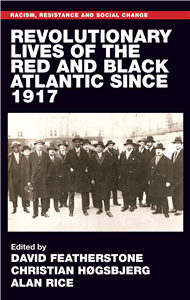
Revolutionary lives of the Red and Black Atlantic brings to light the life histories of a wide range of radical figures whose political activity in relation to the black liberation struggle was profoundly shaped by the global impact and legacy of the Russian Revolution of October 1917. The volume introduces new perspectives on the intellectual trajectories of well-known figures and critical activists including C. L. R. James, Paul Robeson, Walter Rodney and Grace P. Campbell. This biographical approach brings a vivid and distinctive lens to bear on how racialised social and political worlds were negotiated and experienced by these revolutionary figures, and on historic black radical engagements with left political movements, in the wake of the Russian Revolution.
Trusted Partner
Trusted Partner
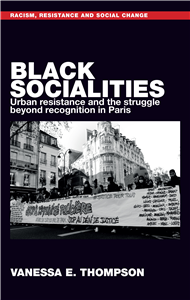
From author: This is a cutting-edge exploration of black urban politics in Parisian racialized working class and working poor districts, the formation of abolition geography, and the possibilities of new forms of political blackness. In Black Socialities. Urban resistance and the struggle beyond recognition in Paris, Vanessa E. Thompson argues that black urban politics in the French banlieues are multi-racial and spatially grounded towards abolition. Based on a close engagement with urban black activist practices against racial imagery in the city, policing and state racism, and housing insecurity, she shows how radical anti-racism goes beyond struggles for recognition and unfolds alongside new formations of political blackness that is based on urban conviviality. This form of black politics has much to teach us in this current conjuncture of liberal anti-racism and state recognition politics.
Trusted Partner
 Trusted Partner

This book is about power in welfare encounters. Present-day citizens are no longer the passive clients of the bureaucracy and welfare workers are no longer automatically the powerful party of the encounter. Instead, citizens are expected to engage in active, responsible and coproducing relationships with welfare workers. However, other factors impact these interactions; factors which often pull in different directions. Welfare encounters are thus influenced by bureaucratic principles and market values as well. Consequently, this book engages with both Weberian (bureaucracy) and Foucauldian (market values/NPM) studies when investigating the powerful welfare encounter. The book is targeted Academics, post-graduates, and undergraduates within sociology, anthropology and political science.
Trusted Partner
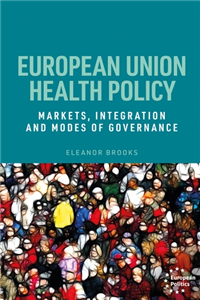
The first book-length analysis of EU health policy since the COVID-19 pandemic, encompassing the creation of the European Health Union and the Recovery and Resilience Facility, this volume offers a timely and accessible analysis of the EU's health policy, institutions and governance. Focusing on the EU's health objectives and how they are pursued, it offers a detailed overview of the development of EU health policy, and five in-depth case studies of specific policy fields. The book will appeal to academic and policy audiences interested in the EU's health objectives and how it pursues them.



