
Thekla Verlag
We are a publisher from Germany with a selected list of children's and young adult books.
View Rights Portal
We are a publisher from Germany with a selected list of children's and young adult books.
View Rights Portal
Theart Press is a South African publisher specialisingin inspirational books - including poetry, children's books and biography.
View Rights Portal

Cannabis has been used as a drug since antiquity – but only recently has it progressed to become one of the most exciting medical-pharmaceutical topics of our times. In scarcely any other area of pharmacotherapy has the state of knowledge recently developed at comparable speed. Experts from a variety of fields are constantly working to generate new scientific evidence for the therapeutic use of cannabis and/or cannabinoids and to provide patients with quality-assured medicinal cannabis. This book is the first to give representatives of all relevant areas of expertise the chance to speak. Alongside medical-therapeutic aspects, they address such questions as cultivation, quality assurance, patient care practices and patient counselling. The result of this accumulated knowledge and skill is a unique overall picture that, for the first time, combines and consolidates the current legal and scientific framework of medicinal cannabis provision! All facts have been painstakingly researched and checked. The result is a scientifically valid work, which sets the standard. This excellent compendium is indispensable for everyone who comes into contact with cannabis for professional or personal reasons.

Cannabis from A to Z – now available in English The use of cannabis for medicinal purposes can be traced back to antiquity, but it is only recently that it has garnered attention as one of the most exciting medicalpharmaceutical topics. In hardly any other area of pharmacotherapy has knowledge of late developed with comparable dynamism. Experts from different fields are continuously working on new scientific evidence for the therapeutic use of cannabis and cannabinoids in order to provide patients with quality-assured cannabis medicines. For the first time, representatives of all relevant disciplines contributed to an exhaustive work on this topic, addressing medical-therapeutic aspects as well as questions on cultivation, quality assurance, supply practice, and patient care. The concentrated expertise created a unique, comprehensive picture, offering an unprecedented, consolidated scientific and legal framework of medical cannabis care. All facts have been conscientiously researched and meticulously reviewed. The result is a scientifically valid work setting new standards. For all those who deal with cannabis for professional or personal reasons, this exceptional book is indispensable.
 Trusted Partner

The therapeutic use of cannabis follows the maxim: Start low, go slow! That is how to reach the optimum dose and efficacy with minimum side effects. But this balancing act requires relevant information. Our authors, recognised cannabis experts, have put everything important together in one place: - Indications and routes of administration - Effects, interactions and side effects - Selection and prescription of suitable cannabis-based medicines - Practical tips, e.g. about travelling or driving and road use The 4th edition includes updates on the legal situation, the pharmacology of the endocannabinoid system and of cannabidiol. Directions for use and tips for patients taking cannabis have been added, together with the new prescribing modalities for physicians as well as a list of available cannabis products. This prescribing aid covers the expanded range of cannabis-based medicines and the current legal position.
Trusted Partner


From pills and capsules to patches, drops and creams – the world of pharmaceutical forms is highly diverse. This variety poses new challenges for pharmaceutical professionals every day. Whether transdermal patches, sustained-release pills, oral inhalers or suppositories – safe and effective treatment can only be ensured through correct use. This standard reference offers in-depth knowledge, practical advice and numerous tips for the correct handling of dosage forms. It combines background knowledge with practical tips. The author discusses common application errors and also examines the physiological characteristics of special groups such as geriatric and paediatric patients. New in this edition: content on Connected Drug Delivery Devices. The book also includes: • Numerous product images, • Overview tables of commonly used finished medicinal products by form, • Application videos for dosage forms requiring detailed explanation. This indispensable reference work for pharmacies, clinics and teaching is essential when the package insert falls short. Expert advice ensures safe use. Target group: Pharmacicsts, pharmaceutical technicians, students of pharmacy, pharmacy interns
Trusted Partner

 Trusted Partner


From insects to fish as well as birds and primates: the use of tools is amazingly widespread in the animal kingdom. It’s a misnomer to presume that humans are distinguished by tool use and conscious capacity. So where is culture initiated? The biologist Peter-René Becker has evaluated numerous studies and cites plenty of evidence for the use of the hammer and anvil, lances, bait or sponges. Animals also use “tools as social implements”. Ultimately, the depth of man’s conscience singles him out from other animals.
Trusted Partner


The literature on diagnosis and treatment of drug and substance abuse is filled with successful, empirically based approaches, but also with controversy and hearsay. Health professionals in a range of settings are bound to meet clients with troubles related to drugs – and this text helps them separate the myths from the facts. It provides trainees and professionals with a handy, concise guide for helping problem drug users build enjoyable, multifaceted lives using approaches based on decades of research. Readers will improve their intuitions and clinical skills by adding an overarching understanding of drug use and the development of problems that translates into appropriate techniques for encouraging clients to change behavior themselves. This highly readable text explains not only what to do, but when and how to do it. Seasoned experts and those new to the field will welcome the chance to review the latest developments in guiding self-change for this intriguing, prevalent set of problems. Target Group: clinical psychologists, psychiatrists, psychotherapists, counselors, students.
Trusted Partner

The assessment of nursing and care needs and the organisation and quality assurance of nursing care are key tasks performed by nursing staff. This also includes administering medication, something which requires sound organisation, control, implementation and documentation. Nurses observe whether medication is taken consistently, has the desired effect, and whether undesirable side effects occur. The drug product as a „special commodity“ – whether in inpatient long-term care, in outpatient care, or in hospital – requires special knowledge concerning - correct storage, - the pharmacological effect, and - appropriate application. This book is geared towards the diseases and symptoms of people requiring nursing or care. All the important facts concerning the use of medicines are presented here in an understandable manner, focusing on the essentials. Numerous illustrations and practical tips provide the link to everyday nursing care. It is the ideal textbook and reference work for nursing and care assistants as well as nursing professionals.
Trusted Partner
Trusted Partner

Concrete guidance on harm reduction treatment (HaRT) with substance-using patients:• Written by experts from the field• Details a unique evidence-based approach• Includes example scripts• Provides case studies• Includes downloadable handouts Harm reduction approaches are effective alternatives to abstinence-based treatment for people who are not ready, willing, or able to stop using substances. This volume outlines the scientific basis and historical development of these approaches, and reviews why abstinence-based approaches often do not work. The authors then share their expertise about harm reduction treatment (HaRT), an empirically based approach co-developed with community members impacted by substance-related harm – a first of its kind. The reader learns in detail about the pragmatic mindset and compassionate heartset of HaRT and the three treatment components: measurement and tracking of patient-preferred substance-related metrics, harm-reduction goal setting and achievement, and discussion of safer-use strategies. In addition, the book provides example scripts for use in daily practice.
Trusted Partner

Bourgeois Consumption looks at how the middle classes in late nineteenth-century London and Paris used food and dining as forms of social expression and identity. This engaging treatise about how class and gender informed people's eating habits focuses on the complex interactions between bodies, ritual and identity. Forgoing the traditional food history territory of recipes and ingredients in favor of how people ate in different circles, Bourgeois Consumption explores the role of real and imagined meals in shaping Victorian lives. The perception of the middle classes as rigid and upright, found in the extensive pages of their etiquette books, is contrasted with a more flexible and spontaneous bourgeoisie, gleaned from the pages of their own colorful memoirs, diaries and letters, leading us on a lively journey into eating spaces, mealtimes, manners, and social interactions between diners. Further, contrasting Paris with London reveals some of the ways each city shaped its inhabitants but, more surprisingly, throws up a range of similarities that suggest the middle classes were, in fact, a transnational class. Rachel Rich's work will be of interest to anyone intrigued by the history of food, consumption and leisure, as well as to a broader audience curious about how the Victorian middle classes distinguished themselves through daily life and manners. ;
Trusted Partner
Trusted Partner
 Trusted Partner

Richard Haass and Mitchell Reiss, as autonomous diplomats in the George W. Bush State Department, were able to alter US intervention in Northern Ireland and play critical roles in the post-1998 peace process. Their contributions have not been fully appreciated or understood. The restoration of Northern Ireland's power-sharing government in 2007 was made possible by State Department-led intervention in the peace process. There are few references to Northern Ireland in work examining the foreign policy legacy of the George W. Bush presidency. Moreover, the ability to control US foreign policy towards the region brought one of George W. Bush's Northern Ireland special envoys into direct diplomatic conflict with the most senior actors inside the British government. This book will uncover the extent of this fall-out and provide original accounts on how diplomatic relations between these old allies became so fraught.
Trusted Partner
Trusted Partner
 Trusted Partner

People with dementia experience their condition as a big change in which, for example, new events are not linked to existing experiences and wishes, thoughts, and actions can no longer be connected to each other. This kind of experience of the self, due to the intergative function of the brainbeing temporarily or permanently lost, is called dissociative self-experience. Based on this understanding of dementia, the author develops an approach to effectively understand and support people with dementia in everyday activities. Typical everyday situations and behaviours are presented and reflected on in a practical context.
Trusted Partner
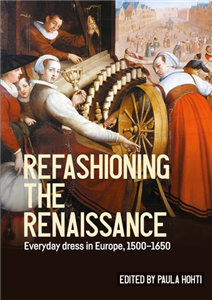
How did ordinary men and women dress in early modern Europe? What fabrics and garments formed the essential elements of fashion for artisans and shopkeepers? Did they rely on affordable alternatives to the silks, jewellery, and decorations favoured by the wealthy elite? Or did those with modest means find innovative ways to express their fashion sense? This book provides new perspectives on early modern clothing and fashion history byinvestigating the consumption and meaning of fashionable clothing and accessories among the 'popular' classes. Through a close examination of the materials, craftsmanship and cultural significance of fashion items owned by and available to a broad group of consumers, it challenges conventional assumptions that the everyday dress of ordinary families was limited to a narrow selection of garments made of coarse textiles, often produced at home and resistant to change.
Trusted Partner
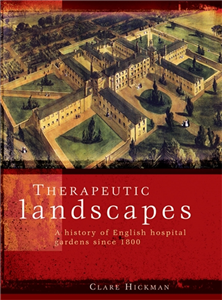
Therapeutic landscapes uniquely brings together historical and contemporary debates on the use of the garden as a therapeutic space. Hickman narrates the story of the landscapes associated with psychiatric, general and specialist medical institutions and asks what did they look like, how were they used and how did this relate to medical concepts? It traces the history of these gardens from the grottos, Chinese galleries and summer houses of elite nineteenth-century lunatic asylums, through Florence Nightingale's championing of the Victorian pavilion hospital design with its courtyard gardens, and the open-air institutions of the Edwardian period with their revolving chalets. It concludes with a discussion of new hospital gardens being created by designers such as Dan Pearson in the twenty-first century. This book will be essential reading for those interested in the histories of place, space and material culture, and in particular medical historians, garden historians and historical geographers. ;
Trusted Partner
In this book, the complexity and the significance of the foods we eat are analysed from a variety of perspectives, by sociologists, economists, geographers and anthropologists. Chapters address a number of intriguing questions: how do people make judgments about taste? How do such judgments come to be shared by groups of people?; what social and organisational processes result in foods being certified as of decent or proper quality? How has dissatisfaction with the food system been expressed? What alternatives are thought to be possible? The multi-disciplinary analysis of this book explores many different answers to such questions. The first part of the book focuses on theoretical and conceptual issues, the second part considers processes of formal and informal regulation, while the third part examines social and political responses to industrialised food production and mass consumption. Qualities of food will be of interest to researchers and students in all the social science disciplines that are concerned with food, whether marketing, sociology, cultural studies, anthropology, human nutrition or economics.



