
All Things Women
Find your focus and strengths in times of crisis.
View Rights Portal

POPLAR Publishing Co., Ltd., a leading independent publisher of children's books in Japan, has been in business for more than 70 years. As it started as a children's books publisher, it has always tried to provide children with enjoyable and exciting books. Today, the company's goals remain unchanged: everything it publishes should be enjoyable and enrich people's lives.
View Rights Portal
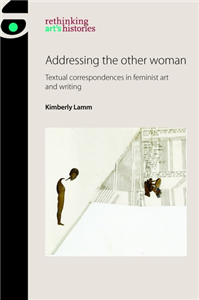
This book analyses how three artists - Adrian Piper, Nancy Spero and Mary Kelly - worked with the visual dimensions of language in the 1960s and 1970s. These artists used text and images of writing to challenge female stereotypes, addressing viewers and asking them to participate in the project of imagining women beyond familiar words and images of subordination. The book explores this dimension of their work through the concept of 'the other woman', a utopian wish to reach women and correspond with them across similarities and differences. To make the artwork's aspirations more concrete, it places the artists in correspondence with three writers - Angela Davis, Valerie Solanas, and Laura Mulvey - who also addressed the limited range of images through which women are allowed to become visible.

Sexually transgressive, politically astute and determined to claim educational and employment rights equal to those enjoyed by men, the new woman took centre stage in the cultural landscape of late-Victorian Britain. By comparing the fictional representations with the lived experience of the new woman, Ledger's book makes a major contribution to an understanding of the 'woman question' at the fin de siecle. She alights on such disparate figures as Eleanor Marx, Gertrude Dix, Dracula, Oscar Wilde, Olive Schreiner and Radclyffe Hall. Focusing mainly on the last two decades of the nineteenth century, the book's later chapters project forward into the twentieth century, considering the relationship between new woman fiction and early modernism as well as the socio-sexual inheritance of the 'second generation' new woman writers. ;
 Trusted Partner
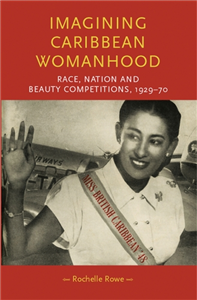
Over fifty years after Jamaican and Trinidadian independence, Imagining Caribbean womanhood examines the links between beauty and politics in the Anglophone Caribbean, providing a first cultural history of Caribbean beauty competitions, spanning from Kingston to London. It traces the origins and transformation of female beauty contests in the British Caribbean from 1929 to 1970, through the development of cultural nationalism, race-conscious politics and decolonisation. The beauty contest, a seemingly marginal phenomenon, is used to illuminate the persistence of racial supremacy, the advance of consumer culture and the negotiation of race and nation through the idealised performance of cultured, modern beauty. Modern Caribbean femininity was intended to be politically functional but also commercially viable and subtly eroticised.
Trusted Partner
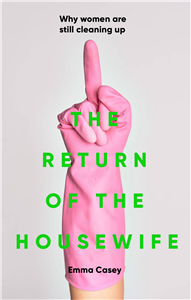
An illuminating look at the world of cleanfluencers that asks why the burden of housework still falls on women. Housework is good for you. Housework sparks joy. Housework is beautiful. Housework is glamorous. Housework is key to a happy family. Housework shows that you care. Housework is women's work. Social media is flooded with images of the perfect home. TikTok and Instagram 'cleanfluencers' produce endless photos and videos of women cleaning, tidying and putting things right. Figures such as Marie Kondo and Mrs Hinch have placed housework, with its promise of a life of love and contentment, at the centre of self-care and positive thinking. And yet housework remains one of the world's most unequal institutions. Women, especially poorer women and women of colour, do most low-paid and unpaid domestic labour. In The return of the housewife, Emma Casey asks why these inequalities matter and why they persist after a century of dramatic advances in women's rights. She offers a powerful call to challenge the prevailing myths around housework and the 'naturally competent' woman homemaker.
Trusted Partner
Trusted Partner


This bestselling title is a practical handbook on the concept of basic stimulation in nursing and its application for patients suffering from perceptional deficits, developmental delays and mental handicaps. It enables nurses to develop, improve and stabilize physically and mentally handicapped people with impaired perceptional, communicative and motor skills. Target Group: Nurses
Trusted Partner

In How to be multiple, Helena de Bres - a twin herself - argues that twinhood is a unique lens for examining our place in the world and how we relate to other people. The way we think about twins offers remarkable insights into some of the deepest questions of our existence, from what is a person? to how should we treat one another? Deftly weaving together literary and cultural history, philosophical enquiry and personal experience, de Bres examines such thorny issues as binary thinking, objectification, romantic love and friendship, revealing the limits of our individualistic perspectives. In this illuminating, entertaining book, wittily illustrated by her twin sister, de Bres ultimately suggests that to consider twinhood is to imagine the possibility of a more interconnected, capacious human future.
Trusted Partner
Recent years have seen a rennaissance of scholarly interest in the fin-de-siecle fiction of the New Woman. New Woman Strategies offers a new approach to the subject by focusing on the discursive strategies and revisionist aesthetics of the genre in the writings of three of its key exponents: Sarah Grand, Olive Schreiner and Mona Caird. ;
Trusted Partner
Trusted Partner
 Trusted Partner
Trusted Partner
Trusted Partner
Trusted Partner
Trusted Partner
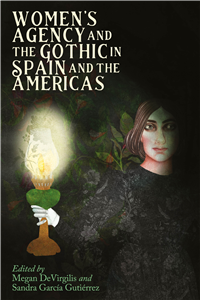
This volume has emerged to fulfill two main purposes: Primarily, to constitute the first collaborative work that traces the relationship between the Gothic and Women in Spain and the Americas, but also, to surpass the term 'Female Gothic,' coined by Ellen Moers, by transferring the focus towards women and their agency as writers, readers and characters. This volume functions as a manifesto per se to open new avenues into understanding how women have interacted with the Gothic between the nineteenth and twenty-first centuries in Spain and the Americas. The question, we determine, is not simply about identity, but rather about agency. We define women's agency as the total capacity of characters, authors and readers to act freely within a social framework in relation to gothic texts. In our exploration of authorship, we reject the claim that the Gothic is a simplistic literary genre, instead sustaining that the plasticity of the Gothic has enabled it to survive for centuries; by shifting from a genre to a mode, it has surpassed literary forms and invaded all kinds of media: from film to music and merchandise such as clothing and pop culture collectables, fostering an authentic goth fandom.
Trusted Partner
Trusted Partner


Wenn Miss Braitwhistle den Unterricht in der Klasse 4a übernimmt, ist alles möglich. Ob Schulausflug im Golfplatz-Mobil, Fahrradprüfung mit Linksverkehr oder Besuch der englischen Schildkröten namens Harry und Willy – diese Lehrerin ist immer für eine Überraschung gut. Kommt sie erst einmal richtig in Fahrt, rettet sie mit ihren Zauberkünsten nicht nur den langweiligen Wandertag der 4a. Der zweite Teil der verrückten Schulgeschichten um Miss Braitwhistle ist leichtfüßig und wieder mit viel Witz erzählt. Alle Bände der Reihe: Band 1: Die fabelhafte Miss BraitwhistleBand 2: Miss Braitwhistle kommt in FahrtBand 3: Miss Braitwhistle hebt abBand 4: Klassentreffen bei Miss BraitwhistleBand 5: Klassenreise mit Miss BraitwhistleBand 6: Miss Braitwhistle startet durch
Trusted Partner

Although the importance of ethics is often stressed, it remains sidelined in training. Marianne Rabe makes ethics and ethical reflection the focus of nursing practice and training. Her study - presents the theoretical principles of formative learning and explores how it can be put into practice - puts forward practical curriculum suggestions for incorporating ethics into nurse training - shows how to address the ethical principles of dignity, autonomy, care, justice, responsibility, and dialogue within the framework of a teaching concept - presents Rabe’s own model of ethical reflection based on her personal experience. Target Group: Nursing trainers, lecturers
Trusted Partner

 Trusted Partner

This highly original book constitutes one of the first attempts to examine the problem of distributive justice in the European Union in a systematic manner. João Labareda argues that the set of shared political institutions at EU level, including the European Parliament and the Court of Justice of the EU, generate democratic duties of redistribution among EU citizens. Furthermore, the economic structure of the EU, comprising a common market, a common currency and a free-movement area, triggers duties of reciprocity among member states. The responsibilities to fulfil these duties, Labareda argues, should be shared by the local, national and supranational levels of government. Not only should the EU act as a safety net to the national welfare systems, applying the principle of subsidiarity, but common market and Eurozone regulations should balance their efficiency targets with fair cooperation terms. The concrete policy proposals presented in this book include a threshold of basic goods for all EU citizens, an EU labour code, a minimum EU corporate tax rate and an EU fund for competitiveness. Labarada argues that his proposals match the political culture of the member states, are economically feasible, can be translated into functioning institutions and policies and are consistent with the limited degree of social solidarity in Europe. This book is a major contribution to the understanding of what a just Europe would look like and what it might take to get us there. This book is relevant to United Nations Sustainable Development Goal 10, Reduced inequalities
Trusted Partner

How can humor be used to engage with and help people suffering from mental illness? This practical handbook explains the concept of humor in psychiatric treatment and sets out the case for employing it. The author outlines how nurses can assess who might benefit from the use of humor and for whom it would be out of place, and provides a toolkit of humorous interventions for daily nursing practice. Target Group: Practicing nurses, psychiatric nurses, care clowns
Trusted Partner



