
Humanities & Social Sciences
Description
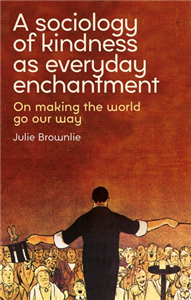
This book asks us to consider how and why the notion of random acts of kindness and the idea of kindness more generally have come to take a hold in many contemporary English-speaking societies. By introducing and mapping the contours of an emergent kindness industry, marshalling empirical research on contemporary framings of everyday kindness and theoretical resources from cultural sociology to the sociology of emotions and relationships, Brownlie makes the case for a critical sociological engagement with the idea of kindness. In doing so, she argues for kindness to be seen as a form of everyday enchantment - one that, like all enchantments, is ultimately ambivalent.
More Information
Rights Information
Albania, Algeria, Angola, Argentina, Armenia, Australia, Austria, Bahrain, Belgium, Belize, Benin, Bolivia, Bosnia and Herzegovina, Botswana, Brazil, Bulgaria, Burkina Faso, Burundi, Cameroon, Canada, Cape Verde, Central African Republic, Chad, Chile, China, Colombia, Comoros, Congo [DRC], Congo, Republic of the, Costa Rica, Ivory Coast, Croatia, Czech Republic, Denmark, Djibouti, Ecuador, Egypt, El Salvador, Equatorial Guinea, Eritrea, Estonia, Ethiopia, Faroe Islands, Finland, France, French Guiana, Gabon, Gambia, Georgia, Germany, Ghana, Greece, Guatemala, Guinea, Guinea-Bissau, Guyana, Honduras, Hongkong, Hungary, Iceland, India, Indonesia, Iran, Iraq, Ireland, Israel, Italy, Japan, Jordan, Kazakhstan, Kenya, Kuwait, Latvia, Lebanon, Lesotho, Liberia, Libya, Lithuania, Luxembourg, Macau, China, Macedonia [FYROM], Madagascar, Malawi, Malaysia, Mali, Malta, Mauritania, Mauritius, Mayotte, Mexico, Mongolia, Montenegro, Morocco, Mozambique, Namibia, Netherlands, New Zealand, Nicaragua, Niger, Nigeria, Norway, Oman, Pakistan, Panama, Paraguay, Peru, Philippines, Poland, Portugal, Puerto Rico, Qatar, Reunion, Romania, Russia, Rwanda, Saint Helena, Sao Tome and Principe, Saudi Arabia, Senegal, Serbia, Seychelles, Sierra Leone, Singapore, Slovakia, Slovenia, Somalia, South Africa, South Korea, Spain, Sri Lanka, Sudan, Suriname, Swaziland, Sweden, Switzerland, Syria, Taiwan, Tanzania, Thailand, Timor-Leste, Togo, Tokelau, Tunisia, Turkey, Uganda, Ukraine, United Arab Emirates, United Kingdom, United States, Uruguay, Venezuela, Vietnam, Western Sahara, Yemen, Zambia, Zimbabwe, South Sudan, Cyprus, Palestine, Bangladesh, Cambodia, Liechtenstein, Azerbaijan, Jamaica, Kyrgyzstan, Dominican Republic, Myanmar, Monaco
Endorsements
A sociology of kindness as everyday enchantment explores the contemporary preoccupation with 'random acts of kindness' and the broader concept of kindness. It questions whether this focus challenges the logic of capitalism or reinforces it, examining the commodification of emotion in our everyday lives. By introducing and mapping the contours of an emergent kindness industry, the author uses empirical research and theoretical resources from cultural sociology and the sociology of emotions and relationships to argue for a critical sociological engagement with the 'prosocial' that does justice to its profound ambivalence. In the case of kindness, this involves understanding both the regulatory nature of the enchantment sold by a kindness industry and the problem-solving potential of the enchantment of kindness in the everyday. It helps address contemporary feelings of disconnection, shame, anxiety and hopelessness, and facilitates the possibility of making life materially liveable. The book argues that the idea of kindness can be thought of as an example of a 'good story' - a captivating narrative about goodness that also evokes anxieties that it may turn out to be nothing more than a story. These stories embody both hope and fear, resonating deeply in contemporary society. Through investigating such stories, Brownlie exposes the complicated relationship between feeling, doing and telling good. Ultimately, she argues that the 'good story' of kindness belongs in the space of the broken middle, where its ambivalences are to be laboured with, rather than resolved.
Reviews
A sociology of kindness as everyday enchantment explores the contemporary preoccupation with 'random acts of kindness' and the broader concept of kindness. It questions whether this focus challenges the logic of capitalism or reinforces it, examining the commodification of emotion in our everyday lives. By introducing and mapping the contours of an emergent kindness industry, the author uses empirical research and theoretical resources from cultural sociology and the sociology of emotions and relationships to argue for a critical sociological engagement with the 'prosocial' that does justice to its profound ambivalence. In the case of kindness, this involves understanding both the regulatory nature of the enchantment sold by a kindness industry and the problem-solving potential of the enchantment of kindness in the everyday. It helps address contemporary feelings of disconnection, shame, anxiety and hopelessness, and facilitates the possibility of making life materially liveable. The book argues that the idea of kindness can be thought of as an example of a 'good story' - a captivating narrative about goodness that also evokes anxieties that it may turn out to be nothing more than a story. These stories embody both hope and fear, resonating deeply in contemporary society. Through investigating such stories, Brownlie exposes the complicated relationship between feeling, doing and telling good. Ultimately, she argues that the 'good story' of kindness belongs in the space of the broken middle, where its ambivalences are to be laboured with, rather than resolved.
Author Biography
Julie Brownlie is Professor of Sociology at the University of Edinburgh
 Trusted Partner

Manchester University Press
Manchester University Press is a leading UK publisher known for excellent research in the humanities and social sciences.
View all titlesBibliographic Information
- Publisher Manchester University Press
- Publication Date January 2026
- Orginal LanguageEnglish
- ISBN/Identifier 9781526165152 / 1526165155
- Publication Country or regionUnited Kingdom
- FormatPrint PDF
- Pages224
- ReadershipCollege/higher education; Professional and scholarly
- Publish StatusPublished
- Dimensions216 X 138 mm
- Biblio NotesDerived from Proprietary 5357
- Reference Code13709
Thank you for proceeding with this offer.
Manchester University Press has chosen to review this offer before it proceeds.
You will receive an email update that will bring you back to complete the process.
You can also check the status in the My Offers area
Manchester University Press has chosen to review this offer before it proceeds.
You will receive an email update that will bring you back to complete the process.
You can also check the status in the My Offers area

Please wait while the payment is being prepared.
Do not close this window.

(c) Copyright 2026 - Frankfurter Buchmesse GmbH. All Right Reserved