
Literature & Literary Studies
Description
What do #MeToo and Jane Austen have in common? More than you might think.
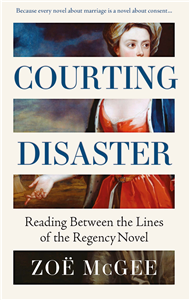
Ever since the novel was invented, women have used it as a platform for sharing ideas about sexual consent. Zoë McGee reveals how Jane Austen, Frances Burney and their now-overlooked contemporaries used their stories to try to change society's mind about rape culture - and to reassure survivors they were not alone.
Courting Disaster takes a timely deep-dive into a series of classic novels, comparing them with both historic court records and current events to show that our arguments about consent are not a new phenomenon. With the wit and wryness of a courtship novel, McGee reads between the lines to unveil a quiet feminist movement that still resonates today. Because every novel about marriage is also a novel about consent.
In an era that's clamouring for a return to the values of the past, Courting disaster asks what that would really mean, and whether anyone actually liked it back then anyway.
More Information
Rights Information
Albania, Algeria, Angola, Argentina, Armenia, Australia, Austria, Bahrain, Belgium, Belize, Benin, Bolivia, Bosnia and Herzegovina, Botswana, Brazil, Bulgaria, Burkina Faso, Burundi, Cameroon, Canada, Cape Verde, Central African Republic, Chad, Chile, China, Colombia, Comoros, Congo [DRC], Congo, Republic of the, Costa Rica, Ivory Coast, Croatia, Czech Republic, Denmark, Djibouti, Ecuador, Egypt, El Salvador, Equatorial Guinea, Eritrea, Estonia, Ethiopia, Faroe Islands, Finland, France, French Guiana, Gabon, Gambia, Georgia, Germany, Ghana, Greece, Guatemala, Guinea, Guinea-Bissau, Guyana, Honduras, Hongkong, Hungary, Iceland, India, Indonesia, Iran, Iraq, Ireland, Israel, Italy, Japan, Jordan, Kazakhstan, Kenya, Kuwait, Latvia, Lebanon, Lesotho, Liberia, Libya, Lithuania, Luxembourg, Macau, China, Macedonia [FYROM], Madagascar, Malawi, Malaysia, Mali, Malta, Mauritania, Mauritius, Mayotte, Mexico, Mongolia, Montenegro, Morocco, Mozambique, Namibia, Netherlands, New Zealand, Nicaragua, Niger, Nigeria, Norway, Oman, Pakistan, Panama, Paraguay, Peru, Philippines, Poland, Portugal, Puerto Rico, Qatar, Reunion, Romania, Russia, Rwanda, Saint Helena, Sao Tome and Principe, Saudi Arabia, Senegal, Serbia, Seychelles, Sierra Leone, Singapore, Slovakia, Slovenia, Somalia, South Africa, South Korea, Spain, Sri Lanka, Sudan, Suriname, Swaziland, Sweden, Switzerland, Syria, Taiwan, Tanzania, Thailand, Timor-Leste, Togo, Tokelau, Tunisia, Turkey, Uganda, Ukraine, United Arab Emirates, United Kingdom, United States, Uruguay, Venezuela, Vietnam, Western Sahara, Yemen, Zambia, Zimbabwe, South Sudan, Cyprus, Palestine, Bangladesh, Cambodia, Liechtenstein, Azerbaijan, Jamaica, Kyrgyzstan, Dominican Republic, Myanmar, Monaco
Endorsements
Ever since the novel was invented, women have used it as a platform for sharing ideas about sexual consent. Zoë McGee reveals how Jane Austen, Frances Burney and their now-overlooked contemporaries used their stories to try to change society's mind about rape culture - and to reassure survivors they were not alone. Courting Disaster takes a timely deep-dive into a series of classic novels, comparing them with both historic court records and current events to show that our arguments about consent are not a new phenomenon. With the wit and wryness of a courtship novel, McGee reads between the lines to unveil a quiet feminist movement that still resonates today. Because every novel about marriage is also a novel about consent. In an era that's clamouring for a return to the values of the past, Courting disaster asks what that would really mean, and whether anyone actually liked it back then anyway.
Reviews
Ever since the novel was invented, women have used it as a platform for sharing ideas about sexual consent. Zoë McGee reveals how Jane Austen, Frances Burney and their now-overlooked contemporaries used their stories to try to change society's mind about rape culture - and to reassure survivors they were not alone. Courting Disaster takes a timely deep-dive into a series of classic novels, comparing them with both historic court records and current events to show that our arguments about consent are not a new phenomenon. With the wit and wryness of a courtship novel, McGee reads between the lines to unveil a quiet feminist movement that still resonates today. Because every novel about marriage is also a novel about consent. In an era that's clamouring for a return to the values of the past, Courting disaster asks what that would really mean, and whether anyone actually liked it back then anyway.
Author Biography
Zoë McGee has a PhD from Queen Mary University of London and an MSt in Eighteenth Century Studies from the University of Oxford. She has spoken at conferences internationally and performs at very nerdy stand-up-comedy nights. She has worked as a university teacher and a bookseller.
 Trusted Partner

Manchester University Press
Manchester University Press is a leading UK publisher known for excellent research in the humanities and social sciences.
View all titlesBibliographic Information
- Publisher Manchester University Press
- Publication Date November 2025
- Orginal LanguageEnglish
- ISBN/Identifier 9781526188854 / 1526188856
- Publication Country or regionUnited Kingdom
- FormatPrint PDF
- Pages320
- ReadershipGeneral/trade; College/higher education; Professional and scholarly
- Publish StatusPublished
- Dimensions234 X 156 mm
- Biblio NotesDerived from Proprietary 6450
- Reference Code17362
Thank you for proceeding with this offer.
Manchester University Press has chosen to review this offer before it proceeds.
You will receive an email update that will bring you back to complete the process.
You can also check the status in the My Offers area
Manchester University Press has chosen to review this offer before it proceeds.
You will receive an email update that will bring you back to complete the process.
You can also check the status in the My Offers area

Please wait while the payment is being prepared.
Do not close this window.

(c) Copyright 2026 - Frankfurter Buchmesse GmbH. All Right Reserved