
Legacies of British slavery in Australia and New Zealand
by Zoë Laidlaw, Jane Lydon
Description
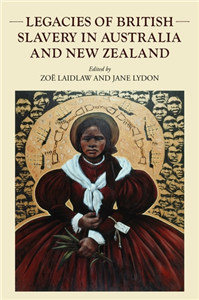
This book investigates the legacies of British slavery beyond Britain, focusing upon the colonisation of Australia and New Zealand, and explores why this history has been overlooked. After August 1833, when the British Parliament abolished slavery in the British Caribbean, Mauritius and the Cape, the former slave-owners were paid compensation for the loss of their 'property'. New research has begun to show that many beneficiaries had ties to other parts of the British Empire, including the settler colonies of Australia, New Zealand, Canada and South Africa. Through a range of case studies, contributors to this collection trace the movement of people, goods, capital, and practices from the Caribbean to the new Australasian settler colonies. Chapters consider a range of places, people and themes to reveal the varied ways that slavery continued to shape imperial relationships, economic networks, and racial labour regimes after 1833.
More Information
Rights Information
Albania, Algeria, Angola, Argentina, Armenia, Australia, Austria, Bahrain, Belgium, Belize, Benin, Bolivia, Bosnia and Herzegovina, Botswana, Brazil, Bulgaria, Burkina Faso, Burundi, Cameroon, Canada, Cape Verde, Central African Republic, Chad, Chile, China, Colombia, Comoros, Congo [DRC], Congo, Republic of the, Costa Rica, Ivory Coast, Croatia, Czech Republic, Denmark, Djibouti, Ecuador, Egypt, El Salvador, Equatorial Guinea, Eritrea, Estonia, Ethiopia, Faroe Islands, Finland, France, French Guiana, Gabon, Gambia, Georgia, Germany, Ghana, Greece, Guatemala, Guinea, Guinea-Bissau, Guyana, Honduras, Hongkong, Hungary, Iceland, India, Indonesia, Iran, Iraq, Ireland, Israel, Italy, Japan, Jordan, Kazakhstan, Kenya, Kuwait, Latvia, Lebanon, Lesotho, Liberia, Libya, Lithuania, Luxembourg, Macau, China, Macedonia [FYROM], Madagascar, Malawi, Malaysia, Mali, Malta, Mauritania, Mauritius, Mayotte, Mexico, Mongolia, Montenegro, Morocco, Mozambique, Namibia, Netherlands, New Zealand, Nicaragua, Niger, Nigeria, Norway, Oman, Pakistan, Panama, Paraguay, Peru, Philippines, Poland, Portugal, Puerto Rico, Qatar, Reunion, Romania, Russia, Rwanda, Saint Helena, Sao Tome and Principe, Saudi Arabia, Senegal, Serbia, Seychelles, Sierra Leone, Singapore, Slovakia, Slovenia, Somalia, South Africa, South Korea, Spain, Sri Lanka, Sudan, Suriname, Swaziland, Sweden, Switzerland, Syria, Taiwan, Tanzania, Thailand, Timor-Leste, Togo, Tokelau, Tunisia, Turkey, Uganda, Ukraine, United Arab Emirates, United Kingdom, United States, Uruguay, Venezuela, Vietnam, Western Sahara, Yemen, Zambia, Zimbabwe, South Sudan, Cyprus, Palestine, Bangladesh, Cambodia, Liechtenstein, Azerbaijan, Jamaica, Kyrgyzstan, Dominican Republic, Myanmar, Monaco
Endorsements
This book investigates the legacies of British slavery beyond Britain, focusing upon the colonisation of Australia and New Zealand, and explores why this history has been overlooked. After August 1833, when the British Parliament abolished slavery in the British Caribbean, Mauritius and the Cape, former slave-owners were paid compensation for the loss of their 'property'. New research has reveals that many beneficiaries had ties to other parts of the British Empire, including the settler colonies of Australia, New Zealand, Canada and South Africa. Through a range of case studies, contributors to this volume trace the movement of people, goods, capital and practices from the Caribbean to the new Australasian settler colonies. The book considers a range of places, people and themes to reveal the varied ways that slavery continued to shape imperial relationships, economic networks and racial labour regimes after 1833. It covers the life stories of those travelling from the Caribbean to the new settler colonies, the extensive links between Caribbean slavery and the mid-nineteenth century development of colonial industries such as pastoralism, and Queensland's sugar industry. For the first time, this collection tracks reinvestment in the new colonies, and experiments with 'free' labour championed by colonisers with strong financial or personal links to Caribbean slavery. It shows that colonisers' connections to Caribbean slavery shaped their approach to First Nations peoples, in seeking to exploit their land, control their labour, and meet anti-colonial resistance with lethal violence.
Reviews
This book investigates the legacies of British slavery beyond Britain, focusing upon the colonisation of Australia and New Zealand, and explores why this history has been overlooked. After August 1833, when the British Parliament abolished slavery in the British Caribbean, Mauritius and the Cape, former slave-owners were paid compensation for the loss of their 'property'. New research has reveals that many beneficiaries had ties to other parts of the British Empire, including the settler colonies of Australia, New Zealand, Canada and South Africa. Through a range of case studies, contributors to this volume trace the movement of people, goods, capital and practices from the Caribbean to the new Australasian settler colonies. The book considers a range of places, people and themes to reveal the varied ways that slavery continued to shape imperial relationships, economic networks and racial labour regimes after 1833. It covers the life stories of those travelling from the Caribbean to the new settler colonies, the extensive links between Caribbean slavery and the mid-nineteenth century development of colonial industries such as pastoralism, and Queensland's sugar industry. For the first time, this collection tracks reinvestment in the new colonies, and experiments with 'free' labour championed by colonisers with strong financial or personal links to Caribbean slavery. It shows that colonisers' connections to Caribbean slavery shaped their approach to First Nations peoples, in seeking to exploit their land, control their labour, and meet anti-colonial resistance with lethal violence.
Author Biography
Zoë Laidlaw is Reader in British Imperial and Colonial History at Royal Holloway, University of London;
 Trusted Partner

Manchester University Press
Manchester University Press is a leading UK publisher known for excellent research in the humanities and social sciences.
View all titlesBibliographic Information
- Publisher Manchester University Press
- Publication Date March 2026
- Orginal LanguageEnglish
- ISBN/Identifier 9781526184818 / 1526184818
- Publication Country or regionUnited Kingdom
- FormatPrint PDF
- Pages320
- ReadershipGeneral/trade
- Publish StatusPublished
- Dimensions234 X 156 mm
- Biblio NotesDerived from Proprietary 6393
- SeriesStudies in Imperialism
- Reference Code17255
Thank you for proceeding with this offer.
Manchester University Press has chosen to review this offer before it proceeds.
You will receive an email update that will bring you back to complete the process.
You can also check the status in the My Offers area
Manchester University Press has chosen to review this offer before it proceeds.
You will receive an email update that will bring you back to complete the process.
You can also check the status in the My Offers area

Please wait while the payment is being prepared.
Do not close this window.

(c) Copyright 2026 - Frankfurter Buchmesse GmbH. All Right Reserved