
The Arts
Description
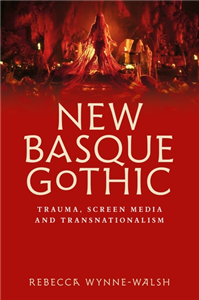
This monograph addresses the twenty-first century upsurge in Gothic screen media emanating from the Autonomous Basque Community, Euskadi, in Northern Spain. The book focuses on online video sharing, streaming and social media platforms, demonstrating the impact of multi-national co-production and distribution on the development of Basque film production; looking to the future of regional production in the digital era. This monograph fills a critical gap, presenting Basque Gothic screen media as a regionalist challenge to national models of cinema and identity. Wynne-Walsh establishes Basque Gothic as an expression of transgenerational trauma engendered by a history of state-suppression and socio-political violence. This regional iteration of the mode is addressed as a window into community perception and projection. While this project centres a Basque case study, it establishes a model for the reimagination of critical approaches to global, twenty-first century screen cultures.
More Information
Rights Information
Albania, Algeria, Angola, Argentina, Armenia, Australia, Austria, Bahrain, Belgium, Belize, Benin, Bolivia, Bosnia and Herzegovina, Botswana, Brazil, Bulgaria, Burkina Faso, Burundi, Cameroon, Canada, Cape Verde, Central African Republic, Chad, Chile, China, Colombia, Comoros, Congo [DRC], Congo, Republic of the, Costa Rica, Ivory Coast, Croatia, Czech Republic, Denmark, Djibouti, Ecuador, Egypt, El Salvador, Equatorial Guinea, Eritrea, Estonia, Ethiopia, Faroe Islands, Finland, France, French Guiana, Gabon, Gambia, Georgia, Germany, Ghana, Greece, Guatemala, Guinea, Guinea-Bissau, Guyana, Honduras, Hongkong, Hungary, Iceland, India, Indonesia, Iran, Iraq, Ireland, Israel, Italy, Japan, Jordan, Kazakhstan, Kenya, Kuwait, Latvia, Lebanon, Lesotho, Liberia, Libya, Lithuania, Luxembourg, Macau, China, Macedonia [FYROM], Madagascar, Malawi, Malaysia, Mali, Malta, Mauritania, Mauritius, Mayotte, Mexico, Mongolia, Montenegro, Morocco, Mozambique, Namibia, Netherlands, New Zealand, Nicaragua, Niger, Nigeria, Norway, Oman, Pakistan, Panama, Paraguay, Peru, Philippines, Poland, Portugal, Puerto Rico, Qatar, Reunion, Romania, Russia, Rwanda, Saint Helena, Sao Tome and Principe, Saudi Arabia, Senegal, Serbia, Seychelles, Sierra Leone, Singapore, Slovakia, Slovenia, Somalia, South Africa, South Korea, Spain, Sri Lanka, Sudan, Suriname, Swaziland, Sweden, Switzerland, Syria, Taiwan, Tanzania, Thailand, Timor-Leste, Togo, Tokelau, Tunisia, Turkey, Uganda, Ukraine, United Arab Emirates, United Kingdom, United States, Uruguay, Venezuela, Vietnam, Western Sahara, Yemen, Zambia, Zimbabwe, South Sudan, Cyprus, Palestine, Bangladesh, Cambodia, Liechtenstein, Azerbaijan, Jamaica, Kyrgyzstan, Dominican Republic, Myanmar, Monaco
Endorsements
New Basque Gothic addresses the twenty-first century upsurge in Gothic screen media emerging from the Autonomous Basque Community, Euskadi, in Northern Spain. Focusing on online video sharing, streaming and social media platforms, this book demonstrates the impact of multinational co-production and distribution on the development of Basque film production and explores the future of regional production in the digital era. Filling a critical gap, it presents Basque Gothic screen media as a regionalist challenge to national models of cinema and identity, it establishes Basque Gothic as an expression of transgenerational trauma engendered by a history of state-suppression and socio-political violence. This regional iteration of the model offers insight into community perception and projection. Regionalism holds great value for future cultural and film studies endeavours, challenging national singularity and delineating the nuances of interstitial cultural identities. Without regionalist approaches, elements such as language, folklore, locations, political references, and music can be misinterpreted. Centered on a Basque case study, this book establishes a model for the reimagination of critical approaches to global, twenty-first-century screen cultures.
Reviews
New Basque Gothic addresses the twenty-first century upsurge in Gothic screen media emerging from the Autonomous Basque Community, Euskadi, in Northern Spain. Focusing on online video sharing, streaming and social media platforms, this book demonstrates the impact of multinational co-production and distribution on the development of Basque film production and explores the future of regional production in the digital era. Filling a critical gap, it presents Basque Gothic screen media as a regionalist challenge to national models of cinema and identity, it establishes Basque Gothic as an expression of transgenerational trauma engendered by a history of state-suppression and socio-political violence. This regional iteration of the model offers insight into community perception and projection. Regionalism holds great value for future cultural and film studies endeavours, challenging national singularity and delineating the nuances of interstitial cultural identities. Without regionalist approaches, elements such as language, folklore, locations, political references, and music can be misinterpreted. Centered on a Basque case study, this book establishes a model for the reimagination of critical approaches to global, twenty-first-century screen cultures.
Author Biography
Rebecca Wynne-Walsh is a Lecturer in Film Studies and Production at Edge Hill University
 Trusted Partner

Manchester University Press
Manchester University Press is a leading UK publisher known for excellent research in the humanities and social sciences.
View all titlesBibliographic Information
- Publisher Manchester University Press
- Publication Date December 2025
- Orginal LanguageEnglish
- ISBN/Identifier 9781526181183 / 1526181185
- Publication Country or regionUnited Kingdom
- FormatPrint PDF
- Pages256
- ReadershipGeneral/trade
- Publish StatusPublished
- Dimensions234 X 156 mm
- Biblio NotesDerived from Proprietary 6278
- Reference Code16690
Thank you for proceeding with this offer.
Manchester University Press has chosen to review this offer before it proceeds.
You will receive an email update that will bring you back to complete the process.
You can also check the status in the My Offers area
Manchester University Press has chosen to review this offer before it proceeds.
You will receive an email update that will bring you back to complete the process.
You can also check the status in the My Offers area

Please wait while the payment is being prepared.
Do not close this window.

(c) Copyright 2026 - Frankfurter Buchmesse GmbH. All Right Reserved