
The Arts
Reframing Margaret Thatcher
Genre, form, and the making of post-Thatcherism in British film and TV
by Felipe Espinoza Garrido
Description
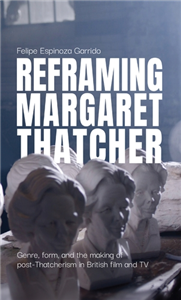
Against the backdrop of Britain's historically anti-Thatcherite films of the 1980s and 1990s, Reframing Margaret Thatcher outlines a decisive shift in the collective imagination of Thatcher. Drawing on genre, trauma, and queer studies, it demonstrates how post-Thatcherite films reflect upon their own entanglement in the polarization of the Thatcher years but also rewrite the clichéd Iron Lady. Chapters on The Iron Lady, This is England, Doomsday, 9 Dead Gay Guys, and the Sherlock TV series investigate various Thatcher imaginations, ranging from Thatcher as a lesbian mob boss, as prime minister in apocalyptic England, to Thatcher as an empty bust. This innovative study shows how the apparent depoliticization of British film makes visible new relations between genre, cinematic form, and imaginations of the past and offers fresh perspectives that both critique and reinterpret Thatcher's enduring impact.
More Information
Rights Information
Albania, Algeria, Angola, Argentina, Armenia, Australia, Austria, Bahrain, Belgium, Belize, Benin, Bolivia, Bosnia and Herzegovina, Botswana, Brazil, Bulgaria, Burkina Faso, Burundi, Cameroon, Canada, Cape Verde, Central African Republic, Chad, Chile, China, Colombia, Comoros, Congo [DRC], Congo, Republic of the, Costa Rica, Ivory Coast, Croatia, Czech Republic, Denmark, Djibouti, Ecuador, Egypt, El Salvador, Equatorial Guinea, Eritrea, Estonia, Ethiopia, Faroe Islands, Finland, France, French Guiana, Gabon, Gambia, Georgia, Germany, Ghana, Greece, Guatemala, Guinea, Guinea-Bissau, Guyana, Honduras, Hongkong, Hungary, Iceland, India, Indonesia, Iran, Iraq, Ireland, Israel, Italy, Japan, Jordan, Kazakhstan, Kenya, Kuwait, Latvia, Lebanon, Lesotho, Liberia, Libya, Lithuania, Luxembourg, Macau, China, Macedonia [FYROM], Madagascar, Malawi, Malaysia, Mali, Malta, Mauritania, Mauritius, Mayotte, Mexico, Mongolia, Montenegro, Morocco, Mozambique, Namibia, Netherlands, New Zealand, Nicaragua, Niger, Nigeria, Norway, Oman, Pakistan, Panama, Paraguay, Peru, Philippines, Poland, Portugal, Puerto Rico, Qatar, Reunion, Romania, Russia, Rwanda, Saint Helena, Sao Tome and Principe, Saudi Arabia, Senegal, Serbia, Seychelles, Sierra Leone, Singapore, Slovakia, Slovenia, Somalia, South Africa, South Korea, Spain, Sri Lanka, Sudan, Suriname, Swaziland, Sweden, Switzerland, Syria, Taiwan, Tanzania, Thailand, Timor-Leste, Togo, Tokelau, Tunisia, Turkey, Uganda, Ukraine, United Arab Emirates, United Kingdom, United States, Uruguay, Venezuela, Vietnam, Western Sahara, Yemen, Zambia, Zimbabwe, South Sudan, Cyprus, Palestine, Bangladesh, Cambodia, Liechtenstein, Azerbaijan, Jamaica, Kyrgyzstan, Dominican Republic, Myanmar, Monaco
Endorsements
Reframing Margaret Thatcher explores new representations of Thatcher and her aftermath in contemporary film and TV. It traces a shift in British film since the early 2000s, which it understands as 'post-Thatcherism.' Rather than reproducing the polarisation of the Thatcher years, such post-Thatcherite films revisit and reflect upon earlier media incarnations of the former prime minister. This book adds to our understanding of how British culture represents and remembers Thatcher, how it has normalised the ways in which it does so, and how British film has begun to interrogate such normalisations. Simultaneously, post-Thatcherite films offer new and playful imaginations that appropriate, reconfigure, and rewrite the clichéd Iron Lady. This book addresses such new representations in relation to iconicity and memory (The Iron Lady), the Falklands War and social realism (This Is England), queer liberation and commodification (9 Dead Gay Guys), the cinematic form of trauma (Doomsday), and the mutability of Thatcher herself (Sherlock's 'The Six Thatchers'). Drawing on genre, trauma, and queer studies, as well as film narratology, this innovative study shows how the apparent depoliticisation of British film makes visible new relations between genre, cinematic form, and imaginations of the past. It demonstrates how post-Thatcherism allows films to question the dominant narratives that have historically defined Thatcherism, offering fresh perspectives that both critique and creatively reinterpret her enduring impact.
Reviews
Reframing Margaret Thatcher explores new representations of Thatcher and her aftermath in contemporary film and TV. It traces a shift in British film since the early 2000s, which it understands as 'post-Thatcherism.' Rather than reproducing the polarisation of the Thatcher years, such post-Thatcherite films revisit and reflect upon earlier media incarnations of the former prime minister. This book adds to our understanding of how British culture represents and remembers Thatcher, how it has normalised the ways in which it does so, and how British film has begun to interrogate such normalisations. Simultaneously, post-Thatcherite films offer new and playful imaginations that appropriate, reconfigure, and rewrite the clichéd Iron Lady. This book addresses such new representations in relation to iconicity and memory (The Iron Lady), the Falklands War and social realism (This Is England), queer liberation and commodification (9 Dead Gay Guys), the cinematic form of trauma (Doomsday), and the mutability of Thatcher herself (Sherlock's 'The Six Thatchers'). Drawing on genre, trauma, and queer studies, as well as film narratology, this innovative study shows how the apparent depoliticisation of British film makes visible new relations between genre, cinematic form, and imaginations of the past. It demonstrates how post-Thatcherism allows films to question the dominant narratives that have historically defined Thatcherism, offering fresh perspectives that both critique and creatively reinterpret her enduring impact.
Author Biography
Felipe Espinoza Garrido is a Senior Lecturer in English, Postcolonial and Media Studies at the University of Münster
 Trusted Partner

Manchester University Press
Manchester University Press is a leading UK publisher known for excellent research in the humanities and social sciences.
View all titlesBibliographic Information
- Publisher Manchester University Press
- Publication Date May 2026
- Orginal LanguageEnglish
- ISBN/Identifier 9781526181237 / 1526181231
- Publication Country or regionUnited Kingdom
- FormatPrint PDF
- Pages328
- ReadershipGeneral/trade
- Publish StatusPublished
- Dimensions216 X 138 mm
- Biblio NotesDerived from Proprietary 6277
- Reference Code16686
Thank you for proceeding with this offer.
Manchester University Press has chosen to review this offer before it proceeds.
You will receive an email update that will bring you back to complete the process.
You can also check the status in the My Offers area
Manchester University Press has chosen to review this offer before it proceeds.
You will receive an email update that will bring you back to complete the process.
You can also check the status in the My Offers area

Please wait while the payment is being prepared.
Do not close this window.

(c) Copyright 2026 - Frankfurter Buchmesse GmbH. All Right Reserved