
Literature & Literary Studies
Russo-Soviet imperialist hauntings
Neo-Gothic geographies in Central and Eastern Europe since 1989
by Svitlana Krys, Maryna Romanets
Description
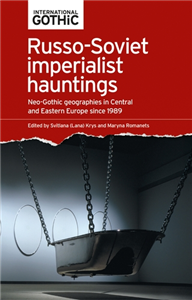
Russo-Soviet imperialist hauntings attempts to capture some of the ghosts of the colonial and totalitarian past that have been proliferating in international political and cultural landscapes after the collapse of the USSR. By conflating postcolonial, post-totalitarian, postcommunist, and Gothic discourses, it maps virtually untouched aspects of cultural decolonization, focusing on unsettling "hauntings" of unresolved memory traces of Russo-Soviet domination in the former Eastern Bloc countries and Soviet republics. Operating within a vast intertextual field of social, cultural, and ideological discourses, the volume enables a productive exchange across distinct (inter)disciplinary boundaries and represents a range of voices from Europe and North America. The contributors' diverse interests draw on transmedia (literature, visual arts, and film), transnational, and translingual (diasporic literature) approaches, providing insights into a variety of forms that the Gothic has taken in the (late) twentieth and twenty-first centuries, and demonstrating its consistent engagement with history, ideology, and politics.
More Information
Rights Information
Albania, Algeria, Angola, Argentina, Armenia, Australia, Austria, Bahrain, Belgium, Belize, Benin, Bolivia, Bosnia and Herzegovina, Botswana, Brazil, Bulgaria, Burkina Faso, Burundi, Cameroon, Canada, Cape Verde, Central African Republic, Chad, Chile, China, Colombia, Comoros, Congo [DRC], Congo, Republic of the, Costa Rica, Ivory Coast, Croatia, Czech Republic, Denmark, Djibouti, Ecuador, Egypt, El Salvador, Equatorial Guinea, Eritrea, Estonia, Ethiopia, Faroe Islands, Finland, France, French Guiana, Gabon, Gambia, Georgia, Germany, Ghana, Greece, Guatemala, Guinea, Guinea-Bissau, Guyana, Honduras, Hongkong, Hungary, Iceland, India, Indonesia, Iran, Iraq, Ireland, Israel, Italy, Japan, Jordan, Kazakhstan, Kenya, Kuwait, Latvia, Lebanon, Lesotho, Liberia, Libya, Lithuania, Luxembourg, Macau, China, Macedonia [FYROM], Madagascar, Malawi, Malaysia, Mali, Malta, Mauritania, Mauritius, Mayotte, Mexico, Mongolia, Montenegro, Morocco, Mozambique, Namibia, Netherlands, New Zealand, Nicaragua, Niger, Nigeria, Norway, Oman, Pakistan, Panama, Paraguay, Peru, Philippines, Poland, Portugal, Puerto Rico, Qatar, Reunion, Romania, Russia, Rwanda, Saint Helena, Sao Tome and Principe, Saudi Arabia, Senegal, Serbia, Seychelles, Sierra Leone, Singapore, Slovakia, Slovenia, Somalia, South Africa, South Korea, Spain, Sri Lanka, Sudan, Suriname, Swaziland, Sweden, Switzerland, Syria, Taiwan, Tanzania, Thailand, Timor-Leste, Togo, Tokelau, Tunisia, Turkey, Uganda, Ukraine, United Arab Emirates, United Kingdom, United States, Uruguay, Venezuela, Vietnam, Western Sahara, Yemen, Zambia, Zimbabwe, South Sudan, Cyprus, Palestine, Bangladesh, Cambodia, Liechtenstein, Azerbaijan, Jamaica, Kyrgyzstan, Dominican Republic, Myanmar, Monaco
Endorsements
Russo-Soviet imperialist hauntings examines the ghosts of the colonial and totalitarian past that have proliferated in international political and cultural landscapes since the collapse of the USSR. By combining postcolonial, post-totalitarian, postcommunist, and Gothic perspectives, this volume maps virtually untouched aspects of cultural decolonization and the politics of memory, focusing on the uncanny return of unsettling "hauntings"-unresolved memory traces of Russo-Soviet domination in the former Eastern Bloc states and Soviet republics. Operating within social, cultural, and ideological discourses, it facilitates a productive exchange across distinct (inter)disciplinary and (trans)national boundaries, unearthing and amplifying the voices of Albanian, Bosnian, Bulgarian, Hungarian, Latvian, Polish, Slovak, Ukrainian, and diasporic authors in settler-colonial societies in North America. While enriching critical discussions of the totalitarian, communist, and colonial past of the region through the Gothic lens, the book opens up space for a conversation about how conventional Gothic modalities have been questioned, appropriated, redeployed, and developed outside established practices and current paradigms of knowledge. Through their exploration of the transgressive energies of the Gothic, the contributors provide insights into a variety of transcultural forms and transmutations that have appeared in the late twentieth- and early twenty-first centuries, demonstrating the genre's persistent engagement with history, ideology, and politics.
Reviews
Russo-Soviet imperialist hauntings examines the ghosts of the colonial and totalitarian past that have proliferated in international political and cultural landscapes since the collapse of the USSR. By combining postcolonial, post-totalitarian, postcommunist, and Gothic perspectives, this volume maps virtually untouched aspects of cultural decolonization and the politics of memory, focusing on the uncanny return of unsettling "hauntings"-unresolved memory traces of Russo-Soviet domination in the former Eastern Bloc states and Soviet republics. Operating within social, cultural, and ideological discourses, it facilitates a productive exchange across distinct (inter)disciplinary and (trans)national boundaries, unearthing and amplifying the voices of Albanian, Bosnian, Bulgarian, Hungarian, Latvian, Polish, Slovak, Ukrainian, and diasporic authors in settler-colonial societies in North America. While enriching critical discussions of the totalitarian, communist, and colonial past of the region through the Gothic lens, the book opens up space for a conversation about how conventional Gothic modalities have been questioned, appropriated, redeployed, and developed outside established practices and current paradigms of knowledge. Through their exploration of the transgressive energies of the Gothic, the contributors provide insights into a variety of transcultural forms and transmutations that have appeared in the late twentieth- and early twenty-first centuries, demonstrating the genre's persistent engagement with history, ideology, and politics.
Author Biography
Svitlana (Lana) Krys is Associate Professor of English and Comparative Literature at MacEwan University, Canada Maryna Romanets is Professor of English at the University of Northern British Columbia, Canada
 Trusted Partner

Manchester University Press
Manchester University Press is a leading UK publisher known for excellent research in the humanities and social sciences.
View all titlesBibliographic Information
- Publisher Manchester University Press
- Publication Date May 2026
- Orginal LanguageEnglish
- ISBN/Identifier 9781526191038 / 1526191032
- Publication Country or regionUnited Kingdom
- FormatPrint PDF
- Pages432
- ReadershipGeneral/trade
- Publish StatusPublished
- Dimensions216 X 138 mm
- Biblio NotesDerived from Proprietary 6572
- SeriesInternational Gothic Series
- Reference Code17848
Thank you for proceeding with this offer.
Manchester University Press has chosen to review this offer before it proceeds.
You will receive an email update that will bring you back to complete the process.
You can also check the status in the My Offers area
Manchester University Press has chosen to review this offer before it proceeds.
You will receive an email update that will bring you back to complete the process.
You can also check the status in the My Offers area

Please wait while the payment is being prepared.
Do not close this window.

(c) Copyright 2026 - Frankfurter Buchmesse GmbH. All Right Reserved