
Business, Economics & Law
Description
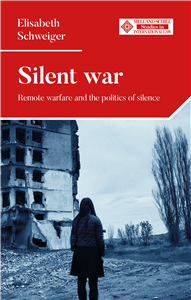
Silent war reveals how silence functions as a crucial but often overlooked force in enabling and sustaining military violence. While war propaganda and discursive justifications have received significant attention, this book argues that military operations also depend on a hidden infrastructure of silence - through omission, secrecy, and tacit consent. Focusing on drone warfare and colonial counterinsurgency, it explores how regimes of (not) listening shape what can and cannot be heard. Drawing on a multidisciplinary framework and extensive empirical research - including analysis of Western parliamentary debates, UN documents, media coverage, and archival records - Silent war traces the enduring role of silence in legitimising imperial violence. It reframes silence not as absence but as a constitutive force in global power relations, offering critical tools for interrogating dominant frameworks of military violence and opening space for listening otherwise.
More Information
Rights Information
Albania, Algeria, Angola, Argentina, Armenia, Australia, Austria, Bahrain, Belgium, Belize, Benin, Bolivia, Bosnia and Herzegovina, Botswana, Brazil, Bulgaria, Burkina Faso, Burundi, Cameroon, Canada, Cape Verde, Central African Republic, Chad, Chile, China, Colombia, Comoros, Congo [DRC], Congo, Republic of the, Costa Rica, Ivory Coast, Croatia, Czech Republic, Denmark, Djibouti, Ecuador, Egypt, El Salvador, Equatorial Guinea, Eritrea, Estonia, Ethiopia, Faroe Islands, Finland, France, French Guiana, Gabon, Gambia, Georgia, Germany, Ghana, Greece, Guatemala, Guinea, Guinea-Bissau, Guyana, Honduras, Hongkong, Hungary, Iceland, India, Indonesia, Iran, Iraq, Ireland, Israel, Italy, Japan, Jordan, Kazakhstan, Kenya, Kuwait, Latvia, Lebanon, Lesotho, Liberia, Libya, Lithuania, Luxembourg, Macau, China, Macedonia [FYROM], Madagascar, Malawi, Malaysia, Mali, Malta, Mauritania, Mauritius, Mayotte, Mexico, Mongolia, Montenegro, Morocco, Mozambique, Namibia, Netherlands, New Zealand, Nicaragua, Niger, Nigeria, Norway, Oman, Pakistan, Panama, Paraguay, Peru, Philippines, Poland, Portugal, Puerto Rico, Qatar, Reunion, Romania, Russia, Rwanda, Saint Helena, Sao Tome and Principe, Saudi Arabia, Senegal, Serbia, Seychelles, Sierra Leone, Singapore, Slovakia, Slovenia, Somalia, South Africa, South Korea, Spain, Sri Lanka, Sudan, Suriname, Swaziland, Sweden, Switzerland, Syria, Taiwan, Tanzania, Thailand, Timor-Leste, Togo, Tokelau, Tunisia, Turkey, Uganda, Ukraine, United Arab Emirates, United Kingdom, United States, Uruguay, Venezuela, Vietnam, Western Sahara, Yemen, Zambia, Zimbabwe, South Sudan, Cyprus, Palestine, Bangladesh, Cambodia, Liechtenstein, Azerbaijan, Jamaica, Kyrgyzstan, Dominican Republic, Myanmar, Monaco
Endorsements
Silent war examines the political work of silence in enabling and sustaining military violence. While scholarly and public attention has often focused on war propaganda and overt justifications for the use of force, this book contends that military operations equally depend on a parallel infrastructure of silences and omissions. Using drone warfare as a central case study, the book explores the interlocking functions of silence, from state secrecy to public acquiescence, systems of neglect and the tacit power of unspoken assumptions. Developing a multidisciplinary conceptual framework, grounded in extensive empirical analysis, it critically investigates the hidden logics of silence in sustaining imperial violence. Through close analysis of Western parliamentary debates, media coverage, NGO reports and United Nations documents, the book traces how regimes of (not) listening shape what becomes audible - and what does not. It situates these dynamics within a longer historical continuum, showing how colonial counterinsurgency practices similarly depended on a hidden architecture of silence. Archival research into records of police bombing campaigns from the 1910s to the 1930s reveals patterns of silence that enabled, legitimised and sustained imperial violence. Ultimately, Silent war argues that silence is not merely a void or absence, but a constitutive force within global power relations - an infrastructural element of violence that sustains hegemonic orders through practices of erasure, disavowal and unhearing. By placing silence at the centre of its analysis, the book challenges dominant frameworks of military violence, offering critical tools for interrogating imperial power structures and opening generative space for listening otherwise.
Reviews
Silent war examines the political work of silence in enabling and sustaining military violence. While scholarly and public attention has often focused on war propaganda and overt justifications for the use of force, this book contends that military operations equally depend on a parallel infrastructure of silences and omissions. Using drone warfare as a central case study, the book explores the interlocking functions of silence, from state secrecy to public acquiescence, systems of neglect and the tacit power of unspoken assumptions. Developing a multidisciplinary conceptual framework, grounded in extensive empirical analysis, it critically investigates the hidden logics of silence in sustaining imperial violence. Through close analysis of Western parliamentary debates, media coverage, NGO reports and United Nations documents, the book traces how regimes of (not) listening shape what becomes audible - and what does not. It situates these dynamics within a longer historical continuum, showing how colonial counterinsurgency practices similarly depended on a hidden architecture of silence. Archival research into records of police bombing campaigns from the 1910s to the 1930s reveals patterns of silence that enabled, legitimised and sustained imperial violence. Ultimately, Silent war argues that silence is not merely a void or absence, but a constitutive force within global power relations - an infrastructural element of violence that sustains hegemonic orders through practices of erasure, disavowal and unhearing. By placing silence at the centre of its analysis, the book challenges dominant frameworks of military violence, offering critical tools for interrogating imperial power structures and opening generative space for listening otherwise.
Author Biography
Elisabeth Schweiger is a Lecturer in International Politics at the University of Stirling
 Trusted Partner

Manchester University Press
Manchester University Press is a leading UK publisher known for excellent research in the humanities and social sciences.
View all titlesBibliographic Information
- Publisher Manchester University Press
- Publication Date April 2026
- Orginal LanguageEnglish
- ISBN/Identifier 9781526169532 / 1526169533
- Publication Country or regionUnited Kingdom
- FormatPrint PDF
- Pages240
- ReadershipCollege/higher education; Professional and scholarly
- Publish StatusPublished
- Dimensions216 X 138 mm
- Biblio NotesDerived from Proprietary 5772
- SeriesMelland Schill Studies in International Law
- Reference Code15177
Thank you for proceeding with this offer.
Manchester University Press has chosen to review this offer before it proceeds.
You will receive an email update that will bring you back to complete the process.
You can also check the status in the My Offers area
Manchester University Press has chosen to review this offer before it proceeds.
You will receive an email update that will bring you back to complete the process.
You can also check the status in the My Offers area

Please wait while the payment is being prepared.
Do not close this window.

(c) Copyright 2026 - Frankfurter Buchmesse GmbH. All Right Reserved