
Literature & Literary Studies
Strange matter
Medieval disruptions of time
by Martin Bleisteiner, Jan-Peer Hartmann, Andrew James Johnston
Description
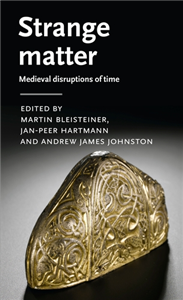
Medieval and early modern texts reflect a fascination with material objects, from ancient heirlooms to ingenious automata. Often imbued with power or beauty, these objects carry an uncanny sense of otherness, their mysterious origins evoking wonder and suggesting temporal and spatial distance. Acting as repositories of temporal alterity, such artefacts bridge the past and present in profound ways.
This volume, featuring contributions from experts in literature and art history, explores how texts from these periods use material objects to engage with temporal otherness. From everyday items to marvellous creations, objects challenge distinctions between human and material, natural and cultural.
Whether examining the hybrid status of Hector's body in Lydgate's Troy Book or the temporal agency of humble bubbles, the chapters illuminate the vibrant networks connecting people and objects. By highlighting the 'hybridity' of matter, the book offers fresh insights into Bruno Latour's critique of nature-culture divides.
More Information
Rights Information
Albania, Algeria, Angola, Argentina, Armenia, Australia, Austria, Bahrain, Belgium, Belize, Benin, Bolivia, Bosnia and Herzegovina, Botswana, Brazil, Bulgaria, Burkina Faso, Burundi, Cameroon, Canada, Cape Verde, Central African Republic, Chad, Chile, China, Colombia, Comoros, Congo [DRC], Congo, Republic of the, Costa Rica, Ivory Coast, Croatia, Czech Republic, Denmark, Djibouti, Ecuador, Egypt, El Salvador, Equatorial Guinea, Eritrea, Estonia, Ethiopia, Faroe Islands, Finland, France, French Guiana, Gabon, Gambia, Georgia, Germany, Ghana, Greece, Guatemala, Guinea, Guinea-Bissau, Guyana, Honduras, Hongkong, Hungary, Iceland, India, Indonesia, Iran, Iraq, Ireland, Israel, Italy, Japan, Jordan, Kazakhstan, Kenya, Kuwait, Latvia, Lebanon, Lesotho, Liberia, Libya, Lithuania, Luxembourg, Macau, China, Macedonia [FYROM], Madagascar, Malawi, Malaysia, Mali, Malta, Mauritania, Mauritius, Mayotte, Mexico, Mongolia, Montenegro, Morocco, Mozambique, Namibia, Netherlands, New Zealand, Nicaragua, Niger, Nigeria, Norway, Oman, Pakistan, Panama, Paraguay, Peru, Philippines, Poland, Portugal, Puerto Rico, Qatar, Reunion, Romania, Russia, Rwanda, Saint Helena, Sao Tome and Principe, Saudi Arabia, Senegal, Serbia, Seychelles, Sierra Leone, Singapore, Slovakia, Slovenia, Somalia, South Africa, South Korea, Spain, Sri Lanka, Sudan, Suriname, Swaziland, Sweden, Switzerland, Syria, Taiwan, Tanzania, Thailand, Timor-Leste, Togo, Tokelau, Tunisia, Turkey, Uganda, Ukraine, United Arab Emirates, United Kingdom, United States, Uruguay, Venezuela, Vietnam, Western Sahara, Yemen, Zambia, Zimbabwe, South Sudan, Cyprus, Palestine, Bangladesh, Cambodia, Liechtenstein, Azerbaijan, Jamaica, Kyrgyzstan, Dominican Republic, Myanmar, Monaco
Endorsements
Medieval and early modern texts reveal a deep fascination with material objects, from ancient heirlooms to ingenious automata. These items, often beautiful or imbued with power, are marked by an uncanny sense of otherness. Their mysterious origins evoke wonder and emphasize temporal and spatial distance, framing them as relics of alternative time schemes. Through their strange and wondrous qualities, such objects act as repositories of temporal alterity, bridging the past and the present in profound ways. This volume brings together contributions from experts in medieval and early modern literature and art history to investigate how texts of these periods use material objects to explore notions of temporal otherness. The chapters illuminate the dynamic interplay between materiality and temporality, showing how objects-both extraordinary and everyday-challenge conventional distinctions between the human and the material. From clothing to glass to humble bubbles, these objects are revealed as participants in complex networks that connect the natural and cultural realms. The discussions uncover how material objects disrupt the status quo, asserting a degree of independence that elevates them beyond mere utility. Whether exploring the hybrid status of Hector's body in Lydgate's Troy Book or the temporal resonance of marvellous artefacts, the book reveals a world where material artefacts possess their own temporal regimes and agency. By foregrounding the 'hybridity' of matter and its intermediary status, this collection anticipates Bruno Latour's critique of the divide between nature and culture. It offers a compelling rethinking of the boundaries between human and material, subject and object, in ways that resonate across disciplines.
Reviews
Medieval and early modern texts reveal a deep fascination with material objects, from ancient heirlooms to ingenious automata. These items, often beautiful or imbued with power, are marked by an uncanny sense of otherness. Their mysterious origins evoke wonder and emphasize temporal and spatial distance, framing them as relics of alternative time schemes. Through their strange and wondrous qualities, such objects act as repositories of temporal alterity, bridging the past and the present in profound ways. This volume brings together contributions from experts in medieval and early modern literature and art history to investigate how texts of these periods use material objects to explore notions of temporal otherness. The chapters illuminate the dynamic interplay between materiality and temporality, showing how objects-both extraordinary and everyday-challenge conventional distinctions between the human and the material. From clothing to glass to humble bubbles, these objects are revealed as participants in complex networks that connect the natural and cultural realms. The discussions uncover how material objects disrupt the status quo, asserting a degree of independence that elevates them beyond mere utility. Whether exploring the hybrid status of Hector's body in Lydgate's Troy Book or the temporal resonance of marvellous artefacts, the book reveals a world where material artefacts possess their own temporal regimes and agency. By foregrounding the 'hybridity' of matter and its intermediary status, this collection anticipates Bruno Latour's critique of the divide between nature and culture. It offers a compelling rethinking of the boundaries between human and material, subject and object, in ways that resonate across disciplines.
Author Biography
Andrew James Johnston is Chair of Medieval and Renaissance English Literature at the Freie Universität Berlin
 Trusted Partner

Manchester University Press
Manchester University Press is a leading UK publisher known for excellent research in the humanities and social sciences.
View all titlesBibliographic Information
- Publisher Manchester University Press
- Publication Date July 2025
- Orginal LanguageEnglish
- ISBN/Identifier 9781526175960 / 1526175967
- Publication Country or regionUnited Kingdom
- FormatPrint PDF
- Pages320
- ReadershipGeneral/trade
- Publish StatusPublished
- Dimensions216 X 138 mm
- Biblio NotesDerived from Proprietary 5654
- SeriesManchester Medieval Literature and Culture
- Reference Code15010
Thank you for proceeding with this offer.
Manchester University Press has chosen to review this offer before it proceeds.
You will receive an email update that will bring you back to complete the process.
You can also check the status in the My Offers area
Manchester University Press has chosen to review this offer before it proceeds.
You will receive an email update that will bring you back to complete the process.
You can also check the status in the My Offers area

Please wait while the payment is being prepared.
Do not close this window.

(c) Copyright 2026 - Frankfurter Buchmesse GmbH. All Right Reserved