
Literature & Literary Studies
Description
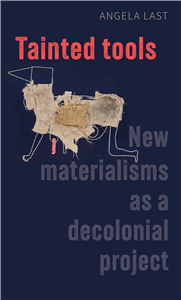
Tainted Tools makes a provocative intervention into the fraught intersection between new materialist and decolonial approaches. Despite a common project of challenging European philosophical and social categories and hierarchies, the discourses are considered incompatible. Most prominently, new materialisms have been accused of harbouring a White vision of the human while disregarding the racist resonances of the 'nonhuman'. The book traces this conflict to an earlier meeting point of new materialist and decolonial projects, which came about through the experimental combination of Marx and Nietzsche. Used to fight fascism, Stalinism and colonialism, this politically contentious fusion gradually became depoliticised, leading to unaddressed tensions today. While the book does not argue for a revival of these early 'new materialisms', it brings their strategies into dialogue with today's new materialisms and decolonial approaches to develop greater theoretical solidarity in times of crisis.
More Information
Rights Information
Albania, Algeria, Angola, Argentina, Armenia, Australia, Austria, Bahrain, Belgium, Belize, Benin, Bolivia, Bosnia and Herzegovina, Botswana, Brazil, Bulgaria, Burkina Faso, Burundi, Cameroon, Canada, Cape Verde, Central African Republic, Chad, Chile, China, Colombia, Comoros, Congo [DRC], Congo, Republic of the, Costa Rica, Ivory Coast, Croatia, Czech Republic, Denmark, Djibouti, Ecuador, Egypt, El Salvador, Equatorial Guinea, Eritrea, Estonia, Ethiopia, Faroe Islands, Finland, France, French Guiana, Gabon, Gambia, Georgia, Germany, Ghana, Greece, Guatemala, Guinea, Guinea-Bissau, Guyana, Honduras, Hongkong, Hungary, Iceland, India, Indonesia, Iran, Iraq, Ireland, Israel, Italy, Japan, Jordan, Kazakhstan, Kenya, Kuwait, Latvia, Lebanon, Lesotho, Liberia, Libya, Lithuania, Luxembourg, Macau, China, Macedonia [FYROM], Madagascar, Malawi, Malaysia, Mali, Malta, Mauritania, Mauritius, Mayotte, Mexico, Mongolia, Montenegro, Morocco, Mozambique, Namibia, Netherlands, New Zealand, Nicaragua, Niger, Nigeria, Norway, Oman, Pakistan, Panama, Paraguay, Peru, Philippines, Poland, Portugal, Puerto Rico, Qatar, Reunion, Romania, Russia, Rwanda, Saint Helena, Sao Tome and Principe, Saudi Arabia, Senegal, Serbia, Seychelles, Sierra Leone, Singapore, Slovakia, Slovenia, Somalia, South Africa, South Korea, Spain, Sri Lanka, Sudan, Suriname, Swaziland, Sweden, Switzerland, Syria, Taiwan, Tanzania, Thailand, Timor-Leste, Togo, Tokelau, Tunisia, Turkey, Uganda, Ukraine, United Arab Emirates, United Kingdom, United States, Uruguay, Venezuela, Vietnam, Western Sahara, Yemen, Zambia, Zimbabwe, South Sudan, Cyprus, Palestine, Bangladesh, Cambodia, Liechtenstein, Azerbaijan, Jamaica, Kyrgyzstan, Dominican Republic, Myanmar, Monaco
Endorsements
Tainted Tools addresses the tension between new materialisms' decolonial ambitions and practices. Emerging out of anthropology, history of science, sociology and feminist studies, new materialisms have claimed to contest Western knowledge divisions and hierarchies. Despite this overlap with decolonial projects, new materialisms are generally perceived a White discourse that disregards racism, economics, and the critique of postcolonial, decolonial and critical race theories. The book makes sense of this contradiction by returning to an earlier convergence of both sets of theories: the transition from Marx to Nietzsche. This shift took place not only in Europe-where it was used to combat fascism and Stalinism-but also in its colonies, where it informed anti-colonial resistance. While these early 'new materialisms' had a different political focus and were performed in different political spaces, they jointly attacked Western philosophical and social norms. As anti-authoritarian new materialisms, they also rejected the illusions of European humanism and experimented with performances of 'objecthood'. The aim of this book is not to revive these earlier 'new materialisms', but to highlight their strategies in an extreme political environment that today feels closer than ever. By combining past and present 'new materialisms' as well as postcolonial, decolonial and critical race theories, Tainted Tools provokes a rethinking of theoretical solidarity in times of crisis. It will be of interest to postgraduate students, academics and artists working with new materialisms, as well as Marxist, Foucauldian and decolonial skeptics.
Reviews
Tainted Tools addresses the tension between new materialisms' decolonial ambitions and practices. Emerging out of anthropology, history of science, sociology and feminist studies, new materialisms have claimed to contest Western knowledge divisions and hierarchies. Despite this overlap with decolonial projects, new materialisms are generally perceived a White discourse that disregards racism, economics, and the critique of postcolonial, decolonial and critical race theories. The book makes sense of this contradiction by returning to an earlier convergence of both sets of theories: the transition from Marx to Nietzsche. This shift took place not only in Europe-where it was used to combat fascism and Stalinism-but also in its colonies, where it informed anti-colonial resistance. While these early 'new materialisms' had a different political focus and were performed in different political spaces, they jointly attacked Western philosophical and social norms. As anti-authoritarian new materialisms, they also rejected the illusions of European humanism and experimented with performances of 'objecthood'. The aim of this book is not to revive these earlier 'new materialisms', but to highlight their strategies in an extreme political environment that today feels closer than ever. By combining past and present 'new materialisms' as well as postcolonial, decolonial and critical race theories, Tainted Tools provokes a rethinking of theoretical solidarity in times of crisis. It will be of interest to postgraduate students, academics and artists working with new materialisms, as well as Marxist, Foucauldian and decolonial skeptics.
Author Biography
Angela Last is Lecturer in Human Geography at the University of Leicester.
 Trusted Partner

Manchester University Press
Manchester University Press is a leading UK publisher known for excellent research in the humanities and social sciences.
View all titlesBibliographic Information
- Publisher Manchester University Press
- Publication Date June 2026
- Orginal LanguageEnglish
- ISBN/Identifier 9781526144256 / 1526144255
- Publication Country or regionUnited Kingdom
- FormatPrint PDF
- Pages232
- ReadershipGeneral/trade; College/higher education; Professional and scholarly
- Publish StatusPublished
- Dimensions216 X 138 mm
- Biblio NotesDerived from Proprietary 5012
- Reference Code12427
Thank you for proceeding with this offer.
Manchester University Press has chosen to review this offer before it proceeds.
You will receive an email update that will bring you back to complete the process.
You can also check the status in the My Offers area
Manchester University Press has chosen to review this offer before it proceeds.
You will receive an email update that will bring you back to complete the process.
You can also check the status in the My Offers area

Please wait while the payment is being prepared.
Do not close this window.

(c) Copyright 2026 - Frankfurter Buchmesse GmbH. All Right Reserved