
The Arts
Description
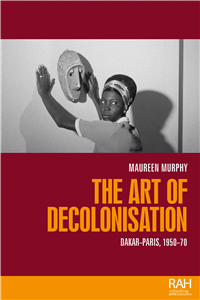
The art of decolonisation examines how artists challenged colonial legacies and reconfigured power through transnational networks of art and diplomacy. Adopting a global and transhistorical perspective, it explores artistic, political, and institutional relations between France and Senegal during decolonisation and the Cold War. From the emergence of a national modern art in Senegal to contested cultural policies and high-profile exhibitions-such as those featuring Picasso and Soulages in Dakar, or contemporary Senegalese art in Paris-this book traces the circulation of artworks, ideas, and influence across borders. It reveals how visual artists and filmmakers shaped a new artistic geopolitics between 1950 and 1970.
Reconsidering the accepted chronology of the 'global turn', The art of decolonisation shows that the roots of global art discourse run deeper than the 1990s, and were already forming during the era of independence struggles.
More Information
Rights Information
Albania, Algeria, Angola, Argentina, Armenia, Australia, Austria, Bahrain, Belgium, Belize, Benin, Bolivia, Bosnia and Herzegovina, Botswana, Brazil, Bulgaria, Burkina Faso, Burundi, Cameroon, Canada, Cape Verde, Central African Republic, Chad, Chile, China, Colombia, Comoros, Congo [DRC], Congo, Republic of the, Costa Rica, Ivory Coast, Croatia, Czech Republic, Denmark, Djibouti, Ecuador, Egypt, El Salvador, Equatorial Guinea, Eritrea, Estonia, Ethiopia, Faroe Islands, Finland, France, French Guiana, Gabon, Gambia, Georgia, Germany, Ghana, Greece, Guatemala, Guinea, Guinea-Bissau, Guyana, Honduras, Hongkong, Hungary, Iceland, India, Indonesia, Iran, Iraq, Ireland, Israel, Italy, Japan, Jordan, Kazakhstan, Kenya, Kuwait, Latvia, Lebanon, Lesotho, Liberia, Libya, Lithuania, Luxembourg, Macau, China, Macedonia [FYROM], Madagascar, Malawi, Malaysia, Mali, Malta, Mauritania, Mauritius, Mayotte, Mexico, Mongolia, Montenegro, Morocco, Mozambique, Namibia, Netherlands, New Zealand, Nicaragua, Niger, Nigeria, Norway, Oman, Pakistan, Panama, Paraguay, Peru, Philippines, Poland, Portugal, Puerto Rico, Qatar, Reunion, Romania, Russia, Rwanda, Saint Helena, Sao Tome and Principe, Saudi Arabia, Senegal, Serbia, Seychelles, Sierra Leone, Singapore, Slovakia, Slovenia, Somalia, South Africa, South Korea, Spain, Sri Lanka, Sudan, Suriname, Swaziland, Sweden, Switzerland, Syria, Taiwan, Tanzania, Thailand, Timor-Leste, Togo, Tokelau, Tunisia, Turkey, Uganda, Ukraine, United Arab Emirates, United Kingdom, United States, Uruguay, Venezuela, Vietnam, Western Sahara, Yemen, Zambia, Zimbabwe, South Sudan, Cyprus, Palestine, Bangladesh, Cambodia, Liechtenstein, Azerbaijan, Jamaica, Kyrgyzstan, Dominican Republic, Myanmar, Monaco
Endorsements
What role did art play in the process of decolonisation, and what strategies were developed by artists to reconfigure power relations and artistic practices? How can modernism be decentered and the 1950s to 1970s rethought from a global and interconnected perspective? The art of decolonisation adopts a transnational and transhistorical lens to examine the artistic, political, and diplomatic relations between a former colonial power and an emancipated colony at the time of decolonisation and the Cold War. Focusing on France and Senegal, it explores how the circulation of objects, artists, and ideas reveals the power struggles that shaped the art scene between 1950 and 1970. From the development of a national modern art in Senegal to challenges to the cooperation policies between the two countries, and from the 'Picasso' and 'Soulages' exhibitions held in Dakar in the 1970s to the 1974 exhibition of contemporary Senegalese art in Paris, a new artistic geopolitics was taking shape-one in which visual artists and filmmakers played an active role. This book also invites a rethinking of the commonly accepted historiography of the 'global turn', demonstrating that its origins lie well before the 1990s.
Reviews
What role did art play in the process of decolonisation, and what strategies were developed by artists to reconfigure power relations and artistic practices? How can modernism be decentered and the 1950s to 1970s rethought from a global and interconnected perspective? The art of decolonisation adopts a transnational and transhistorical lens to examine the artistic, political, and diplomatic relations between a former colonial power and an emancipated colony at the time of decolonisation and the Cold War. Focusing on France and Senegal, it explores how the circulation of objects, artists, and ideas reveals the power struggles that shaped the art scene between 1950 and 1970. From the development of a national modern art in Senegal to challenges to the cooperation policies between the two countries, and from the 'Picasso' and 'Soulages' exhibitions held in Dakar in the 1970s to the 1974 exhibition of contemporary Senegalese art in Paris, a new artistic geopolitics was taking shape-one in which visual artists and filmmakers played an active role. This book also invites a rethinking of the commonly accepted historiography of the 'global turn', demonstrating that its origins lie well before the 1990s.
Author Biography
Maureen Murphy is Professor of Art history at University Paris-Nanterre
 Trusted Partner

Manchester University Press
Manchester University Press is a leading UK publisher known for excellent research in the humanities and social sciences.
View all titlesBibliographic Information
- Publisher Manchester University Press
- Publication Date April 2026
- Orginal LanguageEnglish
- ISBN/Identifier 9781526175250 / 1526175258
- Publication Country or regionUnited Kingdom
- FormatPrint PDF
- Pages288
- ReadershipGeneral/trade
- Publish StatusPublished
- Dimensions234 X 156 mm
- Biblio NotesDerived from Proprietary 5909
- SeriesRethinking Art's Histories
- Reference Code15691
Thank you for proceeding with this offer.
Manchester University Press has chosen to review this offer before it proceeds.
You will receive an email update that will bring you back to complete the process.
You can also check the status in the My Offers area
Manchester University Press has chosen to review this offer before it proceeds.
You will receive an email update that will bring you back to complete the process.
You can also check the status in the My Offers area

Please wait while the payment is being prepared.
Do not close this window.

(c) Copyright 2026 - Frankfurter Buchmesse GmbH. All Right Reserved