
Humanities & Social Sciences
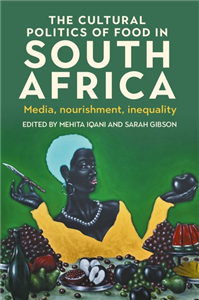
The cultural politics of food in South Africa
Media, nourishment, inequality
by Mehita Iqani, Sarah Gibson
Description
Food is both a material system of nourishment, necessary for human survival, and a communicative system that signifies multiple meanings across human cultures. This book explores the cultural politics of food in the South African context, bringing together a range of disciplinary perspectives on the links between media, nourishment, and inequality. The chapters all highlight the multiplicity of meanings that food has in South African society. These include historical perspectives on the impact of colonialism, migration and apartheid had on food and foodways in South Africa; sociological interventions on food and society; aesthetic practices in relation to food; and mediated food cultures in South Africa. Taken together, the book critically explores the multiple ways in which food is never just food, and always linked to complex and shifting modalities of meaning and knowledge in the South African context.
More Information
Rights Information
Albania, Algeria, Angola, Argentina, Armenia, Australia, Austria, Bahrain, Belgium, Belize, Benin, Bolivia, Bosnia and Herzegovina, Botswana, Brazil, Bulgaria, Burkina Faso, Burundi, Cameroon, Canada, Cape Verde, Central African Republic, Chad, Chile, China, Colombia, Comoros, Congo [DRC], Congo, Republic of the, Costa Rica, Ivory Coast, Croatia, Czech Republic, Denmark, Djibouti, Ecuador, Egypt, El Salvador, Equatorial Guinea, Eritrea, Estonia, Ethiopia, Faroe Islands, Finland, France, French Guiana, Gabon, Gambia, Georgia, Germany, Ghana, Greece, Guatemala, Guinea, Guinea-Bissau, Guyana, Honduras, Hongkong, Hungary, Iceland, India, Indonesia, Iran, Iraq, Ireland, Israel, Italy, Japan, Jordan, Kazakhstan, Kenya, Kuwait, Latvia, Lebanon, Lesotho, Liberia, Libya, Lithuania, Luxembourg, Macau, China, Macedonia [FYROM], Madagascar, Malawi, Malaysia, Mali, Malta, Mauritania, Mauritius, Mayotte, Mexico, Mongolia, Montenegro, Morocco, Mozambique, Namibia, Netherlands, New Zealand, Nicaragua, Niger, Nigeria, Norway, Oman, Pakistan, Panama, Paraguay, Peru, Philippines, Poland, Portugal, Puerto Rico, Qatar, Reunion, Romania, Russia, Rwanda, Saint Helena, Sao Tome and Principe, Saudi Arabia, Senegal, Serbia, Seychelles, Sierra Leone, Singapore, Slovakia, Slovenia, Somalia, South Africa, South Korea, Spain, Sri Lanka, Sudan, Suriname, Swaziland, Sweden, Switzerland, Syria, Taiwan, Tanzania, Thailand, Timor-Leste, Togo, Tokelau, Tunisia, Turkey, Uganda, Ukraine, United Arab Emirates, United Kingdom, United States, Uruguay, Venezuela, Vietnam, Western Sahara, Yemen, Zambia, Zimbabwe, South Sudan, Cyprus, Palestine, Bangladesh, Cambodia, Liechtenstein, Azerbaijan, Jamaica, Kyrgyzstan, Dominican Republic, Myanmar, Monaco
Endorsements
This book straddles disciplines that are usually separated to provide an overview of how food both shapes and is shaped by interpersonal, psycho-social, socio-political and historical dynamics in South Africa. It courageously acknowledges and respects a very wide range of disciplinary and theoretical approaches to food in South Africa. Desiree Lewis, Professor, University of the Western Cape Food is never just food. This interdisciplinary volume examines the cultural politics of food in South Africa, revealing how nourishment is bound up with histories of colonialism, apartheid, migration and enduring inequality. Drawing on perspectives from media studies, sociology, history and cultural studies, the chapters explore how food functions as a site of identity, resistance, memory and aspiration. From Indigenous food systems and missionary food regimes to television, advertising and social media, the book traces how meanings around food are produced, contested and mediated. It considers the everyday and the symbolic, from home-cooked meals and community cookbooks to performances of culinary capital within foodie cultures. Through this diverse and critical lens, the volume argues that food in South Africa cannot be separated from the power structures and social dynamics that shape it. In doing so, it offers a vital counterpoint to dominant narratives from the Global North, contributing to a richer understanding of how food intersects with representation, access and cultural expression in the Global South.
Reviews
This book straddles disciplines that are usually separated to provide an overview of how food both shapes and is shaped by interpersonal, psycho-social, socio-political and historical dynamics in South Africa. It courageously acknowledges and respects a very wide range of disciplinary and theoretical approaches to food in South Africa. Desiree Lewis, Professor, University of the Western Cape Food is never just food. This interdisciplinary volume examines the cultural politics of food in South Africa, revealing how nourishment is bound up with histories of colonialism, apartheid, migration and enduring inequality. Drawing on perspectives from media studies, sociology, history and cultural studies, the chapters explore how food functions as a site of identity, resistance, memory and aspiration. From Indigenous food systems and missionary food regimes to television, advertising and social media, the book traces how meanings around food are produced, contested and mediated. It considers the everyday and the symbolic, from home-cooked meals and community cookbooks to performances of culinary capital within foodie cultures. Through this diverse and critical lens, the volume argues that food in South Africa cannot be separated from the power structures and social dynamics that shape it. In doing so, it offers a vital counterpoint to dominant narratives from the Global North, contributing to a richer understanding of how food intersects with representation, access and cultural expression in the Global South.
Author Biography
Mehita Iqani isProfessor of Communications in the Journalism Department and SARCHi Chairholder at Stellenbosch University Sarah Gibson is Associate Professor in the Centre for Communication and Media in Society at the University of KwaZulu-Natal
 Trusted Partner

Manchester University Press
Manchester University Press is a leading UK publisher known for excellent research in the humanities and social sciences.
View all titlesBibliographic Information
- Publisher Manchester University Press
- Publication Date March 2026
- Orginal LanguageEnglish
- ISBN/Identifier 9781526184740 / 1526184745
- Publication Country or regionUnited Kingdom
- FormatPrint PDF
- Pages240
- ReadershipCollege/higher education; Professional and scholarly
- Publish StatusPublished
- Dimensions234 X 156 mm
- Biblio NotesDerived from Proprietary 6387
- Reference Code17083
Thank you for proceeding with this offer.
Manchester University Press has chosen to review this offer before it proceeds.
You will receive an email update that will bring you back to complete the process.
You can also check the status in the My Offers area
Manchester University Press has chosen to review this offer before it proceeds.
You will receive an email update that will bring you back to complete the process.
You can also check the status in the My Offers area

Please wait while the payment is being prepared.
Do not close this window.

(c) Copyright 2026 - Frankfurter Buchmesse GmbH. All Right Reserved