
Literature & Literary Studies
Translating hell
Vernacular theology and apocrypha in the medieval North Sea
by Stephen C. E. Hopkins
Description
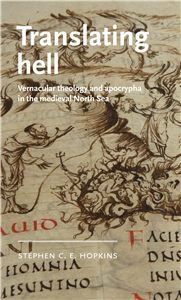
In the Middle Ages, hell was useful because it was vaguely defined. Canonical scriptures scarcely mention hell, leaving much to the imaginations of early Christians, who used it to sort out who belonged within the faith. This book explores how hell became a place for literary experiments with local challenges in theology and identity. Following the reception and transformations of two popular hell apocrypha, it argues that they served as this role because of their liminal textual authority. As noncanonical scriptures, apocrypha afforded medieval writers space to revise their hells (since they were not actually scripture), while also encouraging readers to revere those experiments as valid (since they seemed like scripture). The book brings together adaptations from early medieval England, Iceland, Ireland, and Wales, placing the early vernacular theologies of the North Sea in comparative conversation.
More Information
Rights Information
Albania, Algeria, Angola, Argentina, Armenia, Australia, Austria, Bahrain, Belgium, Belize, Benin, Bolivia, Bosnia and Herzegovina, Botswana, Brazil, Bulgaria, Burkina Faso, Burundi, Cameroon, Canada, Cape Verde, Central African Republic, Chad, Chile, China, Colombia, Comoros, Congo [DRC], Congo, Republic of the, Costa Rica, Ivory Coast, Croatia, Czech Republic, Denmark, Djibouti, Ecuador, Egypt, El Salvador, Equatorial Guinea, Eritrea, Estonia, Ethiopia, Faroe Islands, Finland, France, French Guiana, Gabon, Gambia, Georgia, Germany, Ghana, Greece, Guatemala, Guinea, Guinea-Bissau, Guyana, Honduras, Hongkong, Hungary, Iceland, India, Indonesia, Iran, Iraq, Ireland, Israel, Italy, Japan, Jordan, Kazakhstan, Kenya, Kuwait, Latvia, Lebanon, Lesotho, Liberia, Libya, Lithuania, Luxembourg, Macau, China, Macedonia [FYROM], Madagascar, Malawi, Malaysia, Mali, Malta, Mauritania, Mauritius, Mayotte, Mexico, Mongolia, Montenegro, Morocco, Mozambique, Namibia, Netherlands, New Zealand, Nicaragua, Niger, Nigeria, Norway, Oman, Pakistan, Panama, Paraguay, Peru, Philippines, Poland, Portugal, Puerto Rico, Qatar, Reunion, Romania, Russia, Rwanda, Saint Helena, Sao Tome and Principe, Saudi Arabia, Senegal, Serbia, Seychelles, Sierra Leone, Singapore, Slovakia, Slovenia, Somalia, South Africa, South Korea, Spain, Sri Lanka, Sudan, Suriname, Swaziland, Sweden, Switzerland, Syria, Taiwan, Tanzania, Thailand, Timor-Leste, Togo, Tokelau, Tunisia, Turkey, Uganda, Ukraine, United Arab Emirates, United Kingdom, United States, Uruguay, Venezuela, Vietnam, Western Sahara, Yemen, Zambia, Zimbabwe, South Sudan, Cyprus, Palestine, Bangladesh, Cambodia, Liechtenstein, Azerbaijan, Jamaica, Kyrgyzstan, Dominican Republic, Myanmar, Monaco
Endorsements
In the Middle Ages, apocryphal literature was wildly popular because it answered questions raised (but unanswered) by canonical scriptures, especially questions about the nature of hell and who would find themselves there. In translating apocryphal visions of hell, vernacular writers customised the inferno to speak to local concerns about identity and belonging in locally significant ways. Because hell is only obliquely described in the Bible, there is a paradox: it is barely mapped out, and yet it is central for understandings of how salvation works, how the world ends, and how God metes out divine justice. Translating hell argues that this crucial but under-defined literary space invited extra-canonical embellishment from vernacular translators. Drawing upon a robust corpus of texts in Latin, Old Irish, Old English, Middle Welsh, and Old Norse, the book invites readers to consider the creative energies generated by the tensions between orthodox understandings of hell and localised versions, as translators sought to harness the power of vernacular words and genres to reinvent the inferno. The book analyses a wide range of poetic and prose literary texts to argue that the sheer variety found in medieval vernacular descriptions of hell represent not confusion or ignorance, but creativity. Thanks to the power of vernacular apocrypha, hell was translated and localised to solve regional problems of identity, belonging, and justice, delineating forms of belonging by reinterpreting and transmuting the boundaries of salvation and damnation across time, space, and theology.
Reviews
In the Middle Ages, apocryphal literature was wildly popular because it answered questions raised (but unanswered) by canonical scriptures, especially questions about the nature of hell and who would find themselves there. In translating apocryphal visions of hell, vernacular writers customised the inferno to speak to local concerns about identity and belonging in locally significant ways. Because hell is only obliquely described in the Bible, there is a paradox: it is barely mapped out, and yet it is central for understandings of how salvation works, how the world ends, and how God metes out divine justice. Translating hell argues that this crucial but under-defined literary space invited extra-canonical embellishment from vernacular translators. Drawing upon a robust corpus of texts in Latin, Old Irish, Old English, Middle Welsh, and Old Norse, the book invites readers to consider the creative energies generated by the tensions between orthodox understandings of hell and localised versions, as translators sought to harness the power of vernacular words and genres to reinvent the inferno. The book analyses a wide range of poetic and prose literary texts to argue that the sheer variety found in medieval vernacular descriptions of hell represent not confusion or ignorance, but creativity. Thanks to the power of vernacular apocrypha, hell was translated and localised to solve regional problems of identity, belonging, and justice, delineating forms of belonging by reinterpreting and transmuting the boundaries of salvation and damnation across time, space, and theology.
Author Biography
Stephen Hopkins is Assistant Professor of English Literature at the University of Virginia
 Trusted Partner

Manchester University Press
Manchester University Press is a leading UK publisher known for excellent research in the humanities and social sciences.
View all titlesBibliographic Information
- Publisher Manchester University Press
- Publication Date May 2026
- Orginal LanguageEnglish
- ISBN/Identifier 9781526175038 / 1526175037
- Publication Country or regionUnited Kingdom
- FormatPrint PDF
- Pages352
- ReadershipGeneral/trade
- Publish StatusPublished
- Dimensions216 X 138 mm
- Biblio NotesDerived from Proprietary 5902
- SeriesManchester Medieval Literature and Culture
- Reference Code15893
Thank you for proceeding with this offer.
Manchester University Press has chosen to review this offer before it proceeds.
You will receive an email update that will bring you back to complete the process.
You can also check the status in the My Offers area
Manchester University Press has chosen to review this offer before it proceeds.
You will receive an email update that will bring you back to complete the process.
You can also check the status in the My Offers area

Please wait while the payment is being prepared.
Do not close this window.

(c) Copyright 2026 - Frankfurter Buchmesse GmbH. All Right Reserved