
Humanities & Social Sciences
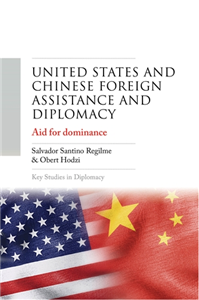
United States and Chinese foreign assistance and diplomacy
Aid for dominance
by Salvador Santino Regilme, Obert Hodzi
Description
Aid for Dominance addresses the analytic weaknesses of mainstream analysis of foreign aid, which often focuses on its material dimensions. The book underscores the constitutive relationship between foreign aid as a material resource and the diplomatic discourses and practices that constitute complex bilateral relations between donor and recipient states. Written by two leading scholars of contemporary United States and Chinese foreign policies in the Global South, Aid for Dominance offers a pioneering, theoretically conscious, and empirically rich account of the two great powers' grand strategies in the global development sector. By deploying a multidisciplinary and comparative analysis, this book draws from a wide range of evidentiary materials from primary sources, including data from fieldwork interviews, government documents, local and international newspapers, speeches by high-ranking government officials and diplomats, and secondary data from scholarly publications and policy papers.
More Information
Rights Information
Albania, Algeria, Angola, Argentina, Armenia, Australia, Austria, Bahrain, Belgium, Belize, Benin, Bolivia, Bosnia and Herzegovina, Botswana, Brazil, Bulgaria, Burkina Faso, Burundi, Cameroon, Canada, Cape Verde, Central African Republic, Chad, Chile, China, Colombia, Comoros, Congo [DRC], Congo, Republic of the, Costa Rica, Ivory Coast, Croatia, Czech Republic, Denmark, Djibouti, Ecuador, Egypt, El Salvador, Equatorial Guinea, Eritrea, Estonia, Ethiopia, Faroe Islands, Finland, France, French Guiana, Gabon, Gambia, Georgia, Germany, Ghana, Greece, Guatemala, Guinea, Guinea-Bissau, Guyana, Honduras, Hongkong, Hungary, Iceland, India, Indonesia, Iran, Iraq, Ireland, Israel, Italy, Japan, Jordan, Kazakhstan, Kenya, Kuwait, Latvia, Lebanon, Lesotho, Liberia, Libya, Lithuania, Luxembourg, Macau, China, Macedonia [FYROM], Madagascar, Malawi, Malaysia, Mali, Malta, Mauritania, Mauritius, Mayotte, Mexico, Mongolia, Montenegro, Morocco, Mozambique, Namibia, Netherlands, New Zealand, Nicaragua, Niger, Nigeria, Norway, Oman, Pakistan, Panama, Paraguay, Peru, Philippines, Poland, Portugal, Puerto Rico, Qatar, Reunion, Romania, Russia, Rwanda, Saint Helena, Sao Tome and Principe, Saudi Arabia, Senegal, Serbia, Seychelles, Sierra Leone, Singapore, Slovakia, Slovenia, Somalia, South Africa, South Korea, Spain, Sri Lanka, Sudan, Suriname, Swaziland, Sweden, Switzerland, Syria, Taiwan, Tanzania, Thailand, Timor-Leste, Togo, Tokelau, Tunisia, Turkey, Uganda, Ukraine, United Arab Emirates, United Kingdom, United States, Uruguay, Venezuela, Vietnam, Western Sahara, Yemen, Zambia, Zimbabwe, South Sudan, Cyprus, Palestine, Bangladesh, Cambodia, Liechtenstein, Azerbaijan, Jamaica, Kyrgyzstan, Dominican Republic, Myanmar, Monaco
Endorsements
United States and Chinese foreign assistance and diplomacy underscores the constitutive relationship between foreign aid as a material resource and the diplomatic discourses and practices that constitute complex bilateral relations between donor and recipient states. Written by two leading scholars of contemporary United States and Chinese foreign policies in the Global South, it offers a pioneering, theoretically conscious, and empirically rich account of the two great powers' grand strategies in the global development sector. The book systematically demonstrates that notwithstanding the differences between the two programs, Chinese and US foreign aid portfolios demonstrate the strategic political and economic interests of the donor government. They do so in two ways: foreign aid programs shape the domestic politics of recipient countries to accommodate the donor government's policy preferences, and they seek to enhance the social reputation and legitimacy of the donor state in the international system. United States and Chinese foreign assistance and diplomacy is the first comprehensive and globally oriented analysis of United States and Chinese foreign aid programs and public diplomacy in the twenty-first century, with a particular focus on their material properties as well as ideational justifications and legitimation narratives. Regilme and Hodzi offer essential insights for scholars of world politics, development studies, and economics, as well as activists, practitioners, and policymakers in foreign aid and governance sectors.
Reviews
United States and Chinese foreign assistance and diplomacy underscores the constitutive relationship between foreign aid as a material resource and the diplomatic discourses and practices that constitute complex bilateral relations between donor and recipient states. Written by two leading scholars of contemporary United States and Chinese foreign policies in the Global South, it offers a pioneering, theoretically conscious, and empirically rich account of the two great powers' grand strategies in the global development sector. The book systematically demonstrates that notwithstanding the differences between the two programs, Chinese and US foreign aid portfolios demonstrate the strategic political and economic interests of the donor government. They do so in two ways: foreign aid programs shape the domestic politics of recipient countries to accommodate the donor government's policy preferences, and they seek to enhance the social reputation and legitimacy of the donor state in the international system. United States and Chinese foreign assistance and diplomacy is the first comprehensive and globally oriented analysis of United States and Chinese foreign aid programs and public diplomacy in the twenty-first century, with a particular focus on their material properties as well as ideational justifications and legitimation narratives. Regilme and Hodzi offer essential insights for scholars of world politics, development studies, and economics, as well as activists, practitioners, and policymakers in foreign aid and governance sectors.
Author Biography
Salvador Santino Regilmeis an Associate Professor of International Relations at Leiden University in the Netherlands. Obert Hodzi is an Associate Professor in Politics at the University of Liverpool, UK.
 Trusted Partner

Manchester University Press
Manchester University Press is a leading UK publisher known for excellent research in the humanities and social sciences.
View all titlesBibliographic Information
- Publisher Manchester University Press
- Publication Date January 2026
- Orginal LanguageEnglish
- ISBN/Identifier 9781526183194 / 1526183196
- Publication Country or regionUnited Kingdom
- FormatPrint PDF
- Pages216
- ReadershipCollege/higher education; Professional and scholarly
- Publish StatusPublished
- Dimensions234 X 156 mm
- Biblio NotesDerived from Proprietary 6339
- SeriesKey Studies in Diplomacy
- Reference Code16899
Thank you for proceeding with this offer.
Manchester University Press has chosen to review this offer before it proceeds.
You will receive an email update that will bring you back to complete the process.
You can also check the status in the My Offers area
Manchester University Press has chosen to review this offer before it proceeds.
You will receive an email update that will bring you back to complete the process.
You can also check the status in the My Offers area

Please wait while the payment is being prepared.
Do not close this window.

(c) Copyright 2026 - Frankfurter Buchmesse GmbH. All Right Reserved