
Humanities & Social Sciences
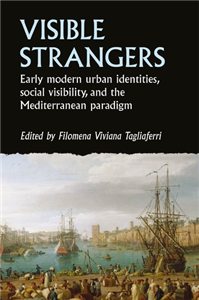
Visible strangers
Early modern urban identities, social visibility, and the Mediterranean paradigm
by Filomena Viviana Tagliaferri
Description
Visible strangers is a collection of essays on the nature of cultural pluralism in the Mediterranean and the different ways in which this was managed in various cities during the early modern period. The book's nine chapters considers new case studies, where authors offer a diachronic view of the nature of the co-presence of minorities in different urban spaces, investigated through the lens of the fascinating relationship between visibility and identity. The considered case studies cover different areas of the Mediterranean space: the Adriatic, the Ottoman empire between Asia and Africa, the Italian and Iberian peninsulas, the island of Malta, at the centre of the Mare Nostrum and host to many of its influences. The analysis of the way cultural pluralism expressed itself wishes to overcome the bias induced by 'Mediterraneanism', that has led to the Mediterranean as an area of study hardening into a conceptual category.
More Information
Rights Information
Albania, Algeria, Angola, Argentina, Armenia, Australia, Austria, Bahrain, Belgium, Belize, Benin, Bolivia, Bosnia and Herzegovina, Botswana, Brazil, Bulgaria, Burkina Faso, Burundi, Cameroon, Canada, Cape Verde, Central African Republic, Chad, Chile, China, Colombia, Comoros, Congo [DRC], Congo, Republic of the, Costa Rica, Ivory Coast, Croatia, Czech Republic, Denmark, Djibouti, Ecuador, Egypt, El Salvador, Equatorial Guinea, Eritrea, Estonia, Ethiopia, Faroe Islands, Finland, France, French Guiana, Gabon, Gambia, Georgia, Germany, Ghana, Greece, Guatemala, Guinea, Guinea-Bissau, Guyana, Honduras, Hongkong, Hungary, Iceland, India, Indonesia, Iran, Iraq, Ireland, Israel, Italy, Japan, Jordan, Kazakhstan, Kenya, Kuwait, Latvia, Lebanon, Lesotho, Liberia, Libya, Lithuania, Luxembourg, Macau, China, Macedonia [FYROM], Madagascar, Malawi, Malaysia, Mali, Malta, Mauritania, Mauritius, Mayotte, Mexico, Mongolia, Montenegro, Morocco, Mozambique, Namibia, Netherlands, New Zealand, Nicaragua, Niger, Nigeria, Norway, Oman, Pakistan, Panama, Paraguay, Peru, Philippines, Poland, Portugal, Puerto Rico, Qatar, Reunion, Romania, Russia, Rwanda, Saint Helena, Sao Tome and Principe, Saudi Arabia, Senegal, Serbia, Seychelles, Sierra Leone, Singapore, Slovakia, Slovenia, Somalia, South Africa, South Korea, Spain, Sri Lanka, Sudan, Suriname, Swaziland, Sweden, Switzerland, Syria, Taiwan, Tanzania, Thailand, Timor-Leste, Togo, Tokelau, Tunisia, Turkey, Uganda, Ukraine, United Arab Emirates, United Kingdom, United States, Uruguay, Venezuela, Vietnam, Western Sahara, Yemen, Zambia, Zimbabwe, South Sudan, Cyprus, Palestine, Bangladesh, Cambodia, Liechtenstein, Azerbaijan, Jamaica, Kyrgyzstan, Dominican Republic, Myanmar, Monaco
Endorsements
Visible strangers is a collective work that rethinks the study of the identity categories that characterised the Mediterranean space in the early modern era. The book's nine chapters consider new case studies, offering a diachronic overview on the management, expression, and negotiation of diversity in early modern cities and how this evolved from the 16th to the 18th century. Central to the volume is the concept of visibility as a unique form of identity expression and as a valuable opportunity to access otherness and cultural negotiation. Through the analysis of case studies of Adriatic cities such as Zadar, Venice, Ancona, and Dubrovink; of Valletta's Grand Port; of the Italian and Iberian peninsulas; and of travel reports to Istanbul and Alexandria, the book offers an expanded view of the materiality of cultural affiliations in the early modern Mediterranean. Each contribution offers a paradigm of historical and cultural phenomena related to coexistence, considered in the framework of a Mediterranean region as a system of microecologies connected by a shared history. This perspective provides the basis for discussing a Mediterranean model that can be usefully employed to investigate cultural pluralism in areas with similar characteristics, while overcoming the bias induced by 'Mediterraneanism'.
Reviews
Visible strangers is a collective work that rethinks the study of the identity categories that characterised the Mediterranean space in the early modern era. The book's nine chapters consider new case studies, offering a diachronic overview on the management, expression, and negotiation of diversity in early modern cities and how this evolved from the 16th to the 18th century. Central to the volume is the concept of visibility as a unique form of identity expression and as a valuable opportunity to access otherness and cultural negotiation. Through the analysis of case studies of Adriatic cities such as Zadar, Venice, Ancona, and Dubrovink; of Valletta's Grand Port; of the Italian and Iberian peninsulas; and of travel reports to Istanbul and Alexandria, the book offers an expanded view of the materiality of cultural affiliations in the early modern Mediterranean. Each contribution offers a paradigm of historical and cultural phenomena related to coexistence, considered in the framework of a Mediterranean region as a system of microecologies connected by a shared history. This perspective provides the basis for discussing a Mediterranean model that can be usefully employed to investigate cultural pluralism in areas with similar characteristics, while overcoming the bias induced by 'Mediterraneanism'.
Author Biography
Filomena Viviana Tagliaferri is a Lecturer of Early Modern History at the University of Modena and Reggio Emilia and a Research Fellow in Early Modern History and the Institute of Mediterranean Europe History of the Italian Research Council (ISEM-CNR)
 Trusted Partner

Manchester University Press
Manchester University Press is a leading UK publisher known for excellent research in the humanities and social sciences.
View all titlesBibliographic Information
- Publisher Manchester University Press
- Publication Date September 2025
- Orginal LanguageEnglish
- ISBN/Identifier 9781526182050 / 152618205X
- Publication Country or regionUnited Kingdom
- FormatPrint PDF
- Pages312
- ReadershipGeneral/trade
- Publish StatusPublished
- Dimensions234 X 156 mm
- Biblio NotesDerived from Proprietary 6302
- SeriesStudies in Early Modern European History
- Reference Code16777
Thank you for proceeding with this offer.
Manchester University Press has chosen to review this offer before it proceeds.
You will receive an email update that will bring you back to complete the process.
You can also check the status in the My Offers area
Manchester University Press has chosen to review this offer before it proceeds.
You will receive an email update that will bring you back to complete the process.
You can also check the status in the My Offers area

Please wait while the payment is being prepared.
Do not close this window.

(c) Copyright 2026 - Frankfurter Buchmesse GmbH. All Right Reserved