
Literature & Literary Studies
Description
A compelling tour of Shakespeare's England that makes a powerful contribution to the 'authorship question'.
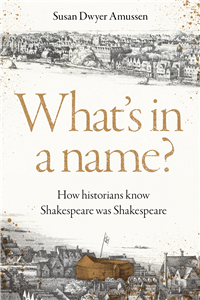
How do we know Shakespeare was Shakespeare? Could a glover's son who left school at fifteen really be the author behind such masterpieces as Hamlet, King Lear and The Tempest?
Yes! says historian Susan Amussen. She transports readers back to early modern England, to travel the path that carried William Shakespeare from humble origins in Stratford to literary greatness on the London stage. This was a society undergoing rapid change. Grammar schools made education in Latin and Greek available to commoners, while touring players brought the latest dramatic productions to the masses. And in London, a metropolis filled with European visitors, ordinary people had the opportunity to see courtly life up close.
No serious historian doubts that Shakespeare was the author of the plays that bear his name. Susan Amussen shares what they know: that Shakespeare's England was a complex and cosmopolitan place, with everything a talented young playwright needed to develop his craft and furnish his imagination.
More Information
Rights Information
Albania, Algeria, Angola, Argentina, Armenia, Australia, Austria, Bahrain, Belgium, Belize, Benin, Bolivia, Bosnia and Herzegovina, Botswana, Brazil, Bulgaria, Burkina Faso, Burundi, Cameroon, Canada, Cape Verde, Central African Republic, Chad, Chile, China, Colombia, Comoros, Congo [DRC], Congo, Republic of the, Costa Rica, Ivory Coast, Croatia, Czech Republic, Denmark, Djibouti, Ecuador, Egypt, El Salvador, Equatorial Guinea, Eritrea, Estonia, Ethiopia, Faroe Islands, Finland, France, French Guiana, Gabon, Gambia, Georgia, Germany, Ghana, Greece, Guatemala, Guinea, Guinea-Bissau, Guyana, Honduras, Hongkong, Hungary, Iceland, India, Indonesia, Iran, Iraq, Ireland, Israel, Italy, Japan, Jordan, Kazakhstan, Kenya, Kuwait, Latvia, Lebanon, Lesotho, Liberia, Libya, Lithuania, Luxembourg, Macau, China, Macedonia [FYROM], Madagascar, Malawi, Malaysia, Mali, Malta, Mauritania, Mauritius, Mayotte, Mexico, Mongolia, Montenegro, Morocco, Mozambique, Namibia, Netherlands, New Zealand, Nicaragua, Niger, Nigeria, Norway, Oman, Pakistan, Panama, Paraguay, Peru, Philippines, Poland, Portugal, Puerto Rico, Qatar, Reunion, Romania, Russia, Rwanda, Saint Helena, Sao Tome and Principe, Saudi Arabia, Senegal, Serbia, Seychelles, Sierra Leone, Singapore, Slovakia, Slovenia, Somalia, South Africa, South Korea, Spain, Sri Lanka, Sudan, Suriname, Swaziland, Sweden, Switzerland, Syria, Taiwan, Tanzania, Thailand, Timor-Leste, Togo, Tokelau, Tunisia, Turkey, Uganda, Ukraine, United Arab Emirates, United Kingdom, United States, Uruguay, Venezuela, Vietnam, Western Sahara, Yemen, Zambia, Zimbabwe, South Sudan, Cyprus, Palestine, Bangladesh, Cambodia, Liechtenstein, Azerbaijan, Jamaica, Kyrgyzstan, Dominican Republic, Myanmar, Monaco
Endorsements
How do we know Shakespeare was Shakespeare? Could a glover's son who left school at fifteen really be the author behind such masterpieces as Hamlet, King Lear and The Tempest? Yes! says historian Susan Amussen. She transports readers back to early modern England, to travel the path that carried William Shakespeare from humble origins in Stratford to literary greatness on the London stage. This was a society undergoing rapid change. Grammar schools made education in Latin and Greek available to commoners, while touring players brought the latest dramatic productions to the masses. And in London, a metropolis filled with European visitors, ordinary people had the opportunity to see courtly life up close. No serious historian doubts that Shakespeare was the author of the plays that bear his name. Susan Amussen shares what they know: that Shakespeare's England was a complex and cosmopolitan place, with everything a talented young playwright needed to develop his craft and furnish his imagination.
Reviews
How do we know Shakespeare was Shakespeare? Could a glover's son who left school at fifteen really be the author behind such masterpieces as Hamlet, King Lear and The Tempest? Yes! says historian Susan Amussen. She transports readers back to early modern England, to travel the path that carried William Shakespeare from humble origins in Stratford to literary greatness on the London stage. This was a society undergoing rapid change. Grammar schools made education in Latin and Greek available to commoners, while touring players brought the latest dramatic productions to the masses. And in London, a metropolis filled with European visitors, ordinary people had the opportunity to see courtly life up close. No serious historian doubts that Shakespeare was the author of the plays that bear his name. Susan Amussen shares what they know: that Shakespeare's England was a complex and cosmopolitan place, with everything a talented young playwright needed to develop his craft and furnish his imagination.
Author Biography
Susan D. Amussen is Distinguished Professor of History at the University of California, Merced. She is the author of several books, most recently Gender, Culture and Politics in England, 1560-1603: Turning the World Upside Down, co-written with David Underdown (2017). She serves as co-editor of volume III of The New Cambridge History of Britain (2025). While her primary work has been as a social historian focused on gender, race and class, her research has been used extensively by literary scholars, with whom she has been in conversation for over thirty years.
 Trusted Partner

Manchester University Press
Manchester University Press is a leading UK publisher known for excellent research in the humanities and social sciences.
View all titlesBibliographic Information
- Publisher Manchester University Press
- Publication Date March 2026
- Orginal LanguageEnglish
- ISBN/Identifier 9781526191908 / 1526191903
- Publication Country or regionUnited Kingdom
- FormatPrint PDF
- Pages216
- ReadershipGeneral/trade
- Publish StatusPublished
- Dimensions234 X 156 mm
- Biblio NotesDerived from Proprietary 6568
- Reference Code17836
Thank you for proceeding with this offer.
Manchester University Press has chosen to review this offer before it proceeds.
You will receive an email update that will bring you back to complete the process.
You can also check the status in the My Offers area
Manchester University Press has chosen to review this offer before it proceeds.
You will receive an email update that will bring you back to complete the process.
You can also check the status in the My Offers area

Please wait while the payment is being prepared.
Do not close this window.

(c) Copyright 2026 - Frankfurter Buchmesse GmbH. All Right Reserved