
Literature & Literary Studies
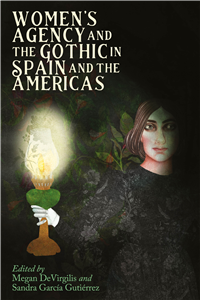
Women’s Agency and the Gothic in Spain and the Americas
by Megan DeVirgilis, Sandra García Gutiérrez
Description
This volume has emerged to fulfill two main purposes: Primarily, to constitute the first collaborative work that traces the relationship between the Gothic and Women in Spain and the Americas, but also, to surpass the term 'Female Gothic,' coined by Ellen Moers, by transferring the focus towards women and their agency as writers, readers and characters. This volume functions as a manifesto per se to open new avenues into understanding how women have interacted with the Gothic between the nineteenth and twenty-first centuries in Spain and the Americas. The question, we determine, is not simply about identity, but rather about agency. We define women's agency as the total capacity of characters, authors and readers to act freely within a social framework in relation to gothic texts. In our exploration of authorship, we reject the claim that the Gothic is a simplistic literary genre, instead sustaining that the plasticity of the Gothic has enabled it to survive for centuries; by shifting from a genre to a mode, it has surpassed literary forms and invaded all kinds of media: from film to music and merchandise such as clothing and pop culture collectables, fostering an authentic goth fandom.
More Information
Rights Information
Albania, Algeria, Angola, Argentina, Armenia, Australia, Austria, Bahrain, Belgium, Belize, Benin, Bolivia, Bosnia and Herzegovina, Botswana, Brazil, Bulgaria, Burkina Faso, Burundi, Cameroon, Canada, Cape Verde, Central African Republic, Chad, Chile, China, Colombia, Comoros, Congo [DRC], Congo, Republic of the, Costa Rica, Ivory Coast, Croatia, Czech Republic, Denmark, Djibouti, Ecuador, Egypt, El Salvador, Equatorial Guinea, Eritrea, Estonia, Ethiopia, Faroe Islands, Finland, France, French Guiana, Gabon, Gambia, Georgia, Germany, Ghana, Greece, Guatemala, Guinea, Guinea-Bissau, Guyana, Honduras, Hongkong, Hungary, Iceland, India, Indonesia, Iran, Iraq, Ireland, Israel, Italy, Japan, Jordan, Kazakhstan, Kenya, Kuwait, Latvia, Lebanon, Lesotho, Liberia, Libya, Lithuania, Luxembourg, Macau, China, Macedonia [FYROM], Madagascar, Malawi, Malaysia, Mali, Malta, Mauritania, Mauritius, Mayotte, Mexico, Mongolia, Montenegro, Morocco, Mozambique, Namibia, Netherlands, New Zealand, Nicaragua, Niger, Nigeria, Norway, Oman, Pakistan, Panama, Paraguay, Peru, Philippines, Poland, Portugal, Puerto Rico, Qatar, Reunion, Romania, Russia, Rwanda, Saint Helena, Sao Tome and Principe, Saudi Arabia, Senegal, Serbia, Seychelles, Sierra Leone, Singapore, Slovakia, Slovenia, Somalia, South Africa, South Korea, Spain, Sri Lanka, Sudan, Suriname, Swaziland, Sweden, Switzerland, Syria, Taiwan, Tanzania, Thailand, Timor-Leste, Togo, Tokelau, Tunisia, Turkey, Uganda, Ukraine, United Arab Emirates, United Kingdom, United States, Uruguay, Venezuela, Vietnam, Western Sahara, Yemen, Zambia, Zimbabwe, South Sudan, Cyprus, Palestine, Bangladesh, Cambodia, Liechtenstein, Azerbaijan, Jamaica, Kyrgyzstan, Dominican Republic, Myanmar, Monaco
Endorsements
This groundbreaking volume uncovers the longstanding and dynamic relationship between women and the gothic mode across Spain and Latin America. Focusing on literary production from the nineteenth to the twenty-first centuries, the book exposes how shifting ideological coordinates have shaped women authors' use of gothic strategies over time to challenge patriarchal norms and oppressive laws within the frameworks of bourgeois capitalism and neoliberalism. Moving away from critical approaches that centre women's vulnerability and distress, the volume situates women's agency-as authors, readers, and protagonists-as fundamental to the Gothic. Bringing together a dynamic collection of essays, the volume offers fresh insights into the intersections of cultural production, feminism/activism, ecological crises, colonialism, and neoliberalism. Domestic violence and femicide, for example, are not simply "private" horrors but symptoms of national and global crises that women have been actively challenging for centuries across political, legal, and literary landscapes with nuance and success. Similarly, women authors of the Gothic engage bodily mutations and zombification not only to criticise ecological destruction and the exploitation of bodies, but to propose alternative models and ways of knowing. Through its feminocentric and transhispanic approaches, this collection challenges traditional readings of the Gothic, offering readers deeper insight into its manifestations beyond the English canon and the transformative power of women's writing.
Reviews
This groundbreaking volume uncovers the longstanding and dynamic relationship between women and the gothic mode across Spain and Latin America. Focusing on literary production from the nineteenth to the twenty-first centuries, the book exposes how shifting ideological coordinates have shaped women authors' use of gothic strategies over time to challenge patriarchal norms and oppressive laws within the frameworks of bourgeois capitalism and neoliberalism. Moving away from critical approaches that centre women's vulnerability and distress, the volume situates women's agency-as authors, readers, and protagonists-as fundamental to the Gothic. Bringing together a dynamic collection of essays, the volume offers fresh insights into the intersections of cultural production, feminism/activism, ecological crises, colonialism, and neoliberalism. Domestic violence and femicide, for example, are not simply "private" horrors but symptoms of national and global crises that women have been actively challenging for centuries across political, legal, and literary landscapes with nuance and success. Similarly, women authors of the Gothic engage bodily mutations and zombification not only to criticise ecological destruction and the exploitation of bodies, but to propose alternative models and ways of knowing. Through its feminocentric and transhispanic approaches, this collection challenges traditional readings of the Gothic, offering readers deeper insight into its manifestations beyond the English canon and the transformative power of women's writing.
Author Biography
Megan DeVirgilis is Associate Professor of Spanish at Morgan State University Sandra García Gutiérrez is Assistant Professor of Spanish and Iberian Studies at Lamar University
 Trusted Partner

Manchester University Press
Manchester University Press is a leading UK publisher known for excellent research in the humanities and social sciences.
View all titlesBibliographic Information
- Publisher Manchester University Press
- Publication Date May 2026
- Orginal LanguageEnglish
- ISBN/Identifier 9781526176721 / 1526176726
- Publication Country or regionUnited Kingdom
- FormatPrint PDF
- Pages288
- ReadershipGeneral/trade
- Publish StatusPublished
- Dimensions234 X 156 mm
- Biblio NotesDerived from Proprietary 5997
- Reference Code15988
Thank you for proceeding with this offer.
Manchester University Press has chosen to review this offer before it proceeds.
You will receive an email update that will bring you back to complete the process.
You can also check the status in the My Offers area
Manchester University Press has chosen to review this offer before it proceeds.
You will receive an email update that will bring you back to complete the process.
You can also check the status in the My Offers area

Please wait while the payment is being prepared.
Do not close this window.

(c) Copyright 2026 - Frankfurter Buchmesse GmbH. All Right Reserved