Your Search Results

      • Trusted Partner
        Literature & Literary Studies
        October 2020

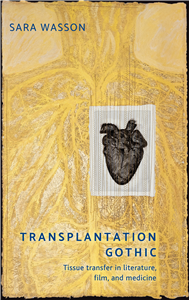
        Transplantation Gothic

        Tissue transfer in literature, film and medicine

        by Sara Wasson

        Transplantation Gothic is a shadow cultural history of transplantation, as mediated through medical writing, science fiction, life writing and visual arts in a Gothic mode, from the nineteenth-century to the present. The works explore the experience of donor/suppliers, recipients and practitioners, and simultaneously express transfer-related suffering and are complicit in its erasure. Examining texts from Europe, North America and India, the book resists exoticising predatorial tissue economies and considers fantasies of harvest as both product and symbol of structural ruination under neoliberal capitalism. In their efforts to articulate bioengineered hybridity, these works are not only anxious but speculative. The book will be of interest to academics and students researching Gothic studies, science fiction, critical medical humanities and cultural studies of transplantation.

      • Trusted Partner
        Fiction
        October 2016

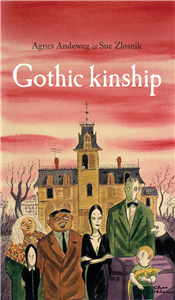
        Gothic kinship

        by Agnes Andeweg, Sue Zlosnik

        Although the preoccupation of Gothic storytelling with the family has often been observed, it invites a more systematic exploration. Gothic kinship brings together case studies of Gothic kinship ties in film and literature and offers a synthesis and theorisation of the different appearances of the Gothic family. Writers discussed include early British Gothic writers such as Eleanor Sleath and Louisa Sidney Stanhope as well as a range of later authors writing in English, including Elizabeth Gaskell, William March, Stephen King, Poppy Z. Brite, Patricia Duncker, J. K. Rowling and Audrey Niffenegger. There are also essays on Dutch authors (Louis Couperus and Renate Dorrestein) and on the film directors Wes Craven and Steven Sheil. Arranged chronologically, the various contributions show that both early and contemporary Gothic display very diverse kinship ties, ranging from metaphorical to triangular, from queer to nuclear-patriarchal. Gothic proves to be a rich source of expressing both subversive and conservative notions of the family. Gothic kinship will be of interest to academics and students of European and American Gothic in literature and film, gender studies and cultural studies.

      • Trusted Partner
        Literature & Literary Studies
        March 2023

        Transplantation Gothic

        Tissue transfer in literature, film, and medicine

        by Sara Wasson

        Winner of the International Gothic Association's Allan Lloyd Smith Prize 2022. Shortlisted for the British Society of Literature and Science Book Prize 2020. Transplantation Gothic is a shadow cultural history of transplantation, as mediated through medical writing, science fiction, life writing and visual arts in a Gothic mode, from the nineteenth-century to the present. The works explore the experience of donor/suppliers, recipients and practitioners, and simultaneously express transfer-related suffering and are complicit in its erasure. Examining texts from Europe, North America and India, the book resists exoticising predatorial tissue economies and considers fantasies of harvest as both product and symbol of structural ruination under neoliberal capitalism. In their efforts to articulate bioengineered hybridity, these works are not only anxious but speculative. The book will be of interest to academics and students researching Gothic studies, science fiction, critical medical humanities and cultural studies of transplantation.

      • Trusted Partner
        Literature & Literary Studies
        May 2016

        Gothic Renaissance

        A reassessment

        by Elisabeth Bronfen, Beate Neumeier

        This collection of essays by experts in Renaissance and Gothic studies tracks the lines of connection between Gothic sensibilities and the discursive network of the Renaissance. The texts covered encompass poetry, epic narratives, ghost stories, prose dialogues, political pamphlets and Shakespeare's texts, read alongside those of other playwrights. The authors show that the Gothic sensibility addresses subversive fantasies of transgression, be this in regard to gender (troubling stable notions of masculinity and femininity), in regard to social orders (challenging hegemonic, patriarchal or sovereign power), or in regard to disciplinary discourses (dictating what is deemed licit and what illicit or deviant). They relate these issues back to the early modern period as a moment of transition, in which categories of individual, gendered, racial and national identity began to emerge, and connect the religious and the pictorial turn within early modern textual production to a reassessment of Gothic culture.

      • Trusted Partner
        Literature & Literary Studies
        June 2017

        Gothic writing 1750–1820

        A genealogy

        by Robert Miles

        Now available again in paperback, this provocative study by Robert Miles uses the tools of modern literary theory and criticism to analyse this very distinctive body of texts. Miles introduces the reader to contexts of Gothic in the eigteenth century including its historical development and its placement within the period's concerns with discourse and gender. By using texts ranging from sensational novels such as The Monk and The Mysteries of Udolpho, poetic variations on Gothic by Coleridge, Shelley and Keats, to satirical works on the theme by Jane Austen, Miles presents an intriguing overview of Gothic literature. By drawing extensively on the ideas of Michel Foucault to establish a genealogy he brings Gothic writing in from the margins of 'popular fiction', resituating it at the centre of debate about Romanticism.

      • Trusted Partner
        The Arts
        October 2023

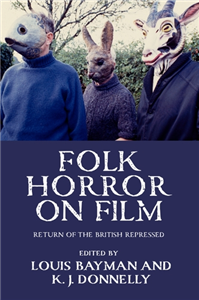
        Folk horror on film

        Return of the British repressed

        by Kevin J. Donnelly, Louis Bayman

        What is folk horror and how culturally significant is it? This collection is the first study to address these questions while considering the special importance of British cinema to the genre's development. The book presents political and aesthetic analyses of folk horror's uncanny landscapes and frightful folk. It places canonical films like Witchfinder General (1968), The Blood on Satan's Claw (1971) and The Wicker Man (1973) in a new light and expands the canon to include films like the sci-fi horror Doomwatch (1970-72) and the horror documentary Requiem for a Village (1975) alongside filmmakers Ken Russell and Ben Wheatley. A series of engrossing chapters by established scholars and new writers argue for the uniqueness of folk horror from perspectives that include the fragmented national history of pagan heresies and Celtic cultures, of peasant lifestyles, folkloric rediscoveries and postcolonial decline.

      • Trusted Partner
        The Arts
        October 2023

        Folk horror on film

        Return of the British repressed

        by Kevin J. Donnelly, Louis Bayman

        What is folk horror and how culturally significant is it? This collection is the first study to address these questions while considering the special importance of British cinema to the genre's development. The book presents political and aesthetic analyses of folk horror's uncanny landscapes and frightful folk. It places canonical films like Witchfinder General (1968), The Blood on Satan's Claw (1971) and The Wicker Man (1973) in a new light and expands the canon to include films like the sci-fi horror Doomwatch (1970-72) and the horror documentary Requiem for a Village (1975) alongside filmmakers Ken Russell and Ben Wheatley. A series of engrossing chapters by established scholars and new writers argue for the uniqueness of folk horror from perspectives that include the fragmented national history of pagan heresies and Celtic cultures, of peasant lifestyles, folkloric rediscoveries and postcolonial decline.

      • Trusted Partner
        The Arts
        June 2025

        Folk horror on film

        Return of the British repressed

        by Kevin J. Donnelly, Louis Bayman

        What is folk horror and how culturally significant is it? This collection is the first study to address these questions while considering the special importance of British cinema to the genre's development. The book presents political and aesthetic analyses of folk horror's uncanny landscapes and frightful folk. It places canonical films like Witchfinder General (1968), The Blood on Satan's Claw (1971) and The Wicker Man (1973) in a new light and expands the canon to include films like the sci-fi horror Doomwatch (1970-72) and the horror documentary Requiem for a Village (1975) alongside filmmakers Ken Russell and Ben Wheatley. A series of engrossing chapters by established scholars and new writers argue for the uniqueness of folk horror from perspectives that include the fragmented national history of pagan heresies and Celtic cultures, of peasant lifestyles, folkloric rediscoveries and postcolonial decline.

      • Trusted Partner
        The Arts
        October 2023

        Folk horror on film

        Return of the British repressed

        by Kevin J. Donnelly, Louis Bayman

        What is folk horror and how culturally significant is it? This collection is the first study to address these questions while considering the special importance of British cinema to the genre's development. The book presents political and aesthetic analyses of folk horror's uncanny landscapes and frightful folk. It places canonical films like Witchfinder General (1968), The Blood on Satan's Claw (1971) and The Wicker Man (1973) in a new light and expands the canon to include films like the sci-fi horror Doomwatch (1970-72) and the horror documentary Requiem for a Village (1975) alongside filmmakers Ken Russell and Ben Wheatley. A series of engrossing chapters by established scholars and new writers argue for the uniqueness of folk horror from perspectives that include the fragmented national history of pagan heresies and Celtic cultures, of peasant lifestyles, folkloric rediscoveries and postcolonial decline.

      • Trusted Partner
        Literature & Literary Studies
        June 2026

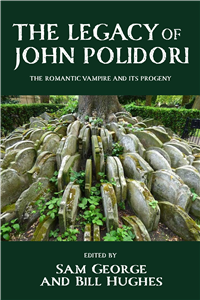
        The legacy of John Polidori

        The Romantic vampire and its progeny

        by Sam George, Bill Hughes

        John Polidori's novella The Vampyre (1819) is perhaps 'the most influential horror story of all time' (Frayling). Polidori's story transformed the shambling, mindless monster of folklore into a sophisticated, seductive aristocrat that stalked London society rather than being confined to the hinterlands of Eastern Europe. Polidori's Lord Ruthven was thus the ancestor of the vampire as we know it. This collection explores the genesis of Polidori's vampire. It then tracks his bloodsucking progeny across the centuries and maps his disquieting legacy. Texts discussed range from the Romantic period, including the fascinating and little-known The Black Vampyre (1819), through the melodramatic vampire theatricals in the 1820s, to contemporary vampire film, paranormal romance, and science fiction. The essays emphasise the background of colonial revolution and racial oppression in the early nineteenth century and the cultural shifts of postmodernity.

      • Trusted Partner
        Literature & Literary Studies
        October 2024

        The Legacy of John Polidori

        The Romantic Vampire and its Progeny

        by Sam George, Bill Hughes

        John Polidori's novella The Vampyre (1819) is perhaps 'the most influential horror story of all time' (Frayling). Polidori's story transformed the shambling, mindless monster of folklore into a sophisticated, seductive aristocrat that stalked London society rather than being confined to the hinterlands of Eastern Europe. Polidori's Lord Ruthven was thus the ancestor of the vampire as we know it. This collection explores the genesis of Polidori's vampire. It then tracks his bloodsucking progeny across the centuries and maps his disquieting legacy. Texts discussed range from the Romantic period, including the fascinating and little-known The Black Vampyre (1819), through the melodramatic vampire theatricals in the 1820s, to contemporary vampire film, paranormal romance, and science fiction. They emphasise the background of colonial revolution and racial oppression in the early nineteenth century and the cultural shifts of postmodernity.

      • Trusted Partner
        Literature & Literary Studies
        December 2025

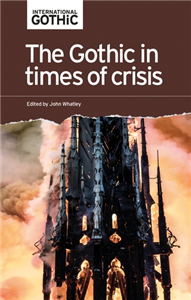
        The Gothic in times of crisis

        by John Whatley

        The Gothic in times of crisis reflects contemporary society, showing how the Gothic modes continually resets its own forms to encompass each new reality, each new apocalypse, each new plague or crisis. This collection expands oncurrent scholarship to show how the Gothic challenges our understanding of both older and recent crises and, in turn, disturbs all genre complacencies to expose and confront the problems and contradictions in what our world has been, has become, or is in danger of becoming. This collection explores Gothic's current relevance to the contestations of ideas and the underlying and visible conflicts it dramatizes across a wide range of media. In various ways, it reveals what happens to Gothic modes now they confront the increasingly Gothic realities of our times, sometimesby recalling earlier crises and ideological contestations leading up to them.

      Subscribe to our

      newsletter