
Literature & Literary Studies
The Gothic in times of crisis
by John Whatley
Description
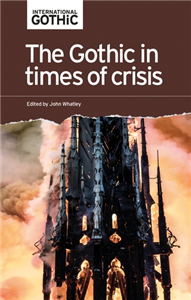
The Gothic in times of crisis reflects contemporary society, showing how the Gothic modes continually resets its own forms to encompass each new reality, each new apocalypse, each new plague or crisis. This collection expands oncurrent scholarship to show how the Gothic challenges our understanding of both older and recent crises and, in turn, disturbs all genre complacencies to expose and confront the problems and contradictions in what our world has been, has become, or is in danger of becoming. This collection explores Gothic's current relevance to the contestations of ideas and the underlying and visible conflicts it dramatizes across a wide range of media. In various ways, it reveals what happens to Gothic modes now they confront the increasingly Gothic realities of our times, sometimesby recalling earlier crises and ideological contestations leading up to them.
More Information
Rights Information
Albania, Algeria, Angola, Argentina, Armenia, Australia, Austria, Bahrain, Belgium, Belize, Benin, Bolivia, Bosnia and Herzegovina, Botswana, Brazil, Bulgaria, Burkina Faso, Burundi, Cameroon, Canada, Cape Verde, Central African Republic, Chad, Chile, China, Colombia, Comoros, Congo [DRC], Congo, Republic of the, Costa Rica, Ivory Coast, Croatia, Czech Republic, Denmark, Djibouti, Ecuador, Egypt, El Salvador, Equatorial Guinea, Eritrea, Estonia, Ethiopia, Faroe Islands, Finland, France, French Guiana, Gabon, Gambia, Georgia, Germany, Ghana, Greece, Guatemala, Guinea, Guinea-Bissau, Guyana, Honduras, Hongkong, Hungary, Iceland, India, Indonesia, Iran, Iraq, Ireland, Israel, Italy, Japan, Jordan, Kazakhstan, Kenya, Kuwait, Latvia, Lebanon, Lesotho, Liberia, Libya, Lithuania, Luxembourg, Macau, China, Macedonia [FYROM], Madagascar, Malawi, Malaysia, Mali, Malta, Mauritania, Mauritius, Mayotte, Mexico, Mongolia, Montenegro, Morocco, Mozambique, Namibia, Netherlands, New Zealand, Nicaragua, Niger, Nigeria, Norway, Oman, Pakistan, Panama, Paraguay, Peru, Philippines, Poland, Portugal, Puerto Rico, Qatar, Reunion, Romania, Russia, Rwanda, Saint Helena, Sao Tome and Principe, Saudi Arabia, Senegal, Serbia, Seychelles, Sierra Leone, Singapore, Slovakia, Slovenia, Somalia, South Africa, South Korea, Spain, Sri Lanka, Sudan, Suriname, Swaziland, Sweden, Switzerland, Syria, Taiwan, Tanzania, Thailand, Timor-Leste, Togo, Tokelau, Tunisia, Turkey, Uganda, Ukraine, United Arab Emirates, United Kingdom, United States, Uruguay, Venezuela, Vietnam, Western Sahara, Yemen, Zambia, Zimbabwe, South Sudan, Cyprus, Palestine, Bangladesh, Cambodia, Liechtenstein, Azerbaijan, Jamaica, Kyrgyzstan, Dominican Republic, Myanmar, Monaco
Endorsements
The Gothic has always given fiery expression to times of crisis with its distinctive versions of major social, cultural and climatic upheavals. Forms of the Gothic are now as widely dispersed and flexible as the proliferation of troubles that beset us today from Fukushima and Chernobyl, to 9/11, growing autocracies, COVID with its threatening variants, and climate-driven storms and wildfires. In the seventeen chapters included in this collection, the Gothic's fantasias, uncanny technologies, and end-of-the world narratives are channelling the major troubles of our own, as well as earlier, times. This dynamic, especially in recent years, has brought about extensive revisions of the Gothic mode in a variety of media that, while they yet manifest haunting manifestation of past crises, now include a wide variety of today's global disruptions. This collection shows how these crises both inform today's Gothic modes and reshape the Gothic itself in literature, film, poetry, the graphic novel, television and other media.
Reviews
The Gothic has always given fiery expression to times of crisis with its distinctive versions of major social, cultural and climatic upheavals. Forms of the Gothic are now as widely dispersed and flexible as the proliferation of troubles that beset us today from Fukushima and Chernobyl, to 9/11, growing autocracies, COVID with its threatening variants, and climate-driven storms and wildfires. In the seventeen chapters included in this collection, the Gothic's fantasias, uncanny technologies, and end-of-the world narratives are channelling the major troubles of our own, as well as earlier, times. This dynamic, especially in recent years, has brought about extensive revisions of the Gothic mode in a variety of media that, while they yet manifest haunting manifestation of past crises, now include a wide variety of today's global disruptions. This collection shows how these crises both inform today's Gothic modes and reshape the Gothic itself in literature, film, poetry, the graphic novel, television and other media.
Author Biography
John Whatley is a retired lecturer from the Simon Fraser University Department of English and a retired associate member of the School of Criminology at Simon Fraser University. He is currently managing editor of Simon Fraser University Publications.
 Trusted Partner

Manchester University Press
Manchester University Press is a leading UK publisher known for excellent research in the humanities and social sciences.
View all titlesBibliographic Information
- Publisher Manchester University Press
- Publication Date December 2025
- Orginal LanguageEnglish
- ISBN/Identifier 9781526191724 / 1526191725
- Publication Country or regionUnited Kingdom
- FormatPrint PDF
- Pages312
- ReadershipGeneral/trade
- Publish StatusPublished
- Dimensions216 X 138 mm
- Biblio NotesDerived from Proprietary 6491
- SeriesInternational Gothic Series
- Reference Code17546
Thank you for proceeding with this offer.
Manchester University Press has chosen to review this offer before it proceeds.
You will receive an email update that will bring you back to complete the process.
You can also check the status in the My Offers area
Manchester University Press has chosen to review this offer before it proceeds.
You will receive an email update that will bring you back to complete the process.
You can also check the status in the My Offers area

Please wait while the payment is being prepared.
Do not close this window.

(c) Copyright 2026 - Frankfurter Buchmesse GmbH. All Right Reserved