
Self-Counsel Press
Livres Canada Books
View Rights Portal

Agency representing picture books projects, Foreign rights for publishers of picture books, representation of portfolios, contract consultancies.
View Rights Portal

Cough, hay fever or herpes are at least as troublesome during pregnancy and breast-feeding as under normal “conditions” - and yet everything is different. Physiological changes to the body in pregnancy and lactation, together with the vulnerability of the unborn baby or infant, set particular requirements when selecting the correct, safe medication. Especially in the area of self-medication, the needs of pregnant and breast-feeding women for information are great and call for competent advice! This comprehensive handbook is the key: General information about pharmacotherapy, supplementary measures, vaccinations, questions about diet and infections in pregnancy and lactation creates a broad knowledge base. The core feature of the book are the traffic light tables, with precise recommendations for medicinal products for all types of treatment. All the important indications for selfmedication in pregnancy and lactation are listed and the tables are supported by detailed explanations of the individual assessments. The sections “Advice from medical specialists” are particularly useful, with additional tips from gynaecologists and “Footnotes” with relevant information on the use of prescription- only medicines – and as the ultimate practical tool: the enclosed sales counter leaflets with all traffic light tables to enable quick reference for first-class advice!

Already in its 3rd edition, the PTAheute handbook presents the essence of practical pharmacy knowledge and is becoming the standard work for a practical pharmacy. PTAheute authors contribute their professional experience and bundle the most important facts, in the proven manner of the trade journal PTAheute: ■ Comprehensibly prepared content facilitates putting knowledge effectively into practice. ■ Infographics help readers understand the contexts. ■ Yellow boxes provide a quick overview. ■ Pictures and graphic design increase reading pleasure. The content on multiple sclerosis or on the various aspects of Covid-19 is new to the 3rd edition. The chapters on „Antibiotics“ and „Interactions“ have been completely restructured and revised and all other content has been brought fully up to date. The PTAheute handbook – the reliable companion in everyday pharmacy life!
 Trusted Partner

After pharmacy studies have ended, the fascinating world of the pharmacy awaits – simultaneously varied and challenging. This is no problem with this well-established standard work to hand! The 7th edition, with a new editor and new structure, goes through the various stages of pharmacy operation. Beginning with the social mandate to supply medicines and then considering the organisational and economic orientation of a pharmacy, one delves ever deeper into its inner workings. In every area, the appropriate specific information can be found about pharmaceutical law and practice – whether this concerns the back office, over-the-counter medicines, dispensary and dispensing, or the supply of care homes, or preparation of cytotoxic drugs. In addition to the important topic “Dispensing of drugs and medical devices on prescription”, particular attention is paid to the principal activity in the pharmacy – giving advice on self-medication. The contents are based on the regulations for registration of pharmacists and the guidelines of the Federal Chamber of Pharmacists for the practical training of pharmacy interns in the pharmacy. The Practice of Pharmacy safely navigates the user through the practical training year and is the ideal preparation for the 3rd State Examination! Returnees, pharmacies that provide training and pharmacists of many years’ experience, will also benefit from this textbook and reference work.
Trusted Partner

Minor illness or a serious disease ? Through systematic questioning, pharmacists or pharmaceutical technicians can establish the possibilities and limits of self-medication. Each monograph on the over 100 indications for self-medication includes: - A flow chart: basis for the structured consultation - A brief description: additional information about the symptoms - Recommended medications/groups of medications: the treatment options - Additional advice: individual supportive and alternative treatment options - Specific knowledge for advising particular patient groups: e.g. pregnant women, children and senior citizens New for the 7th edition: Monographs that explore the possibilities of supportive self-medication for indications such as hypertension and diabetes. Information about what to do in the case of poisoning, scabies or inflammation of the nail bed (paronychia) is also provided! The details about active substances, products and additional tips have been updated. The pocket guide has long been the standard for providing advice on self-medication – a “must-have”!
Trusted Partner

 Trusted Partner


People with dementia experience their condition as a big change in which, for example, new events are not linked to existing experiences and wishes, thoughts, and actions can no longer be connected to each other. This kind of experience of the self, due to the intergative function of the brainbeing temporarily or permanently lost, is called dissociative self-experience. Based on this understanding of dementia, the author develops an approach to effectively understand and support people with dementia in everyday activities. Typical everyday situations and behaviours are presented and reflected on in a practical context.
Trusted Partner

The requirements concerning the preparation of extemporaneous formulations in the pharmacy are high. In her book the author explains which current guidelines must be observed in the production of semi-solid and liquid preparations, capsules or eyedrops. The reader will learn, - Which points are important when checking the plausibility of a medical prescription - How to store formulations correctly and how to specify the expiry date after opening - Why preparation of the workspace is so important. The individual manufacturing steps are described and explained in a readily understandable way. In addition, the book contains many valuable tips for pharmaceutical practice. With the aid of a training centre, the reader’s knowledge can also be deepened. This guide is an invaluable help to everyone who undertakes compounding and dispensing – whether a pharmaceutical technician or a fully qualified pharmacist!
Trusted Partner

At the core of this hands-on resource for psychologists and other practitioners, including educators, coaches, and consultants, is Mindfulness-Based Strengths Practice (MBSP), the first structured program to combine mindfulness with the character strengths laid out in the VIA Institute's classification developed by Drs. Martin E. P. Seligman and Christopher Peterson. This 8-session program systematically boosts awareness and application of character strengths. The first section of the book consists of a detailed primer on mindfulness and character strengths while the second part goes into more detail about the integration of mindfulness and character strengths. The third section then leads readers step-by-step through each of the 8 MBSP sessions, including details of session structure and content, suggested homework, 30 practical handouts, as well as inspiring quotes and stories and useful practitioner tips. An additional chapter discusses the adaption of MBSP to different settings and populations (e.g., business, education, individuals, couples). The mindfulness and character strengths meditations on the accompanying CD support growth and development. Target Group: Psychologists, consultants, therapists and counselors, and all those interested in mindfulness, positive psychology, and improving life.
Trusted Partner
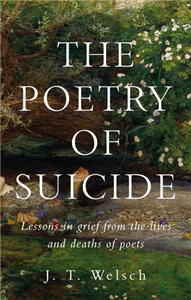
A profound exploration of the connection between poetry and suicide. 'Suicides have a special language,' Anne Sexton wrote in her 1964 poem 'Wanting to Die'. But is it a language we can learn to read? In The poetry of suicide, J. T. Welsch interweaves stories of poets who took their own lives with the long history of suicide in his own family, searching for a new way of understanding these difficult deaths. Beginning with Hamlet's 'To be or not to be?', he delves into the work of Dante, Sylvia Plath, Vladimir Mayakovsky and others, asking what it can teach us about suicide's messy reality. Suicide is more like poetry than we realise, Welsch argues. Both are filled with ambiguities, contradictions and unknowable intentions. Both demand and resist interpretation. Recovering the personal dimension often lost in our medicalised public discourse, Welsch finds practical ways of confronting suicide's poem-like difficulties.
Trusted Partner

This book explores the ways in which the two leading sensation authors of the 1860s, Mary Elizabeth Braddon and Wilkie Collins, engaged with nineteenth-century ideas about personality formation and the extent to which it can be influenced either by the subject or by others. Innovative readings of seven sensation novels explore how they employ and challenge Victorian theories of heredity, degeneration, inherent constitution, education, upbringing and social circumstance. Far from presenting a reductive depiction of 'nature' versus 'nurture', Braddon and Collins show the creation of character to be a complex interplay of internal and external factors. Drawing on material ranging from medical textbooks, to sociological treatises, to popular periodicals, Creating character shows how sensation authors situated themselves at the intersections of established and developing, conservative and radical, learned and sensationalist thought about how identity could be made and modified.
Trusted Partner


This book is made up largely from the experiences of hunters and trappers who have dug "seng" and "seal" and who know much of their peculiarities, and scores are now successful growers.In adidtion to Ginseng and Golden Seal nearly 50 other medicinal plants are described--habits, range, price, uses, etc.
Trusted Partner

The „Standardised risk assessment of high blood pressure“ enables every pharmacy to easily expand its range of services. This tool provides the pharmacy staff with the basis for providing such a service. It contains clear information on the development of hypertension and guideline-based drug therapy. Step by step, the user is guided through practical blood pressure measurement according to standard operating procedures through to individual advice and subsequent billing. This tool contains the following supplementary information: - Legal requirements for handling medical devices and/or blood pressure monitors - Frequently asked questions and case examples - What one should know about quality management - Work aids and forms as copy templates
Trusted Partner

From a psychological perspective, there are many aspects to negotiating. Given the right knowledge of backgrounds and mechanisms, it is an art form possible to get to grips with and put into practice. In an entertaining and informative way, this book introduces the reader to the basics of communication and body language, cooperative negotiation, strategic negotiation, the different personalities of negotiators, and negotiating. Using practical exercises and valuable practical tips, this book takes the reader through the main psychological strategies and methods so he can negotiate in a flexible, goal-oriented, and successful manner. Target Group: For people who want to improve their negotiating skills.
Trusted Partner


Emmo would also like to celebrate Christmas for a change. He’s lucky that his best friend Gwendoline, the Snow Fairy, is there to help him with his preparations. A Christmas tree, presents, delicious biscuits, sweet-smelling baked apples, and of course glittering white snow - all in readiness for the most wonderful Christmas party the Silver Forest has ever seen. With Stefanie Dahle’s enchanting illustrations, this solid, read-aloud picture book will accompany big and little picture-book lovers through a wonderfully harmonious Advent and Christmas.
Trusted Partner
The moral problem of authority is the challenge of reconciling legitimate authority (the right to rule) with the demands of freedom and rationality. In this book, I argue that authority can have legitimacy, but when it does it generates a moral dilemma, where the obligation to obey comes at some cost to freedom and reason. Hence, not only do I depart from the views of those who insist that authority can never have legitimacy, but also those who maintain that insofar as authority is legitimate it simply satisfies the demands of freedom or rationality. My focus here will be on both what it is that justifies authority (in particular focusing on membership, and the goods of membership) as well what type of reason an authoritative directive is, how it can come into conflict with others reasons, and how those conflicts are resolved.
Trusted Partner
Suicide and the Gothic is the first protracted study of how the act of self-destruction recurs and functions within one of the most enduring and popular forms of fiction. Comprising eleven original essays and an authoritative introduction, this collection explores how the act of suicide has been portrayed, interrogated and pathologised from the eighteenth century to the present. The featured fictions embrace both canonical and the less-studied texts and examine the crisis of suicide - a crisis that has personal, familial, religious, legal and medical implications - in European, American and Asian contexts. Featuring detailed interventions into the understanding of texts as temporally distant as Thomas Percy's Reliques and Patricia Highsmith's crime fictions, and movements as diverse as Wertherism, Romanticism and fin-de-siècle decadence, Suicide and the Gothic provides a comprehensive and compelling overview of this recurrent crisis in fiction and culture.
Trusted Partner
Critical theory and Independent Living explores intersections between contemporary critical theory and disabled people's struggle for self-determination. The book highlights the affinities between the Independent Living movement and studies of epistemic injustice, biopower, and psychopower. It discusses in depth the activists' critical engagement with welfare-state paternalism, neoliberal marketisation, and familialism. This helps develop a pioneering comparison between various welfare regimes grounded in Independent Living advocacy. The book draws on the activism of disabled people from the European Network on Independent Living (ENIL) by developing case studies of the ENIL's campaigning for deinstitutionalisation and personal assistance. It is argued that this work helps rethink independence as a form of interdependence, and that this reframing is pivotal for critical theorising in the twenty-first century.
Trusted Partner
Trusted Partner

This title helps people with autism to effectively cope with anger, frustration, and injustice. This practical book offers a training-program which can be completed alone, based on scientifically examined treatment methods. It is especially suited to be used together with a caretaker. The first part of the book clearly describes the connection between autism and self-control issues. The second part offers practical exercises which explain how to recognize anger in time and how strong emotions such as anger and frustration. Numerous tips, exercises and relatable examples help the reader to experience more direction and control. Target Group: Adults with autism and involved caretakers


