Your Search Results

      • Trusted Partner
        Humanities & Social Sciences
        July 2021

        Critical theory and feeling

        The affective politics of the early Frankfurt School

        by Simon Mussell

        This book offers a unique and timely reading of the early Frankfurt School in response to the recent 'affective turn' within the arts and humanities. Resisting the overly rationalist tendencies of political philosophy, it argues that critical theory actively cultivates a powerful connection between thinking and feeling, and rediscovers a range of often neglected concepts that were of vital importance to the first generation of critical theorists, including melancholia, hope, (un)happiness, objects and mimesis. In doing so, it brings the dynamic work of Walter Benjamin, Theodor Adorno, Ernst Bloch and Siegfried Kracauer into conversation with more recent debates around politics and affect. An important intervention in the fields of affect studies and social and political thought, Critical theory and feeling shows that sensuous experience is at the heart of the Frankfurt School's affective politics.

      • Trusted Partner
        Literature & Literary Studies
        May 2026

        Women’s Agency and the Gothic in Spain and the Americas

        by Megan DeVirgilis, Sandra García Gutiérrez

        This volume has emerged to fulfill two main purposes: Primarily, to constitute the first collaborative work that traces the relationship between the Gothic and Women in Spain and the Americas, but also, to surpass the term 'Female Gothic,' coined by Ellen Moers, by transferring the focus towards women and their agency as writers, readers and characters. This volume functions as a manifesto per se to open new avenues into understanding how women have interacted with the Gothic between the nineteenth and twenty-first centuries in Spain and the Americas. The question, we determine, is not simply about identity, but rather about agency. We define women's agency as the total capacity of characters, authors and readers to act freely within a social framework in relation to gothic texts. In our exploration of authorship, we reject the claim that the Gothic is a simplistic literary genre, instead sustaining that the plasticity of the Gothic has enabled it to survive for centuries; by shifting from a genre to a mode, it has surpassed literary forms and invaded all kinds of media: from film to music and merchandise such as clothing and pop culture collectables, fostering an authentic goth fandom.

      • Trusted Partner
        Literature & Literary Studies
        October 1999

        The Witch of Edmonton

        by William Rowley, Thomas Dekker and John Ford

        by Peter Corbin, David Bevington, Douglas Sedge

        The Witch of Edmonton has received considerable attention recently both from scholars and critics interested in witchcraft practices and also from the directors in the theatre. The play, based on a sensational witchcraft trial of 1621, presents Mother Sawyer and her local community in the grip of a witch-mania reflecting popular belief and superstition of the time. This edition offers a thorough reconsideration of the text with a complete transcription of the original pamphlet by Henry Goodcole. This edition will be of particular interest not only to students of Renaissance Drama but also of the cultural history of the seventeenth century.. Open University adopted text (for their new Renaissance Drama module). ;

      • Trusted Partner
        October 2021

        Shelter

        by Ursula Poznanski

        What if you created your own conspiracy theory - and suddenly, everyone believed in it?What happens when a party gets so out of hand that some hungover students come up with a crazy idea? On a whim, Benny and his friends invent a harebrained story about the visit of aliens. They make up a secret symbol that they spray all over town and post them under fake social media accounts. Benny, Nando, Till, Darya and Liv are mostly curious to see what will happen and if people will believe their conspiracy theory - Liv is also excited to have a topic for her bachelor's thesis in psychology. But to their own surprise, more and more people believe in the story, especially when an anonymous user called "Octavio" starts dropping mysterious hints. Benny’s attempt to clear everything up soon puts his life in danger.Bestselling author (#1 for German YA) Ursula Poznanski's new thriller is a vigilant analysis of the mechanisms of modern superstition and a shocking thriller about a prank that becomes confusing reality.

      • Trusted Partner
        Humanities & Social Sciences
        June 2009

        Science and society in southern Africa

        by Andrew Thompson, Saul Dubow, John Mackenzie

        This collection, dealing with case studies drawn from South Africa, Zimbabwe, Mozambique and Mauritius, examines the relationship between scientific claims and practices, and the exercise of colonial power. It challenges conventional views that portray science as a detached mode of reasoning with the capacity to confer benefits in a more or less even-handed manner. That science has the potential to further the collective good is not fundamentally at issue, but science can also be seen as complicit in processes of colonial domination. Not only did science assist in bolstering aspects of colonial power and exploitation, it also possessed a significant ideological component: it offered a means of legitimating colonial authority by counter-poising Western rationality to native superstition and it served to enhance the self-image of colonial or settler elites in important respects. This innovative volume ranges broadly through topics such as statistics, medicine, eugenics, agriculture, entomology and botany. ;

      • Trusted Partner
        Humanities & Social Sciences
        March 2017

        Science and society in southern Africa

        by Saul Dubow

        This collection, dealing with case studies drawn from South Africa, Zimbabwe, Mozambique and Mauritius, examines the relationship between scientific claims and practices, and the exercise of colonial power. It challenges conventional views that portray science as a detached mode of reasoning with the capacity to confer benefits in a more or less even-handed manner. That science has the potential to further the collective good is not fundamentally at issue, but science can also be seen as complicit in processes of colonial domination. Not only did science assist in bolstering aspects of colonial power and exploitation, it also possessed a significant ideological component: it offered a means of legitimating colonial authority by counter-poising Western rationality to native superstition and it served to enhance the self-image of colonial or settler elites in important respects. This innovative volume ranges broadly through topics such as statistics, medicine, eugenics, agriculture, entomology and botany.

      • Trusted Partner
        Literature & Literary Studies
        April 2025

        Speculative endeavors

        Cultures of knowledge and capital in the long nineteenth century

        by Selina Foltinek, Karin Hoepker, Katrin Horn

        Speculative endeavours contributes to an emerging field of scholarship that focuses on alternative forms of knowledge production and speculation in nineteenth century US-American society. It sheds light on unofficial knowledges such as insider information, rumour, gossip, slander, emphasising how knowledges excluded by institutional discourses and authorities form a core part of the developing market economy. Ranging from the Early Republic to the Gilded Age, contributions analyse entanglements of financial, cultural, and social capital. They focus on social actors who differ from the newly minted ideal of the (free, white, male) entrepreneurial individual. The speculative endeavours discussed include illicit communications located in slave quarters and domestic spaces, communal interventions into a commercialised print market, debates on immigrant fiduciary and legal competency, and disciplinary techniques of pecuniary pedagogy. Taken together they offer unprecedented interdisciplinary insights into an emerging age of capital.

      • Trusted Partner
      • Trusted Partner
        Medicine
        August 2025

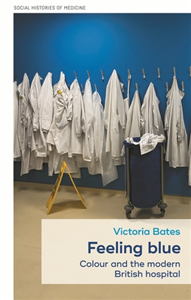
        Feeling blue

        Colour and the modern British hospital

        by Victoria Bates

        Feeling blue is the first book-length history of colour in modern hospitals. It examines colour in relation to six key themes - hygiene, emotion, humanisation, homeliness, play, consumerism - which are tied together by the idea of the 'modern' hospital. The book does not simply describe changes to the appearance of hospitals over time, but instead thinks expansively about the role of colour in shaping how hospitals felt. It uses colour to understand the layered meanings of modernity in twentieth-century Britain, and its relationship to the 'mundane' or everyday life of hospitals.

      • Trusted Partner
        October 2005

        Imaginary Kings

        Royal Images in the Ancient Near East, Greece and Rome

        by Herausgegeben von Hekster, Olivier; Herausgegeben von Fowler, Richard

      • Trusted Partner
        March 2021

        Feeling fresh

        Wie Kälte unser Immunsystem stärkt und wir uns rundum wohlfühlen

        by Andrea Bianchi

      • Trusted Partner
        November 2024

        Feeling Safe

        Wie sicher bist du wirklich? Thriller

        by Rose, Jeneva

        Aus dem Englischen von Danielle Styron

      • Trusted Partner
        Fiction

        THE BOOK OF IMAGINARY ISLANDS

        by Lukas Maisel

        Almost every Asian culture has a name for this particular creature – Yeren in China, Chemo in Tibet or Orang Pendek on Sumatra. For centuries it has had a place in myths and imaginations. Only the scientific world is not interested in the missing link between man and beast. A Swiss cryptozoologist is determined to change this. He sets off on an expedition to central Papua New Guinea. By his side is a man from the ethnic group of the Bugis; at the helm of the boat is someone who calls himself Jonah. And then there is Blum, in his mid-twenties, faint-hearted, but with a pronounced awareness of proper etiquette. Together they set off on a journey into well-measured uncertainty. With a self-welded cage on the bow…

      • Trusted Partner
        Humanities & Social Sciences
        November 2017

        Critical theory and feeling

        by Simon Mussell, Darrow Schecter

      • Trusted Partner
        Business, Economics & Law
        March 2017

        Law in popular belief

        Myth and reality

        by Edited by Anthony Amatrudo, Regina Rauxloh

        In recent years there has been a significant growth in interest of the so-called "law in context" extending legal studies beyond black letter law. This book looks at the relationship between statute law and legal practice. It examines how law is applied in reality and more precisely how law is perceived by the general public in contrast to the legal profession. The authors look at a number of themes that are central to examining ways in which myths about law are formed, and how there is inevitably a constitutive power aspect to this myth making. At the same time they explore to what extent law itself creates and sustains myths. The book will be of general interest to a number of different disciplines such as legal theory, general law, criminology and sociology.

      • Trusted Partner
      • Trusted Partner
        Humanities & Social Sciences
        September 2020

        Law in popular belief

        by Anthony Amatrudo, Regina Rauxloh

      • Trusted Partner
        Humanities & Social Sciences
        July 2019

        Feeling the strain

        by Jill Kirby, Keir Waddington, David Cantor

      Subscribe to our

      newsletter