Your Search Results

      • Publishing House Nova Knjiga

        Nova knjiga insists to create good connection between comercial and elite.We pay close attention to all aspects of the publishing business according to the highest standards and criteria always taking care of the high quality of the translation, covers and textblock.Publishing sectors: fiction, non-fiction, classics, children books. Nova knjiga has a network of own bookstores in biggest towns which covers Montenegrin market. Beside the publishing we have great developed network of wholesale and we are main suppliers of the books in Montenegro. We provide to all companies in Montenegro and region easy way to buy all our editions and editions of other publishing houses.

        View Rights Portal
      • Cultural Relics Press

        Cultural Relics Press was established in 1957, and is the only press dedicated to publishing archeology related books. It is committed to salvaging and protecting China’s cultural heritage and publicizing the content and artistic charm of traditional Chinese culture. Over the past 60 years, it has published about 7000 kinds of books on culture and archeology”. Its publications on traditional Chinese culture are well received across the world. It is the first press to engage in cultural exchange abroad and cooperate with counterparts in Europe, the United States, Hong Kong and Taiwan. It has collaborated with partners in UK, USA, Italy, Japan, former Yugoslavia, Taiwan. More than 300 awards has been received at home and abroad, including, among others, National Book Award, China Book Award, and “Most Beautiful Books in the World” (Leipzig).

        View Rights Portal
      • Trusted Partner
      • Trusted Partner
      • Trusted Partner
        The Arts
        December 2025

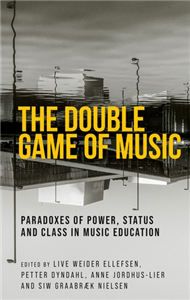
        The double game of music

        Paradoxes of power, status and class in music education

        by Live Weider Ellefsen, Petter Dyndahl, Anne Jordhus-Lier, Siw Graabræk Nielsen

        The double game of music imagines music education as a series of games - each with its own rules, play currency and players - to challenge readers to rethink the significance of music and musical upbringing in shaping social structures. Drawing on their own empirical research and a wide range of international contributions, the authors unravel the intertwining of social positioning and power hierarchies with players beliefs in the pure values and virtues of their games, whether these relate to parenting, children's play, schooling, academic pursuits, musical leisure activities or the television and music industries. In a world where music is often celebrated as an important tool for inclusion and democratisation, this groundbreaking book offers a timely critique, revealing complexities and contradictions that tend to be overlooked by teachers, researchers, politicians and others interested in the powers of music education.

      • Trusted Partner
        Humanities & Social Sciences
        April 2012

        The Labour party and citizenship education

        Policy networks and the introduction of citizenship lessons in schools

        by Ben Kisby

        The Labour Party and citizenship education provides the definitive account of why and how Labour introduced citizenship education as a compulsory subject in the National Curriculum. Based on interviews with the key players, it contributes to our understanding of the role of ideas and policy networks in the policy process, to debates about the nature of New Labour as a political phenomenon, and addresses the significant and topical issues of political disaffection and community cohesion. This book is essential reading for academics and students of political science, public and social policy, education, contemporary history, and political theory. Written in an accessible style, it will also be of interest to the general reader concerned about issues of citizenship, political participation, disengagement and re-engagement. ;

      • Trusted Partner
      • Trusted Partner
        Literature & Literary Studies
        May 2023

        Pasts at play

        Childhood encounters with history in British culture, 1750–1914

        by Rachel Bryant Davies, Barbara Gribling

        This collection brings together scholars from disciplines including Children's Literature, Classics, and History to develop fresh approaches to children's culture and the uses of the past. It charts the significance of historical episodes and characters during the long nineteenth-century (1750-1914), a critical period in children's culture. Boys and girls across social classes often experienced different pasts simultaneously, for purposes of amusement and instruction. The book highlights an active and shifting market in history for children, and reveals how children were actively involved in consuming and repackaging the past: from playing with historically themed toys and games to performing in plays and pageants. Each chapter reconstructs encounters across different media, uncovering the cultural work done by particular pasts and exposing the key role of playfulness in the British historical imagination.

      • Trusted Partner
        The Arts
        October 2025

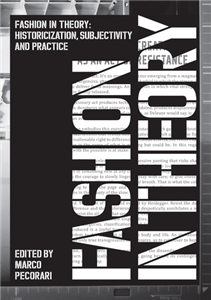
        Fashion in theory

        Historicization, subjectivity and practice

        by Marco Pecorari

        For Spring Summer 2020, Gucci showed a collection questioning identity politics and capitalism. Rather than the usual explanation of the material, shapes or inspirations behind the collection, the press release handed out at the show quoted the philosopher Michel Foucault and questioned the very nature of fashion itself. Gucci's press release reflects the popularization of critical theory in public discourse and fashion in particular. Philosophers, activists and academics are increasingly recruited to collaborate with luxury brands, and main-stream fashion brands have begun to adopt a discourse about politics and critical thinking using, in their communication, concepts such as "resistance", "gender fluidity", "national identity" or "cultural heritage" without accompanying these discourses with any form of political engagement or activism. Based on this intellectualization of the fashion industry and the recent proliferation of critical theory in fashion education, this book stresses the importance of rethinking the relationship between fashion and theory. Drawing together eleven chapters and four conversations by and with philosophers, cultural theorists, historians, anthropologists, activists, performers and designers, the book investigates both the theorization of fashion and the ways in which fashion offers a useful landscape in understanding the current state of critical theory today.

      • Trusted Partner
        The Arts
        June 2026

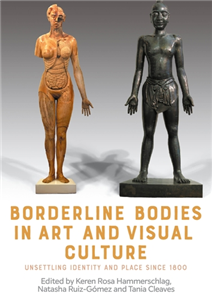
        Borderline bodies in art and visual culture

        Unsettling identity and place since 1800

        by Keren Hammerschlag, Natasha Ruiz-Gómez, Tania Anne Cleaves

        Borderline bodies offers original interpretations of visual representations of human bodies as bounded and unbounded, fortified and permeable, mobile and static-subject to borders and able to traverse and challenge them. It also takes as its focus images and objects that might be considered 'borderline' because they sit at the intersection of disciplines or sit outside accepted notions of what constitutes serious 'art.' By mapping the ways human bodies traverse borders and straddle-even dismantle-categories, this volume's essays approach afresh the relationship of bodies to traditional modes of representation, especially in art and medicine, and encourage us to think anew about how we understand the relationship between human corporeality, identity and place. Critical transdisciplinary and transnational analyses of objects and images from a range of geographies shed new light on the themes of: bodies and identity; typologies of the body; racialised bodies; 'normal' and 'abnormal' bodies; encounters between bodies; bodies in transition; bodies and mobility; and the bounded and unbounded human body. The outcome is a fresh approach to depictions of the human body produced for the purposes of artistic and medical education, aesthetic edification, and scientific and professional advancement, which disrupts assumptions about the normative human body perpetuated through Western image-making traditions.

      • Trusted Partner
        Humanities & Social Sciences
        June 2023

        Worrier state

        Risk, anxiety and moral panic in South Africa

        by Nicky Falkof

        Risk, anxiety and moral panic are endemic to contemporary societies and media forms. How do these phenomena manifest in a place like South Africa, which features heightened insecurity, deep inequality and accelerated social change? What happens when cultures of fear intersect with pervasive systems of gender, race and class? Worrier state investigates four case studies in which fear and anxiety appear in radically different ways: the far right myth of 'white genocide'; so-called 'Satanist' murders of young women; an urban legend about township crime; and social theories about safety and goodness in the suburbs. Falkof foregrounds the significance of emotion as a socio-political force, emphasising South Africa's imbrication within globalised conditions of anxiety and thus its fundamental and often-ignored hypermodernity. The book offers a bold and creative perspective on the social roles of fear and emotion in South Africa and thus on everyday life in this complex place.

      • Trusted Partner
        Lifestyle, Sport & Leisure
        September 2024

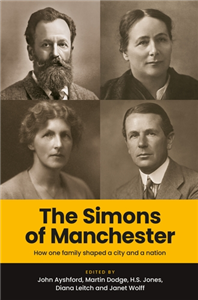
        The Simons of Manchester

        How one family shaped a city and a nation

        by Martin Dodge, John Ayshford, Diana Leitch, Stuart Jones, Janet Wolff

        The Simons of Manchester revives the history of one of Manchester's most influential families, the Simons. The book investigates the lives and public work of Henry and Emily Simon, and Ernest and Shena Simon. Through philanthropy and work in social reform, the two generations of the Simons greatly enriched Manchester's cultural and civic institutions, worked to improve the lives of its citizens, and helped to spearhead profound national reforms in health, housing, planning and education. While many people in Manchester are familiar with the Simon name through Shena Simon College, Simonsway, and the Simon Building at the University of Manchester, there is scant public knowledge of who the Simons were and their legacy. As such, this edited volume of collected essays aims to illuminate their fascinating lives and public service to rehabilitate the Simons and examine their local and national significance.

      • Trusted Partner
        July 2023

        Democracy Into Children's Minds

        Why our future will be decided in schools

        by Julian Nida-Rümelin/Klaus Zierer

        — By two renowned authors from the fields of philosophy and education — Julian Nida-Rümelin – a popular talk show guest The debate about the correct school policy has been going on for many years. And there's no end to the bad news regarding the shortage of teachers, poor performance by students at PISA or the lack of suitable equipment in schools. What is being neglected in the discussions about the education policy but is, in fact, a central momentum in its development, is the school's task of conveying democratic values and patterns of action. This is the only way our society's supporting pillars can be strengthened in future generations. In the light of the complex situation, from the authors' point of view it is important to formulate a wake-up call: Democracy education – now!

      • Trusted Partner
        Humanities & Social Sciences
        January 2011

        Public Schools and Private Education

        The Clarendon Commission 1861–64 and the Public Schools Acts

        by Colin Shrosbree

        The great public schools are central to any discussion of English secondary education. Founded as public endowments, they are the basis of private education. Set apart from the other grammar schools by the Clarendon Commission of 1861, their influence on the state system has been enormous. Severed from the national provision of public education, they have put prestige and ancient endowments at the service of wealth and patronage. This book, available in paperback for the first time, shows how this came to pass. How the schools' attempts at reform, reliance on fees, the defence of the Classics, public criticism of Eton, European ideas and foreign economic competition led to the Carendon Commission. How Lord Clarendon himself, in conflict with Palmerston over foreign policy, came to lead the Commission and attempt curricular reform. How the Public Schools Acts created a separate school system for the benefit of Eton and how the Lords sought to establish that system for the upper classes. How the fee-paying, class-based principles of the Commission influenced the other grammar schools and all later English education. How the Public schools Acts reduced the influence of local parents and how new governors were appointed nationally. How Shrewsbury School, an example of an endowed grammar school with strong local connections, came to be part of the public school system. It is not the conflict between state education and private schools that makes so much discussion of English education bitter and controversial. It is the loss to state education of the public schools - the original political purpose of the Acts - and the impoverishment of national education by the class divisions of Victorian legislation. ;

      • Trusted Partner
        Humanities & Social Sciences
        January 2020

        Higher education in a globalising world

        Community engagement and lifelong learning

        by Peter Mayo, Michael Osborne

        This book focuses on current policy discourse in Higher Education, with special reference to Europe. It discusses globalisation, Lifelong Learning, the EU's Higher Education discourse, this discourse's regional ramifications and alternative practices in Higher Education from both the minority and majority worlds with their different learning traditions and epistemologies. It argues that these alternative practices could well provide the germs for the shape of a public good oriented Higher Education for the future. It theoretically expounds on important elements to consider when engaging Higher Education and communities, discussing the nature of the term 'community' itself. Special reference is accorded to the difference that lies at the core of these ever-changing communities. It then provides an analysis of an 'on the ground project' in University community engagement, before suggesting signposts for further action at the level of policy and provision.

      • Trusted Partner
        Humanities & Social Sciences
        May 2020

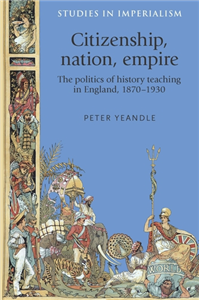
        Citizenship, nation, empire

        The politics of history teaching in England, 1870–1930

        by Andrew Thompson, Peter Yeandle, John M. MacKenzie

        Citizenship, nation, empire investigates the extent to which popular imperialism influenced the teaching of history between 1870 and 1930. It is the first book-length study to trace the substantial impact of educational psychology on the teaching of history, probing its impact on textbooks, literacy primers and teacher-training manuals. Educationists identified 'enlightened patriotism' to be the core objective of historical education. This was neither tub-thumping jingoism, nor state-prescribed national-identity teaching, but rather a carefully crafted curriculum for all children which fused civic as well as imperial ambitions. The book will be of interest to those studying or researching aspects of English domestic imperial culture, especially those concerned with questions of childhood and schooling, citizenship, educational publishing and anglo-British relations. Given that vitriolic debates about the politics of history teaching have endured into the twenty-first century, Citizenship, nation, empire is a timely study of the formative influences that shaped the history curriculum in English schools

      • Trusted Partner
        Humanities & Social Sciences
        March 2026

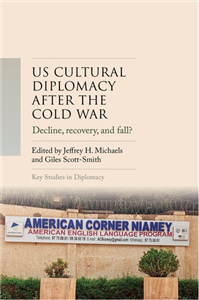
        US cultural diplomacy after the Cold War

        Decline, recovery, and fall

        by Jeffrey H. Michaels, Giles Scott-Smith

        In the decades following the USSR's collapse, the US has gone from unrivalled hegemon to a position of relative decline. With America 'triumphant' after 1991, its culture, like its diplomatic, military and economic power, remained unmatched. Such favourable circumstances seemed to undercut the need for cultural diplomacy. Why should the US government sell a product that was already selling so well? After 9/11, however, it was apparent the US image was less popular than previously assumed. To reverse this negative image, cultural diplomacy was revived. Despite being beset by internal and external challenges, US officials supported various cultural initiatives and partnerships to promote the American brand globally. Along the way, cultural diplomacy has made use of new forms of expression to promote American culture and build positive foreign relations. The arrival of the second Trump administration in 2025 has clearly signalled an end to using cultural diplomacy to further causes of empowerment and diversity, making the future uncertain for this field of activity.

      • Trusted Partner
        Nursing & ancillary services

        Nursing Education Manual

        Theory - Empiricism - Practice

        by Maria A. Marchwacka (Ed.)

        The handbook explains theoretical approaches to nursing education, provides empirical findings on the concept of education in nursing, and shows possibilities for practical applications and implementation of nursing education using examples in vocational education, such as interdisciplinary learning, competence orientation, simulation testing, and inclusion, as well as professionalism and awareness of language registers of teachers.

      • Trusted Partner
        Humanities & Social Sciences
        April 2016

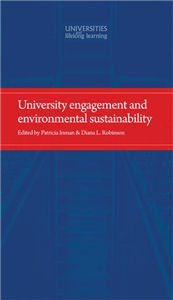
        University engagement and environmental sustainability

        by Michael Osborne, Patricia Inman, Diana Robinson

        Universities have a key role to play in contributing to environmental development and combating climate change. The chapters within this volume detail the challenges faced by higher education institutions in considering environmental sustainability, and provide both a broad view of university engagement and a detailed examination of various projects. As part of this series in association with the Place and Social Capital and Learning (PASCAL) International Observatory, the three key PASCAL themes of place management, lifelong learning and the development of social capital are considered throughout the book. While universities have historically generated knowledge outside of specific local contexts, this book argues that it is particularly important for them to engage with the local community and to consider diverse perspectives and assets when looking at issues within an ecological context. The chapters in this volume provide new perspectives and frames of reference for transforming universities by engaging in the development of resilient communities.

      • Trusted Partner
        Humanities & Social Sciences
        September 2023

        Missionaries and modernity

        Education in the British Empire, 1830-1910

        by Felicity Jensz

        Many missionary societies established mission schools in the nineteenth century in the British Empire as a means to convert non-Europeans to Christianity. Although the details, differed in various colonial contexts, the driving ideology behind mission schools was that Christian morality was highest form of civilisation needed for non-Europeans to be useful members of colonies under British rule. This comprehensive survey of multi-colonial sites over the long time span clearly describes the missionary paradox that to draw in pupils they needed to provide secular education, but that secular education was seen to lead both to a moral crisis and to anti-British sentiments.

      Subscribe to our

      newsletter