
Your Search Results


-
Promoted Content

 Literature & Literary StudiesSeptember 2017
The Pianoplayers
by Anthony Burgess
by Will Carr, Paul Wake, Andrew Biswell
This novel is one of Anthony Burgess's most accessible and entertaining works. By turns bawdy, raucous, tender and bittersweet, and full of music and songs, this is a warm and affectionate portrait of the working-class Lancashire of the 1920s and 1930s that he knew from his own early life. The Pianoplayers is a funny, moving, autobiographical novel that brings to life the world of silent cinemas and music-halls of 1920s Manchester and Blackpool. Fully annotated and with a new introduction, this is an authoritative text for a new generation of readers. Part of the forthcoming Irwell Edition of the Works of Anthony Burgess, this book offers an opportunity to reappraise an unjustly neglected novel important to our understanding of Burgess's wider oeuvre. The 2017 Burgess centenary makes this a key moment for reflection on the life and work of a major figure in twentieth century letters.
-
Promoted Content
 Humanities & Social SciencesFebruary 2023
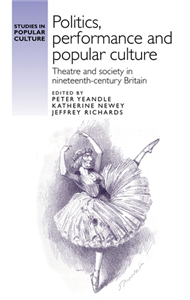
Politics, performance and popular culture
Theatre and society in nineteenth-century Britain
by Peter Yeandle, Katherine Newey, Jeffrey Richards
This collection brings together studies of popular performance and politics across the nineteenth century, offering a fresh perspective from an archivally grounded research base. It works with the concept that politics is performative and performance is political. The book is organised into three parts in dialogue regarding specific approaches to popular performance and politics. Part I offers a series of conceptual studies using popular culture as an analytical category for social and political history. Part II explores the ways that performance represents and constructs contemporary ideologies of race, nation and empire. Part III investigates the performance techniques of specific politicians - including Robert Peel, Keir Hardie and Henry Hyndman - and analyses the performative elements of collective movements.
-
 Trusted Partner
 Humanities & Social SciencesDecember 2024
British culture after empire
Race, decolonisation and migration since 1945
by Josh Doble, Liam Liburd, Emma Parker
British culture after Empire is the first collection of its kind to explore the intertwined social, cultural and political aftermath of empire in Britain from 1945 up to and beyond the Brexit referendum of 2016, combining approaches from the fields of history, English and cultural studies. Against those who would deny, downplay or attempt to forget Britain's imperial legacy, the various contributions expose and explore how the British Empire and the consequences of its end continue to shape Britain at the local, national and international level. As an important and urgent intervention in a field of increasing relevance within and beyond the academy, the book offers fresh perspectives on the colonial hangovers in post-colonial Britain from up-and-coming as well as established scholars.
-
Trusted Partner
 Humanities & Social SciencesMarch 2026
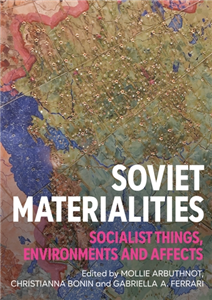
Soviet materialities
Socialist things, environments and affects
by Mollie Arbuthnot, Christianna Bonin, Gabriella Ferrari
Soviet materialities explores how material transforms our understanding of Soviet culture, from the textures of domestic space in 1960s apartment blocks to Gulag labour on the Moscow canal, and from avant-garde literary theory in the 1920s to conceptual art under perestroika. It starts from the ethos that the material world shapes people and society. Taking a material approach-or a range of material approaches-can therefore illuminate aspects of the cultural production and lived experiences of Soviet socialism that are not reflected in other kinds of historical records. This edited volume brings cutting-edge research by emerging scholars together with the established voices who have broken the ground in this sub-field over the last twenty years and promises to make a major intervention in the study of Soviet history and culture.
-
Trusted Partner
 Literature & Literary StudiesOctober 2025
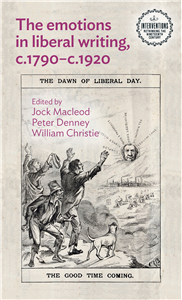
The emotions in liberal writing, c.1790–c.1920
by Jock Macleod, Peter Denney, William Christie
This volume of essays from a selection of distinguished international scholars is the first of its kind to explore in depth the emotional dimensions of liberal writing in Britain over the long nineteenth century. Addressing liberal writing in the public sphere rather than high political or parliamentary liberalism, it comprises a clear, context-setting introduction and eleven substantive chapters. The chapters analyse key texts and figures from the 1790s through to the 1920s and offer several different approaches to the central concern with the emotions and liberalism. These include examining the place of the emotions in the 'good life'; the social and political function of the emotions; emotional rhetoric in liberal writing; and liberal theories of the emotions. Both individually and as a collection, the essays provide an essential foundation for further scholarly work in this emerging field.
-
Trusted Partner
-
Trusted Partner
-
Trusted Partner
 Industrial / commercial art & designApril 2017
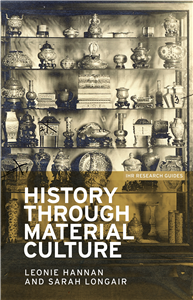
History through material culture
by Series edited by Simon Trafford, Leonie Hannan, Sarah Longair
History through material culture is a unique, step-by-step guide for students and researchers who wish to use objects as historical sources. Responding to the significant, scholarly interest in historical material culture studies, this book makes clear how students and researchers ready to use these rich material sources can make important, valuable and original contributions to history. Written by two experienced museum practitioners and historians, the book recognises the theoretical and practical challenges of this approach and offers clear advice on methods to get the best out of material culture research. With a focus on the early modern and modern periods, this volume draws on examples from across the world and demonstrates how to use material culture to answer a range of enquiries, including social, economic, gender, cultural and global history.
-
Trusted Partner
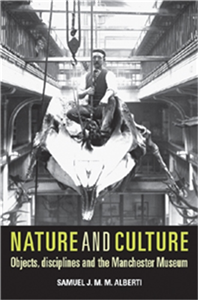 The ArtsSeptember 2009
Nature and culture
Objects, disciplines and the Manchester Museum
by Samuel J. M. M. Alberti
This is a vital new work; the first to take the University of Manchester's Museum as its subject. By setting the museum in its cultural and intellectual contexts, Nature and culture explores twentieth-century collecting and display, and the status of the object in the modern world. Beginning with the origins of the Manchester Museum, accounting for its development as an internationally renowned university museum, and concluding at its major expansion at the turn of the millennium, this book casts new light on the history of museums. How did objects become knowledge? Who encountered museum objects on their way to museums? What happened to collections within the museum? How did visitors use and respond to objects? In answering these questions, Nature and culture illuminates not only the history of one institution, but also contributes to wider discussions in the history of science, cultural history and museology. ;
-
Trusted Partner
 Humanities & Social SciencesMarch 2017
The harem, slavery and British imperial culture
Anglo-Muslim relations in the late nineteenth century
by Diane Robinson-Dunn
This book focuses on British efforts to suppress the traffic in female slaves destined for Egyptian harems during the late-nineteenth century. It considers this campaign in relation to gender debates in England, and examines the ways in which the assumptions and dominant imperialist discourses of these abolitionists were challenged by the newly-established Muslim communities in England, as well as by English people who converted to or were sympathetic with Islam. While previous scholars have treated antislavery activity in Egypt first and foremost as an extension of earlier efforts to abolish plantation slavery in the New World, this book considers it in terms of encounters with Islam during a period which it argues marked a new departure in Anglo-Muslim relations. This approach illuminates the role of Islam in the creation of English national identities within the global cultural system of the British Empire. This book would appeal to those with an interest in British imperial history; Islam; gender, feminism, and women's studies; slavery and race; the formation of national identities; global processes; Orientalism; and Middle Eastern studies.
-
Trusted Partner
 Literature & Literary StudiesFebruary 2000
Feminism, femininity and popular culture
by Joanne Hollows
Accessible, introductory student guide which identifies key feminist approaches to popular culture from the 1960s to the present.. The only introduction to both feminist cultural studies and feminism and popular culture published in the UK.. Presents its information in a reader friendly series of case studies on: women's film romantic fiction soap opera consumption and material culture fashion and beauty proactices youth culture and popular music. Will appeal to students across a wide range of disciplines as a variety of popular cultural forms are discussed. ;
-
Trusted Partner
 Teaching, Language & ReferenceJanuary 2019
Global humanitarianism and media culture
by Michael Lawrence, Rachel Tavernor, Bertrand Taithe
-
Trusted Partner
 Humanities & Social SciencesJuly 2020
Victorian literary culture and ancient Egypt
by Eleanor Dobson
-
Trusted Partner
 The ArtsNovember 2006
Spanish visual culture
Cinema, television, internet
by Paul Julian Smith, Susan Williams
This book is the first to explore three visual media in contemporary Spain: cinema, television and the internet. It also examines cultural products in each of these media in terms of three vital themes: emotion, location and nostalgia. The first two chapters focus on emotion. They analyze the 'emotional imperative' in a recent Almodóvar feature film and in Spanish television's top-rated period drama, and investigate the politics of affect in TV drama in the last decade. The next pair of chapters deal with location. They use cultural geography to re-read contradictory accounts of the movida (the post-Franco cultural boom) and examine an attempt to anchor a US-derived genre (the youth movie) in the urban landscape of Madrid. The fifth and sixth chapters introduce the theme of location into nostalgia. They treat the unique cases of a successful Spanish heritage movie and a contemporary Spanish thriller remade in Hollywood. The peunultimate chapter investigates electronic artists and the virtual universe, and the book ends with a look at the implications of Hispano-Mexican co-productions and the interconnectedness of economic and aesthetic cultural forms. ;
-
Trusted Partner
 Humanities & Social SciencesJune 2024
Pandemic culture
by Ben Walmsley, Abigail Gilmore, Dave O'Brien
-
Trusted Partner
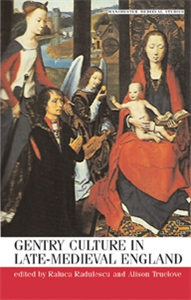 Humanities & Social SciencesJanuary 2006
Gentry culture in late-medieval England
by Raluca Radulescu, Steve Rigby, Alison Truelove
Essays in this fascinating and important collection examine the lifestyles and attitudes of the gentry in late medieval England. They consider the emergence of the gentry as a group distinct from the nobility, and explore the various available routes to gentility. Through surveys of the gentry's military background, administrative and political roles, social behaviour, and education, the reader is provided with an overview of how the group's culture evolved, and how it was disseminated. Studies of the gentry's literacy, creation and use of literature, cultural networks, religious activities and their experiences of music and the visual arts more directly address the practice and expression of this culture, exploring the extent to which the gentry's activities were different from those of the wider population. Joining the editors in contributing essays to this collection is an impressive array of eminent scholars, all specialists in their respective fields: Christine Carpenter, Peter Fleming, Maurice Keen, Philippa Maddern, Nicholas Orme, Tim Shaw, Thomas Tolley and Deborah Youngs. As a whole, the book offers a broad view of gentry culture that explores, reassesses, and sometimes even challenges the idea that members of the gentry cultivated their own distinctive cultural identity. It will appeal to students looking for a comprehensive introduction to late medieval gentry culture, as well as to researchers interested in gentry studies more generally. ;
-
Trusted Partner
 Humanities & Social SciencesJune 2020
Gentry culture and the politics of religion
by Richard Cust, Peter Lake
-
Trusted Partner
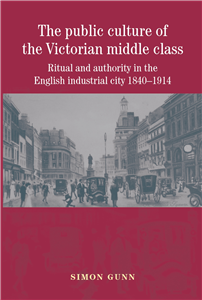 The ArtsAugust 2007
The public culture of the Victorian middle class
Ritual and authority in the English industrial city 1840–1914
by Simon Gunn
The public culture of the Victorian middle class looks at the creation of a distinctive 'high' culture in the industrial cities of Birmingham, Leeds and Manchester in the mid-nineteenth century and its incipient decline from the 1880s. The history of urban bourgeois culture has been relatively unexplored and under-theorised compared to popular culture. This volume therefore represents a significant contribution both to the study of middle-class cultural forms and to an understanding of the relationship between culture and power. In particular, it argues for the importance of ritualised modes of social behaviour in understanding the construction of authority in the nineteenth-century city. As well as many original arguments, the book provides a clear and useful overview of the public cultures of Victorian 'respectability'. The book will be of interest to scholars and students in the areas of social history, cultural history, urban history, cultural studies, urban studies and the sociology of culture. ;
-
Trusted Partner
 Humanities & Social SciencesMay 2000
Smoking in British popular culture 1800–2000
by Matthew Hilton, Jeffrey Richards
A concise history of smoking in British popular culture from the early nineteenth century to the present day.. Provides the historical backdrop to the current debates about the politics of tobacco and health, demonstrating that both pro- and anti-smokers have consistently failed to understand the position of smoking within popular culture.. Important themes explored include: the importance of consumption to constructions of masculinity and femininity, the role of the state in the official regulation of the 'minor vices', the morality of consumption and the position of scientific knowledge within popular culture.. Traces the production, promotion and consumption of tobacco as well as outlining the arguments that have variously opposed this ever-controversial drug.. Genuinely interdisciplinary, combining elements of social, cultural and economic history whilst contributing to debates in sociology and cultural studies, the anthropology of material culture, design history, medical history and public health policy. ;
-
Trusted Partner
 Humanities & Social SciencesSeptember 2001
Railways and culture in Britain
The epitome of modernity
by Ian Carter, Jeffrey Richards
The nineteenth-century's steam railway epitomised modernity's relentlessly onrushing advance. In Railways and culture in Britain Ian Carter delves into the cultural impact of train technology, and how this was represented in British society. Why, for example, did Britain possess no great railway novel? The book's first half tests that assertion by comparing fiction and images by some canonical British figures (Turner, Dickens, Arnold Bennett) with selected French and Russian competitors: Tolstoy, Zola, Monet, Manet. The second half proposes that if high cultural work on the British steam railway is thin, then this does not mean that all British culture ignored this revolutionary artefact. Detailed discussions of comic fiction, crime fiction and cartoons reveal a popular fascination with railways tumbling from vast (and hitherto unexplored) stores of critically overlooked genres. A final chapter contemplates cultural correlations of the steam railway's eclipse. If this was the epitome of modernity, then does the triumph of diesel and electric trains, of cars and planes, signal a decisive shift to postmodernity? ;



