
Humanities & Social Sciences
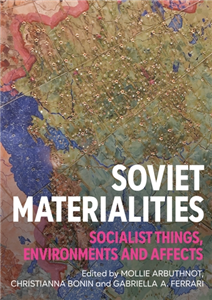
Soviet materialities
Socialist things, environments and affects
by Mollie Arbuthnot, Christianna Bonin, Gabriella Ferrari
Description
Soviet materialities explores how material transforms our understanding of Soviet culture, from the textures of domestic space in 1960s apartment blocks to Gulag labour on the Moscow canal, and from avant-garde literary theory in the 1920s to conceptual art under perestroika. It starts from the ethos that the material world shapes people and society. Taking a material approach-or a range of material approaches-can therefore illuminate aspects of the cultural production and lived experiences of Soviet socialism that are not reflected in other kinds of historical records. This edited volume brings cutting-edge research by emerging scholars together with the established voices who have broken the ground in this sub-field over the last twenty years and promises to make a major intervention in the study of Soviet history and culture.
More Information
Rights Information
Albania, Algeria, Angola, Argentina, Armenia, Australia, Austria, Bahrain, Belgium, Belize, Benin, Bolivia, Bosnia and Herzegovina, Botswana, Brazil, Bulgaria, Burkina Faso, Burundi, Cameroon, Canada, Cape Verde, Central African Republic, Chad, Chile, China, Colombia, Comoros, Congo [DRC], Congo, Republic of the, Costa Rica, Ivory Coast, Croatia, Czech Republic, Denmark, Djibouti, Ecuador, Egypt, El Salvador, Equatorial Guinea, Eritrea, Estonia, Ethiopia, Faroe Islands, Finland, France, French Guiana, Gabon, Gambia, Georgia, Germany, Ghana, Greece, Guatemala, Guinea, Guinea-Bissau, Guyana, Honduras, Hongkong, Hungary, Iceland, India, Indonesia, Iran, Iraq, Ireland, Israel, Italy, Japan, Jordan, Kazakhstan, Kenya, Kuwait, Latvia, Lebanon, Lesotho, Liberia, Libya, Lithuania, Luxembourg, Macau, China, Macedonia [FYROM], Madagascar, Malawi, Malaysia, Mali, Malta, Mauritania, Mauritius, Mayotte, Mexico, Mongolia, Montenegro, Morocco, Mozambique, Namibia, Netherlands, New Zealand, Nicaragua, Niger, Nigeria, Norway, Oman, Pakistan, Panama, Paraguay, Peru, Philippines, Poland, Portugal, Puerto Rico, Qatar, Reunion, Romania, Russia, Rwanda, Saint Helena, Sao Tome and Principe, Saudi Arabia, Senegal, Serbia, Seychelles, Sierra Leone, Singapore, Slovakia, Slovenia, Somalia, South Africa, South Korea, Spain, Sri Lanka, Sudan, Suriname, Swaziland, Sweden, Switzerland, Syria, Taiwan, Tanzania, Thailand, Timor-Leste, Togo, Tokelau, Tunisia, Turkey, Uganda, Ukraine, United Arab Emirates, United Kingdom, United States, Uruguay, Venezuela, Vietnam, Western Sahara, Yemen, Zambia, Zimbabwe, South Sudan, Cyprus, Palestine, Bangladesh, Cambodia, Liechtenstein, Azerbaijan, Jamaica, Kyrgyzstan, Dominican Republic, Myanmar, Monaco
Endorsements
How did matter matter in the Soviet world? Soviet materialities rethinks the relationship between humans, things, and environments in the Soviet Union, moving beyond a simple study of objects made in the USSR to explore how materials shaped social life, ideology, and identity. It calls for a fresh approach to materiality, one that recognises the mutual formation of people and their material surroundings under Soviet socialism. Bringing together a selection of original and interdisciplinary scholarship, its case studies range from the Turksib railway built across the Kazakh steppe to a collection of pickled brains, from the literal and metaphorical explosions of gelatine printing to an atheist museum built in a Sufi shrine in Uzbekistan, and from heirloom jewellery sold for survival during famine in Ukraine to the experimental performances of Conceptualist artists. Drawing on affect theory, environmental history, the history of the everyday-and the theoretical interventions of New Materialism more broadly-Soviet materialities uncovers how distinct ways of understanding and conceptualising matter emerged in the ideological and historical contexts of the Soviet Union. Bridging history, literature, anthropology, art history and environmental humanities, this book argues that materiality offers a groundbreaking methodological toolkit for rethinking the Soviet past through material relations.
Reviews
How did matter matter in the Soviet world? Soviet materialities rethinks the relationship between humans, things, and environments in the Soviet Union, moving beyond a simple study of objects made in the USSR to explore how materials shaped social life, ideology, and identity. It calls for a fresh approach to materiality, one that recognises the mutual formation of people and their material surroundings under Soviet socialism. Bringing together a selection of original and interdisciplinary scholarship, its case studies range from the Turksib railway built across the Kazakh steppe to a collection of pickled brains, from the literal and metaphorical explosions of gelatine printing to an atheist museum built in a Sufi shrine in Uzbekistan, and from heirloom jewellery sold for survival during famine in Ukraine to the experimental performances of Conceptualist artists. Drawing on affect theory, environmental history, the history of the everyday-and the theoretical interventions of New Materialism more broadly-Soviet materialities uncovers how distinct ways of understanding and conceptualising matter emerged in the ideological and historical contexts of the Soviet Union. Bridging history, literature, anthropology, art history and environmental humanities, this book argues that materiality offers a groundbreaking methodological toolkit for rethinking the Soviet past through material relations.
Author Biography
Mollie Arbuthnot is Assistant Professor of History at Nazarbayev University Christianna Bonin is Assistant Professor of Art History and Theory at American University of Sharjah Gabriella A. Ferrari is an independent scholar of Russian and Soviet visual culture
 Trusted Partner

Manchester University Press
Manchester University Press is a leading UK publisher known for excellent research in the humanities and social sciences.
View all titlesBibliographic Information
- Publisher Manchester University Press
- Publication Date March 2026
- Orginal LanguageEnglish
- ISBN/Identifier 9781526182128 / 1526182122
- Publication Country or regionUnited Kingdom
- FormatPrint PDF
- Pages360
- ReadershipCollege/higher education; Professional and scholarly
- Publish StatusPublished
- Dimensions240 X 170 mm
- Biblio NotesDerived from Proprietary 6319
- Reference Code16828
Thank you for proceeding with this offer.
Manchester University Press has chosen to review this offer before it proceeds.
You will receive an email update that will bring you back to complete the process.
You can also check the status in the My Offers area
Manchester University Press has chosen to review this offer before it proceeds.
You will receive an email update that will bring you back to complete the process.
You can also check the status in the My Offers area

Please wait while the payment is being prepared.
Do not close this window.

(c) Copyright 2026 - Frankfurter Buchmesse GmbH. All Right Reserved