
Wolters Kluwer Legal & Regulatory U.S.
Wolters Kluwer Law & Business delivers expert content and solutions in the areas of law, corporate compliance, health compliance, reimbursement, and legal education.
View Rights Portal
Wolters Kluwer Law & Business delivers expert content and solutions in the areas of law, corporate compliance, health compliance, reimbursement, and legal education.
View Rights Portal
Musicians and Copyright explores the role of Collective Management Organizations (CMOs) in shaping the music industry from the mid-nineteenth century to today. Edited by VéroniquePouillard, Marius Buning, and Mala Loth, the book traces the development of CMOs and their impact on copyright and cultural production. Through historical analysis, it examines the challenges CMOs have faced, from colonial contexts to European integration and the digital age, and shows how CMOs have navigated regulatory changes, technological shifts, and internal politics. Offering a detailed history of these important institutions, Musicians and Copyright is a valuable resource for anyone interested in the intersection of music, law, and the cultural industries.

Three of the most important chronicles of eleventh-century Germany were composed in the south-western duchy of Swabia. The chronicles reveal how between 1049 and 1100 the centripetal attraction of the reform papacy became the dominant fact of intellectual life in German reformed monastic circles. In the abbey of Reichenau Herman 'the Lame' composed a chronicle of the reign of Emperor Henry III (1039-56). His pupil, Berthold of Reichenau, continued his master's work, composing a detailed account of 1076-1079 in Germany. Bernold, a clergyman of Constance, continued the work of Herman and Berthold in a text containing the fullest extant account of 1080-1100. Herman's waning enthusiasm for the monarchy and growing interest in the newly reformed papacy were intensified in Berthold's chronicle, and writing in the new context of the reformed monasteries of south-western Germany, Bernold preached total obedience to the Gregorian papacy. The Swabian chronicles are an indispensable resource to the student of the changing loyalties and conflicts of eleventh-century Germany.
 Trusted Partner
 Trusted Partner
This volume presents the first systematic account of Japanese international legal theory; edited by Japanese scholars, the volume traces thirteen influential scholars and spans over a century. It examines how theorists positioned outside international law's Western centre developed sophisticated frameworks to address tensions between Western modernity and their own experiences. The book's central contribution proposes 'conversation'-continuous engagement that respects differences between legal traditions-as an alternative to 'dialogue', which often reproduces existing hierarchies by assuming all perspectives can be reconciled. Through detailed intellectual biographies across six historical periods, contributors reveal how Japanese scholars strategically employed legal positivism, articulated transcivilizational perspectives, and developed concepts of normative multilateralism. Addressed at scholars of international law, legal theory, and comparative legal traditions, this volume demonstrates that the discipline's future requires genuinely reciprocal exchange where diverse perspectives can coexist productively.
Trusted Partner
Anthony Burgess and America is a biographical and critical analysis of Burgess's commentary on and relationship with the United States of America. Utilising Burgess's entire canon and newly discovered materials to assess Burgess's views on America, this book also evaluates the American inspirations in five Burgess novels. This essential addition to Burgess scholarship tells the story of a nearly unexplored area of Burgess's life. For the first time ever, Burgess's American experiences, work, and documented communication, lectures, interviews and public utterances are brought together to assess where these commentaries overlapped with his fiction. The result is a complex personal and public history about one of Britain's greatest twentieth century authors and their immersion into and interaction with American culture in the second half of the twentieth century.
Trusted Partner
Examining the popular discourse of nerves and stress, this book provides a historical account of how ordinary Britons understood, explained and coped with the pressures and strains of daily life during the twentieth century. It traces the popular, vernacular discourse of stress, illuminating not just how stress was known, but the ways in which that knowledge was produced. Taking a cultural approach, the book focuses on contemporary popular understandings, revealing continuity of ideas about work, mental health, status, gender and individual weakness, as well as the changing socio-economic contexts that enabled stress to become a ubiquitous condition of everyday life by the end of the century. With accounts from sufferers, families and colleagues it also offers insight into self-help literature, the meanings of work and changing dynamics of domestic life, delivering a complementary perspective to medical histories of stress.
Trusted Partner
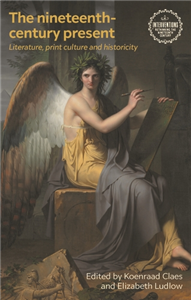
The Nineteenth-Century Present explores the multiple ways in which history was understood, structured, and reassessed in literary, theological, and political contexts across the nineteenth century. While the scope of the book is wide, ranging from the representations of geological time and ancient history to the writing of the recent past, and covering the work of writers from Walter Scott to G.K. Chesterton, each chapter reveals how present concerns intrude on and shape every view of history. Ultimately, the collection emphasises that issues raised regarding historicity in recent methodological debates were already concerns in the nineteenth century.
Trusted Partner

This novel is one of Anthony Burgess's most accessible and entertaining works. By turns bawdy, raucous, tender and bittersweet, and full of music and songs, this is a warm and affectionate portrait of the working-class Lancashire of the 1920s and 1930s that he knew from his own early life. The Pianoplayers is a funny, moving, autobiographical novel that brings to life the world of silent cinemas and music-halls of 1920s Manchester and Blackpool. Fully annotated and with a new introduction, this is an authoritative text for a new generation of readers. Part of the forthcoming Irwell Edition of the Works of Anthony Burgess, this book offers an opportunity to reappraise an unjustly neglected novel important to our understanding of Burgess's wider oeuvre. The 2017 Burgess centenary makes this a key moment for reflection on the life and work of a major figure in twentieth century letters.
Trusted Partner
This collection of essays addresses research trends in the history of British leisure while also presenting a wide range of articles on cultural conflict and leisure in the twentieth century. It includes innovative research on a number of topics, including television, cinema, the circus, women's leisure, dance, football and drug culture. It provides an excellent entry to leisure studies and history, while addressing the contributions of other disciplines and exploring key historiographical trends. Three broad topics structure the collection; cultural contestation and social conflict in leisure; regulation and standardisation; and national identity embodied in leisure and popular culture. The book will be useful to students and educators of twentieth-century and British history, as it offers accessible and topical studies that pique historical curiosity. In addition, historians, sociologists and cultural analysts of the twentieth century will find it essential for understanding pleasure and recreation in twentieth-century British society.
Trusted Partner
This collection of essays addresses research trends in the history of British leisure while also presenting a wide range of articles on cultural conflict and leisure in the twentieth century. It includes innovative research on a number of topics, including television, cinema, the circus, women's leisure, dance, football and drug culture. It provides an excellent entry to leisure studies and history, while addressing the contributions of other disciplines and exploring key historiographical trends. Three broad topics structure the collection; cultural contestation and social conflict in leisure; regulation and standardisation; and national identity embodied in leisure and popular culture. The book will be useful to students and educators of twentieth-century and British history, as it offers accessible and topical studies that pique historical curiosity. In addition, historians, sociologists and cultural analysts of the twentieth century will find it essential for understanding pleasure and recreation in twentieth-century British society. ;
Trusted Partner

The eleventh-century papal reform transformed western European Church and society and permanently altered the relations of Church and State in the west. The reform was inaugurated by Pope Leo IX (1048-54) and given a controversial change of direction by Pope Gregory VII (1073-85). This book contains the earliest biographies of both popes, presented here for the first time in English translation with detailed commentaries. The biographers of Leo IX were inspired by his universally acknowledged sanctity, whereas the biographers of Gregory VII wrote to defend his reputation against the hostility generated by his reforming methods and his conflict with King Henry IV. Also included is a translation of Book to a Friend, written by Bishop Bonizo of Sutri soon after the death of Gregory VII, as well as an extract from the violently anti-Gregorian polemic of Bishop Benzo of Alba (1085) and the short biography of Leo IX composed in the papal curia in the 1090s by Bishop Bruno of Segni. These fascinating narrative sources bear witness to the startling impact of the papal reform and of the 'Investiture Contest', the conflict of empire and papacy that was one of its consequences. An essential collection of translated texts for students of medieval history.
Trusted Partner
Suicide and the Gothic is the first protracted study of how the act of self-destruction recurs and functions within one of the most enduring and popular forms of fiction. Comprising eleven original essays and an authoritative introduction, this collection explores how the act of suicide has been portrayed, interrogated and pathologised from the eighteenth century to the present. The featured fictions embrace both canonical and the less-studied texts and examine the crisis of suicide - a crisis that has personal, familial, religious, legal and medical implications - in European, American and Asian contexts. Featuring detailed interventions into the understanding of texts as temporally distant as Thomas Percy's Reliques and Patricia Highsmith's crime fictions, and movements as diverse as Wertherism, Romanticism and fin-de-siècle decadence, Suicide and the Gothic provides a comprehensive and compelling overview of this recurrent crisis in fiction and culture.
Trusted Partner
Whether for reasons of family, food, shopping or religion, it's hard to imagine a British winter without Christmas, or to think of a more traditional national festival. But how and when did Christmas cards, pantomimes and advertising become part of that tradition? This book looks at how people in the nineteenth and early twentieth centuries experienced Christmas and how today's priorities and rituals began and endured. It explores the origins of our deeply held notions around Christmas traditions and demonstrates how those ideas were in fact shaped by the fast-paced modernisation of English life. A fascinating account of the development of many things we now take for granted, the book touches on the history of childhood and the family, philanthropy and work, and the beginnings of consumerism that shaped the Christmas we know today.
Trusted Partner
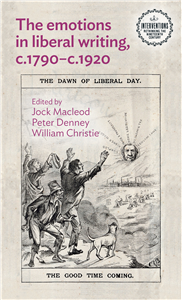
This volume of essays from a selection of distinguished international scholars is the first of its kind to explore in depth the emotional dimensions of liberal writing in Britain over the long nineteenth century. Addressing liberal writing in the public sphere rather than high political or parliamentary liberalism, it comprises a clear, context-setting introduction and eleven substantive chapters. The chapters analyse key texts and figures from the 1790s through to the 1920s and offer several different approaches to the central concern with the emotions and liberalism. These include examining the place of the emotions in the 'good life'; the social and political function of the emotions; emotional rhetoric in liberal writing; and liberal theories of the emotions. Both individually and as a collection, the essays provide an essential foundation for further scholarly work in this emerging field.
Trusted Partner
Re-examining nineteenth-century Eastscontributes novel approaches to gendered and gendering fictions and travel writing in and of the cultural-geographical-ideological contexts surrounding nineteenth-century Easts. It examines underexplored stories of travel and narratives of encounter to reconsider the western allure of travelling to the Easts - from the Balkans to the Middle and Far East, through a range of diverse critical approaches. It discusses writers - travellers, novelists, and short-story writers - who authored texts based on their varied experiences in eastern lands. It also analyses how views of eastern places became a rich source of material for identity formations related to Empire but also discussions about masculinity and femininity at 'home'.
Trusted Partner
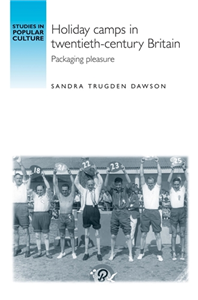
This book is the story of two holiday camp chains established in the 1930s that provided thousands with packaged pleasure. Warner and Butlin's commercial camps emerged at the intersection of cultural shifts that politicised working-class leisure and consumption. Entertainment fostered in the post-war camps provided a forum for popular pleasure that reinforced the idea of a 'national' culture grown from the common experience of war. Butlin and Warner, the big commercial chains of the 50s and 60s, are enmeshed in our social and cultural history. Dawson uncovers the significance of the holiday camps to the political, economic, social, and cultural history of twentieth-century Britain, drawing on an impressive variety of sources, from government documents to trade journals, advertising, photographs, oral histories, literature, films and songs. This unique volume will be of interest to academics and specialists of British social history, popular culture and tourism studies whilst remaining accessible to enthusiasts. ;
Trusted Partner
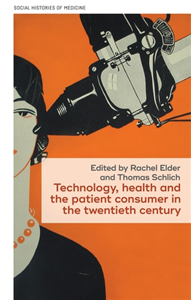
Technology and consumerism are two characteristic phenomena in the history medicine and healthcare, yet the connections between them are rarely explored by scholars. In this edited volume, the authors address this disconnect, noting the ways in which a variety of technologies have shaped patients' roles as consumers since the early twentieth century. Chapters examine key issues, such as the changing nature of patient information and choice, patients' assessment of risk and reward, and matters of patient role and of patient demand as they relate to new and changing technologies. They simultaneously investigate how differences in access to care and in outcomes across various patient groups have been influenced by the advent of new technologies and consumer-based approaches to health. The volume spans the twentieth and twenty-first centuries, spotlights an array of medical technologies and health products, and draws on examples from across the United States and United Kingdom.
Trusted Partner
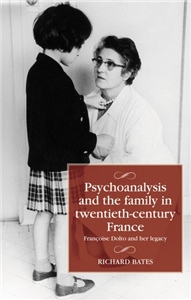
In the last quarter of the twentieth century, if French people had a parenting problem or dilemma there was one person they consulted above all: Françoise Dolto (1908-88). But who was Dolto? How did she achieve a position of such influence? What ideas did she communicate to the French public? This book connects the story of Dolto's rise to two broader histories: the dramatic growth of psychoanalysis in postwar France and the long-running debate over the family and the proper role of women in society. It shows that Dolto's continued reputation in France as a liberal and enlightened educational thinker is at best only partially deserved and that conservative and anti-feminist ideas often underpinned her prominent public interventions. While Dolto retains the status of a national treasure, her career has had far-reaching and sometimes harmful repercussions for French society, particularly in the treatment of autism.
Trusted Partner

The nineteenth-century Hispanic world was shattered to its core by war, civil war, and revolution. At the same time, it confronted a new period of European and North-American expansion and development. In these essays, authors explore major, dynamic ways that people in Spain envisaged how they would adapt and change, or simply continue as they were. Each chapter title begins with the words "How to...", and examines the ways in which Spaniards conceived or undertook major activities that shaped their lives. These range from telling the time to being a man. Adaptability, paradox, and inconsistency come to the fore in many of the essays. We find before us a human quest for opportunity and survival in a complex and changing world. This wide-ranging book contains chapters by leading scholars from the United States, United Kingdom, and Spain.
Trusted Partner
In 1660 Charles II was restored to the thrones of England, Scotland and Ireland, but his hold on power was precarious. In particular, Ireland was fundamentally unstable - Catholics formed the majority of the population in a country where Protestantism was the established religion, a state of affairs unique in Europe. It was through the law that the restored Stuart monarchy governed its subjects and its colonial dependencies, and this book examines how Catholics engaged with and experienced English common law primarily through the eyes of Catholic clerics and Gaelic poets. It also examines how Catholics engaged with the Courts and the particular challenges they faced as lawyers. The book draws on an extensive body of primary source materials, including Irish-language poetry and little-used archival material relating to elite Catholic families.


