
Your Search Results
-

-

Masr El Arabia for Publishing and Distribution
We are Masr El Arabia for Publishing and Distribution, an Egyptian publishing house located in Cairo – Egypt. Established in 1977 with a focus on distribution and few but carefully selected titles. In 2007 we decided to shift more to publishing and started with academic books then lately we added a new line which is translated literature, we care most about the quality of the work and we managed to present many foreign authors for the first time to the Arab readers such as Goncalo Tavares, Immanuel Mifsud, Reiner Englemann, Julian Fuks, Kelly James Clark and others, also we managed to publish the Nobel laureate Svetlana Alexievich (Chernobyl Prayer) 2015, Jo Nesbo and many others during the past few years. We would like to mention that prior to the publishing house, we established Al Thaqafa Al Jadeeda Bookshop in the United Arab Emirates (Abu Dhabi) which was one of the first book shops in the country. We participate in almost all the Arab book fairs, and we have our books distributed in every Arab country through the major bookshop chains and local distributors.
View Rights Portal
-
Promoted Content

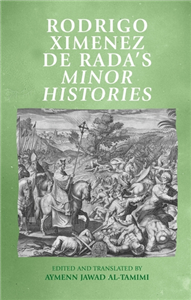 Humanities & Social SciencesJanuary 2026
Rodrigo Ximenez de Rada’s Minor Histories
by Aymenn Al-Tamimi
This work provides the first complete English translation of works by Toledan archbishop Rodrigo Ximénez de Rada (1170-1247 CE), whose 'Minor Histories' are sequels to his larger 'Gothic History' and thus round off his grand history of Spain project that he began at the request of King Ferdinand III. The 'Minor Histories' include Rodrigo's 'History of the Arabs' that can be considered the first surviving Western monograph focused on Arab and Islamic history and thus occupies a unique position in the medieval Latin corpus of writings. In addition to the translation, this book provides a thorough and accessible introduction to the life and works of Rodrigo, making sense of the context in which he wrote and his historical method. The translations are thoroughly annotated including cross-references to other Latin and Arabic sources for comparison.
-
Promoted Content
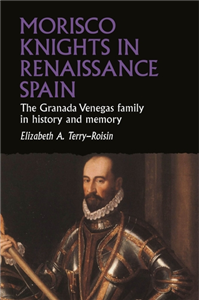 Humanities & Social SciencesAugust 2026
Morisco knights in Renaissance Spain
The Granada Venegas family in history and memory
by Elizabeth Terry-Roisin
How does a Morisco enter the Spanish nobility? This book reveals the cultural strategies through which a family of converts from Islam to Christianity overcame limpieza de sangre laws, rose in social status, avoided King Philip III's Morisco expulsions of 1609-14, and achieved a noble title. Drawing on archival sources from both Spain and Italy to re-create the original family archive, this book follows the Granada Venegas family from Granada, to Madrid, to the dusty Andalucían town of Campotéjar, of which they became Marquises, and finally to Italy. Their descendants would serve as Doges of Genoa in the eighteenth century.
-
 Trusted Partner
 Humanities & Social SciencesMay 2020
Spain in the nineteenth century
New essays on experiences of culture and society
by Andrew Ginger, Geraldine Lawless
The nineteenth-century Hispanic world was shattered to its core by war, civil war, and revolution. At the same time, it confronted a new period of European and North-American expansion and development. In these essays, authors explore major, dynamic ways that people in Spain envisaged how they would adapt and change, or simply continue as they were. Each chapter title begins with the words "How to...", and examines the ways in which Spaniards conceived or undertook major activities that shaped their lives. These range from telling the time to being a man. Adaptability, paradox, and inconsistency come to the fore in many of the essays. We find before us a human quest for opportunity and survival in a complex and changing world. This wide-ranging book contains chapters by leading scholars from the United States, United Kingdom, and Spain.
-
Trusted Partner
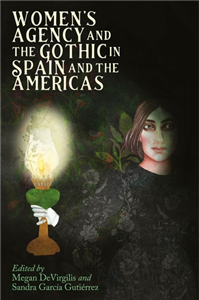 Literature & Literary StudiesMay 2026
Women’s Agency and the Gothic in Spain and the Americas
by Megan DeVirgilis, Sandra García Gutiérrez
This volume has emerged to fulfill two main purposes: Primarily, to constitute the first collaborative work that traces the relationship between the Gothic and Women in Spain and the Americas, but also, to surpass the term 'Female Gothic,' coined by Ellen Moers, by transferring the focus towards women and their agency as writers, readers and characters. This volume functions as a manifesto per se to open new avenues into understanding how women have interacted with the Gothic between the nineteenth and twenty-first centuries in Spain and the Americas. The question, we determine, is not simply about identity, but rather about agency. We define women's agency as the total capacity of characters, authors and readers to act freely within a social framework in relation to gothic texts. In our exploration of authorship, we reject the claim that the Gothic is a simplistic literary genre, instead sustaining that the plasticity of the Gothic has enabled it to survive for centuries; by shifting from a genre to a mode, it has surpassed literary forms and invaded all kinds of media: from film to music and merchandise such as clothing and pop culture collectables, fostering an authentic goth fandom.
-
Trusted Partner
 Humanities & Social SciencesFebruary 2017
Conquering nature in Spain and its empire, 1750–1850
by Helen Cowie, Andrew Thompson, John M. MacKenzie
This book examines the study of natural history in the Spanish empire in the years 1750-1850. During this period, Spain made strenuous efforts to survey, inventory and exploit the natural productions of her overseas possessions, orchestrating a serries of scientific expeditions and cultivating and displaying American fauna and flora in metropolitan gardens and museums. This book assesses the cultural significance of natural history, emphasising the figurative and utilitarian value with which eighteenth-century Spaniards invested natural objects, from globetrotting elephants to three-legged chickens. It considers how the creation, legitimisation and dissemination of scientific knowledge reflected broader questions of imperial power and national identity. This book will be of particular interest to scholars and students of Spanish and Latin American History, the History of Science and Imperial Culture
-
Trusted Partner
 Humanities & Social SciencesJuly 2013
Diversity management in Spain
New dimensions, new challenges
by Ricard Zapata-Barrero
In the current European dilemma as to whether to increase diversity policies or move towards an assimilationist policy, it is difficult to know what the Spanish approach is. This book argues that Spain represents a context of "multiple diversity", where two frameworks interact: an old, unresolved one, arising from democratic transition, and a new one due to immigration. This explains the Spanish practical approach, where the recent past plays the role of an iron cage, limiting institutional innovation and change. The author proposes a heuristic model, to better understand the "Spanish laboratory of diversities". In order to go through these steps, the author analyses three case studies, coming from the political/social agenda: education, workplace, and political rights. At the end, the reader will have an empirically informed and theoretically founded overview on how Spain is managing diversity. This book is timely for a wide range of academic and professional readers. ;
-
Trusted Partner
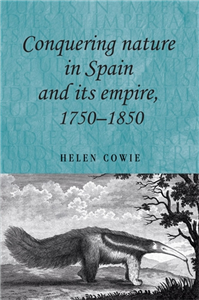 September 2011
Conquering nature in Spain and its empire, 1750–1850
by Helen Cowie, Andrew Thompson, John Mackenzie
This book examines the study of natural history in the Spanish empire in the years 1750-1850. During this period, Spain made strenuous efforts to survey, inventory and exploit the natural productions of her overseas possessions, orchestrating a serries of scientific expeditions and cultivating and displaying American fauna and flora in metropolitan gardens and museums. This book assesses the cultural significance of natural history, emphasising the figurative and utilitarian value with which eighteenth-century Spaniards invested natural objects, from globetrotting elephants to three-legged chickens. It considers how the creation, legitimisation and dissemination of scientific knowledge reflected broader questions of imperial power and national identity. This book will be of particular interest to scholars and students of Spanish and Latin American History, the History of Science and Imperial Culture ;
-
Trusted Partner
 Humanities & Social SciencesJanuary 2011
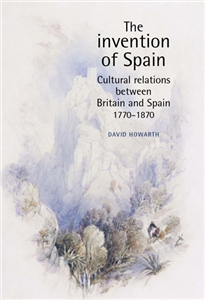
The invention of Spain
Cultural relations between Britain and Spain, 1770–1870 (NEW SUBTITLE)
by David Howarth
This book considers the close but sometimes contested relationship between Britain and Iberia in the period c.1770-1870. It begins by considering how British Enlightenment writers came to terms with the decline of Spain as a political and economic force following the Seven Years War. It then considers the great debates in Britain about Catholic emancipation, franchise reform, how the British historically understood themselves, issues of intervention or non-intervention in Europe, the emergence of history writing as a popular form of reading, an academic discipline and an extension of national identity. The discovery of Spanish art and the emergence of a debate in Victorian architecture about the use of the vernacular and craft techniques are also discussed, and consequently the book makes a significant addition to our understanding of Victorian taste and aesthetics. Spain was therefore something of a mirror in which the British saw themselves both reflected and perhaps distorted, and so we learn as much about the British as about the Spanish. A broad cultural history which is multi-disciplined in its approach and appeal, it will become essential reading for senior level undergraduates and postgraduates in Hispanic Studies departments. ;
-
Trusted Partner
 Humanities & Social SciencesDecember 2024
Iran, Saudi Arabia and the United States
Power, identity and strategy in the Persian Gulf triangle
by Luíza Cerioli
This book offers a nuanced snapshot of the complex geopolitical dynamics in the Persian Gulf, underlining the interaction between Iran, Saudi Arabia, and the US. Examining their interwoven relations since the 1970s, Luíza Cerioli's framework reveals how changes in US-Saudi ties have ripple effects on Iran-US and Iran-Saudi relations and vice versa. Using a historical lens, she explores how enduring US-Saudi connections hinge on order expectations, delves into the cognitive factors shaping US-Iran enmity and traces the source of oscillation in the Saudi-Iran ties. Employing Neoclassical Realism, the book investigates status-seeking, national identities and leadership preferences, offering a deeper understanding of the region's multipolar system. By combining International Relations and Middle East Studies, Cerioli's work contributes to both fields, unravelling the intricate interplay between international structures, regional nuances and agency in shaping Persian Gulf geopolitics.
-
Trusted Partner
 Humanities & Social SciencesJune 2026
The Persian Gulf triangle
Strategic relations between Iran, Saudi Arabia and the United States
by Luíza Cerioli
This book offers a nuanced snapshot of the complex geopolitical dynamics in the Persian Gulf, underlining the interaction between Iran, Saudi Arabia, and the US. Examining their interwoven relations since the 1970s, Luíza Cerioli's framework reveals how changes in US-Saudi ties have ripple effects on Iran-US and Iran-Saudi relations and vice versa. Using a historical lens, she explores how enduring US-Saudi connections hinge on order expectations, delves into the cognitive factors shaping US-Iran enmity and traces the source of oscillation in the Saudi-Iran ties. Employing Neoclassical Realism, the book investigates status-seeking, national identities and leadership preferences, offering a deeper understanding of the region's multipolar system. By combining International Relations and Middle East Studies, Cerioli's work contributes to both fields, unravelling the intricate interplay between international structures, regional nuances and agency in shaping Persian Gulf geopolitics.
-
Trusted Partner
 Humanities & Social SciencesOctober 2021
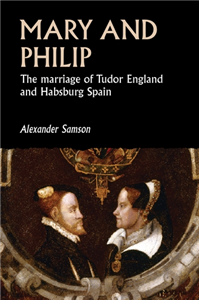
Mary and Philip
The marriage of Tudor England and Habsburg Spain
by Alexander Samson
Mary I, eldest daughter of Henry VIII, was Queen of England from 1553 until her death in 1558. For much of this time she ruled alongside her husband, King Philip II of Spain, forming a co-monarchy that put England at the heart of early modern Europe. In this book, Alexander Samson presents a bold reassessment of Mary and Philip's reign, rescuing them from the neglect they have suffered at the hands of generations of historians. The co-monarchy of Mary I and Philip II put England at the heart of early modern Europe. This positive reassessment of their joint reign counters a series of parochial, misogynist and anti-Catholic assumptions, correcting the many myths that have grown up around the marriage and explaining the reasons for its persistent marginalisation in the historiography of sixteenth-century England. Using new archival discoveries and original sources, the book argues for Mary as a great Catholic queen, while fleshing out Philip's important contributions as king of England.
-
Trusted Partner
 Humanities & Social SciencesApril 2016
Zionism in Arab discourses
by Ofir Winter, Uriya Shavit
Zionism in Arab discourses presents a ground-breaking study of the Arab-Israeli conflict. Through analyses of hundreds of texts written by Arab Islamists and liberals from the late-nineteenth century to the 'Arab Spring', the book demonstrates that the Zionist enterprise has played a dual function of an enemy and a mentor. Islamists and liberals alike discovered, respectively, in Zionism and in Israeli society qualities they sought to implement in their sown homelands. Focusing on Palestinian, Egyptian, Syrian and Jordanian political discourses, this study uncovers fascinating and unexpected Arab points of views on different aspects of Zionism; from the first Zionist Congress to the First Lebanon War; from gardening in the early years of Tel Aviv to women's service in the Israeli Defence Forces; from the role of religion in the creation of the state to the role of democracy in its preservation. This study presents the debates between and within contesting Arab ideological trends on a conflict that has shaped, and is certain to continue and shape, one of the most complicated regions in the world. ;
-
Trusted Partner
 Humanities & Social SciencesMarch 2016
The Model Arab League manual
A guide to preparation and performance
by Philip D’Agati, Holly Jordan
This textbook provides a comprehensive overview of the Model Arab League (MAL) programme for first time and returning students. Drawing on over fourteen years of combined experience in successfully leading award-winning MAL delegations, Philip D'Agati and Holly A. Jordan provide students with an introduction to being a delegate and tips on effective research techniques as well as simplifying the complex process of taking on the identity of a state and then representing it effectively in a MAL debate. ;
-
Trusted Partner
 Humanities & Social SciencesSeptember 2013
The Spanish Socialist Party and the modernisation of Spain
by Paul Kennedy, Steven Fielding, John Callaghan, Steve Ludlam
This book considers the most electorally successful political party in Spain, the Spanish Socialist Workers' Party (PSOE), which was in government for two of the three decades since it won office under Felipe González in 1982. Providing rich historical background, the book's main focus is on the period since General Franco's death in 1975. It charts Spain's modernisation under the PSOE, with a particular focus on the role played by European integration in this process. Covering events including the 2011 general election, the book is one of the most up-to-date works available in English and will be of great interest to academics and undergraduate and postgraduate students in the field of Spanish and European studies. ;
-
Trusted Partner
-
Trusted Partner
 Humanities & Social SciencesMarch 2017
Britain in China
by Robert Bickers
This is a study of Britain's presence in China both at its peak, and during its inter-war dissolution in the face of assertive Chinese nationalism and declining British diplomatic support. Using archival materials from China and records in Britain and the United States, the author paints a portrait of the traders, missionaries, businessmen, diplomats and settlers who constituted "Britain-in-China", challenging our understanding of British imperialism there. Bickers argues that the British presence in China was dominated by urban settlers whose primary allegiance lay not with any grand imperial design, but with their own communities and precarious livelihoods. This brought them into conflict not only with the Chinese population, but with the British imperial government. The book also analyzes the formation and maintenance of settler identities, and then investigates how the British state and its allies brought an end to the reign of freelance, settler imperialism on the China coast. At the same time, other British sectors, missionary and business, renegotiated their own relationship with their Chinese markets and the Chinese state and distanced themselves from the settler British.
-
Trusted Partner
 Humanities & Social SciencesSeptember 2018
The anxiety of sameness in early modern Spain
by Christina H. Lee, Joseph Bergin, Penny Roberts, Bill Naphy
-
Trusted Partner
-
Trusted Partner
 Early modern history: c 1450/1500 to c 1700November 2015
The anxiety of sameness in early modern Spain
by Christina H. Lee
This book explores the Spanish elite's fixation on social and racial 'passing' and 'passers', as represented in a wide range of texts. It examines literary and non-literary works produced in the sixteenth and seventeenth centuries that express the dominant Spaniards' anxiety that socially mobile lowborns, Conversos (converted Jews), and Moriscos (converted Muslims) could impersonate and pass for 'pure' Christians like themselves. Ultimately, this book argues that while conspicuous sociocultural and ethnic difference was certainly perturbing and unsettling, in some ways it was not as threatening to the dominant Spanish identity as the potential discovery of the arbitrariness that separated them from the undesirables of society - and therefore the recognition of fundamental sameness. This fascinating and accessible work will appeal to students of Hispanic studies, European history, cultural studies, Spanish literature and Spanish history.
-
Trusted Partner
 Humanities & Social SciencesAugust 2021
Counter-terror by proxy
The Spanish State's illicit war with ETA
by Emmanuel Pierre Guittet
Between 1983 and 1987, mercenaries adopting the pseudonym GAL (Grupos Antiterroristas de Liberación, Antiterrorist Liberation Group) paid by the Spanish treasury and relying upon national intelligence support were at war with the Basque militant group ETA (Euskadi (e)Ta Askatasuna, Basque Country and Freedom). Over four years, their campaign of extrajudicial assassinations spanned the French-Spanish border. Nearly thirty people were killed in a campaign comprised of torture, kidnapping, bombing and the assassination of suspected ETA activists and Basque refugees. This establishment of unofficial counterterrorist squads by a Spanish Government was a blatant detour from legality. It was also a rare case in Europe where no less than fourteen high-ranking Spanish police officers and senior government officials, including the Minister of Interior himself, were eventually arrested and condemned for counter-terrorism wrongdoings and illiberal practices. Thirty years later, this campaign of intimidation, coercion and targeted killings continues to grip Spain. The GAL affair was not only a serious example of a major departure from accepted liberal democratic constitutional principles of law and order, but also a brutal campaign that postponed by decades the possibility of a political solution for the Basque conflict. Counter-terror by proxy uncovers why and how a democratic government in a liberal society turned to a 'dirty war' and went down the route of illegal and extrajudicial killing actions. It offers a fuller examination of the long-term implications of the use of unorthodox counter-terrorist strategies in a liberal democracy.



