
The Authors Show ®
We present during this event a handful of authors who appeared on our show, and who have expressed an interest in selling the international rights to their work.
View Rights Portal
We present during this event a handful of authors who appeared on our show, and who have expressed an interest in selling the international rights to their work.
View Rights Portal
We are a one-stop platform to read, write, self-publish and sell ebooks in any of the Indian languages. Our mission is to empower the author's community with the digital tools and techniques, and we take care of the online presence of professionals in the publishing landscape, be they authors, publishers, editors, designers, publicists, etc.
View Rights Portal
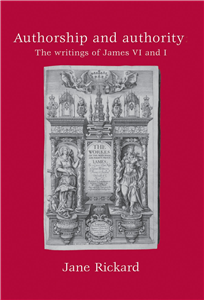
James VI of Scotland and I of England participated in the burgeoning literary culture of the Renaissance, not only as a monarch and patron, but as an author in his own right, publishing extensively in a number of different genres over four decades. As the first monograph devoted to James as an author, this book offers a fresh perspective on his reigns in Scotland and England, and also on the inter-relationship of authorship and authority, literature and politics in the Renaissance. Beginning with the poetry he wrote in Scotland in the 1580s, it moves through a wide range of his writings in other genres, including scriptural exegeses, political, social and theological treatises and printed speeches, concluding with his manuscript poetry of the early 1620s. The book combines extensive primary research into the preparation, material form and circulation of these varied writings, with theoretically informed consideration of the relationship between authors, texts and readers. The discussion thus explores James's responses to, and interventions in, a range of literary, political and religious debates, and reveals the development of his aims and concerns as an author. Rickard argues that, despite the King's best efforts to the contrary, his writings expose the tensions and contradictions between authorship and authority. This book will be of interest to scholars and students of the reign of James VI and I, the literary and political cultures of late sixteenth-century Scotland and early seventeenth-century England, the development of notions of authorship and the relationship between literature and politics. ;


 Trusted Partner
Trusted Partner
Trusted Partner
Trusted Partner
Trusted Partner
Trusted Partner
Trusted Partner
Trusted Partner
Trusted Partner

 Trusted Partner

When is the use of force for humanitarian purposes legitimate? The book examines this question through one of the most controversial examples of humanitarian intervention in the post Cold War period: the 1999 NATO intervention in Kosovo. Justifying Violence applies a critical theoretical approach to an interrogation of the communicative practices which underpin claims to legitimacy for the use of force by actors in international politics. Drawing on the theory of communicative ethics, the book develops an innovative conceptual framework which contributes a critical communicative dimension to the question of legitimacy that extends beyond the moral and legal approaches so often applied to the intervention in Kosovo. The empirical application of communicative ethics offers a provocative and nuanced account which contests conventional interpretations of the legitimacy of NATO's intervention. ;
Trusted Partner
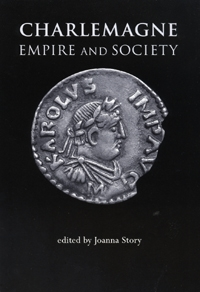
The age of Charlemagne was a crucible for change in the history of Europe, bridging the divide between the medieval and the classical worlds and setting the political and cultural tone for centuries to come. This book focuses directly on the reign of Charlemagne, bringing together a wide range of approaches and sources from the diverse voices of fifteen of the top scholars of early medieval Europe. The contributors have taken a number of original aproaches to the subject, from the fields of archaeology and numismatics to thoroughly-researched essays on key historical texts. The essays are embedded in the scholarship of recent decades but also offer insights into new areas and new approaches for research. A full bibliography of works in English as well as key reading in European languages is provided, making the volume essential reading for experienced scholars as well as students new to the history of the early middle ages. ;
Trusted Partner
Writing power radically rethinks the place of the canon and canonicity as objects and concepts in contemporary academia and the everyday intellectual practices of academics. It is distinctive in its demonstration of how academics' engagements with canons shape their writing practices but also how scholars' writing practices, spaces, proclivities, and desires shape the canon and changing ideas of value in canonicity. The book thinks through frequently discussed problems of legitimacy and knowledge production from fresh perspectives of lived experience and the everyday to offer new insights into the politics of knowledge in contemporary social sciences.
Trusted Partner
Trusted Partner
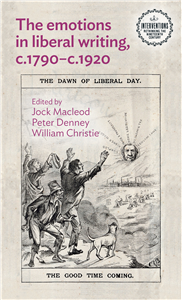
This volume of essays from a selection of distinguished international scholars is the first of its kind to explore in depth the emotional dimensions of liberal writing in Britain over the long nineteenth century. Addressing liberal writing in the public sphere rather than high political or parliamentary liberalism, it comprises a clear, context-setting introduction and eleven substantive chapters. The chapters analyse key texts and figures from the 1790s through to the 1920s and offer several different approaches to the central concern with the emotions and liberalism. These include examining the place of the emotions in the 'good life'; the social and political function of the emotions; emotional rhetoric in liberal writing; and liberal theories of the emotions. Both individually and as a collection, the essays provide an essential foundation for further scholarly work in this emerging field.
Trusted Partner
Trusted Partner

James VI of Scotland and I of England participated in the burgeoning literary culture of the Renaissance, not only as a monarch and patron, but as an author in his own right, publishing extensively in a number of different genres over four decades. As the first monograph devoted to James as an author, this book offers a fresh perspective on his reigns in Scotland and England, and also on the inter-relationship of authorship and authority, literature and politics in the Renaissance. Beginning with the poetry he wrote in Scotland in the 1580s, it moves through a wide range of his writings, including scriptural exegeses, political, social and theological treatises and printed speeches, concluding with his manuscript poetry of the early 1620s. The book combines extensive primary research into the preparation, material form and circulation of these varied writings, with theoretically informed consideration of the relationship between authors, texts and readers. The discussion thus explores James's responses to, and interventions in, a range of literary, political and religious debates, and reveals the development of his aims and concerns as an author.
Trusted Partner
Trusted Partner
Trusted Partner
 Trusted Partner

 Trusted Partner
Trusted Partner
Trusted Partner



