
Your Search Results
-

-

Speaking Tiger
Speaking Tiger is an independent publishing company based in New Delhi. Founded in September 2014, the company publishes a diverse list comprising quality fiction and non-fiction from South Asia and the rest of the world, with a strong emphasis on new voices.
View Rights Portal
-
Promoted Content

 Health & Personal Development
Autism Spectrum Disorders in Adults
A Practical Guide for Adults with ASD
by Annelies Spek
Lately, autism spectrum disorders (ASD) in adults have received more and more attention. A decade ago, autism was only recognised and diagnosed in children. Oddly enough, the fact that ASD could also occur in adults has been neglected for a long time. By now it has become clear that the symptoms of ASD change over the lifetime. Though people with ASD definitely have many strengths (eye for detail, perseverance, sincerity, a sense of humour, reliability, and consistency), they also have shortcomings. This book brings the reader up to date about ASD. In Part 1, the causes of ASD are described, both in nature and nurture. This part also includes a discussion about information processing in relation to ASD. Part 2 deals with the behavioural aspects as described in the DSM-5. In Part 3, several important themes are discussed, such as the diagnostic process, sexuality, gender differences, and changes that people with ASD experience throughout their lives. ‘I wish I had read this book 15 years ago. I finally understand why people respond to me the way they do.’ Joost, diagnosed with ASD. Target Group: adults with autism, relatives, therapists.
-
Promoted Content
 Family & health
A Family with Autism
When Autism is the Rule, not the Exception
by Joyce van Maaren
Four out of your five children have autism, and your husband too! This is what happened to Joyce van Maaren. Over the years four of her children and her husband are diagnosed with an autism spectrum disorder. In A Family With Autism she talks openly about how her life gets turned upside down over and over again, and how the family had to regain their balance. In this inspiring and lovable book, Joyce van Maaren takes the reader on a journey – one with many ups and downs. Readers can find support in her story and discover what autism means for daily life. But most of all, they will be inspired to make the most of every day, even if they or their family has to deal with autism (or other psychological disorders). Target Group: people with autism and their relatives, families of which some members have autism.
-
 Trusted Partner
 Medicine
Psychological and Neuropsychological Assessment of Autism Spectrum Disorder
by Maria Cristina Triguero Veloz Teixeira / Cleonice Alves Bosa (Eds.)
This title discusses the psychological and neuropsychological background of autism spectrum disorder, as well as appropriate diagnostic tools. The assessments that this book introduces are sorted by development area (intellectual, adaptive, social, language, etc.). Additionally, this title provides professionals with a variety of case studies from clinical practice. Target Group: clinical psychologists, mental health professionals, psychiatrists, neurologists, pediatricians, speech therapists, students, teachers
-
Trusted Partner
 Health & Personal Development
More Peace, Less Stress
A Step-by-Step Guide for Adults with ASD
by Marja Boxhoorn
When you have autism, you probably have to cope with stress on a daily basis. Often, people with autism do not know how to recognize stress, what causes stress, and what they can do to reduce it. More peace, less stress offers a useful step-by-step plan. In seven steps, the reader learns what causes stress, how to recognise stress signals, and what they can do to feel more at ease. The book includes practical exercises so new knowledge can be applied right away. Being more at ease means to be able to: have better relationships with a partner, family, friends and colleagues, focus attention to get things done more easily, have a grip on life, instead of experiencing chaos, restlessness and insecurity and feel more powerful and have more self-esteem.
-
Trusted Partner
 Health & Personal Development
Mindfulness for Adults with Autism
A Handbook for Therapists and Adults with ASD
by Annelies Spek
This book discusses a new type of therapy that can help people with autism to be less overburdened, let go of recurrent thoughts, and get better at recognizing physical signs of stress. Mindfulness includes meditation techniques that are derived from Buddhism and that do not require much communication or insight in thoughts and feelings. This is especially beneficial for people with autism, for whom communication and social interaction can be a challenge. After a clear introduction to what mindfulness is, each chapter of this book offers a meditation exercise. For each meditation exercise useful tips and tricks are given, as well as potential pitfalls that relate directly to autism. Mindfulness for adults with autism is the first treatment for adults with autism that has proven to be effective. Because of its readability and the beautiful illustrations, this book is highly recommended for both therapists and people with autism.
-
Trusted Partner
 Psychiatry
Self-control in Adults With Autism
Dealing With Anger, Injustice, and Frustration
by Jeroen Bartels
This title helps people with autism to effectively cope with anger, frustration, and injustice. This practical book offers a training-program which can be completed alone, based on scientifically examined treatment methods. It is especially suited to be used together with a caretaker. The first part of the book clearly describes the connection between autism and self-control issues. The second part offers practical exercises which explain how to recognize anger in time and how strong emotions such as anger and frustration. Numerous tips, exercises and relatable examples help the reader to experience more direction and control. Target Group: Adults with autism and involved caretakers
-
Trusted Partner
 Health & Personal Development
A Husband with ASD, What To Do?
A Training Course for Thoses Who Have a Partner with Autism
by Els Blijd-Hoogewys, Anja Talboom
Because of their problems with social interaction it is often presumed that people with an autism spectrum disorder (ASD) cannot have romantic relationships. This is not true; adults with ASD are certainly capable of having long-term relationships. Although some partners are satisfied with their relationship, there are also some who experience problems caused by ASD. Both, the partner with, as the partner without ASD, can feel unhappy and misunderstood in the relationship. This is where this book can be of help. This unique 10 step psychoeducational program helps women, whose partner suffers from an autism spectrum disorder, to understand the condition as well as their partner better. This book also offers tips for daily life that can help improve the relationship between the partners and giving the women more time to herself. Target Group: partners of people with autism, therapists.
-
Trusted Partner
 Psychology
Mental and Behavioral Disorders in Early Childhood
Textbook on Basics, Clinic and Therapy
by Rüdiger Kißgen, Kathrin Sevecke (Eds.)
One in five children in a kindergarten class is at risk for mental health problems. By making a diagnosis as early as possible, the child may receive targeted support and be strengthened in his or her further development. This textbook aims at increasing competence in the expert treatment of mental disorders and behavioral problems in early childhood. After a compact presentation of child development in the first six years of life, possible clinical disorders are presented, stringently structured according to classification, prevalence, causes, diagnosis, and therapy. The disorders that are covered in this book include autism spectrum disorders, ADHD, anxiety and obsessive-compulsive disorders, affective disorders, sleep, eating, and crying disorders, trauma, stress, and deprivation disorders, and attachment and relationship disorders of early childhood.
-
Trusted Partner

 2019
2019Why ADHD is Not a Disease
A polemic
by Amrei Wittwer
In some European countries, one in four children is now diagnosed with ADHD (attention deficit/hyperactivity disorder) due to their socially disruptive behaviour. The treatment usually consists of suppressing the symptoms with psychostimulants such as Ritalin. This treatment does not improve school performance, but it curbs the children’s creativity and may stigmatise them for their entire lives. Taking an opposing viewpoint, ADHD expert Dr. Amrei Wittwer focuses on the physical and psychological well-being of the affected children. Because almost all “ADHD patients“ are facing difficulties in relationships with adults, she considers that a solution begins with the children’s domestic and school environments, instruction of parents and teachers, and by using therapeutic approaches rather than simply sedating the children. “Children are our future”, is a common theme in Sunday speeches. Anyone who takes this point seriously, whether or not they themselves are immediately affected, should think about this important topic.
-
Trusted Partner
 2024
2024High-functioning Depression
The overlooked condition. An educational book
by Michelle Hildebrandt
The image many people have of depression is devastating - a chronic condition that leaves not only the sufferer but also their loved ones at a loss. Unfortunately, psychotherapies often focus on deficits rather than individual strengths and resources. Although this makes patients feel understood, there is a risk that they will become stuck in the role of victim. But what about those who seem to be functioning normally, those who masterfully hide their depression behind a smile? High-functioning depression" is often overlooked because people affected by it have good coping strategies to deal with everyday life. In this groundbreaking book, Dr Michelle Hildebrandt, a specialist in psychiatry and psychotherapy, shows how high-functioning depression can be recognised and how resource-oriented therapy can help not only those affected, but also other people with depression and their relatives. This book broadens the picture of depression and creates a space of hope.
-
Trusted Partner
 Health & Personal DevelopmentJune 2016
Studying Successfully with ADHD
A Pratical Guide for Parents
by Stefanie Rietzler, Fabian Grolimund
For children with ADHD and their parents, the school years are often difficult. Children may avoid homework they dislike, involve their parents in endless discussions of the point or pointlessness of particular exercises, dawdle and daydream their time away, or explode with frustration if they get something wrong or cannot do something. This book provides parents with concrete and practical help. It shows you how you can: • improve your child’s concentration and stamina• increase your child’s motivation to learn and study• reduce frustration, arguments, and tears over homework• control chaos and forgetfulness• help your child succeed by using smart learning methods• develop your child’s strengths• help your child cope with failure and maintain self-confidence• establish a good relationship with the school. For: • parents / relatives of children with ADHD• therapists• learning coaches• teachers
-
Trusted Partner

 History of medicineFebruary 2017
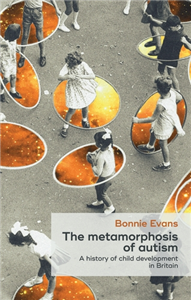
The metamorphosis of autism
'A history of child development in Britain
by Series edited by Professor Keir Waddington, Bonnie Evans
What is autism and where has it come from? Increased diagnostic rates, the rise of the 'neurodiversity' movement, and growing autism journalism, have recently fuelled autism's fame and controversy. The metamorphosis of autism is the first book to explain our current fascination with autism by linking it to a longer history of childhood development. Drawing from a staggering array of primary sources, Bonnie Evans traces autism back to its origins in the early twentieth century and explains why the idea of autism has always been controversial and why it experienced a 'metamorphosis' in the 1960s and 1970s. Evans takes the reader on a journey of discovery from the ill-managed wards of 'mental deficiency' hospitals, to high-powered debates in the houses of parliament, and beyond. The book will appeal to a wide market of scholars and others interested in autism, neurodiversity and how this relates to wider theories of children's psychological development.
-
Trusted Partner
 MedicineMarch 2017
The metamorphosis of autism
A history of child development in Britain
by Keir Waddington, Bonnie Evans
This book is available as an open access ebook under a CC-BY-NC-ND licence. What is autism and where has it come from? Increased diagnostic rates, the rise of the 'neurodiversity' movement, and growing autism journalism, have recently fuelled autism's fame and controversy. The metamorphosis of autism is the first book to explain our current fascination with autism by linking it to a longer history of childhood development. Drawing from a staggering array of primary sources, Bonnie Evans traces autism back to its origins in the early twentieth century and explains why the idea of autism has always been controversial and why it experienced a 'metamorphosis' in the 1960s and 1970s. Evans takes the reader on a journey of discovery from the ill-managed wards of 'mental deficiency' hospitals, to high-powered debates in the houses of parliament, and beyond. The book will appeal to a wide market of scholars and others interested in autism.
-
Trusted Partner
 Psychiatry
Intoduction to Affect Phobia Therapy
by Dr. Quin van Dam
A fear of one’s own emotions can lead people to develop what has been termed emotion- or affect phobia. To deal with this specific kind of phobia, Affect Phobia Therapy (APT) has proven to be useful. In APT, psychodynamic, cognitive behavioral, and experimental techniques are combined to help the patient to learn to accept and manage emotions again. Research shows that especially people suffering from anxiety or depression and people with avoidant or dependent personality disorders benefit from this method. This book offers a practical explanation of this evidence-based therapeutic method. The eight chapters focus on all different aspects of APT and the underlying theoretical concepts are illustrated with example patient-therapist dialogues. Target Group: psychologists, psychotherapists, students
-
Trusted Partner
-
Trusted Partner
 Medicine
Episodic Depression
Successful and Effective Treatment in Practice
by Ulrich Leutgeb
With medical help, the troublesome symptoms of episodic depression (e.g., insomnia, agitation) can be alleviated right at the start of a treatment program. Drawing on his extensive practical experience, the author describes the details of treatment, the effects of commonly used drugs, the role of psychotherapy, and the latest research findings in layman’s terms. This can help those suffering from episodic depression and their family members understand the disorder and prepare for therapy. Target Group: Anyone affected by episodic depression and their relatives; psychiatrists and psychotherapists; physicians treating patients with depression.
-
Trusted Partner
 April 2024
Depression Is not SomethingThat Just Happens
10 self-empowerment conceptsfor burnout, depression and trauma
by Barbara Günther-Haug
A crisis does not make a disease. It only becomes dangerous when we get stuck – in the ways of thinking and acting that are rooted in our fears and desires, but not in reality. That way, we wear ourselves out for nothing; exhaustion and frustration increase, and may even end in depression. This book sheds a light on ten main stress situations that may be the reason for depression. It goes far beyond the usual explanations of the symptoms of depression or individual stories, and is a treasure trove for people who want to understand what has caused them to wear themselves out mentally and how they can lift themselves out of this low.
-
Trusted Partner
 PsychologyMay 2022
Dealing with Phobic Disorders
by Wannemüller, André; Margraf, Jürgen
This guidebook provides information about the core characteristics, developmental factors and treatment options of various phobic disorders and offers numerous tips and suggestions for self-help. Using vivid case studies, it illustrates how normal fear reactions differ from phobic fear reactions, why avoidance plays an important role in the maintenance of phobic fears, which fear-producing assumptions and expectations typically underlie phobic disorders, and why these are unfounded in the vast majority of cases. The guidebook provides a sound insight into psychotherapeutic treatment options for phobic fears and informs about the effectiveness of different psychotherapeutic and medicinal procedures. Readers who initially want to tackle their anxiety problem on their own are provided with concrete tips for planning and carrying out effective exercises. In addition, it provides suggestions for relatives on how to deal with and support their phobic family members. For:• those affected and their families• psychotherapists• psychiatrists• employees in counseling centers
-
Trusted Partner
 Humanities & Social Sciences
Helping Children and Adolescents with Obsessive-Compulsive Disorders
by Sigrun Schmidt-Traub
Obsessive-compulsive disorders usually cause a high degree of suffering and can significantly impair the quality of life of the affected child or adolescent. The new edition of this guidebook describes the manifestations of obsessive thoughts and compulsive acts as well as the causative, triggering and perpetuating conditions, considering current findings in obsessive-compulsive research. Part I of the guide is aimed at adult readers and Part II at affected children and adolescents, who receive the most important information on obsessive-compulsive disorders in easy-to-understand language. The case studies make it comprehensible how an individual disorder model can be developed, how goals for coping with the compulsions can be derived from it, and finally how the treatment of the obsessive-compulsive disorder can be planned and carried out. The children and adolescents as well as their parents and educators receive concrete advice on how to help themselves and how to cope with compulsions. For:• affected children and adolescents• parents• teachers• therapists• relatives
-
Trusted Partner
 Psychology
ICD-11 Personality Disorders: A Clinician’s Guide
by Bo Bach, Sebastian Simonsen
Introduction to the new ICD-11 classification of personalitydisorders and related traits. Using clinical examples, thisbook explains aspects of personality functioning, diagnosingseverity and specifying trait domains.Specific guidelines are included for the diagnosis and clinicalmanagement of mild, moderate and severe personalitydisorders as well as subdiagnostic personality difficulties. Inaddition, the reader is guided in interpreting specific combinationsof trait domains. Guidance on differential diagnosticconsiderations, clinical decision-making, individualizedtreatment planning, treatment intensity, and psychotherapeuticfocus is also included.



