Your Search Results

      • E-planet Educational Services

        About E-planet E-planet Educational Services is an international organisation created by a dedicated and enthusiastic team of experts on education, marketing and development. Our goal is to provide our partners, students and customers with top-level services and products. That is why we have developed a unique, fully integrated company for ESL (English as a Second Language) educational services and business training. We combine traditional methods with cutting-edge technology to achieve a variety of purposes!

        View Rights Portal
      • Bajek Publisher Services

        Book, Magazine, Retail Specialist. Edward “Ed” Bajek began working in the publishing industry in 1984. Ed has worked domestically and internationally in RIGHTS SALES, sales, distribution, circulation, marketing, merchandising and logistics for books and magazines. Ed has worked with some of the largest publishers, wholesalers, and disturbers in the world.

        View Rights Portal
      • Trusted Partner
        Humanities & Social Sciences
        June 2026

        Governing the military

        by Carlos Solar

      • Trusted Partner
        Humanities & Social Sciences
        March 2017

        Popular imperialism and the military, 1850-1950

        by John M. MacKenzie

        Colonial war played a vital part in transforming the reputation of the military and placing it on a standing equal to that of the navy. The book is concerned with the interactive culture of colonial warfare, with the representation of the military in popular media at home, and how these images affected attitudes towards war itself and wider intellectual and institutional forces. It sets out to relate the changing image of the military to these fundamental facts. For the dominant people they were an atavistic form of war, shorn of guilt by Social Darwinian and racial ideas, and rendered less dangerous by the increasing technological gap between Europe and the world. Attempts to justify and understand war were naturally important to dominant people, for the extension of imperial power was seldom a peaceful process. The entertainment value of war in the British imperial experience does seem to have taken new and more intensive forms from roughly the middle of the nineteenth century. Themes such as the delusive seduction of martial music, the sketch of the music hall song, powerful mythic texts of popular imperialism, and heroic myths of empire are discussed extensively. The first important British war correspondent was William Howard Russell (1820-1907) of The Times, in the Crimea. The 1870s saw a dramatic change in the representation of the officer in British battle painting. Up to that point it was the officer's courage, tactical wisdom and social prestige that were put on display.

      • Trusted Partner
        The Arts
        October 2025

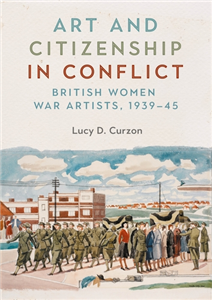
        Art and citizenship in conflict

        British women war artists, 1939–45

        by Lucy Curzon

        Art and Citizenship in Conflict examines the work of women war artists in order to highlight the complexity of citizenship and gender in Britain during the Second World War. Evelyn Dunbar, Mary Kessell, Ethel Gabain, Stella Schmolle, and Laura Knight, among others, were commissioned by the War Artists' Advisory Committee (WAAC) to document the millions of women who took up sometimes unconventional roles-in agriculture, the auxiliary services, and manufacturing, among others-to support the British war effort. Indeed, their prints, drawings, and paintings were part of a broader scheme to uphold morale and promote much-needed citizen involvement on the home front. While there is growing interest, the importance of their remit in the history of the Second World War and the quality of their artistry have nonetheless not yet secured them a significant place in scholarship. Art and Citizenship in Conflict seeks to amend this gap while also broadening approaches to the study of war itself.

      • Trusted Partner
        Humanities & Social Sciences
        July 2021

        Post-everything

        An intellectual history of post-concepts

        by Herman Paul, Adriaan van Veldhuizen

        Postmodern, postcolonial and post-truth are broadly used terms. But where do they come from? When and why did the habit of interpreting the world in post-terms emerge? And who exactly were the 'post boys' responsible for this? Post-everything examines why post-Christian, post-industrial and post-bourgeois were terms that resonated, not only among academics, but also in the popular press. It delves into the historical roots of postmodern and poststructuralist, while also subjecting more recent post-constructions (posthumanist, postfeminist) to critical scrutiny. This study is the first to offer a comprehensive history of post-concepts. In tracing how these concepts found their way into a broad range of genres and disciplines, Post-everything contributes to a rapprochement between the history of the humanities and the history of the social sciences.

      • Trusted Partner
      • Trusted Partner
        Humanities & Social Sciences
        July 2016

        The humanitarian-military complex in Afghanistan

        by Bertrand Taithe, Eric James, Tim Jacoby

        Violent conflict brings together two seemingly disparate groups: humanitarians and soldiers. This mixes and convolutes agendas, blurring lines that are often perceived to be sacrosanct. Delving deeply into the history and reasons of why these two groups work in close proximity, this study provide a unique insight into the history, ethical dilemmas and policy conundrums when aid workers operate close to the military. Using Afghanistan as a case study, analytical rigour, deep primary research and "field" knowledge are combined in an exceptional contribution to this important area. This book gives scholars and practitioners alike a nuanced perspective on the challenges faced by aid workers, military personnel and decision-makers alike in countries affected by violent conflicts, hosting foreign military interventions and receiving international aid. ;

      • Trusted Partner
        The Arts
        March 2017

        Images of the army

        The military in British art, 1815-1914

        by J. W. M. Hichberger

        In an age when engraving and photography were making artistic images available to a much wider public, artists were able to influence public attitudes more powerfully than ever before. This book examines works of art on military themes in relation to ruling-class ideologies about the army, war and the empire. The first part of the book is devoted to a chronological survey of battle painting, integrated with a study of contemporary military and political history. The chapters link the debate over the status and importance of battle painting to contemporary debates over the role of the army and its function at home and abroad. The second part discusses the intersection of ideologies about the army and military art, but is concerned with an examination of genre representations of soldiers. Another important theme which runs through the book is the relation of English to French military art. During the first eighty years of the period under review France was the cynosure of military artists, the school against which British critics measured their own, and the place from which innovations were imported and modified. In every generation after Waterloo battle painters visited France and often trained there. The book shows that military art, or the 'absence' of it, was one of the ways in which nationalist commentators articulated Britain's moral superiority. The final theme which underlies much of the book is the shifts which took place in the perception of heroes and hero-worship.

      • Trusted Partner
        The Arts
        September 2024

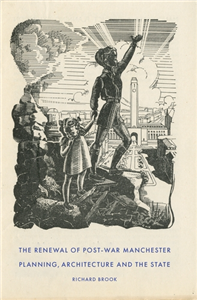
        The renewal of post-war Manchester

        Planning, architecture and the state

        by Richard Brook

        A compelling account of the project to transform post-war Manchester, revealing the clash between utopian vision and compromised reality. Urban renewal in Britain was thrilling in its vision, yet partial and incomplete in its implementation. For the first time, this deep study of a renewal city reveals the complex networks of actors behind physical change and stagnation in post-war Britain. Using the nested scales of region, city and case-study sites, the book explores the relationships between Whitehall legislation, its interpretation by local government planning officers and the on-the-ground impact through urban architectural projects. Each chapter highlights the connections between policy goals, global narratives and the design and construction of cities. The Cold War, decolonialisation, rising consumerism and the oil crisis all feature in a richly illustrated account of architecture and planning in post-war Manchester.

      • Trusted Partner
        Humanities & Social Sciences
        July 2025

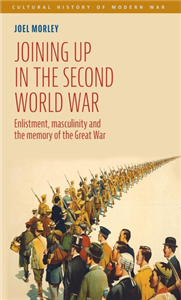
        Joining up in the Second World War

        Enlistment, masculinity and the memory of the Great War

        by Joel Morley

        This book connects the First and Second World Wars. It uses oral histories and Mass Observation material to explore men's attitudes to Second World War enlistment and the relationship they perceived between military service and masculinity, and how these were influenced by understandings of the First World War. Locating the cultural legacy of First World War in the subjectivities of men who participated in the Second World War demonstrates the breadth of sources that informed men's understandings of the First World War in interwar Britain. Its cultural legacy was omnipresent and diverse, and informed young men's attitudes and service preferences, but it reinforced Edwardian conceptions of wartime masculinity as often as it undermined them. Two decades after the First World War ended, they remained resilient in the subjective understandings of men who grew up in the Great War's shadow.

      • Trusted Partner
        Humanities & Social Sciences
        September 2021

        Nostalgia and the post-war Labour Party

        by Richard Jobson

      • Trusted Partner
        Business, Economics & Law
        July 2025

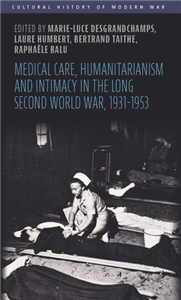
        Medical care, humanitarianism and intimacy in the long Second World War, 1931-1953

        by Marie-Luce Desgrandchamps, Laure Humbert, Bertrand Taithe, Raphaële Balu

        This book offers a micro-global history of humanitarianism and medical care during the 'long' Second World War, which challenges the traditional and Eurocentric chronological boundaries of 1939/1945. It takes as its starting point the Japanese invasion of Manchuria in 1931, which led to the progressive dislocation of the League of Nations, with the Japanese, German and Soviet departures in the 1930s. It ends with the termination of the Korean War in 1953, and the subsequent dismantlement of the first United Coalition and UN Peace enforcement operation. It considers the slow, messy and ambivalent transformation of humanitarian actors' relations to the suffering of distant others through a study of humanitarian encounters, practices, spaces and affects. Paying close attention to a variety of actors, such as French colonial doctors, Swiss ICRC delegates, Egyptian relief workers, Chinese-style physicians, Peruvian and Ecuadorian nurses or American member of the Unitarian Service Committee, the book provides a more holistic story of humanitarianism.

      • Trusted Partner
        June 2026

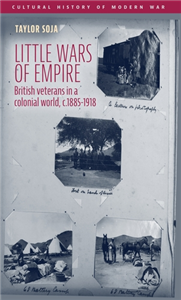
        Little wars of empire

        British veterans in a colonial world, c.1885–1918

        by Taylor Soja

        Little Wars of Empire is a group biography of British veterans who experienced multiple wars across the British empire. Throughout the nineteenth century, Britain was constantly at war in its colonies, defending against anti-colonial resistance or trying to expand its influence. The veterans of these wars did not disappear once they were over, and many of them went on to later experience World War I. By using personal sources such as letters, diaries, and photograph albums, this book works to show how colonial violence and British military history depend upon one another, and argues that colonial war fundamentally shaped the British experience of empire. This was true for all kinds of British veterans, from British Army soldiers and officers to nurses and military families, whose experiences demonstrate the central place of colonial violence to British life.

      • Trusted Partner
        Humanities & Social Sciences
        March 2017

        Guardians of Empire

        The Armed Forces of the Colonial Powers, C.1700-1964

        by Andrew Thompson, John M. MacKenzie, David Killingray

        For imperialists, the concept of guardian is specifically to the armed forces that kept watch on the frontiers and in the heartlands of imperial territories. Large parts of Asia and Africa, and the islands of the Pacific and the Caribbean were imperial possessions. This book discusses how military requirements and North Indian military culture, shaped the cantonments and considers the problems posed by venereal diseases and alcohol, and the sanitary strategies pursued to combat them. The trans-border Pathan tribes remained an insistent problem in Indian defence between 1849 and 1947. The book examines the process by which the Dutch elite recruited military allies, and the contribution of Indonesian soldiers to the actual fighting. The idea of naval guardianship as expressed in the campaign against the South Pacific labour trade is examined. The book reveals the extent of military influence of the Schutztruppen on the political developments in the German protectorates in German South-West Africa and German East Africa. The U.S. Army, charged with defending the Pacific possessions of the Philippines and Hawaii, encountered a predicament similar to that of the mythological Cerberus. The regimentation of military families linked access to women with reliable service, and enabled the King's African Rifles to inspire a high level of discipline in its African soldiers, askaris. The book explains the political and military pressures which drove successive French governments to widen the scope of French military operations in Algeria between 1954 and 1958. It also explores gender issues and African colonial armies.

      • Trusted Partner
        Humanities & Social Sciences
        February 2018

        How to save politics in a post-truth era

        by Ilan Zvi Baron

      • Trusted Partner
        Teaching, Language & Reference
        August 2022

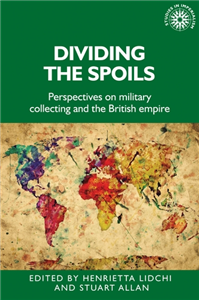
        Dividing the spoils

        Perspectives on military collections and the British empire

        by Henrietta Lidchi, Stuart Allan

        At a time of heightened international interest in the colonial dimensions of museum collections, Dividing the Spoils provides new perspectives on the motivations and circumstances whereby collections were appropriated and acquired during colonial military service. Combining approaches from the fields of material anthropology, imperial and military history, this book argues for a deeper examination of these collections within a range of intercultural histories that include alliance, diplomacy, curiosity and enquiry, as well as expropriation and cultural hegemony. As museums across Europe reckon with the post-colonial legacies of their collections, Dividing the Spoils explores how the amassing of objects was understood and governed in British military culture, and considers how objects functioned in museum collections thereafter, suggesting new avenues for sustained investigation in a controversial, contested field.

      • Trusted Partner
        Humanities & Social Sciences
        July 2014

        Reforming food in post-Famine Ireland

        Medicine, science and improvement, 1845–1922

        by Ian Miller

        Reforming food in post-famine Ireland: Medicine, science and improvement, 1845-1922 is the first dedicated study of how and why Irish eating habits dramatically transformed between the famine and independence. It also investigates the simultaneous reshaping of Irish food production after the famine. Adopting an interdisciplinary approach, the book draws from the diverse methodological disciplines of medical history, history of science, cultural studies, Irish studies, gender studies and food studies. Making use of an impressive range of sources, it maps the pivotal role of food in the shaping of Irish society onto a political and social backdrop of famine, Land Wars, political turbulence, the First World War and the struggle for independence. It will be of interest to historians of medicine and science as well as historians of modern Irish social, economic, political and cultural history. ;

      • Trusted Partner
        2023

        Pharmacy Services

        Future on site

        by Dr. S. Werner and T. König

        Make it simple! The pharmacy can do more than just provide medicines. In this book, two smart authors show what ideas are out there for pharmacy services and how they can be offered. This involves much more than just the pharmaceutical services that are paid for. Digitalisation makes many things possible. Optimised operational processes, broad knowledge and skills become further services that offer good opportunities for the on-site pharmacy. Here you can read about • what contemporary services are available, how they can be introduced, and what they should cost, • why telemedicine and appointment booking software can be helpful strategies, and • how pharmacies can effectively counter the mail-order trade. From the content: pharmaceutical counselling in and outside the pharmacy on health topics, prevention and medicinal products, services for specific target groups, distributing and blistering, vaccination, determination of physiological values and much more.

      • Trusted Partner
        July 2012

        Trotzki

        Eine Biographie

        by Robert Service, Friedrich Griese

        Revolutionäres Vorbild, Internationalist und Kosmopolit, Theoretiker, Philosoph, Schriftsteller, Politiker, Liebhaber, Ehemann, Vater, Jude, Feind und verfolgtes Opfer. Leo Trotzki, einer der bedeutendsten politischen Führer der ersten Hälfte des 20. Jahrhunderts, war von schillernder Gestalt. Der 1879 in der Südukraine als Lew Dawidowitsch Bronstein geborene hat den Grundstein zur Gründung der Sowjetunion gelegt, und wird doch immer wieder unterschlagen, wenn die führenden Köpfe der russischen Revolution genannt werden. Zusammen mit Lenin stand er, der Gründer der Roten Armee, 1917 an der Spitze der Oktoberrevolution. Als Volkskommissar war er unter anderem verantwortlich für das Kriegs- und Verlagswesen. Trotzki war nicht nur politischer Führer, sondern auch produktiver Schriftsteller und begnadeter Redner. Fragen nach Kultur und Alltagsleben waren ihm ebenso wichtig wie Politik und Geschichte. Der Aufstieg der Stalinfraktion nach Lenins Tod 1924 führte zu seinem Ausschluß aus den politischen Führungspositionen und schließlich zu seiner Verbannung 1929. Im Jahr 1940 wurde Trotzki in Mexiko-City von einem GPU-Agenten mit einem Eispickel erschlagen. Robert Service, Professor für Russische Geschichte und Spezialist für Russische Revolutionsgeschichte, hat viele Jahre unveröffentlichtes Archivmaterial gesichtet und mit seiner packenden Biographie nicht nur das Bild eines der brillantesten politischen Köpfe der Revolution gezeichnet, sondern sich – unparteiisch und unverfälscht – auch mit der überfälligen Debatte um das Verhältnis zwischen Trotzki und Stalin auseinandergesetzt.

      Subscribe to our

      newsletter