Your Search Results

      • Trusted Partner

        Bastei Lübbe AG

        Bastei Lübbe AG, based in Cologne, Germany, is a large, both traditional and modern company in the German publishing industry, specializing in the publication of books, audio books and eBooks with fiction and popular science content. The company's core business also includes periodically published novel books. The product range of the twelve imprints of the media company currently comprises a total of around 3,600 titles from the fiction, non-fiction, children's and youth book sectors. International and national bestselling authors such as Ken Follett, Dan Brown, Jeff Kinney, Rebecca Gablé, Petra Hülsmann, Andreas Eschbach, Timur Vermes and many more have published their books at the Cologne publishing house, some of them for decades. Die in Köln ansässige Bastei Lübbe AG ist ein großes, sowohl traditionsreiches wie auch modernes Unternehmen im deutschen Verlagswesen, das auf die Herausgabe von Büchern, Hörbüchern und eBooks mit belletristischen und populärwissenschaftlichen Inhalten spezialisiert ist. Zum Kerngeschäft des Unternehmens gehören auch die periodisch erscheinenden Romanhefte. Das Angebot der zwölf Verlage und Imprints des vor mehr als 60 Jahren gegründeten Medienhauses umfasst derzeit insgesamt rund 3.600 Titel aus den Bereichen Belletristik, Sach-, Kinder- und Jugendbuch. Internationale und nationale Bestsellerautoren wie Ken Follett, Dan Brown, Jeff Kinney, Rebecca Gablé, Petra Hülsmann, Andreas Eschbach, Timur Vermes und viele mehr veröffentlichen ihre Bücher zum Teil seit Jahrzehnten im Kölner Verlagshaus.

        View Rights Portal
      • Almatykitab Baspassy

        Almatykitap Baspassy was founded in 1999 and focuses on a wide range children’s books for ages between 2 and 18, including education and non-fiction titles. There are also a number of ethnographic titles on Kazakh culture, its traditions and nature.

        View Rights Portal
      • Trusted Partner
        The Arts
        April 2019

        Daniel Calparsoro

        by Nuria Triana-Toribio, Ann Davies, Andy Willis

        Daniel Calparsoro, a director who has made a crucial contribution to contemporary Spanish and Basque cinema, has provoked strong reactions from the critics. Reductively dismissed as a works of crude violence by those lamenting a 'lost golden age' of Spanish filmmaking, Calparsoro's films in fact reveal a more complex interaction with trends and traditions in both Spanish and Hollywood cinema. This book is the first full-length study of the director's work, from his early social-realist films set in the Basque Country to his later forays into the genres of the war and horror. It offers an in-depth film-by-film analysis while simultaneously exploring the director's position in the contemporary Spanish context, the tension between directors and critics and the question of national cinema in an area - the Basque Country - of heightened national and regional sensitivities.

      • Trusted Partner
        The Arts
        February 2009

        Daniel Calparsoro

        by Ann Davies, Nuria Triana-Toribio, Andy Willis

        Daniel Calparsoro, a director who has provided a crucial contribution to the contemporary scene in Spanish and Basque cinema, has provoked strong reactions from the critics. Reductively dismissed as a purveyor of crude violence by those critics lamenting a 'lost golden age' of Spanish filmmaking, Calparsoro's films reveal in fact a more complex interaction with trends and traditions in both Spanish and Hollywood cinema. This book is the first full-length study of the director's work, from his early social realist films set in the Basque Country to his later forays into the genres of the war and horror film. It offers an in-depth film-by-film analysis, while simultaneously exploring the function of the director in the contemporary Spanish context, the tension between directors and critics, and the question of national cinema in an area - the Basque Country - of heightened national and regional sensitivities. ;

      • Trusted Partner
        The Arts
        September 2012

        Julio Medem

        by Robert Stone, Nuria Triana-Toribio, Andy Willis

        This thorough account of the life and films of the Spanish-Basque filmmaker Julio Medem is the first book in English on the internationally renowned writer-director of Vacas, La ardilla roja (Red Squirrel), Tierra, Los amantes del Círculo Polar (Lovers of the Arctic Circle), Lucía y el sexo (Sex and Lucía), La pelota vasca: la piel contra la piedra (Basque Ball) and Caótica Ana (Chaotic Ana), Initial chapters explore Medem's childhood, adolescence and education and examine his earliest short films and critical writings against a background of a dramatically changing Spain. Later chapters provide accounts of the genesis, production and release of Medem's challenging and sensual films, which feed into complex but lucid analyses of their meanings, both political and personal, in which Stone draws on traditions and innovations in Basque art, Spanish cinema and European philosophy to create a complete and provocative portrait of Medem and his work. ;

      • Trusted Partner
      • Trusted Partner
        Film, TV & radio
        November 2014

        Spanish cinema 1973–2010

        Auteurism, politics, landscape and memory

        by Edited by Maria M. Delgado and Robin Fiddian

        This collection offers a new lens through which to examine Spain's cinema production following the isolation imposed by the Franco regime. The seventeen key films analysed in the volume span a period of thirty-five years that have been crucial in the development of Spain, Spanish democracy and Spanish cinema. They encompass different genres (horror, thriller, melodrama, social realism, documentary), both popular (Los abrazos rotos/Broken Embraces, Vicky Cristina Barcelona) and more select art house fare (En la ciudad de Sylvia/In the City of Sylvia, El espíritu de la colmena/Spirit of the Beehive) and are made in English (as both first and second language), Basque, Castilian, Catalan and French. Offering an expanded understanding of 'national' cinemas, the volume explores key works by Guillermo del Toro and Lucrecia Martel alongside an examination of the ways in which established auteurs (Almodóvar, José Garci, Carlos Saura) and the younger generations of filmmakers (Cesc Gay, Amenábar, Bollaín) have harnessed cinematic language towards a commentary on the nation-state.

      • Trusted Partner
        The Arts
        January 2019

        Spanish cinema 1973–2010

        Auteurism, politics, landscape and memory

        by Maria M. Delgado, Robin Fiddian

        This collection offers a new lens through which to examine Spain's cinema production following the isolation imposed by the Franco regime. The seventeen key films analysed in the volume span a period of 35 years that have been crucial in the development of Spain, Spanish democracy and Spanish cinema. They encompass different genres (horror, thriller, melodrama, social realism, documentary), both popular (Los abrazos rotos/Broken Embraces, Vicky Cristina Barcelona) and more select art house fare (En la ciudad de Sylvia/In the City of Sylvia, El espíritu de la colmena/Spirit of the Beehive) and are made in English (as both first and second language), Basque, Castilian, Catalan and French. Offering an expanded understanding of 'national' cinemas, the volume explores key works by Guillermo del Toro and Lucrecia Martel alongside an examination of the ways in which established auteurs (Almodóvar, José Garci, Carlos Saura) and younger generations of filmmakers (Cesc Gay, Amenábar, Bollaín) have harnessed cinematic language towards a commentary on the nation-state. The result is a bold new study of the ways in which film has created new prisms that have determined how Spain is positioned in the global marketplace.

      • Trusted Partner
        European history
        July 2013

        Women and ETA

        by Carrie Hamilton

      • Trusted Partner
        Humanities & Social Sciences
        January 2026

        Inventing the modern region

        by Talitha Ilacqua

      • Trusted Partner
        The Arts
        January 2019

        Hispanic and Lusophone women filmmakers

        Theory, practice and difference

        by Parvati Nair, Julian Gutierrez-Albilla

        This volume examines the films of Hispanic and Lusophone women filmmakers from the 1930s to the present day. It establishes productive connections between film practices across these geographical areas by identifying common areas of concern on the part of these female filmmakers. Focusing on aesthetic, theoretical and socio-historical analyses, it questions the manifest or latent gender and sexual politics that inform and structure the emerging cinematic productions by women filmmakers in Portugal, Spain, Latin America and the US. With a combination of scholars from the UK, the US, Spain and Latin America, the volume documents and interprets a fascinating corpus of films made by Hispanic and Lusophone women and proposes research strategies and methodologies that can expand our understanding of socio-cultural and psychic constructions of gender and sexual politics. An essential resource to rethink notions of gender identity and subjectivity, it is a unique contribution to Spanish and Latin American Film Studies and Film Studies.

      • Trusted Partner
        The Arts
        January 2019

        Contemporary Spanish cinema

        by Barry Jordan, Rikki Morgan-Tamosunas

        Contemporary focus, right up to date with material from 1980s and 90s. Wide-ranging analyses of major directors, themes, genres and issues, including historical film, genre cinema, women in film and autonomies.

      • Trusted Partner
      • Trusted Partner
        September 2006

        Der Sohn des Akkordeonspielers

        Roman

        by Bernardo Atxaga, Matthias Strobel

        Als Joseba nach über zwanzig Jahren seinen Jugendfreund David in Kalifornien wiedersieht, müssen die beiden sich erst an ihre gemeinsame Vergangenheit herantasten – zu viele offene Fragen stehen zwischen ihnen, zuviel Verheimlichtes, Unausgesprochenes. Als ehemalige Mitglieder der baskischen Untergrundorganisation haben sie zwar Abstand gewonnen zu ihren Verstrickungen von damals, doch lasten quälende Schuldgefühle auf ihnen – Schuldgefühle angesichts eines Verrats, von dem sie beide wissen, daß er notwendig war. Wie war es dazu gekommen, daß sie, die jugendlichen Freunde und späteren Studenten, in den Bannkreis der militanten baskischen Idee gerieten? Sie müssen ins reine kommen mit ihrer Vergangenheit, die sie auseinandergetrieben hat und die erst im Angesicht von Davids nahem Tod ihre Macht über sie verliert. Es ist eine beklemmende, zunehmend dramatische Geschichte, und Atxaga erzählt sie ebenso eindringlich wie differenziert. Denn hinter dem Gewissenskonflikt, den David und Joseba durchmachen müssen, liegt die ganz andere Geschichte ihrer unwiderruflichen Entfernung aus dem, was ein ländliches Paradies sein könnte. Wie konnte es geschehen, daß aus den musisch begabten, zweifelnden Jugendlichen, die sie waren, militante Aktivisten der ETA wurden? Daß der eine dafür seine erste große Liebe verriet; daß der andere in ein zwielichtiges Verhältnis zu all seinen ehemaligen Freunden geriet? Welchen menschlichen Preis mußten sie zahlen? Und wer, vor allem, hat damals im Jahr 1976 das Kommando verraten, dem sie beide angehörten?

      • Trusted Partner
        Humanities & Social Sciences
        November 2006

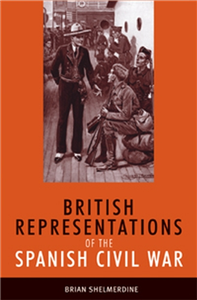
        British representations of the Spanish Civil War

        by Brian Shelmerdine

        This book looks at the reception of the Spanish Civil War in British popular culture, and how supporters of both sides in Britain used the rhetoric and imagery of the conflict to bolster support for their respective causes in the arena of British public opinion. Brian Shelmerdine finds that traditional notions of Spain as a country of bullfighting, bandits and flamenco were pervasive and were significant in shaping wider UK government policy towards Spain. He carefully assesses the different political perceptions of the 1930s Spanish scene, the role of the Catholic Church, the depiction of the two sides in terms of class, race and ethnicity, humanitarian appeals, and the plight of the Basques. The book is fluently written, and should make fascinating and entertaining reading for scholars of British society and culture in the twentieth century, as well as those investigating international impact of the Spanish Civil War. ;

      Subscribe to our

      newsletter