
Your Search Results
-

-

Hanska Literary&Film Agency S.L.
Hanska Literary & Film Agency represents internationally Spanish writers and scriptwriters. Specializing in Spanish commercial and up-market commercial adult fiction: women's fiction, historical novel, crime, thriller, noir, romance, family saga.
View Rights Portal
-
Promoted Content

 The ArtsJanuary 2019
The British working class in postwar film
by Philip Gillett
An incidental pleasure of watching a film is what it tells us about the society in which it is made. Using a sociological model, The British working class in postwar film looks at how working-class people were portrayed in British feature films in the decade after the Second World War. Though some of the films examined are well known, others have been forgotten and deserve reassessment. Original statistical data is used to assess the popularity of the films with audiences. With its interdisciplinary approach and the avoidance of jargon, this book seeks to broaden the approach to film studies. Students of media and cultural studies are introduced to the skills of other disciplines, while sociologists and historians are encouraged to consider the value of film evidence in their own fields. This work should appeal to all readers interested in social history and in how cinema and society works.
-
Promoted Content
-
 Trusted Partner
 The ArtsJanuary 2019
European Film Noir
by Andrew Spicer
European Film Noir is the first book to bring together specialist discussions of film noir in specific European national cinemas. Written by leading scholars, this groundbreaking study provides an authoritative understanding of an important aspect of European cinema and of film noir itself, for too long considered as a solely American form. The Introduction reviews the problems of defining film noir, its key characteristics and discusses its significance to the development of European film, the relationship of specific national films noirs to each other, to American noir and to historical and social change. Eight chapters then discuss film noir in France, Germany, Britain and Spain, analysing both earlier developments and the evolution of neo-noir through to the present. A further chapter explores film noir in Italian cinema where its presence is not so well defined. Each piece provides a critical overview of the most significant films in relation to their industrial and social contexts. European Film Noir is an important contribution to the study of European cinema that will have a broad appeal to undergraduates, cinéastes, film teachers and researchers.
-
Trusted Partner
 Film theory & criticismFebruary 2014
The Encyclopedia of British Film
Fourth edition
by Edited by Brian McFarlane
With well over 6,300 articles, including over 500 new entries, this fourth edition of The Encyclopedia of British Film is a fully updated invaluable reference guide to the British film industry. It is the most authoritative volume yet, stretching from the inception of the industry to the present day, with detailed listings of the producers, directors, actors and studios behind a century or so of great British cinema. Brian McFarlane's meticulously researched guide is the definitive companion for anyone interested in the world of film. Previous editions have sold many thousands of copies and this fourth edition will be an essential work of reference for enthusiasts interested in the history of British cinema, and for universities and libraries.
-
Trusted Partner
-
Trusted Partner
 Humanities & Social SciencesApril 2020
The British political elite and Europe, 1959-1984
A higher loyalty
by Bob Nicholls
This book offers an original interpretation of Britain's relationship with Europe over a 25 year period: 1959-84 and advances the argument that the current problems over EU membership resulted from much earlier political machinations. This evidence based account of the seminal period analyses the applications for EEC membership, the 1975 referendum, and the role of the press. Was the British public misled over the true aims of the European project? How significant was the role of the press in changing public opinion from anti, to pro Common Market membership? Why, after over 40 years since Britain became a member of the European community, does the issue continue to deeply divide not only the political elite, but also the British public? These, and other pertinent questions are answered in this timely book on a subject that remains topical and highly controversial.
-
Trusted Partner
 Film theory & criticismAugust 2016
British rural landscapes on film
by Edited by Paul Newland
British rural landscapes on film offers insights into how rural areas in Britain have been represented on film, from the silent era, through both world wars, and on into the twenty-first century. It is the first book to exclusively deal with representations of the British countryside on film. The contributors demonstrate that the countryside has provided Britain (and its constituent nations and regions) with a dense range of spaces in which cultural identities have been (and continue to be) worked through. British rural landscapes on film demonstrates that British cinema provides numerous examples of how national identity and the identity of the countryside have been partly constructed through filmic representation, and how British rural films can allow us to further understand the relationship between the cultural identities of specific areas of Britain and the landscapes they inhabit.
-
Trusted Partner
 The ArtsJune 2021
Medieval film
by Anke Bernau, Bettina Bildhauer
Medieval film explores theoretical questions about the ideological, artistic, emotional and financial investments inhering in cinematic renditions of the medieval period. What does it mean to create and watch a 'medieval film'? What is a medieval film and why are they successful? This is the first work that attempts to answer these questions, drawing, for instance, on film theory, postcolonial theory, cultural studies and the growing body of work on medievalism. Contributors investigate British, German, Italian, Australian, French, Swedish and American film, exploring topics such translation, temporality, film noir, framing and period film - and find the medieval lurking in inexpected corners. In addition it provides in-depth studies of individual films from different countries including The Birth of a Nation to Nosferatu, and Robin Hood: Prince of Thieves. Medieval Film will be of interest to medievalists working in disciplines including literature, history, to scholars working on film and in cultural studies. It will also be of interest to undergraduates, postgraduates and to an informed enthusiast in film or/and medieval culture.
-
Trusted Partner
 The ArtsJanuary 2019
Medieval film
by Anke Bernau, Bettina Bildhauer
Medieval film explores theoretical questions about the ideological, artistic, emotional and financial investments inhering in cinematic renditions of the medieval period. What does it mean to create and watch a 'medieval film'? What is a medieval film and why are they successful? This is the first work that attempts to answer these questions, drawing, for instance, on film theory, postcolonial theory, cultural studies and the growing body of work on medievalism. Contributors investigate British, German, Italian, Australian, French, Swedish and American film, exploring topics such translation, temporality, film noir, framing and period film - and find the medieval lurking in unexpected corners. In addition it provides in-depth studies of individual films from different countries including The Birth of a Nation to Nosferatu, and Robin Hood: Prince of Thieves. Medieval film will be of interest to medievalists working in disciplines including literature, history, art history, to scholars working on film and in cultural studies. It will also be of interest to undergraduates, postgraduates and to an informed enthusiast in film or/and medieval culture.
-
Trusted Partner
 The ArtsJune 2021
Contemporary French cinema
An introduction (revised edition)
by Guy Austin
Contemporary French cinema is an essential introduction to popular French film of the last 35 years. It charts recent developments in all genres of French cinema with analyses of over 120 movies, from Les Valseuses to Caché. Reflecting the diversity of French film production since the New Wave, this clear and perceptive study includes chapters on the heritage film, the thriller and the war movie, alongside the 'cinéma du look', representations of sexuality, comedies, the work of women film makers and le jeune cinéma. Each chapter introduces the public reception and critical debates surrounding a given genre, interwoven with detailed accounts of relevant films. Confirmed as a major contribution to both Film Studies and French Studies, this book is a fascinating volume for students and fans of French film alike.
-
Trusted Partner
 The ArtsJanuary 2019
Contemporary French cinema
An introduction (revised edition)
by Guy Austin
Contemporary French cinema is an essential introduction to popular French film of the last 35 years. It charts recent developments in all genres of French cinema with analyses of over 120 movies, from Les Valseuses to Caché. Reflecting the diversity of French film production since the New Wave, this clear and perceptive study includes chapters on the heritage film, the thriller and the war movie, alongside the 'cinéma du look', representations of sexuality, comedies, the work of women film makers and le jeune cinéma. Each chapter introduces the public reception and critical debates surrounding a given genre, interwoven with detailed accounts of relevant films. Confirmed as a major contribution to both Film Studies and French Studies, this book is a fascinating volume for students and fans of French film alike.
-
Trusted Partner
 Humanities & Social SciencesMarch 2017
The harem, slavery and British imperial culture
Anglo-Muslim relations in the late nineteenth century
by Diane Robinson-Dunn
This book focuses on British efforts to suppress the traffic in female slaves destined for Egyptian harems during the late-nineteenth century. It considers this campaign in relation to gender debates in England, and examines the ways in which the assumptions and dominant imperialist discourses of these abolitionists were challenged by the newly-established Muslim communities in England, as well as by English people who converted to or were sympathetic with Islam. While previous scholars have treated antislavery activity in Egypt first and foremost as an extension of earlier efforts to abolish plantation slavery in the New World, this book considers it in terms of encounters with Islam during a period which it argues marked a new departure in Anglo-Muslim relations. This approach illuminates the role of Islam in the creation of English national identities within the global cultural system of the British Empire. This book would appeal to those with an interest in British imperial history; Islam; gender, feminism, and women's studies; slavery and race; the formation of national identities; global processes; Orientalism; and Middle Eastern studies.
-
Trusted Partner
 Humanities & Social SciencesFebruary 2017
Country houses and the British Empire, 1700–1930
by Stephanie Barczewski
Country houses and the British empire, 1700-1930 assesses the economic and cultural links between country houses and the Empire between the eighteenth and twentieth centuries. Using sources from over fifty British and Irish archives, it enables readers to better understand the impact of the empire upon the British metropolis by showing both the geographical variations and its different cultural manifestations. Barczewski offers a rare scholarly analysis of the history of country houses that goes beyond an architectural or biographical study, and recognises their importance as the physical embodiments of imperial wealth and reflectors of imperial cultural influences. In so doing, she restores them to their true place of centrality in British culture over the last three centuries, and provides fresh insights into the role of the Empire in the British metropolis.
-
Trusted Partner
 The ArtsJune 2017
Terence Fisher
by Peter Hutchings
Terence Fisher is best known as the director who made most of the classic Hammer horrors - including The Curse of Frankenstein, Dracula and The Devil Rides Out. But there is more to Terence Fisher than Hammer horror. In a busy twenty-five-year career, he directed fifty films, not just horrors but also thrillers, comedies, melodramas and science-fiction. This book offers an appreciation of all of Fisher's films and also gives a sense of his place in British film history. Looking at Fisher's career as a whole not only underlines his importance as a film-maker but also casts a new, interesting light on the areas in which he worked - Gainsborough melodrama, the 1950s B film, 1960s science-fiction and, of course, Hammer, one of the most successful independent film companies in the history of British cinema.
-
Trusted Partner
-
Trusted Partner
 Humanities & Social SciencesFebruary 2017
Cultures and caricatures of British imperial aviation
Passengers, pilots, publicity
by Gordon Pirie, Andrew Thompson, John M. MacKenzie
The new activity of trans-continental civil flying in the 1930s is a useful vantage point for viewing the extension of British imperial attitudes and practices. Cultures and caricatures of British imperial aviation examines the experiences of those (mostly men) who flew solo or with a companion (racing or for leisure), who were airline passengers (doing colonial administration, business or research), or who flew as civilian air and ground crews. For airborne elites, flying was a modern and often enviable way of managing, using and experiencing empire. On the ground, aviation was a device for asserting old empire: adventure and modernity were accompanied by supremacism. At the time, however, British civil imperial flying was presented romantically in books, magazines and exhibitions. Eighty years on, imperial flying is still remembered, reproduced and re-enacted in caricature.
-
Trusted Partner
-
Trusted Partner
 The ArtsJune 2026
The picture politics of Sir Francis Carruthers Gould
Britain's pioneering political cartoonist
by Colin Seymour-Ure, Mark Bryant
This is the first major study of Britain's pioneering graphic satirist, Sir Francis Carruthers Gould (1844-1925), the first staff political cartoonist on a daily newspaper in Britain, and the first of his kind to be knighted. Written by the distinguished media historian, Colin Seymour-Ure, it is essential reading for anyone interested in cartoons, caricature and illustration and will also be welcomed by students of history, politics and the media. It examines Gould's career in Fleet Street until his retirement after the First World War. It also discusses his illustrations for magazines and books and there is an analysis of his use of symbolism and literary allusion to lampoon such eminent politicians as Gladstone and Joseph Chamberlain. As Lord Baker says in his Foreword, this book is 'a major contribution to our knowledge of British cartooning.'
-
Trusted Partner
 Humanities & Social SciencesMarch 2017
British culture and the end of empire
by Stuart Ward
This book is the first major attempt to examine the cultural manifestations of the demise of imperialism as a social and political ideology in post-war Britain. Far from being a matter of indifference or resigned acceptance as is often suggested, the fall of the British Empire came as a profound shock to the British national imagination, and resonated widely in British popular culture. The sheer range of subjects discussed, from the satire boom of the 1960s to the worlds of sport and the arts, demonstrates how profoundly decolonisation was absorbed into the popular consciousness. Offers an extremely novel and provocative interpretation of post-war British cultural history, and opens up a whole new field of enquiry in the history of decolonisation.
-
Trusted Partner
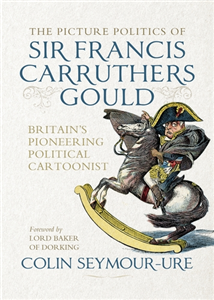 The ArtsDecember 2024
The picture politics of Sir Francis Carruthers Gould
Britain's pioneering political cartoonist
by Mark Bryant
This is the first major study of Britain's pioneering graphic satirist, Sir Francis Carruthers Gould (1844-1925), the first staff political cartoonist on a daily newspaper in Britain, and the first of his kind to be knighted. Written by the distinguished media historian, Colin Seymour-Ure, it is essential reading for anyone interested in cartoons, caricature and illustration and will also be welcomed by students of history, politics and the media. It examines Gould's career in Fleet Street until his retirement after the First World War. It also discusses his illustrations for magazines and books and there is an analysis of his use of symbolism and literary allusion to lampoon such eminent politicians as Gladstone and Joseph Chamberlain. As Lord Baker says in his Foreword, this book is 'a major contribution to our knowledge of British cartooning.'



