
Burnet Media
Burnet Media is an independent publisher based in Cape Town, South Africa. We specialise in forging close author-publisher partnerships for trade and customised projects.
View Rights Portal
Burnet Media is an independent publisher based in Cape Town, South Africa. We specialise in forging close author-publisher partnerships for trade and customised projects.
View Rights Portal
Burleigh Dodds Subliscience Publishing was established in 2015 by former staff at the award-winning Woodhead Publishing. Our vision is to help solve one of the world’s greatest challenges: to feed the world’s growing population. There is an urgent need for a more climate-smart agriculture able to feed a growing population whilst, at the same time, adapting to (and not exacerbating) climate change. Our goal is to build collections of research on key topics in agricultural science so that researchers can build on existing work and collaborate more effectively. We are achieving this by using ’smart-publishing’ to help achieve ’climate-smart’ agriculture.
View Rights Portal

Law across imperial borders offers new perspectives on the complex legal connections between Britain's presence in Western China in the western frontier regions of Yunnan and Xinjiang, and the British colonies of Burma and India. Bringing together a transnational methodology with a social-legal focus, it demonstrates how inter-Asian mobility across frontiers shaped British authority in contested frontier regions of China. It examines the role of a range of actors who helped create, constitute and contest legal practice on the frontier-including consuls, indigenous elites and cultural mediators. The book will be of interest to historians of China, the British Empire in Asia and legal history.
 Trusted Partner
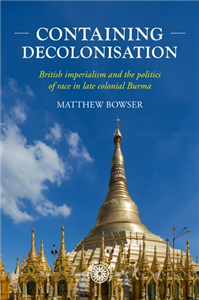
This book examines British imperialism in late colonial Burma to study how imperialists attempted to protect their strategic and economic interests after decolonisation: they did so by supporting ethnonationalism. This process resembles the Cold War tactic of "containment," and the book makes a crucial contribution to the study of modern imperialism by demonstrating the continuity between "containment's" late- and "neo"-colonial manifestations. For Burma/Myanmar, it also explores the origin of the present-day military junta's racial regime: it emphasizes the protection of the ethnoreligious majority from ethnic minority insurgency. The Rohingya people are currently suffering a genocide because of this racial regime. As the country endures civil war against the junta, this book highlights how ethnonationalists in the late colonial period first promoted this racial regime to seize power and prevent revolution, a process supported by British imperialists for their own ends.
Trusted Partner
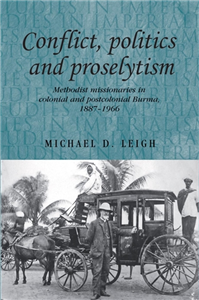
This book is a study of the ambitions, activities and achievements of Methodist missionaries in northern Burma from 1887-1966 and the expulsion of the last missionaries by Ne Win. The story is told through painstaking original research in archives which contain thousands of hitherto unpublished documents and eyewitness accounts meticulously recorded by the Methodist missionaries. This accessible study constitutes a significant contribution to a very little-known area of missionary history. Leigh pulls together the themes of conflict, politics and proselytisation in to a fascinating study of great breadth. The historical nuances of the relationship between religion and governance in Burma are traced in an accessible style. This book will appeal to those teaching or studying colonial and postcolonial history, Burmese politics, and the history of missionary work. ;
Trusted Partner

This book is a study of the ambitions, activities and achievements of Methodist missionaries in northern Burma from 1887-1966 and the expulsion of the last missionaries by Ne Win. The story is told through painstaking original research in archives which contain thousands of hitherto unpublished documents and eyewitness accounts meticulously recorded by the Methodist missionaries. This accessible study constitutes a significant contribution to a very little-known area of missionary history. Leigh pulls together the themes of conflict, politics and proselytisation in to a fascinating study of great breadth. The historical nuances of the relationship between religion and governance in Burma are traced in an accessible style. This book will appeal to those teaching or studying colonial and postcolonial history, Burmese politics, and the history of missionary work.
Trusted Partner

Mit frischem Universitätsabschluss in der Tasche, beschließt der junge Franzose Mauro, seinem bisherigen Leben den Rücken zu kehren. Er will sich nun voll und ganz seiner wirklichen Leidenschaft verschreiben: dem Kochen. Mit seinem Fahrrad rast Mauro von Brasserien über Bistros zu Sternerestaurants, er kocht in Berlin und in Burma, springt vom Blanchieren zum Sautieren, von Bouillons zu Sorbets, von Marktgängen zu Nachtschichten – und eröffnet schließlich seinen eigenen kleinen Laden. Fünfzehn Lehrjahre, gezeichnet von geschundenen Händen, Schlafmangel und einer schleichend zerrinnenden Freizeit. Aber auch ein sinnliches Abenteuer der absoluten Hingabe und der Kunst des perfekten Menüs. Maylis de Kerangal erzählt vom unvergesslichen Geschmack, der in einer Ochsenherztomate oder einem Strauch Wildkräuter steckt – und davon, wie sehr es einen Koch beglücken kann, die eigene kulinarische Philosophie zu finden.
Trusted Partner
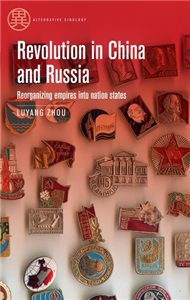
Most scholars believe that China's nationality policy, like that of other socialist states, imitated the Soviet nationality model, a system which has been termed an "affirmative action empire." This book offers two contributions to the literature which run counter to this convention. First, it argues that the People's Republic of China (PRC) and the Soviet Union (USSR) were different; while the PRC was aimed to build an ideal-typical nation-state, the USSR was an open union of nation-states that was only temporarily confined to a physical territory. Second, while scholars who have noted this difference attribute it to contextual factors, such as ethnic structure, geopolitical status, and Russia's intervention into the Chinese Revolution, this book contends that context shaped the Sino-Soviet difference, yet it did not determine it. Rather, there was significant leeway between the implications of the contextual factors, and what the policy-designers ultimately established. This book probes who held agency, and how these individuals bridged this gap.
Trusted Partner

The relationship between Germany and Russia is Europe's most important link with the largest country on the continent. But despite Germany's unparalleled knowledge and historical experience, its policymakers struggle to accept that Moscow's efforts to rebalance Europe at the cost of the cohesion of the EU and NATO are an attack on Germany's core interests. This book explains the scale of the challenge facing Germany in managing relations with a changing Russia. It analyses how successive German governments from 1991 to 2014 misread Russian intentions, until Angela Merkel sharply recalibrated German and EU policy towards Moscow. The book also examines what lies behind efforts to revise Merkel's bold policy shift, including attitudes inherited from the GDR and the role of Russian influence channels in Germany.
Trusted Partner


Vladimir Putin has been ruling Russia for 25 years. There is no end in sight to his dictatorship. He relies on repression at home and is waging a war of destruction against a neighbouring country. The conflict with the West has long become a systemic conflict between an illiberal-autocratic ideology and liberal-democratic principles. Nothing will change as long as Putin remains in power. Nevertheless, as far as can be ascertained under unfree conditions, the majority of the population seems to be supporting Putin. Does this mean that too many people in Russia do not want democracy or peace? Will everything remain the same after Putin? Or is there a chance that Russia will eventually take a different, more democratic path? Whatever the outcome of the war in Ukraine, Russia is not going to disappear. We will still have to deal with our big neighbour in the east. This makes it all the more important to focus on longer-term developments. As a recognised expert on Russian history and society, the author outlines what the post-Putin era might look like. His in-depth analysis makes it clear that Russia is partly Putin, but Putin is not everything about Russia.
Trusted Partner

This volume is timely in that it explores key issues which are currently at the forefront of the EU's relations with its eastern neighbours. It considers the impact of a more assertive Russia, the significance of Turkey, the limitations of the Eastern Partnership with Belarus and Moldova, the position of a Ukraine in crisis and pulled between Russia and the EU, security and democracy in the South Caucasus. It looks at the contested nature of European identity in areas such as the Balkans. In addition it looks at ways in which the EU's interests and values can be tested in sectors such as trade and migration. The interplay between values, identity and interests and their effect on the interpretation of europeanisation between the EU and its neighbours is a core theme of the volume.
Trusted Partner
This highly original book constitutes one of the first attempts to examine the problem of distributive justice in the European Union in a systematic manner. João Labareda argues that the set of shared political institutions at EU level, including the European Parliament and the Court of Justice of the EU, generate democratic duties of redistribution among EU citizens. Furthermore, the economic structure of the EU, comprising a common market, a common currency and a free-movement area, triggers duties of reciprocity among member states. The responsibilities to fulfil these duties, Labareda argues, should be shared by the local, national and supranational levels of government. Not only should the EU act as a safety net to the national welfare systems, applying the principle of subsidiarity, but common market and Eurozone regulations should balance their efficiency targets with fair cooperation terms. The concrete policy proposals presented in this book include a threshold of basic goods for all EU citizens, an EU labour code, a minimum EU corporate tax rate and an EU fund for competitiveness. Labarada argues that his proposals match the political culture of the member states, are economically feasible, can be translated into functioning institutions and policies and are consistent with the limited degree of social solidarity in Europe. This book is a major contribution to the understanding of what a just Europe would look like and what it might take to get us there. This book is relevant to United Nations Sustainable Development Goal 10, Reduced inequalities
Trusted Partner


— Analysis of how we view Europe's North and how this image emerged — An outsider's perspective on Nordic societies and their self image — Serves as an introduction into Northern European culture and society Our image of Northern Europe has been shaped by projections and desires in the long history of encounters: berserkers and war atrocities, bad weather, beautiful nature, stable political systems, social welfare, equality and prosperity, peacefulness, low corruption, hygge and Bullerby – all this is part of the Nordic narrative. But what about the religious, linguistic and ethnic homogeneity, what about the muchvaunted Nordic cooperation? How do politics "work" in the North? Why are Northern Europeans the happiest people?
Trusted Partner

This book offers a fresh look at some of the most challenging dilemmas of European integration and proposes innovative solutions to them by building on perspectives and insights from twelve classical authors in the history of political thought. The book simultaneously offers an original introduction to critical debates in EU studies and makes key political thinkers more accessible to contemporary readers by presenting present-day policy applications of their doctrines. While each chapter discusses a specific challenge for the EU, five key themes appear recurrently throughout the book: (i) the prospects for peace in Europe; (ii) the conditions for an inclusive EU democracy; (iii) socioeconomic inequalities in the EU; (iv) strategies to promote political change in Europe; and (v) the requisites for a fully-fledged EU citizenship. The authors discussed are Plato, Aristotle, Augustine, Machiavelli, Hobbes, Rousseau, Kant, Wollstonecraft, Marx, Arendt, Rawls and hooks.
Trusted Partner

This book offers an original interpretation of Britain's relationship with Europe over a 25 year period: 1959-84 and advances the argument that the current problems over EU membership resulted from much earlier political machinations. This evidence based account of the seminal period analyses the applications for EEC membership, the 1975 referendum, and the role of the press. Was the British public misled over the true aims of the European project? How significant was the role of the press in changing public opinion from anti, to pro Common Market membership? Why, after over 40 years since Britain became a member of the European community, does the issue continue to deeply divide not only the political elite, but also the British public? These, and other pertinent questions are answered in this timely book on a subject that remains topical and highly controversial.
Trusted Partner
Trusted Partner

This book examines Turkey's integration with Europe within structural dynamics of globalisation from a critical political economy perspective. Critical approaches have been sidelined within European Studies. Turkish enlargement is not an exemption. The analyses are based on original data generated by 109 interviews conducted in 2010, 2017 and 2023 with five categories of actors: representatives of capital and labour, political parties, state officials, and struggles around ecology, patriarchy and migration. It argues that the pro-membership was hegemonic in the 2000s which was contested by two rival class strategies, Ha-vet and neo-mercantilism. In the 2010s, pro-membership is no longer hegemonic within rising critical tone of social forces supporting rival class strategies. Unevenness of Turkey's trajectory of integration to Europe is likely to be consolidated through market integration and management of migration through transactional approach.
Trusted Partner
 Trusted Partner
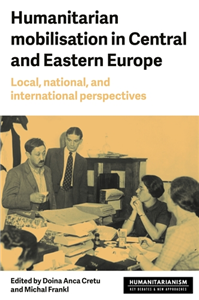
By focusing on aid Central and Eastern Europe, the volume adds to the existent scholarly explorations of modern humanitarianism, its actors and practices. In the twentieth century, aid workers assisted victims of war and earthquakes, delivered food, supported health care, provided childcare, or sheltered refugees. The contributors not only reconstruct these diverse histories and their protagonists, but also bring international, national, and local actors together: from grassroots activists to private associations to state-driven "socialist humanitarians" to large Western aid organizations. In doing so, they challenge the often unidirectional, from West-to-East, and asymmetrical perspective on donor-recipient relationships in humanitarian processes.
Trusted Partner
The first book-length analysis of EU health policy since the COVID-19 pandemic, encompassing the creation of the European Health Union and the Recovery and Resilience Facility, this volume offers a timely and accessible analysis of the EU's health policy, institutions and governance. Focusing on the EU's health objectives and how they are pursued, it offers a detailed overview of the development of EU health policy, and five in-depth case studies of specific policy fields. The book will appeal to academic and policy audiences interested in the EU's health objectives and how it pursues them.
Trusted Partner


Der Palikanon des Theravada-Buddhismus, der heute die dominierende buddhistische Strömung in Sri Lanka, Myanmar, Thailand, Laos und Kambodscha ist, wird traditionell in drei 'Körbe' gegliedert: Der erste enthält vor allem eine Ordensdisziplin für Mönche und Nonnen sowie Rechtsvorschriften, der zweite die Lehrreden des Buddha und der dritte scholastische Unterweisungen. Zum 'Korb der Lehrreden' (Sanskrit: Sutta-Pitaka) des Buddha gehören fünf Sammlungen, unter ihnen die 'Gruppierte Sammlung' mit mehr als siebentausend Predigten. Ihren Namen verdankt sie dem Versuch, Suttas ähnlicher Thematik zusammenzustellen. Der Samyutta-Nikaya mit seinen 56 Gruppen vereinigt Material ganz unterschiedlicher Herkunft und Eigenart. Anfangs überwiegen Mönchsdichtung, Spruchweisheit, Rätselfragen und Zaubersprüche, darauf folgen einige Gruppen, die vorwiegend dogmatisch und didaktisch orientiert sind und einen Überblick über die autoritativen kanonischen Lehren des Pali-Kanons vermitteln. Da viele der späteren Gruppen durch ihre Wiederholungen und Detailvariationen die Lesergeduld herausfordern, konzentriert sich die vorliegende Auswahl auf den ersten Teil.



