
Your Search Results
-

-

The University of South Carolina Press
Established in 1944,the University of South Carolina Press is one of the oldest and most distinguished publishing houses in the South. With well over 1,000 books available in print and digital formats, and publishing approximately fifty new books annually, the Press enhances and expands the scholarly reputation and worldwide visibility of the University of South Carolina.In helping the University fulfill its mission of research and teaching and outreach, the Press publishes a wide range of critically acclaimed works in the following subjects: Southern History, African American Studies, Civil Rights, and South Carolina. In addition, the Press publishes long-running scholarly series in Literary Studies and Rhetoric/Communication. Our editorial profile aligns with several of the institutional strengths of the University and underscores the Press’s mission to serve teachers and learners and readers in the academy and the broader culture, both in North America and around the globe.
View Rights Portal
-
Promoted Content

 Humanities & Social SciencesApril 2026
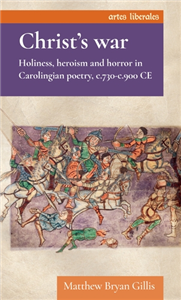
Christ’s war
Holiness, heroism and horror in Carolingian poetry, c.730-c.900 CE
by Matthew Bryan Gillis
Christ's war examines Carolingian holy war from the forging of their empire in the eighth century to its dissolution in the late ninth century during the Northmen's attacks. It argues that the Franks understood their wars to be holy when their soldiers were without sin and, therefore, were holy themselves. God heard their prayers as they begged for divine aid, and he helped them overcome and slaughter their foes. Therefore, the Carolingian vision of holy war differed from the pious, apocalyptic military pilgrimages of the subsequent Crusades. Latin poetry serves as an important source in this study for understanding holy war, including how poets dramatized glorious victories or horrifying defeats for their audiences. The book offers important insights into the religious nature of Frankish warfare, while also contributing a fresh and innovative perspective on medieval holy war overall.
-
Promoted Content
 Humanities & Social SciencesMay 2026
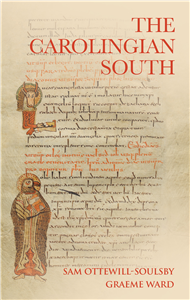
The Carolingian South
by Sam Ottewill-Soulsby, Graeme Ward
The Carolingian South turns the Frankish world upside down by taking as its subject the lands of the Carolingian empire south of the Loire and the Alps. It assembles an international group of scholars from different disciplines to examine how the Carolingians defined and were defined by this region. This book asks how Carolingian power was created and negotiated in the south. It views the Frankish empire from the perspective of the Christian and Muslim polities of the Mediterranean, while also following the movement of people and ideas through the endlessly fascinating world that they made.
-
 Trusted Partner
 Humanities & Social SciencesMay 2020
Confronting crisis in the Carolingian empire
by Mayke de Jong, Justin Lake, Simon Maclean
-
Trusted Partner
 The ArtsSeptember 2024
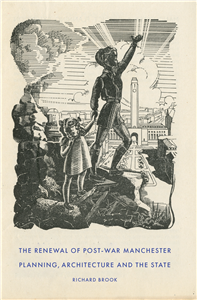
The renewal of post-war Manchester
Planning, architecture and the state
by Richard Brook
A compelling account of the project to transform post-war Manchester, revealing the clash between utopian vision and compromised reality. Urban renewal in Britain was thrilling in its vision, yet partial and incomplete in its implementation. For the first time, this deep study of a renewal city reveals the complex networks of actors behind physical change and stagnation in post-war Britain. Using the nested scales of region, city and case-study sites, the book explores the relationships between Whitehall legislation, its interpretation by local government planning officers and the on-the-ground impact through urban architectural projects. Each chapter highlights the connections between policy goals, global narratives and the design and construction of cities. The Cold War, decolonialisation, rising consumerism and the oil crisis all feature in a richly illustrated account of architecture and planning in post-war Manchester.
-
Trusted Partner
 Humanities & Social SciencesAugust 2016
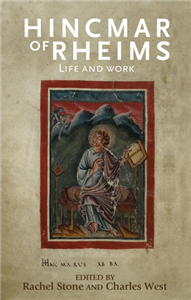
Hincmar of Rheims
Life and work
by Rachel Stone, Charles West
Archbishop Hincmar of Rheims (d. 882) is a crucial figure for all those interested in early medieval European history in general, and Carolingian history in particular. For forty years he was an advisor to kings and religious controversialist; his works are a key source for the political, religious and social history of the later ninth century, covering topics from papal politics to the abduction of women and the role of parish priests. For the first time since Jean Devisse's biography of Hincmar in the 1970s, this book offers a three-dimensional examination of a figure whose actions and writings in different fields are often studied in isolation. It brings together the latest international research across the spectrum of his varied activities, as history-writer, estate administrator, hagiographer, canonist, pastorally engaged bishop, and politically minded royal advisor. The introduction also provides the first substantial English-language survey of Hincmar's whole career.
-
Trusted Partner
 Humanities & Social SciencesJanuary 2013
The annals of St-Bertin
Ninth-century histories, volume I
by Janet L. Nelson
The Annals of St-Bertin, covering the years 830 to 882, are the main narrative source for the Carolingian world in the ninth century. This richly-annotated translation by a leading British specialist makes these Carolingian histories accessible in English for the first time, encouraging readers to reassess and evaluate a crucially formative period of European history. Produced in the 830s in the imperial palace of Louis the Pious, The Annals of St-Bertin were continued away from the Court, first by Bishop Prudentius of Troyes, then by the great scholar-politician Archbishop Hinemar of Rheims. The authors' distinctive voices and interests give the work a personal tone rarely found in medieval annals. They also contain uniquely detailed information on Carolingian politics, especially the reign of the West Frankish king, Charles the Bald (840-877). No other source offers so much evidence on the Continental activities of the Vikings. Janet L. Nelson offers in this volume both an entrée to a crucial Carolingian source and an introduction to the historical setting of teh Annals and possible ways of reading the evidence. The Annals of St-Bertin will be valuable reading for academics, research students and undergraduates in medieval history, archaeology and medieval languages. It will also fascinate any general reader with an interest in the development of European culture and society.
-
Trusted Partner
 Humanities & Social SciencesJanuary 2022
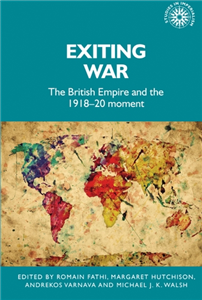
Exiting war
The British Empire and the 1918–20 moment
by Romain Fathi, Margaret Hutchison, Andrekos Varnava, Michael Walsh, Alan Lester
Exiting war explores a particular 1918-20 'moment' in the British Empire's history, between the First World War's armistices of 1918, and the peace treaties of 1919 and 1920. That moment, we argue, was a challenging and transformative time for the Empire. While British authorities successfully answered some of the post-war tests they faced, such as demobilisation, repatriation, and fighting the widespread effects of the Spanish flu, the racial, social, political and economic hallmarks of their imperialism set the scene for a wide range of expressions of loyalties and disloyalties, and anticolonial movements. The book documents and conceptualises this 1918-20 'moment' and its characteristics as a crucial three-year period of transformation for and within the Empire, examining these years for the significant shifts in the imperial relationship that occurred and as laying the foundation for later change in the imperial system.
-
Trusted Partner
 Literature & Literary StudiesOctober 2025
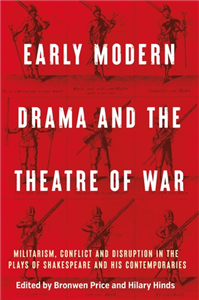
Early modern drama and the theatre of war
Militarism, conflict and disruption in the plays of Shakespeare and his contemporaries
by Bronwen Price, Hilary Hinds
This volume explores the disruptive effects of militarism, war and social unrest in early modern drama. Engaging with Simon Barker's seminal work on dramatic representations of war and militarism, contributors highlight what often lies hidden beneath the surface of martial narratives, treating them as formative interventions in contemporary discourses, whether in justifying war, excluding dissident voices or shaping cultural identities. Discussions include new examinations of militarism, the figure of the soldier and early modern theories of war in Shakespearean tragedy, history and comedy, alongside antimasque and dramatic satire by lesser-known playwrights. The essays investigate how ideas of war underpin emerging concepts of gender, leadership, marriage and the family, as well as the continuing mobilisation of Shakespearean drama in the context of modern armed conflict. Together, they offer rich new contributions to the current lively critical debates on this topic.
-
Trusted Partner
 Business, Economics & LawApril 2026
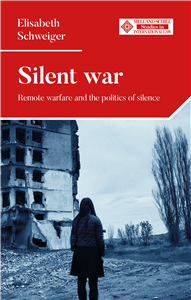
Silent war
Remote warfare and the politics of silence
by Elisabeth Schweiger
Silent war reveals how silence functions as a crucial but often overlooked force in enabling and sustaining military violence. While war propaganda and discursive justifications have received significant attention, this book argues that military operations also depend on a hidden infrastructure of silence - through omission, secrecy, and tacit consent. Focusing on drone warfare and colonial counterinsurgency, it explores how regimes of (not) listening shape what can and cannot be heard. Drawing on a multidisciplinary framework and extensive empirical research - including analysis of Western parliamentary debates, UN documents, media coverage, and archival records - Silent war traces the enduring role of silence in legitimising imperial violence. It reframes silence not as absence but as a constitutive force in global power relations, offering critical tools for interrogating dominant frameworks of military violence and opening space for listening otherwise.
-
Trusted Partner
 Humanities & Social SciencesSeptember 2021
Nostalgia and the post-war Labour Party
by Richard Jobson
-
Trusted Partner

 May 2022
In the Shadow of War
Diary notes from Ukraine
by Christoph Brumme
"What can you learn in war? Do you become numb, do you get used to it at some point? Does war make you "hard", uncaring, above pain? No. These are just clichés. Every day brings new horrors. At best, one learns for some time to suppress strong feelings, because to give in to them would weaken one's life instinct." In a very stirring and shocking, but sometimes humorous language, Christoph Brumme tells of the situation in Ukraine, the everyday life of his family and friends, of fears, longings and political assessments. The diary entries of the war and the resistance of the Ukrainians, starting from the first signs of the impending war in mid-January 2022 until the printing of this book, 1st May 2022, impressively bear witness to the brutality of these events.
-
Trusted Partner
 Literature & Literary StudiesJanuary 2013
History and politics in late Carolingian and Ottonian Europe
by Simon Maclean
-
Trusted Partner
 Humanities & Social SciencesMay 2026
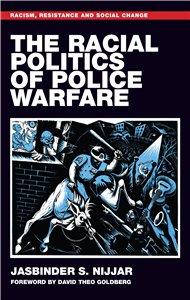
The racial politics of police warfare
by Jasbinder S. Nijjar
Amid renewed anti-racist resistance to violent policing, The racial politics of police warfare unpacks the racisms that rationalise militarised policing in contemporary Britain. Jasbinder S. Nijjar shatters prevailing myths about British police as an impartial public service, by revealing it as an institution where racism and war reinforce one another. In examining flagship anti-gang and counter-terrorism policies and practices, the book offers a unique analysis of the relationship between anti-black and anti-Muslim racisms, to demonstrate how racialised populations are institutionalised as common enemies of modernity. Combining perspectives from sociology, history, criminology and social policy, Nijjar illustrates how British policing defends law and order and national security from the perceived threat of race through hyper-intrusive, pre-emptive and deathly measures. Accordingly, he gives a fresh take on resisting racial police warfare, calling for strategies that are at once political, collective, anti-militaristic and abolitionist.
-
Trusted Partner
 Humanities & Social SciencesSeptember 2023
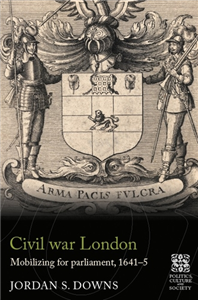
Civil war London
Mobilizing for parliament, 1641–5
by Jordan S. Downs
This book looks at London's provision of financial and military support for parliament's war against King Charles I. It explores for the first time a series of episodic, circumstantial and unique mobilisations that spanned from late 1641 to early 1645 and which ultimately led to the establishment of the New Model Army. Based on research from two-dozen archives, Civil war London charts the successes and failures of efforts to move London's vast resources and in the process poses a number of challenges to longstanding notions about the capital's 'parliamentarian' makeup. It reveals interactions between London's Corporation, parochial communities and livery companies, between preachers and parishioners and between agitators, propagandists and common people. Within these tangled webs of political engagement reside the untold stories of the movement of money and men, but also of parliament's eventual success in the English Civil War.
-
Trusted Partner
 June 2025
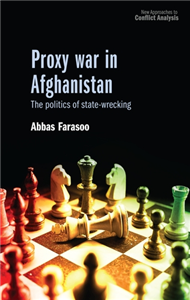
Proxy war in Afghanistan
The politics of state-wrecking
by Abbas Farasoo
This book provides a compelling analysis of proxy warfare and its far-reaching implications for statehood, focusing on the conflict in Afghanistan. Introducing the innovative concept of "state-wrecking," it bridges theory and practice to unravel how external support for insurgent actors fuels violence, undermines territorial control and sovereignty, intensifies violence, and dismantles political legitimacy. The work shifts the discourse on proxy wars from the strategies of global powers to the procedural and structural impacts within target states. Grounded in rigorous empirical research, including interviews, archival data, and conflict analysis, the book critically examines the Pakistan-Taliban nexus and the limitations of US-led interventions. By blending a robust theoretical framework with in-depth case studies, it reveals how proxy dynamics shape conflicts, disrupt governance, and challenge international security. This is an essential resource for those seeking to understand the entanglements of modern warfare and the fragility of states under external influence.
-
Trusted Partner
 Humanities & Social SciencesMarch 2017
Popular imperialism and the military, 1850-1950
by John M. MacKenzie
Colonial war played a vital part in transforming the reputation of the military and placing it on a standing equal to that of the navy. The book is concerned with the interactive culture of colonial warfare, with the representation of the military in popular media at home, and how these images affected attitudes towards war itself and wider intellectual and institutional forces. It sets out to relate the changing image of the military to these fundamental facts. For the dominant people they were an atavistic form of war, shorn of guilt by Social Darwinian and racial ideas, and rendered less dangerous by the increasing technological gap between Europe and the world. Attempts to justify and understand war were naturally important to dominant people, for the extension of imperial power was seldom a peaceful process. The entertainment value of war in the British imperial experience does seem to have taken new and more intensive forms from roughly the middle of the nineteenth century. Themes such as the delusive seduction of martial music, the sketch of the music hall song, powerful mythic texts of popular imperialism, and heroic myths of empire are discussed extensively. The first important British war correspondent was William Howard Russell (1820-1907) of The Times, in the Crimea. The 1870s saw a dramatic change in the representation of the officer in British battle painting. Up to that point it was the officer's courage, tactical wisdom and social prestige that were put on display.
-
Trusted Partner
 The ArtsJune 2021
The war that won't die
The Spanish Civil War in cinema
by David Archibald
The war that won't die charts the changing nature of cinematic depictions of the Spanish Civil War. In 1936, a significant number of artists, filmmakers and writers - from George Orwell and Pablo Picasso to Joris Ivens and Joan Miró - rallied to support the country's democratically-elected Republican government. The arts have played an important role in shaping popular understandings of the Spanish Civil War and this book examines the specific role cinema has played in this process. The book's focus is on fictional feature films produced within Spain and beyond its borders between the 1940s and the early years of the twenty-first century - including Hollywood blockbusters, East European films, the work of the avant garde in Paris and films produced under Franco's censorial dictatorship. The book will appeal to scholars and students of Film, Media and Hispanic Studies, but also to historians and, indeed, anyone interested in why the Spanish Civil War remains such a contested political topic.
-
Trusted Partner
 The ArtsJanuary 2019
The war that won't die
The Spanish Civil War in cinema
by David Archibald
The war that won't die charts the changing nature of cinematic depictions of the Spanish Civil War. In 1936, a significant number of artists, filmmakers and writers - from George Orwell and Pablo Picasso to Joris Ivens and Joan Miró - rallied to support the country's democratically-elected Republican government. The arts have played an important role in shaping popular understandings of the Spanish Civil War and this book examines the specific role cinema has played in this process. The book's focus is on fictional feature films produced within Spain and beyond its borders between the 1940s and the early years of the twenty-first century - including Hollywood blockbusters, East European films, the work of the avant garde in Paris and films produced under Franco's censorial dictatorship. The book will appeal to scholars and students of Film, Media and Hispanic Studies, but also to historians and, indeed, anyone interested in why the Spanish Civil War remains such a contested political topic.
-
Trusted Partner
 June 2026
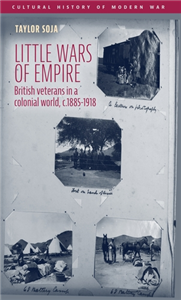
Little wars of empire
British veterans in a colonial world, c.1885–1918
by Taylor Soja
Little Wars of Empire is a group biography of British veterans who experienced multiple wars across the British empire. Throughout the nineteenth century, Britain was constantly at war in its colonies, defending against anti-colonial resistance or trying to expand its influence. The veterans of these wars did not disappear once they were over, and many of them went on to later experience World War I. By using personal sources such as letters, diaries, and photograph albums, this book works to show how colonial violence and British military history depend upon one another, and argues that colonial war fundamentally shaped the British experience of empire. This was true for all kinds of British veterans, from British Army soldiers and officers to nurses and military families, whose experiences demonstrate the central place of colonial violence to British life.
-
Trusted Partner
 Humanities & Social SciencesFebruary 2026
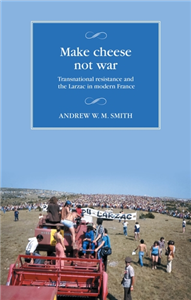
Make cheese not war
Transnational resistance and the Larzac in modern France
by Andrew W. M. Smith
In 1971, the French government announced a massive extension of its military base on the Larzac plateau in southern France. Land was to be expropriated from 107 farms around the small town of La Cavalerie. Limited resistance was expected, but what happened next exceeded all expectations. Local sheep farmers set up protest camps and occupied the land. They soon attracted an astonishing level of support, pioneering a form of regional radicalism with global implications. Drawing out the international dimensions of the protest, Make cheese not war explores a transnational resistance movement in the 1970s that challenged dominant visions of modernity and became a wellspring of radical alternatives. Exploring previously unconsulted archives in France and elsewhere, the book offers an in-depth analysis of the decade-long peasant movement and its aftermath. Repositioning the Larzac struggle within a wider network of French and international solidarities, from the US to the UK, Germany, Burkina Faso, New Caledonia and Japan, the book retraces political networks of pacifist activism, as well as environmental movements and anti-nuclear protest. It shows how this French peasant campaign became both a platform and a model for popular engagement.

