
Your Search Results
-

-

National Academies Press
The National Academies Press (NAP)publish the reports of the National Academies of Sciences, Engineering and Medicine. They published more than 200 books a year on a wide range of topics.
View Rights Portal
-
Promoted Content

 Humanities & Social SciencesApril 2022
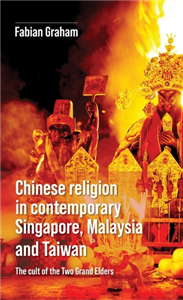
Chinese religion in contemporary Singapore, Malaysia and Taiwan
The cult of the Two Grand Elders
by Fabian Graham
In Singapore and Malaysia, the inversion of Chinese Underworld traditions has meant that Underworld demons are now amongst the most commonly venerated deities in statue form, channelled through their spirit mediums, tang-ki. The Chinese Underworld and its sub-hells are populated by a bureaucracy drawn from the Buddhist, Taoist and vernacular pantheons. Under the watchful eye of Hell's 'enforcers', the lower echelons of demon soldiers impose post-mortal punishments on the souls of the recently deceased for moral transgressions committed during their prior incarnations. Chinese religion in contemporary Singapore, Malaysia and Taiwan offers an ethnography of contemporary Chinese Underworld traditions, where night-time cemetery rituals assist the souls of the dead, exorcised spirits are imprisoned in Guinness bottles, and malicious foetus ghosts are enlisted to strengthen a temple's spirit army. Understanding the religious divergences between Singapore and Malaysia (and their counterparts in Taiwan) through an analysis of socio-political and historical events, Fabian Graham challenges common assumptions about the nature and scope of Chinese vernacular religious beliefs and practices. Graham's innovative approach to alterity allows the reader to listen to first-person dialogues between the author and channelled Underworld deities. Through its alternative methodological and narrative stance, the book intervenes in debates on the interrelation between sociocultural and spiritual worlds, and promotes the destigmatisation of spirit possession and discarnate phenomena in the future study of mystical and religious traditions.
-
Promoted Content
 Humanities & Social SciencesMarch 2017
Britain in China
by Robert Bickers
This is a study of Britain's presence in China both at its peak, and during its inter-war dissolution in the face of assertive Chinese nationalism and declining British diplomatic support. Using archival materials from China and records in Britain and the United States, the author paints a portrait of the traders, missionaries, businessmen, diplomats and settlers who constituted "Britain-in-China", challenging our understanding of British imperialism there. Bickers argues that the British presence in China was dominated by urban settlers whose primary allegiance lay not with any grand imperial design, but with their own communities and precarious livelihoods. This brought them into conflict not only with the Chinese population, but with the British imperial government. The book also analyzes the formation and maintenance of settler identities, and then investigates how the British state and its allies brought an end to the reign of freelance, settler imperialism on the China coast. At the same time, other British sectors, missionary and business, renegotiated their own relationship with their Chinese markets and the Chinese state and distanced themselves from the settler British.
-
 Trusted Partner
 March 2026
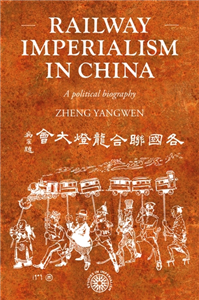
Railway imperialism in China
A political biography
by Yangwen Zheng
Railway Imperialism in China: a Political Biography is the first and most comprehensive book on history and politics of all major railways in China from the late Qing to the post-Mao era. It investigates the transformation of railways from a bête noire within discussions about reform to the emblematic "engines for empire" as foreign powers used it to carve outspheres of control and exploit the late Qing, and as an instrument of nation making for Chinese regimes. The book introduces new archival sources and a wide range of secondary materials. Boldly conceived, it situates the making of modern China in the context of British, Russian, German, Japanese, American expansion. It traces China's transformation from a victim of railway imperialism in the Age of Empireto a railway expansionist in the twenty-first century.
-
Trusted Partner
 Humanities & Social SciencesAugust 2012
Understanding Chinese politics
An introduction to government in the People's Republic of China
by Neil Collins, Andrew Cottey
The Chinese political system is the subject of much media and popular comment in part because China supports an economy with an apparently inexorable dynamic and impressive record of achievement. This book provides a comprehensive introduction to China's political system, outlining the major features of the Chinese model and highlighting its claims and challenges. It explores the central role of the Communist Party in the country's politics and the way in which the Party controls most elements of the political system. The book also draws parallels with previous historical periods in China's history. Finally, it addresses the question of what kind of role the People's Republic of China will play in global politics as a whole, the implications for the West and the rebalancing of relations between China and its neighbours. ;
-
Trusted Partner
-
Trusted Partner
-
Trusted Partner
 Humanities & Social SciencesMarch 2025
Straight nation
Heteronormativity and other exigencies of postcolonial nationalism
by Pavan Mano
In Straight Nation, Pavan Mano reveals the logic of straightness that sits at the heart of postcolonial nationalism in Singapore. Mano rejects the romantic notion of the nation as a haven of belonging, showing it to be a relentless force that is allied with heteronormativity to create a host of minoritized and xenologized figures. Through meticulous exploration and close reading of a swathe of texts, Mano unveils the instrumental role of sexuality in structuring the national imaginary. The book adroitly demonstrates how queerness is rendered foreign in postcolonial Singapore and functions alongside technologies of "race", gender, and class. A provocative critique of narrow contemporary identity politics and its concomitant stymying of a more ambitious political critique, Straight Nation sets out an argument that moves beyond the negativity of traditional critique into a space of (re)thinking, (re)building and (re)imagining.
-
Trusted Partner
 Literature & Literary StudiesMarch 2017
Asia in Western fiction
by Robin Winks
Any reader who has ever visited Asia knows that the great bulk of Western-language fiction about Asian cultures turns on stereotypes. This book, a collection of essays, explores the problem of entering Asian societies through Western fiction, since this is the major port of entry for most school children, university students and most adults. In the thirteenth century, serious attempts were made to understand Asian literature for its own sake. Hau Kioou Choaan, a typical Chinese novel, was quite different from the wild and magical pseudo-Oriental tales. European perceptions of the Muslim world are centuries old, originating in medieval Christendom's encounter with Islam in the age of the Crusades. There is explicit and sustained criticism of medieval mores and values in Scott's novels set in the Middle Ages, and this is to be true of much English-language historical fiction of the nineteenth and early twentieth centuries. Even mediocre novels take on momentary importance because of the pervasive power of India. The awesome, remote and inaccessible Himalayas inevitably became for Western writers an idealised setting for novels of magic, romance and high adventure, and for travellers' tales that read like fiction. Chinese fictions flourish in many guises. Most contemporary Hong Kong fiction reinforced corrupt mandarins, barbaric punishments and heathens. Of the novels about Japan published after 1945, two may serve to frame a discussion of Japanese behaviour as it could be observed (or imagined) by prisoners of war: Black Fountains and Three Bamboos.
-
Trusted Partner
 Humanities & Social SciencesMay 2020
English nationalism, Brexit and the Anglosphere
Wider still and wider
by Ben Wellings
This is the first book to examine the relationship between English nationalism, Brexit and 'the Anglosphere' - a politically-contested term used to denote English-speaking countries sharing cultural and historical roots with the UK. In the aftermath of the UK's EU referendum some pointed to a 'revolt' of those 'left behind' by globalisation. Ben Wellings argues instead that Brexit was and is an elite project, firmly situated within the tradition of an expansive English nationalism. Far from being parochial 'Little Englanders', elite Brexiteers sought to replace the European Union with trade and security alliances between 'true friends' and 'traditional allies' in the Anglosphere. Brexit was thus reassuringly presented as a giant leap into the known. As the UK's future relationship with the rest of the world is negotiated, the need to understand this 'English moment' has never been more pressing.
-
Trusted Partner
 Humanities & Social SciencesJanuary 2026
United States and Chinese foreign assistance and diplomacy
Aid for dominance
by Salvador Santino Regilme, Obert Hodzi
Aid for Dominance addresses the analytic weaknesses of mainstream analysis of foreign aid, which often focuses on its material dimensions. The book underscores the constitutive relationship between foreign aid as a material resource and the diplomatic discourses and practices that constitute complex bilateral relations between donor and recipient states. Written by two leading scholars of contemporary United States and Chinese foreign policies in the Global South, Aid for Dominance offers a pioneering, theoretically conscious, and empirically rich account of the two great powers' grand strategies in the global development sector. By deploying a multidisciplinary and comparative analysis, this book draws from a wide range of evidentiary materials from primary sources, including data from fieldwork interviews, government documents, local and international newspapers, speeches by high-ranking government officials and diplomats, and secondary data from scholarly publications and policy papers.
-
Trusted Partner
 Humanities & Social SciencesSeptember 2020
A global history of white nationalism
by Daniel Geary, Camilla Schofield, Jennifer Sutton, John Solomos, Satnam Virdee, Aaron Winter
-
Trusted Partner
 Humanities & Social SciencesJune 2025
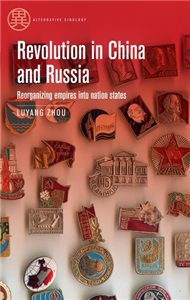
Revolution in China and Russia
Reorganizing empires into nation states
by Luyang Zhou
Most scholars believe that China's nationality policy, like that of other socialist states, imitated the Soviet nationality model, a system which has been termed an "affirmative action empire." This book offers two contributions to the literature which run counter to this convention. First, it argues that the People's Republic of China (PRC) and the Soviet Union (USSR) were different; while the PRC was aimed to build an ideal-typical nation-state, the USSR was an open union of nation-states that was only temporarily confined to a physical territory. Second, while scholars who have noted this difference attribute it to contextual factors, such as ethnic structure, geopolitical status, and Russia's intervention into the Chinese Revolution, this book contends that context shaped the Sino-Soviet difference, yet it did not determine it. Rather, there was significant leeway between the implications of the contextual factors, and what the policy-designers ultimately established. This book probes who held agency, and how these individuals bridged this gap.
-
Trusted Partner
 Humanities & Social SciencesFebruary 2025
Empire and subject peoples
Herbert Adolphus Miller and the political sociology of domination
by Jan Balon, John Holmwood
The book outlines the sociological arguments and political activities of the US pragmatist sociologist, Herbert Adolphus Miller (1875-1951). Miller was part of the milieu of Chicago sociology and involved in its studies of race and immigration. He took a distinctly more radical approach and developed a novel political sociology of domination in which he set out a critique of empires, the plight of subject minorities and the risks associated with the inevitable nationalist responses. Where others have identified with the 'internationalisation' of nationalism, Miller sought to make the nation 'international'. He was actively involved in movements for racial justice, Czechoslovakian independence, the formation of the Mid-European Union of subject peoples, as well as support for Korean and Indian independence. He was dismissed by Ohio State University for his activism in 1932.
-
Trusted Partner
-
Trusted Partner
-
Trusted Partner
-
Trusted Partner
 Humanities & Social SciencesMarch 2017
New frontiers
Imperialism's new communities in East Asia, 1842–1953
by Robert Bickers, Christian Henriot
In the new world order mapped out by Japanese and Western imperialism in East Asia after the mid-nineteenth century opium wars, communities of merchants and settlers took root in China and Korea. New identities were constructed, new modes of collaboration formed and new boundaries between the indigenous and foreign communities were literally and figuratively established. Newly available in paperback, this pioneering and comparative study of Western and Japanese imperialism examines European, American and Japanese communities in China and Korea, and challenges received notions of agency and collaboration by also looking at the roles in China of British and Japanese colonial subjects from Korea, Taiwan and India, and at Chinese Christians and White Russian refugees. This volume will be of interest to students and scholars of the history and anthropology of imperialism, colonialism's culture and East Asian history, as well as contemporary Asian affairs.
-
Trusted Partner
 Humanities & Social SciencesJuly 1999
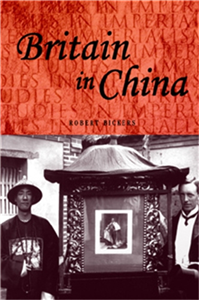
Britain in China
by Robert Bickers, Andrew Thompson, John Mackenzie
This is a study of Britain's presence in China both at its peak, and during its inter-war dissolution in the face of assertive Chinese nationalism and declining British diplomatic support. Using archival materials from China and records in Britain and the United States, the author paints a portrait of the traders, missionaries, businessmen, diplomats and settlers who constituted "Britain-in-China", challenging our understanding of British imperialism there. Bickers argues that the British presence in China was dominated by urban settlers whose primary allegiance lay not with any grand imperial design, but with their own communities and precarious livelihoods. This brought them into conflict not only with the Chinese population, but with the British imperial government. The book also analyzes the formation and maintenance of settler identities, and then investigates how the British state and its allies brought an end to the reign of freelance, settler imperialism on the China coast. At the same time, other British sectors, missionary and business, renegotiated their own relationship with their Chinese markets and the Chinese state and distanced themselves from the settler British. ;
-
Trusted Partner
 Humanities & Social SciencesMarch 2014
The politics of constitutional nationalism in Northern Ireland, 1932–70
Between grievance and reconciliation
by Christopher Norton
In the changed political landscape of Northern Ireland, where all major political parties with a nationalist agenda are now reconciled to the use of peaceful and constitutional means to achieve their objectives, this book presents a timely analysis of the constitutional nationalist tradition in Northern Ireland in the period leading up to the outbreak of the Troubles. The first book on constitutional nationalism to appear in over a decade, this new and incisive work based on extensive primary sources and existing secondary literature, maps the history of the campaigns of nationalist parties and organisations to redress the grievances of Northern Ireland's Catholics and bring partition to an end. It offers a critical reappraisal of these campaigns and it assesses the outcomes and consequences of the political strategies pursued by an array of nationalist parties and groups. ;
-
Trusted Partner
Humanities & Social SciencesMarch 2017
Imperial cities
Landscape, display and identity
by Felix Driver, David Gilbert
Imperial cities explores the influence of imperialism in the landscapes of modern European cities including London, Paris, Rome, Vienna, Marseilles, Glasgow and Seville. Examines large-scale architectural schemes and monuments, including the Queen Victoria Memorial in London and the Vittoriano in Rome. Focuses on imperial display throughout the city, from spectacular exhibitions and ceremonies, to more private displays of empire in suburban gardens. Cconsiders the changing cultural and political identities in the imperial city, looking particularly at nationalism, masculinity and anti-imperialism.



