
China South Booky Culture Media Co. Ltd
Culture media, creative publishing, digital publishing, and other related culture media services.
View Rights Portal
Culture media, creative publishing, digital publishing, and other related culture media services.
View Rights Portal
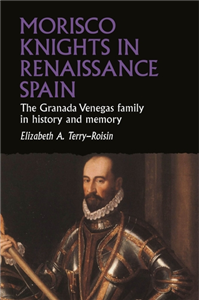
How does a Morisco enter the Spanish nobility? This book reveals the cultural strategies through which a family of converts from Islam to Christianity overcame limpieza de sangre laws, rose in social status, avoided King Philip III's Morisco expulsions of 1609-14, and achieved a noble title. Drawing on archival sources from both Spain and Italy to re-create the original family archive, this book follows the Granada Venegas family from Granada, to Madrid, to the dusty Andalucían town of Campotéjar, of which they became Marquises, and finally to Italy. Their descendants would serve as Doges of Genoa in the eighteenth century.
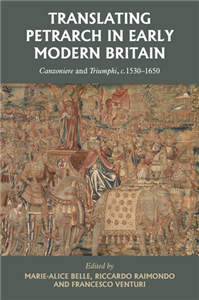
Translating Petrarch in early modern Britain gathers twelve essays by international scholars focusing on the translation of Petrarch's vernacular verse (Canzoniere and Triumphi) into English, from the Tudor age to the mid-seventeenth century (and beyond). Approaching translation as an interpretive process, but also a mode of literary emulation and cultural engagement with Petrarch's prestigious precedent, the collection explores the complex and interconnected trajectories of both poetic works in English and Scottish literary milieux. While situating each translation in its distinct historical, material, and literary context, the essays trace the reception of Petrarch's works in early modern Britain through the combined processes of linguistic and metric innovation, literary imitation, musical adaptation and cultural and material 'domestication'. The collection sheds light on the origins and development of early modern English Petrarchism as part of wider transnational - and indeed, translational-European literary culture.
 Trusted Partner
 Trusted Partner
 Trusted Partner
 Trusted Partner
 Trusted Partner
This volume explores the disruptive effects of militarism, war and social unrest in early modern drama. Engaging with Simon Barker's seminal work on dramatic representations of war and militarism, contributors highlight what often lies hidden beneath the surface of martial narratives, treating them as formative interventions in contemporary discourses, whether in justifying war, excluding dissident voices or shaping cultural identities. Discussions include new examinations of militarism, the figure of the soldier and early modern theories of war in Shakespearean tragedy, history and comedy, alongside antimasque and dramatic satire by lesser-known playwrights. The essays investigate how ideas of war underpin emerging concepts of gender, leadership, marriage and the family, as well as the continuing mobilisation of Shakespearean drama in the context of modern armed conflict. Together, they offer rich new contributions to the current lively critical debates on this topic.
Trusted Partner

This volume questions and qualifies commonly accepted assumptions about the early modern English sonnet: that it was a strictly codified form, most often organised in sequences, which only emerged at the very end of the sixteenth century and declined as fast as it had bloomed, and that minor poets merely participated in the sonnet fashion by replicating established conventions. Drawing from book history and relying on close reading and textual criticism, this collection offers a more nuanced account of the history of the sonnet. It discusses how sonnets were written, published and received in England as compared to mainland Europe, and explores the works of major (Shakespeare, Sidney, Spenser) and minor (Barnes, Harvey) poets alike. Reflecting on current editorial practices, it also provides the first modern edition of an early seventeenth-century Elizabethan miscellany including sonnets presumably by Sidney and Spenser.
Trusted Partner
 Trusted Partner
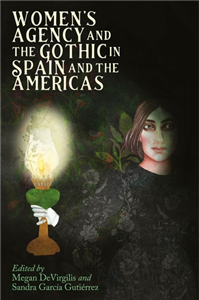
This volume has emerged to fulfill two main purposes: Primarily, to constitute the first collaborative work that traces the relationship between the Gothic and Women in Spain and the Americas, but also, to surpass the term 'Female Gothic,' coined by Ellen Moers, by transferring the focus towards women and their agency as writers, readers and characters. This volume functions as a manifesto per se to open new avenues into understanding how women have interacted with the Gothic between the nineteenth and twenty-first centuries in Spain and the Americas. The question, we determine, is not simply about identity, but rather about agency. We define women's agency as the total capacity of characters, authors and readers to act freely within a social framework in relation to gothic texts. In our exploration of authorship, we reject the claim that the Gothic is a simplistic literary genre, instead sustaining that the plasticity of the Gothic has enabled it to survive for centuries; by shifting from a genre to a mode, it has surpassed literary forms and invaded all kinds of media: from film to music and merchandise such as clothing and pop culture collectables, fostering an authentic goth fandom.
Trusted Partner
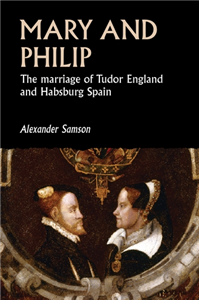
Mary I, eldest daughter of Henry VIII, was Queen of England from 1553 until her death in 1558. For much of this time she ruled alongside her husband, King Philip II of Spain, forming a co-monarchy that put England at the heart of early modern Europe. In this book, Alexander Samson presents a bold reassessment of Mary and Philip's reign, rescuing them from the neglect they have suffered at the hands of generations of historians. The co-monarchy of Mary I and Philip II put England at the heart of early modern Europe. This positive reassessment of their joint reign counters a series of parochial, misogynist and anti-Catholic assumptions, correcting the many myths that have grown up around the marriage and explaining the reasons for its persistent marginalisation in the historiography of sixteenth-century England. Using new archival discoveries and original sources, the book argues for Mary as a great Catholic queen, while fleshing out Philip's important contributions as king of England.
Trusted Partner

At once pervasive and marginal, appealing and repellent, exemplary and atypical, the women of the Bible provoke an assortment of readings across early modern literature. Biblical women in early modern literary culture, 1550-1700 draws attention to the complex ways in which biblical women's narratives could be reimagined for a variety of rhetorical and religious purposes. Considering a confessionally diverse range of writers, working across a variety of genres, this volume reveals how women from the Old and New Testaments exhibit an ideological power that frequently exceeds, both in scope and substance, their associated scriptural records. The essays explore how the Bible's women are fluidly negotiated and diversely redeployed to offer (conflicting) comment on issues including female authority, speech and sexuality, and in discussions of doctrine, confessional politics, exploration and grief. As it explores the rich ideological currency of the Bible's women in early modern culture, this volume demonstrates that the Bible's women are persistently difficult to evade. ;
Trusted Partner

The nineteenth-century Hispanic world was shattered to its core by war, civil war, and revolution. At the same time, it confronted a new period of European and North-American expansion and development. In these essays, authors explore major, dynamic ways that people in Spain envisaged how they would adapt and change, or simply continue as they were. Each chapter title begins with the words "How to...", and examines the ways in which Spaniards conceived or undertook major activities that shaped their lives. These range from telling the time to being a man. Adaptability, paradox, and inconsistency come to the fore in many of the essays. We find before us a human quest for opportunity and survival in a complex and changing world. This wide-ranging book contains chapters by leading scholars from the United States, United Kingdom, and Spain.
Trusted Partner

This book explores the Spanish elite's fixation on social and racial 'passing' and 'passers', as represented in a wide range of texts. It examines literary and non-literary works produced in the sixteenth and seventeenth centuries that express the dominant Spaniards' anxiety that socially mobile lowborns, Conversos (converted Jews), and Moriscos (converted Muslims) could impersonate and pass for 'pure' Christians like themselves. Ultimately, this book argues that while conspicuous sociocultural and ethnic difference was certainly perturbing and unsettling, in some ways it was not as threatening to the dominant Spanish identity as the potential discovery of the arbitrariness that separated them from the undesirables of society - and therefore the recognition of fundamental sameness. This fascinating and accessible work will appeal to students of Hispanic studies, European history, cultural studies, Spanish literature and Spanish history.
Trusted Partner
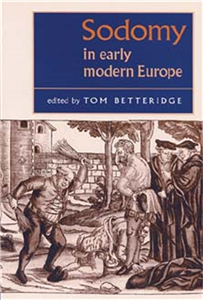
This fascinating collection of essays reflects closely the main areas of debate within gay historiography. For the last twenty years scholars have argued over the nature of early modern sodomy, responding in a number of different and contradictory ways. Questions addressed in the book include: was early modern sodomy the same as modern homosexuality? Were there homosexuals in early modern Europe? Did men who had sex with each other in this period regard their behaviour as determining their identity? What was the relationship between the grave sin of sodomy and the homoerotic images that fill Renaissance culture?. The volume includes essays on sodomy in English Protestant history writing, in Calvin's Geneva, in early modern Venice and the trial of sodomy in Germany. ;
Trusted Partner
 Trusted Partner

Considering a wide range of early modern texts, performances and artworks, the essays in this collection demonstrate how attention to the senses illuminates the literature, art and culture of early modern England. Examining canonical and less familiar literary works alongside early modern texts ranging from medical treatises to conduct manuals via puritan polemic and popular ballads, the collection offers a new view of the senses in early modern England. The volume offers dedicated essays on each of the five senses, each relating works of art to their cultural moments, whilst elsewhere the volume considers the senses collectively in particular cultural contexts. It also pursues the sensory experiences that early modern subjects encountered through the very acts of engaging with texts, performances and artworks. This book will appeal to scholars of early modern literature and culture, to those working in sensory studies, and to anyone interested in the art and life of early modern England.
Trusted Partner

Considering a wide range of early modern texts, performances and artworks, the essays in this collection demonstrate how attention to the senses illuminates the literature, art and culture of early modern England. Examining canonical and less familiar literary works alongside early modern texts ranging from medical treatises to conduct manuals via puritan polemic and popular ballads, the collection offers a new view of the senses in early modern England. The volume offers dedicated essays on each of the five senses, each relating works of art to their cultural moments, whilst elsewhere the volume considers the senses collectively in particular cultural contexts. It also pursues the sensory experiences that early modern subjects encountered through the very acts of engaging with texts, performances and artworks. This book will appeal to scholars of early modern literature and culture, to those working in sensory studies, and to anyone interested in the art and life of early modern England. ;
Trusted Partner
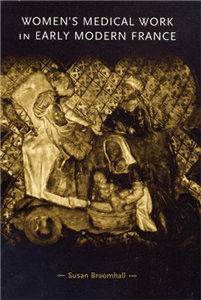
Women have long been crucial to the provision of medical services, both in the treatment of sickness and in maintaining health. In this study, Susan Broomhall situates the practices and perceptions of women's medical work in France in the context of the sixteenth century and its medical evolution and innovations. She argues that early modern understandings of medical practice and authority were highly flexible and subject to change. She furthermore examines how a focus on female practitioners, who cut across most sectors of early modern medical practice, can reveal the multifaceted phenomenon of these negotiations for authority. This new paperback edition of Women's medical work in early modern France skilfully combines detailed research with a clear presentation of the existing literature of women's medical work, making it invaluable to students of gender and medical history.
Trusted Partner
This work provides the first complete English translation of works by Toledan archbishop Rodrigo Ximénez de Rada (1170-1247 CE), whose 'Minor Histories' are sequels to his larger 'Gothic History' and thus round off his grand history of Spain project that he began at the request of King Ferdinand III. The 'Minor Histories' include Rodrigo's 'History of the Arabs' that can be considered the first surviving Western monograph focused on Arab and Islamic history and thus occupies a unique position in the medieval Latin corpus of writings. In addition to the translation, this book provides a thorough and accessible introduction to the life and works of Rodrigo, making sense of the context in which he wrote and his historical method. The translations are thoroughly annotated including cross-references to other Latin and Arabic sources for comparison.


