
Your Search Results


-
Promoted Content

 2025
2025Why Be a Christian Today?
by Elisabeth Zoll / Thomas Seiterich (eds.)
The exciting texts and reports by professing Christians offer a fresh perspective for all those who have cultivated a Christian spirituality for many years. However, the book also provides easy access for those who are newly interested in the Christian faith. There are probably as many professions of Christian faith as there are believers in the world. But what do Christians think and how have they been moulded? Elisabeth Zoll and Thomas Seiterich have compiled very personal ideas about the Christian faith in this book. When selecting the contributors, the editors deliberately chose not to include people with church offices or specialised theologians. Irrespective of church policy issues and church scandals, the contributors have provided insights into their path to faith.
-
Promoted Content

 Business, Economics & LawFebruary 2009
Christianity and democratisation
From pious subjects to critical participants
by John Anderson
This book examines the contribution of different Christian traditions to the waves of democratisation that have swept various parts of the world in recent decades. It offers a historical overview of Christianity's engagement with the development of democracy, before focusing in detail on the period since the 1970s. Successive chapters deal with: the Roman Catholic conversion to democracy and the contribution of that church to democratisation; the Eastern Orthodox 'hesitation' about democracy; the alleged threat to American democracy posed by the politicisation of conservative Protestantism; and the likely impact on democratic development of the global expansion of Pentecostalism. The author draws out several common themes from the analysis of these case studies, the most important of which is the 'liberal-democracy paradox'. This ensures that there will always be tensions between faiths that proclaim some notion of absolute truth and political orders that are rooted in the idea of compromise, negotiation and bargaining. Written in an accessible style, this book will appeal to students of politics, sociology and religion, and prove useful on a range of advanced undergraduate and postgraduate courses. ;
-
 Trusted Partner
 Literature & Literary StudiesSeptember 2025
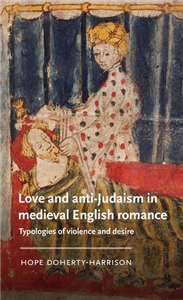
Love and anti-Judaism in medieval English romance
Typologies of violence and desire
by Hope Doherty-Harrison
Love and anti-Judaism is a new examination of medieval romance for the questions it poses of the most significant events in Christian history. Providing new readings of Sir Gawain and the Green Knight, Sir Orfeo, Sir Gowther and Sir Amadace, the book argues that romance explores depictions of love-and the sacrifices it may necessitate-in the Hebrew Bible, especially where they do not easily fit into interpretations asserting that this history must prefigure Christ and the crucifixion. An examination of anti-Judaism as a discourse of violence and desire that could be turned inwardly to expose the irresolution in Christianity, this book will provoke new investigations into the religious crises of medieval romance.
-
Trusted Partner
 Humanities & Social SciencesJune 2021
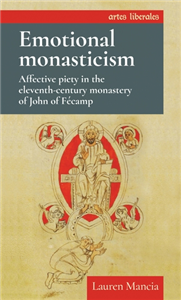
Emotional monasticism
Affective piety in the eleventh-century monastery of John of Fécamp
by Lauren Mancia
Medievalists have long taught that highly emotional Christian devotion, often called 'affective piety', appeared in Europe after the twelfth century and was primarily practiced by communities of mendicants, lay people and women. Emotional monasticism challenges this view. The first study of affective piety in an eleventh-century monastic context, it traces the early history of affective devotion through the life and works of the earliest known writer of emotional prayers, John of Fécamp, abbot of the Norman monastery of Fécamp from 1028-78. Exposing the early medieval monastic roots of later medieval affective piety, the book casts a new light on the devotional life of monks in Europe before the twelfth century and redefines how medievalists should teach the history of Christianity.
-
Trusted Partner
 Humanities & Social SciencesNovember 2023
Rethinking Norman Italy
Studies in honour of Graham A. Loud
by Joanna Drell, Paul Oldfield
This volume on Norman Italy (southern Italy and Sicily, c. 1000-1200) honours and reflects the pioneering scholarship of Graham A. Loud. An international group of scholars reassesses and recasts the paradigm by which Norman Italy has been conventionally understood, addressing varied subjects across four key themes: historiographies, identities and communities, religion and Church, and conquest. The chapters revise and refine our understanding of Norman Italy in the eleventh and twelfth centuries, demonstrating that it was not just a parochial Norman or Mediterranean entity but also an integral player in the medieval mainstream.
-
Trusted Partner
Literature & Literary StudiesJune 2026
The politics of Middle English parables
Fiction, theology, and social practice
by Mary Raschko
The politics of Middle English parables examines the dynamic intersection of fiction, theology and social practice in late-medieval England. Parables occupy a prominent place in Middle English literature, appearing in dream visions and story collections as well as in lives of Christ and devotional treatises. While most scholarship approaches the translated stories as stable vehicles of Christian teaching, this book highlights the many variations and points of conflict across Middle English renditions of the same story. In parables related to labour, social inequality, charity and penance, the book locates a creative theological discourse through which writers attempted to re-construct Christian belief and practice. Analysis of these diverse retellings reveals not what a given parable meant in a definitive sense but rather how Middle English parables inscribe the ideologies, power structures and cultural debates of late-medieval Christianity.
-
Trusted Partner
 Early modern history: c 1450/1500 to c 1700May 2013
Insular Christianity
by Edited by Robert Armstrong and Tadhg Hannrachain
-
Trusted Partner
 Humanities & Social SciencesJanuary 2013
Insular Christianity
by Peter Lake, Robert Armstrong, Tadhg Hannrachain, Anthony Milton, Jason Peacey, Alexandra Gajda
-
Trusted Partner
 Humanities & Social SciencesJanuary 2013
Christian Dualist Heresies in the Byzantine World, c. 650-c. 1450
by Janet Hamilton, Bernard Hamilton
Christian dualism originated in the reign of Constans II (641-68). It was a popular religion, which shared with orthodoxy an acceptance of scriptual authority and apostolic tradition and held a sacramental doctrine of salvation, but understood all these in a radically different way to the Orthodox Church. One of the differences was the strong part demonology played in the belief system. This text traces, through original sources, the origins of dualist Christianity throughout the Byzantine Empire, focusing on the Paulician movement in Armenia and Bogomilism in Bulgaria. It presents not only the theological texts, but puts the movements into their social and political context.
-
Trusted Partner
 Humanities & Social SciencesNovember 2004
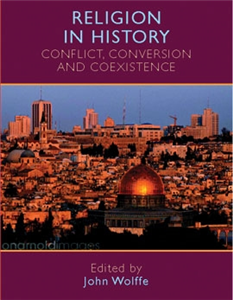
Religion in history
Conflict, conversion and coexistence
by John Wolffe
This is an integrated collection of essays by leading scholars that looks at issues of conflict, conversion and coexistence in the religious context since the third century. The range of topics explored include paganism and Christianity in the later Roman world, the Crusades, the impact of the Reformation in Britain and Ireland, subsequent Protestant-Catholic conflict, the Hindu Renaissance in nineteenth-century India, the Palestinian-Israeli conflict, Britain in the 1960s, women and the ministry, and Christianity, Judaism and the Holocaust. The book concludes by offering an historical perspective on religion, conflict and coexistence in the world today. Published in association with The Open University, this is a student-friendly and accessible volume on popular subjects within religious history, and it will be of value to students on a range of courses, as well as to a wider readership interested in the historical background to the role of religion in the contemporary world. ;
-
Trusted Partner
 Humanities & Social SciencesApril 2022
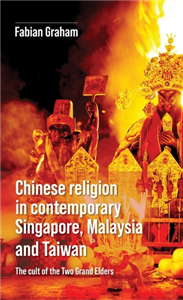
Chinese religion in contemporary Singapore, Malaysia and Taiwan
The cult of the Two Grand Elders
by Fabian Graham
In Singapore and Malaysia, the inversion of Chinese Underworld traditions has meant that Underworld demons are now amongst the most commonly venerated deities in statue form, channelled through their spirit mediums, tang-ki. The Chinese Underworld and its sub-hells are populated by a bureaucracy drawn from the Buddhist, Taoist and vernacular pantheons. Under the watchful eye of Hell's 'enforcers', the lower echelons of demon soldiers impose post-mortal punishments on the souls of the recently deceased for moral transgressions committed during their prior incarnations. Chinese religion in contemporary Singapore, Malaysia and Taiwan offers an ethnography of contemporary Chinese Underworld traditions, where night-time cemetery rituals assist the souls of the dead, exorcised spirits are imprisoned in Guinness bottles, and malicious foetus ghosts are enlisted to strengthen a temple's spirit army. Understanding the religious divergences between Singapore and Malaysia (and their counterparts in Taiwan) through an analysis of socio-political and historical events, Fabian Graham challenges common assumptions about the nature and scope of Chinese vernacular religious beliefs and practices. Graham's innovative approach to alterity allows the reader to listen to first-person dialogues between the author and channelled Underworld deities. Through its alternative methodological and narrative stance, the book intervenes in debates on the interrelation between sociocultural and spiritual worlds, and promotes the destigmatisation of spirit possession and discarnate phenomena in the future study of mystical and religious traditions.
-
Trusted Partner

 May 2002
Die Religion der Gesellschaft
by Niklas Luhmann, André Kieserling
Die Klassiker der Soziologie hatten die Religionssoziologie als einen zentralen Teil der Gesellschaftstheorie angesehen, und zwar auch und gerade dort, wo ihnen die moderne, angeblich so religionsfern gebaute Gesellschaft vor Augen stand. Der vorliegende Band, an dem Niklas Luhmann bis kurz vor seinem Tod gearbeitet hat, erneuert diesen Anspruch, indem er die Religion als autonomes Kommunikationssystem innerhalb der modernen Gesellschaft beschreibt.
-
Trusted Partner
 Humanities & Social SciencesJune 2025
Faith, folk and the far right
Racist and anti-racist Heathenry and Occultism in Britain
by Dominic Alessio, Robert J. Wallis
This book offers the first examination of extremist Heathenry and occultism in the UK and how anti-racist Heathens act to counter this discourse. It explores the spectrum of Heathen practice today and the historical origins of racist Heathenry in nineteenth century Germanic romanticism and twentieth century folkish nationalism. Treating each of the three main extremist Heathen organisations, the book extends the analysis to the neo-Nazi occult organization the Order of the Nine Angles (O9A), and the wider racist Heathen cultural scene in Black Metal and Dark Folk music. The authors balance this with discussion of how inclusivist Heathens are countering this discourse, from visible protests at far-right rallies to inter-faith forums and an active presence on social media platforms. The book makes an important contribution to the intersecting fields of new religious movements, nationalist history and racist politics.
-
Trusted Partner
 Colonialism & imperialismAugust 2004
Religion Versus Empire?
British Protestant missionaries and overseas expansion, 1700–1914
by Andrew Porter
This is the only book that addresses the relations between religion, Protestant missions, and empire building, linking together all three fields of studyby taking as its starting point the early eighteenth century Anglican initiatives in colonial North America and the Caribbean. It considers how the early societies of the 1790s built on this inheritance, and extended their own interests to the Pacific, India, the Far East, and Africa. Fluctuations in the vigour and commitment of the missions, changing missionary theologies, and the emergence of alternative missionary strategies, are all examined for their impact on imperial expansion. Other themes include the international character of the missionary movement, Christianity's encounter with Islam, and major figures such as David Livingstone, the state and politics, and humanitarianism, all of which are viewed in a fresh light. This monumental study shows that the missionary movement had a far more complex and ambiguous relationship with the Empire than has previously been thought, and will be widely welcomed by students and scholars of imperial history and the history of religion.
-
Trusted Partner
-
Trusted Partner
 Literature & Literary StudiesMay 2026
Translating hell
Vernacular theology and apocrypha in the medieval North Sea
by Stephen C. E. Hopkins
In the Middle Ages, hell was useful because it was vaguely defined. Canonical scriptures scarcely mention hell, leaving much to the imaginations of early Christians, who used it to sort out who belonged within the faith. This book explores how hell became a place for literary experiments with local challenges in theology and identity. Following the reception and transformations of two popular hell apocrypha, it argues that they served as this role because of their liminal textual authority. As noncanonical scriptures, apocrypha afforded medieval writers space to revise their hells (since they were not actually scripture), while also encouraging readers to revere those experiments as valid (since they seemed like scripture). The book brings together adaptations from early medieval England, Iceland, Ireland, and Wales, placing the early vernacular theologies of the North Sea in comparative conversation.
-
Trusted Partner
 Humanities & Social SciencesSeptember 2021
Chosen peoples
The Bible, race and empire in the long nineteenth century
by Gareth Atkins, Shinjini Das, Brian Murray
Chosen peoples demonstrates how biblical themes, ideas and metaphors shaped racial, national and imperial identities in the long nineteenth century. Even as radical new ideas challenged the historicity of the Bible, biblical notions of lineage, descent and inheritance continued to inform understandings of race, nation and empire. European settler movements portrayed 'new' territories across the seas as lands of Canaan, but if many colonised and conquered peoples resisted the imposition of biblical narratives, they also appropriated biblical tropes to their own ends. These innovative case-studies throw new light on familiar areas such as slavery, colonialism and the missionary project, while forging exciting cross-comparisons between race, identity and the politics of biblical translation and interpretation in South Africa, Egypt, Australia, America and Ireland.
-
Trusted Partner
 Humanities & Social SciencesJanuary 2007
Religion in Revolutionary England
by Christopher Durston, Judith Maltby
This book offers a collection of essays tightly focused around the issue of religion in England between 1640 and 1660, a time of upheaval and civil war in England. Edited by well-known scholars of the subject, topics include the toleration controversy, women's theological writing, observance of the Lord's Day and prayer books. To aid understanding, the essays are divided into three sections examining theology in revolutionary England, inside and outside the revolutionary National Church and local impacts of religious revolution. Carefully and thoughtfully presented, this book will be of great use for those seeking to better understand the practices and patterns of religious life in England in this important and fascinating period. ;
-
Trusted Partner
 Humanities & Social SciencesMarch 2025
Spirits of extraction
Christianity, settler colonialism and the geology of race
by Claire Blencowe
Spirits of extraction revisits the troubling history of socially reformist, ostensibly anti-racist, Christianity and its role in the expansion of the extractive industries, British imperialism, and settler colonialism. The book explores key moments in the history of Methodism and the evangelical movement. Colonial fears, and the attempt to 'civilise savages', were crucial to the movement's foundation in eighteenth-century industrialising Bristol, England. Through the culture of the Cornish mining diaspora of the nineteenth century, Methodism enmeshed with all the complexity of race and labour-structures of the British empire. At the same time, in Anishinaabewaki/Upper Canda/Ontario, Methodist missionaries laid the foundation of abusive education and racialised ideas of redemption that both enable and sacralise the mining industry. Through these histories of our present, the book theorises the relation of religion and education to racism, modernity, biopower, extractivism, and the geology of race.
-
Trusted Partner
 Humanities & Social SciencesJune 2021
Rethinking Norman Italy
by Joanna Drell, Paul Oldfield, C. E. Beneš


