
Marshall Cavendish
Topical, authentic and high quality books under the Marshall Cavendish Editions imprint provide general interest content that informs, entertains and engages readers.
View Rights Portal
Topical, authentic and high quality books under the Marshall Cavendish Editions imprint provide general interest content that informs, entertains and engages readers.
View Rights Portal
MMC EDIZIONI is a publishing house based in Rome.Born in 2001 as a generalist, along the time it has specialized almost exclusively in non-fiction, dedicated in particular (but not only) to the city of Rome.The main series, called "A walk with history" offers an alternative vision of the city through the historical reconnaissance and analysis of some of its urban furnishings that are not taken into consideration such as small fountains, clocks, inscriptions, sacred shrines, plaques. This series stands out for a particular graphic style and for the abundance of photographs, specially made for these books.Other series on Rome are instead dedicated to in-depth studies on specific historical and customs themes, or on the mysterious aspects of the city that also reveal its dark side.In the MMC catalogue are other non-fiction books on topics such as Music, Interculture, Anthropology and a series of stories for children encouraging solidarity, non-violence and respect for the environment
View Rights Portal

For nearly half a century Anne Lake Prescott has been a force and an inspiration in Renaissance studies. A force, because of her unique blend of learning and wit and an inspiration through her tireless encouragement of younger scholars and students. Her passion has always been the invisible bridge across the Channel: the complex of relations, literary and political, between Britain and France. The essays in this long-awaited collection range from Edmund Spenser to John Donne, from Clément Marot to Pierre de Ronsard. Prescott has a particular fondness for King David, who appears several times; and the reader will encounter chessmen, bishops, male lesbian voices and Roman whores. Always Prescott's immense erudition is accompanied by a sly and gentle wit that invites readers to share her amusement. Reading her is a joyful education.
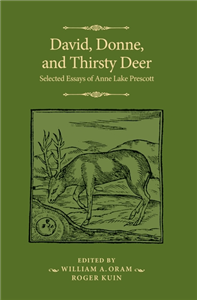
For nearly half a century Anne Lake Prescott has been a force and an inspiration in Renaissance studies. A force, because of her unique blend of learning and wit and an inspiration through her tireless encouragement of younger scholars and students. Her passion has always been the invisible bridge across the Channel: the complex of relations, literary and political, between Britain and France. The essays in this long-awaited collection range from Edmund Spenser to John Donne, from Clément Marot to Pierre de Ronsard. Prescott has a particular fondness for King David, who appears several times; and the reader will encounter chessmen, bishops, male lesbian voices and Roman whores. Always Prescott's immense erudition is accompanied by a sly and gentle wit that invites readers to share her amusement. Reading her is a joyful education.
 Trusted Partner
These essays written to celebrate the distinguished career of Renassiance scholar, Professor Malcolm Quainton, confirm the idea that the sixteenth-century in France was deeply marked by conflict, but readers expecting to find a volume wholly devoted to studies of war and religious disputation will be intrigued to discover that these rare not the only topics discussed. A number of subtle analyses reveal the stresses of internal conflict experienced by writers and woven into the fabric of their compositions. The three sections focus respectively on living and writing in conflict, the Wars of Religion, and intertextuality as conflict. Subjects include Ronard, Baïf, Du Bellay, D'Aubigné, sonnets by Mary Queen of Scots and the political role of court festivities, while a previously unknown riposte to Clément Marot is first published here. This book will appeal to scholars and students of French language, literature and culture, and sixteenth-century European history.
Trusted Partner
Trusted Partner
Trusted Partner
Trusted Partner
Trusted Partner
Trusted Partner
Trusted Partner
Trusted Partner
Trusted Partner

 Trusted Partner
 Trusted Partner
Trusted Partner
Trusted Partner
Trusted Partner
Trusted Partner


In welchem Verhältnis stehen Künste wie Literatur, Malerei und Musik, aber auch Architektur, Design und Computerspiel zueinander? Gibt es eine verbindende Einheit oder ist jede Kunst aus sich heraus zu begreifen? Die Reflexion über Einheit und Pluralität der Künste führt zu Kernfragen der Kunsttheorie nach dem Wesen der Kunst, nach den Medien und den Funktionen der Künste sowie zum zentralen Thema, ob die klassische Konstellation der Künste sich in der Nachmoderne aufgelöst hat. Dieses Kompendium bietet einen umfassenden Überblick über die Debatte und versammelt klassische Beiträge, u. a. von Theodor. W. Adorno, Clement Greenberg und Jean-Luc Nancy, sowie aktuelle Perspektiven, u. a. von Lydia Goehr, Gertrud Koch, Juliane Rebentisch, Peter Osborne und Martin Seel.
Trusted Partner
 Trusted Partner
Trusted Partner
Trusted Partner
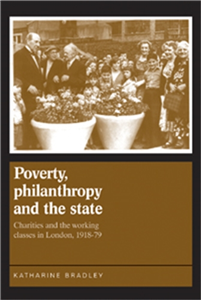
This book looks at a number of charities in London between 1918 and 1979, and the ways in which they negotiated the growth of the welfare state and changes in the communities around them.These charities - the 'university settlements'- were founded in the 1880's and 1890's and brought young graduates such as William Beveridge & Clement Attlee to deprived areas of cities to undertake social work. It is of interest to those who wish to know more about the complexities of the relationships between charities, the welfare state and individuals in the course of the twentieth century. Bradley argues that whilst the settlements often had difficulties in sustaining their work with the vulnerable, they remained an important factor between the individual and the impacts of poverty. Aimed at scholars in the fields of history, social policy, sociology and criminology this book will also be of interest to practitioners in the voluntary sector and government. ;
Trusted Partner
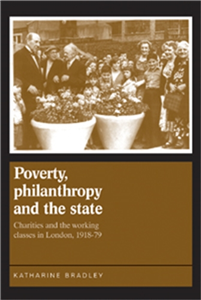
This book looks at a number of charities in London between 1918 and 1979, and the ways in which they negotiated the growth of the welfare state and changes in the communities around them.These charities - the 'university settlements'- were founded in the 1880's and 1890's and brought young graduates such as William Beveridge & Clement Attlee to deprived areas of cities to undertake social work. It is of interest to those who wish to know more about the complexities of the relationships between charities, the welfare state and individuals in the course of the twentieth century. Bradley argues that whilst the settlements often had difficulties in sustaining their work with the vulnerable, they remained an important factor between the individual and the impacts of poverty. Aimed at scholars in the fields of history, social policy, sociology and criminology this book will also be of interest to practitioners in the voluntary sector and government.



