
Coach House Books
Livres Canada Books
View Rights Portal

TheUnited States Insitute of Peace was created by the US congress as a federally funded presscreatingworks toprevent and resolve global conflict by providing education and resources to work towards peace.
View Rights Portal

Because maritime questions are often admixed with territorial sovereignty questions, parties sometimes seek to settle them together. Jurisdiction under the United Nations Convention on the Law of the Sea-UNCLOS-according to the received view does not encompass disputes concerning territorial sovereignty. In this book, international law scholar and practitioner Thomas D. Grant argues that the received view overstates the exclusion of sovereignty disputes. In Coastal State Rights, UNCLOS Annex VII arbitrators overstated the scope of the term 'sovereignty dispute' as well, an error of definition compounded when they ignored evidence probative as to whether a sovereignty dispute exists. Examining UNCLOS, its drafting history, and decades of decided cases, Sovereignty Disputes and the United Nations Convention on the Law of the Sea relates an important problem of international dispute settlement to the public order of which UNCLOS forms part.
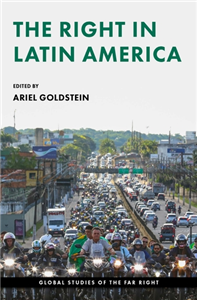
This book provides an in-depth analysis of the rise and influence of both radical and mainstream right-wing movements across Latin America. Through country-specific case studies, it explores the evolution of these groups and their impact on politics, culture, and governance, highlighting key figures and strategies shaping the political landscape in the region.
 Trusted Partner
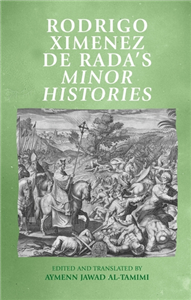
This work provides the first complete English translation of works by Toledan archbishop Rodrigo Ximénez de Rada (1170-1247 CE), whose 'Minor Histories' are sequels to his larger 'Gothic History' and thus round off his grand history of Spain project that he began at the request of King Ferdinand III. The 'Minor Histories' include Rodrigo's 'History of the Arabs' that can be considered the first surviving Western monograph focused on Arab and Islamic history and thus occupies a unique position in the medieval Latin corpus of writings. In addition to the translation, this book provides a thorough and accessible introduction to the life and works of Rodrigo, making sense of the context in which he wrote and his historical method. The translations are thoroughly annotated including cross-references to other Latin and Arabic sources for comparison.
Trusted Partner
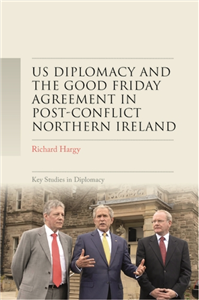
Richard Haass and Mitchell Reiss, as autonomous diplomats in the George W. Bush State Department, were able to alter US intervention in Northern Ireland and play critical roles in the post-1998 peace process. Their contributions have not been fully appreciated or understood. The restoration of Northern Ireland's power-sharing government in 2007 was made possible by State Department-led intervention in the peace process. There are few references to Northern Ireland in work examining the foreign policy legacy of the George W. Bush presidency. Moreover, the ability to control US foreign policy towards the region brought one of George W. Bush's Northern Ireland special envoys into direct diplomatic conflict with the most senior actors inside the British government. This book will uncover the extent of this fall-out and provide original accounts on how diplomatic relations between these old allies became so fraught.
Trusted Partner
 Trusted Partner

In How to be multiple, Helena de Bres - a twin herself - argues that twinhood is a unique lens for examining our place in the world and how we relate to other people. The way we think about twins offers remarkable insights into some of the deepest questions of our existence, from what is a person? to how should we treat one another? Deftly weaving together literary and cultural history, philosophical enquiry and personal experience, de Bres examines such thorny issues as binary thinking, objectification, romantic love and friendship, revealing the limits of our individualistic perspectives. In this illuminating, entertaining book, wittily illustrated by her twin sister, de Bres ultimately suggests that to consider twinhood is to imagine the possibility of a more interconnected, capacious human future.
Trusted Partner
Trusted Partner
Trusted Partner

 Trusted Partner
Trusted Partner
Trusted Partner
Trusted Partner
Trusted Partner
 Trusted Partner
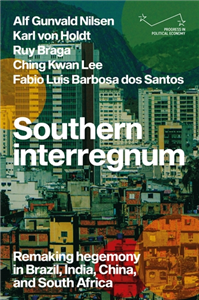
How do governing elites in the global South attempt to remake hegemony in a conjuncture of durable crisis? This is the question at the core of Southern interregnum, a comparative conjunctural analysis of hegemonic projects in Brazil, India, China, and South Africa. Working with a Gramscian notion of crisis, centred on the interregnum as an enduring period of instability and uncertainty, in which hegemonic authority erodes and competing projects for crisis resolution emerge, the book proposes a novel critical reading of the convulsions that are currently reshaping the political economy of the global South and the world-system. Mapping the variegated trajectories of elite projects to reconcile accumulation and legitimation - and probing the limits of these projects - the book breaks new ground in the study of the contemporary global South.
Trusted Partner
Trusted Partner

 Trusted Partner

 Trusted Partner
Trusted Partner
Trusted Partner
Trusted Partner
Trusted Partner
 Trusted Partner



