
Mark Allen Group
The Mark Allen Group is a dynamic media company which delivers high-quality content through market-leading journals, magazines, books, events, exhibitions and websites.
View Rights Portal
The Mark Allen Group is a dynamic media company which delivers high-quality content through market-leading journals, magazines, books, events, exhibitions and websites.
View Rights Portal
Topical, authentic and high quality books under the Marshall Cavendish Editions imprint provide general interest content that informs, entertains and engages readers.
View Rights Portal

This book offers an original interpretation of Britain's relationship with Europe over a 25 year period: 1959-84 and advances the argument that the current problems over EU membership resulted from much earlier political machinations. This evidence based account of the seminal period analyses the applications for EEC membership, the 1975 referendum, and the role of the press. Was the British public misled over the true aims of the European project? How significant was the role of the press in changing public opinion from anti, to pro Common Market membership? Why, after over 40 years since Britain became a member of the European community, does the issue continue to deeply divide not only the political elite, but also the British public? These, and other pertinent questions are answered in this timely book on a subject that remains topical and highly controversial.
 Trusted Partner

This highly original book constitutes one of the first attempts to examine the problem of distributive justice in the European Union in a systematic manner. João Labareda argues that the set of shared political institutions at EU level, including the European Parliament and the Court of Justice of the EU, generate democratic duties of redistribution among EU citizens. Furthermore, the economic structure of the EU, comprising a common market, a common currency and a free-movement area, triggers duties of reciprocity among member states. The responsibilities to fulfil these duties, Labareda argues, should be shared by the local, national and supranational levels of government. Not only should the EU act as a safety net to the national welfare systems, applying the principle of subsidiarity, but common market and Eurozone regulations should balance their efficiency targets with fair cooperation terms. The concrete policy proposals presented in this book include a threshold of basic goods for all EU citizens, an EU labour code, a minimum EU corporate tax rate and an EU fund for competitiveness. Labarada argues that his proposals match the political culture of the member states, are economically feasible, can be translated into functioning institutions and policies and are consistent with the limited degree of social solidarity in Europe. This book is a major contribution to the understanding of what a just Europe would look like and what it might take to get us there. This book is relevant to United Nations Sustainable Development Goal 10, Reduced inequalities
Trusted Partner
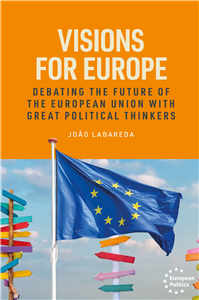
This book offers a fresh look at some of the most challenging dilemmas of European integration and proposes innovative solutions to them by building on perspectives and insights from twelve classical authors in the history of political thought. The book simultaneously offers an original introduction to critical debates in EU studies and makes key political thinkers more accessible to contemporary readers by presenting present-day policy applications of their doctrines. While each chapter discusses a specific challenge for the EU, five key themes appear recurrently throughout the book: (i) the prospects for peace in Europe; (ii) the conditions for an inclusive EU democracy; (iii) socioeconomic inequalities in the EU; (iv) strategies to promote political change in Europe; and (v) the requisites for a fully-fledged EU citizenship. The authors discussed are Plato, Aristotle, Augustine, Machiavelli, Hobbes, Rousseau, Kant, Wollstonecraft, Marx, Arendt, Rawls and hooks.
Trusted Partner

This volume is timely in that it explores key issues which are currently at the forefront of the EU's relations with its eastern neighbours. It considers the impact of a more assertive Russia, the significance of Turkey, the limitations of the Eastern Partnership with Belarus and Moldova, the position of a Ukraine in crisis and pulled between Russia and the EU, security and democracy in the South Caucasus. It looks at the contested nature of European identity in areas such as the Balkans. In addition it looks at ways in which the EU's interests and values can be tested in sectors such as trade and migration. The interplay between values, identity and interests and their effect on the interpretation of europeanisation between the EU and its neighbours is a core theme of the volume.
Trusted Partner

This book examines Turkey's integration with Europe within structural dynamics of globalisation from a critical political economy perspective. Critical approaches have been sidelined within European Studies. Turkish enlargement is not an exemption. The analyses are based on original data generated by 109 interviews conducted in 2010, 2017 and 2023 with five categories of actors: representatives of capital and labour, political parties, state officials, and struggles around ecology, patriarchy and migration. It argues that the pro-membership was hegemonic in the 2000s which was contested by two rival class strategies, Ha-vet and neo-mercantilism. In the 2010s, pro-membership is no longer hegemonic within rising critical tone of social forces supporting rival class strategies. Unevenness of Turkey's trajectory of integration to Europe is likely to be consolidated through market integration and management of migration through transactional approach.
Trusted Partner
 Trusted Partner
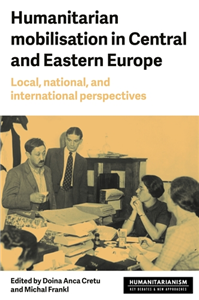
By focusing on aid Central and Eastern Europe, the volume adds to the existent scholarly explorations of modern humanitarianism, its actors and practices. In the twentieth century, aid workers assisted victims of war and earthquakes, delivered food, supported health care, provided childcare, or sheltered refugees. The contributors not only reconstruct these diverse histories and their protagonists, but also bring international, national, and local actors together: from grassroots activists to private associations to state-driven "socialist humanitarians" to large Western aid organizations. In doing so, they challenge the often unidirectional, from West-to-East, and asymmetrical perspective on donor-recipient relationships in humanitarian processes.
Trusted Partner

This book examines how Ireland's relationship with the EU was affected by a succession of crises in both the Republic of Ireland and Northern Ireland. The financial crisis, the Brexit crisis and the migration crisis were not of equal significance on the island of Ireland. The financial crisis was a huge issue for the Republic but not Northern Ireland, Brexit had a major impact in both polities, the migration and populism issues were less controversial, while foreign policy challenges had a minimal impact. The book provides a summary of the main features of each of the crises to be considered, from both the EU and the Irish perspective. Ireland and the European Union is the first volume of its kind to provide a comprehensive analysis on British-Irish relations in the context of Brexit. It assesses the Withdrawal Agreement and Protocol on Ireland/Northern Ireland, the devolution settlement and the 1998 Agreement, as well as the European dimension to Northern Ireland's peace process. The contributors explore a number of policy areas that are central to the understanding of each of the crises and the impact of each for Ireland. Chapters examine issues such as security, migration and taxation as well as protest politics, political parties, the media, public opinion and the economic impact of each of these crises on Ireland's relationship with the EU.
Trusted Partner

The documents in this stimulating volume span from 1245 to 1424 but focus on the 'contagion of rebellion' from 1355 to 1382 that followed in the wake of the plague. They comprise a diversity of sources and cover a variety of forms of popular protest in different social, political and economic settings. Their authors range across a wide political and intellectual horizon and include revolutionaries, the artistocracy, merchants and representatives from the church. They tell gripping and often gruesome stories of personal and collective violence, anguish, anger, terror, bravery, and foolishness. Of over 200 documents presented here, most have been translated into English for the first time, providing students and scholars with a new opportunity to compare social movements across Europe over two centuries, allowing a re-evaluation of pre-industrial revolts, the Black Death and its consequences for political culture and action. This book will be essential reading for those seeking to better understand popular attitudes and protest in medieval Europe.
Trusted Partner
The first book-length analysis of EU health policy since the COVID-19 pandemic, encompassing the creation of the European Health Union and the Recovery and Resilience Facility, this volume offers a timely and accessible analysis of the EU's health policy, institutions and governance. Focusing on the EU's health objectives and how they are pursued, it offers a detailed overview of the development of EU health policy, and five in-depth case studies of specific policy fields. The book will appeal to academic and policy audiences interested in the EU's health objectives and how it pursues them.
Trusted Partner
A unique guide to creating political theatre, produced by one of the UK's most exciting companies. Do It Yourself is a vital resource for anyone interested in exploring theatre culture grounded in and produced by working-class, multi-racial communities. Designed for artists, activists and community organisers, the book offers a step-by-step guide to creating political theatre that is relevant, impactful and rooted in the lives of everyday people. Common Wealth have spent fifteen years working at the cutting edge of political theatre. In Do It Yourself, they share their experimental and activist approach to performance-making, based on DIY principles and the belief that ground-breaking theatre can be made with anyone, anywhere, in ways that truly resonate with the communities it serves. Do It Yourself introduces Common Wealth's artistic and political ethos, provides unique insights into their most significant performances and offers practical exercises for creating your own work. But this is not just a manual. It is a celebration of culture as a collective endeavour, one that can challenge the status quo and inspire change.
Trusted Partner
 Trusted Partner
 Trusted Partner
Trusted Partner
Trusted Partner
Trusted Partner
Trusted Partner
Trusted Partner
Trusted Partner
Trusted Partner
Trusted Partner
Trusted Partner
Trusted Partner



