
Your Search Results


-
Promoted Content

 The ArtsSeptember 2025
Do It Yourself
Making political theatre
by Common Wealth
A unique guide to creating political theatre, produced by one of the UK's most exciting companies. Do It Yourself is a vital resource for anyone interested in exploring theatre culture grounded in and produced by working-class, multi-racial communities. Designed for artists, activists and community organisers, the book offers a step-by-step guide to creating political theatre that is relevant, impactful and rooted in the lives of everyday people. Common Wealth have spent fifteen years working at the cutting edge of political theatre. In Do It Yourself, they share their experimental and activist approach to performance-making, based on DIY principles and the belief that ground-breaking theatre can be made with anyone, anywhere, in ways that truly resonate with the communities it serves. Do It Yourself introduces Common Wealth's artistic and political ethos, provides unique insights into their most significant performances and offers practical exercises for creating your own work. But this is not just a manual. It is a celebration of culture as a collective endeavour, one that can challenge the status quo and inspire change.
-
Promoted Content
 The ArtsApril 2024
Hyde Park
by James Shirley
by Eugene Giddens
Hyde Park (1632) is one of the best-loved comedies of James Shirley, considered to be one of the most important Caroline dramatists. The play showcases strong female characters who excel at rebuking the outlandish courtship of various suitors. Shirley's comic setting, London's Hyde Park, offers ample opportunity for witty dialogue. This is the first critical edition of the play, including a wide-ranging introduction and extensive commentary and textual notes. Paying special attention to the culture of Caroline London and its stage, the volume unpicks Shirley's politics of courtship and consent while also underlining the play's dynamics of class and power. A detailed performance history traces productions from 1632, across the Restoration to the present day, including that of the Royal Shakespeare Company in 1987. A textual history of the play's first quarto determines how it was printed and what relationship Hyde Park has to other texts by Shirley.
-
 Trusted Partner
 The ArtsMay 2022
Hyde Park
by James Shirley
by Helen Ostovich, Eugene Giddens
Hyde Park (1632) is one of the best-loved comedies of James Shirley, considered to be one of the most important Caroline dramatists. The play showcases strong female characters who excel at rebuking the outlandish courtship of various suitors. Shirley's comic setting, London's Hyde Park, offers ample opportunity for witty dialogue and sport - including foot and horse races - across three love plots. This is the first critical edition of the play, including a wide-ranging introduction and extensive commentary and textual notes. Paying special attention to the culture of Caroline London and its stage, the Revels Plays edition unpicks Shirley's politics of courtship and consent while also underlining the play's dynamics of class and power. A detailed performance history traces productions from 1632, across the Restoration to the present day, including that of the Royal Shakespeare Company in 1987. A textual history of the play's first quarto determines how it was printed and what relationship Hyde Park has to other texts by Shirley from the same publishers.
-
Trusted Partner
 The ArtsJuly 2025
An idea for a theatre ecology
Methods, theories, histories and practices
by Carl Lavery
An Idea for a Theatre Ecology is the first book in the discipline of Theatre and Performance Studies to provide a rigorous and coherent theory of the ecology that is immanent to the theatrical medium. Over six clearly written chapters, the book provides a genealogy, outlines a method, provides a lexicon and demonstrates an alternative practice of ecoperformance analysis grounded in the figure of the archipelago. Focusing on Antonin Artaud's theatre of cruelty, the book argues that theatre has no need to provide ecological messages nor to transform itself into a platform for the narration of ecological stories. Instead, more is to be gained, environmentally and politically, by concentrating on the power of images, gestures and voices to create corporeal affects and sensations that implicate the spectators in a terrestrial event.
-
Trusted Partner
The ArtsJune 2025
Death in modern theatre
Stages of mortality
by Adrian Curtin
Death in modern theatre offers a unique account of modern Western theatre, focusing on the ways in which dramatists and theatre-makers have explored historically informed ideas about death and dying in their work. It investigates the opportunities theatre affords to reflect on the end of life in a compelling and socially meaningful fashion. In a series of interrelated, mostly chronological, micronarratives beginning in the late nineteenth century and ending in the early twenty-first century, this book considers how and why death and dying are represented at certain historical moments using dramaturgy and aesthetics that challenge audiences' conceptions, sensibilities, and sense-making faculties. It includes a mix of well-known and lesser-known plays from an international range of dramatists and theatre-makers, and offers original interpretations through close reading and performance analysis.
-
Trusted Partner
 The ArtsSeptember 2020
Science in performance
Theatre and the politics of engagement
by Simon Parry
This electronic version has been made available under a Creative Commons (BY-NC-ND) open access license. This book is about science in theatre and performance. It explores how theatre and performance engage with emerging scientific themes from artificial intelligence to genetics and climate change. The book covers a wide range of performance forms from Broadway musicals to educational theatre, from Somali drama to grime videos. It features work by pioneering companies including Gob Squad, Headlong Theatre and Theatre of Debate as well as offering fresh analysis of global blockbusters such as Wicked and Urinetown. The book offers detailed description and analysis of theatre and performance practices as well as broader commentary on the politics of theatre as public engagement with science. Science in performance is essential reading for researchers, students and practitioners working between science and the arts within fields such as theatre and performance studies, science communication, interdisciplinary arts and health humanities.
-
Trusted Partner
 Humanities & Social SciencesApril 2026
Elites in civil society
A comparative perspective
by Niklas Altermark, Malin Arvidson, Jayeon Lee, Roberto Scaramuzzino
Where civil society is often seen as a driving force for equality, this book addresses a challenging topic: civil society elites. Drawing on a comprehensive study of Italy, Poland, Sweden, and the UK, this ground-breaking research investigates the often-overlooked power structures within civil society. By combining elite studies with civil society research, the book uncovers how a distinct civil society elite emerges and how it interacts with leaders in politics and business. The findings reveal a fascinating paradox. While this elite may be a powerful engine for social change, its integration into wider power circles risks reproducing the very inequalities it seeks to dismantle. By exploring how this elite can become disconnected from its grassroots, the book provides essential insights into the future of civil society and its democratic promise.
-
Trusted Partner
 Business, Economics & LawJuly 2024
Act now
by Common Sense Policy Group, Kate Pickett, Danny Dorling, Richard Wilkinson
-
Trusted Partner
-
Trusted Partner

 2019
2019History of the Throw-Away Society
The drawback of consumption
by Wolfgang König
Sooner or later everything is thrown away. In the consumer society, however, usable and serviceable products that may be as good as new are also thrown away. Such behaviour is the result of a long-term process that has developed over a period of one-and-a-half centuries. The change was led by the USA, and the Federal Republic of Germany followed. It started at the turn of the last century with personal hygiene: articles such as toilet paper, sanitary towels, nappies and paper handkerchiefs. After the Second World War, a large number of other disposable articles were soon added, such as paper cups and plastic dishes, nylon stockings and pens, razor blades, beverage cans and much more besides. Wolfgang König shows how business and consumers have together made throwing things away perfectly normal – and discusses how the throwaway society may be overcome.
-
Trusted Partner
 Literature & Literary StudiesMarch 2013
Adam Smith's Wealth of Nations
by Stephen Copley, Kathryn Sutherland
First published in 1776, Adam Smith's Wealth of Nations is much more than just a handbook on the principles of free-market economics; it is a founding text for the organisation of Western society in its broadest sense. In order to understand the impact of Smith's text across the academic disciplines, this volume brings together leading scholars from fields of economics, politics, history, sociology and literature. Each essay offers a different reading of Wealth of Nations and its legacy. Contributors consider the historical context in which Wealth of Nations was written, its reception and its profound impact on contemporary concepts of market liberalism, on education, on gender relations and on environmental debates. The volume also offers deconstructive analyses of the text and a feminist critique of Smith's construction of the economy. This volume will be the ideal companion to Smith's work for all students of literature, politics and economic history. ;
-
Trusted Partner
 Literature & Literary StudiesNovember 2019
Transnational connections in early modern theatre
by Pavel Drábek, M. A. Katritzky
-
Trusted Partner
 The ArtsMay 2024
Adaptation and resilience in the performing arts
The pandemic and beyond
by Pascale Aebischer, Rachael Nicholas
This book offers insights into some of the digital innovations, structural adaptations and analogue solutions that enabled live performance in the UK to survive through the COVID-19 pandemic. It provides evidence of values-led policies and practices that have improved the wellbeing of the creative workforce and have increased access to live performance. Through sections that address digital innovations, workforce resilience and programming live performances outdoors and in community settings, this book provides practical insights into the challenges live performance faced during the pandemic. It shows how, in order to survive, individuals and companies within the sector drew on the creativity and resourcefulness of its workforce, and on new and existing networks. In these accounts, the pandemic functioned as catalyst for technological innovations, stock-taking regarding exploitative industry structures, and a re-valuing of the role of live performance for community-building.
-
Trusted Partner
 Literature & Literary StudiesNovember 2025
Troilus and Cressida
by Stephen Purcell
A history of Shakespeare's play in performance, from John Dryden's Restoration adaptation to the rediscovery of the play in the twentieth century. What made this play so relevant to audiences who had lived through the horrors of two world wars and the rise of fascism? Why did it speak so directly to the 'angry young men' of the post-war generation and to the countercultural movements of the 1960s? This book investigates the many ways in which modern directors and actors have found their own world reflected in the play, from anti-war protests and the sexual revolution to feminism and postcolonialism. In doing so, it explores the play's own complexity and its refusal to give easy answers.
-
Trusted Partner
 Humanities & Social SciencesJanuary 2018
Noble society
Five lives from twelfth-century Germany
by Jonathan R. Lyon
This book provides scholars and students alike with a set of texts that can deepen their understanding of the culture and society of the twelfth-century German kingdom. The sources translated here bring to life the activities of five noblemen and noblewomen from Rome to the Baltic coast and from the Rhine River to the Alpine valleys of Austria. To read these five sources together is to appreciate how interconnected political, military, economic, religious and spiritual interests could be for some of the leading members of medieval German society-and for the authors who wrote about them. Whether fighting for the emperor in Italy, bringing Christianity to pagans in what is today northern Poland, or founding, reforming and governing monastic communities in the heartland of the German kingdom, the subjects of these texts call attention to some of the many ways that noble life shaped the world of central medieval Europe.
-
Trusted Partner
 Humanities & Social SciencesFebruary 2017
Country houses and the British Empire, 1700–1930
by Stephanie Barczewski
Country houses and the British empire, 1700-1930 assesses the economic and cultural links between country houses and the Empire between the eighteenth and twentieth centuries. Using sources from over fifty British and Irish archives, it enables readers to better understand the impact of the empire upon the British metropolis by showing both the geographical variations and its different cultural manifestations. Barczewski offers a rare scholarly analysis of the history of country houses that goes beyond an architectural or biographical study, and recognises their importance as the physical embodiments of imperial wealth and reflectors of imperial cultural influences. In so doing, she restores them to their true place of centrality in British culture over the last three centuries, and provides fresh insights into the role of the Empire in the British metropolis.
-
Trusted Partner
 Literature & Literary StudiesJanuary 2004
Theatre and religion
Lancastrian Shakespeare
by Richard Dutton, Alison Findlay, Richard Wilson
This important collection of essays focuses on the place of Roman Catholicism in early modern England, bringing new perspectives to bear on whether Shakespeare himself was Catholic. In the Introduction, Richard Wilson reviews the history of the debate over Shakespeare's religion, while Arthur Marotti and Peter Milward offer current perspectives on the subject. Eamon Duffy offers a historian's view of the nature of Elizabethan Catholicism, complemented by Frank Brownlow's study of Elizabeth's most brutal enforcer of religious policy, Richard Topcliffe. Two key Catholic controversialists are addressed by Donna Hamilton (Richard Vestegan) and Jean-Christophe Mayer (Robert Parsons). Robert Miola opens up the neglected field of Jesuit drama in the period, whilst Sonia Fielitz specifically proposes a new, Jesuit source-text for Timon of Athens. Carol Enos (As You Like It), Margaret Jones-Davies (Cymbeline), Gerard Kilroy (Hamlet) and Randall Martin (Henry VI 3) read individual plays in the light of these questions, while Gary Taylor's essay fittingly investigates the possible influence of religious conflicts on the publication of the Shakespeare First Folio. Theatre and religion: Lancastrian Shakespeare as a whole represents a major intervention in this fiercely contested current debate. ;
-
Trusted Partner
 Humanities & Social SciencesMay 2008
The politics of identity and civil society in Britain and Germany
Miners in the Ruhr and South Wales 1890–1926
by Leighton James, Steven Fielding, John Callaghan, Steve Ludlam
This study compares the making and remaking of the political identities of the miners' movements in Britain and Germany. Taking the south Wales and Ruhr coalfields as case studies, it focuses on the public discourse of the trade unions and political parties as it was disseminated in local newspapers, trade union publications, pamphlets and election leaflets. It reveals how the miners' movements used ideas such as class, religion, the 'people' or Volk, socialization and nationalization to construct organizational identities during the turbulent period between 1890 and 1926. These concepts were crucial not only in the formation and self-identity of the miners' trade unions, but also in the way they interacted with employers and the state. They adapted and changed over time as the miners' movements reacted to war, economic depression and increasing industrial conflict. The book contends that these identities were not simply the result of structural factors, but were formed at the juncture where cultural, political and sociological forces intersect. Examining this intersection through discourse analysis and the concept of the 'lifeworld', the book brings together the social world of the miners and the realm of organized politics to advance historical understanding of two of the most important elements in the most powerful labour movements in Europe. ;
-
Trusted Partner
 Humanities & Social SciencesDecember 2003
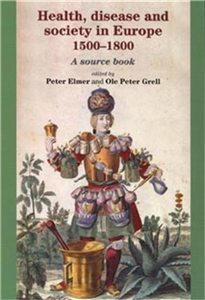
Health, disease and society in Europe, 1500–1800
A source book
by Isobel McLean
Considers how the body was viewed by the medical profession from the Renaissance to the Enlightenment, and challenges established ideas in the field of medical history. Examines the provision of medical care in context and how it was shaped by the social, religious, political and cultural concerns of the age. Arranged thematically and with brief but scholarly introductions, the selection of documents includes contemporary sources, recent research in the field and classical writings. Written in an accessible style by an Open University lecturer. Companion volume to The Healing Arts: Health, Disease and Society in Europe 1500-1800. ;
-
Trusted Partner
 The ArtsFebruary 2026
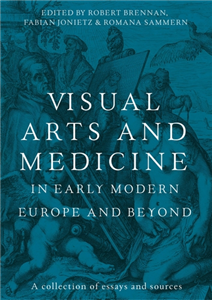
Visual arts and medicine in early modern Europe and beyond
A collection of essays and sources
by Robert Brennan, Fabian Jonietz, Romana Sammern
This book opens up new perspectives on the relationship between art, medicine, and science in late-medieval and early modern Europe. Looking beyond the traditional nexus of art, anatomy, and optics, the volume sheds light on a broader array of connections between artists and physicians: collaborations between painters and doctors on colour charts, handwork skills common to sculptors and surgeons, the transmission of art theory through medical texts long before the emergence of art writing itself as an independent genre, and the kinship of medical diagnosis with early modes of connoisseurship. Reconfiguring the histories of art, medicine, and science, the book also traverses conventional boundaries between physical and mental health, religious and medical modes of healing, menial and exalted forms of knowledge and labour, as well as vernacular and scientific understandings of human difference, including gender, race, and neurodiversity.

