
De Vecchi/DVE - Confidential Concepts International Ltd.
We are from De Vecchi Ediciones / DVE, a publishing house with about 4000 titles in Spanish.
View Rights Portal
We are from De Vecchi Ediciones / DVE, a publishing house with about 4000 titles in Spanish.
View Rights Portal
Der Concadora Verlag steht für inspirierende Medien und Veranstaltungen zu den Themen Mindful Leadership, Organisationsbezogenes Transformationsmanagement, Kommunikation und Mediation für Führungskräfte, BeraterInnen und MediatorInnen. Ein Schwerpunkt unserer Veröffentlichungen sind Medien zum Konfliktmanagement und zur systemischen Mediation.
View Rights Portal

The Ordinance on the Operation of a Pharmacy states that a plausibility check must be undertaken for each new formulation. The tabular compilations of this book help pharmacists to complete this task quickly and reliably. All the information required for the check is clearly laid out and easy to find. New in the 6th edition: Many new active substance – ointment base combinations with demonstrated compatibility | more than 50 new ointment bases | 30 new active substances Bonus: The information about standard doses for paediatric dermatology enables pharmacists to also prepare paediatric formulations. | References to the Ziegler Rezepturbibliothek® (Ziegler Formulation Library), where completely formulated manufacturing instructions for the named active substance – ointment base – combinations can be found. This makes it even easier to supply patients with tested standard preparations. The set includes 50-sheet pads of the complementary form Plausibility Check. The form makes documentation easier and enables rapid and reliable navigation through the tables. This allows both the prescriber’s treatment concept and also possible incompatibilities to be checked in less than no time.

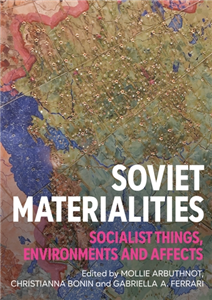
Soviet materialities explores how material transforms our understanding of Soviet culture, from the textures of domestic space in 1960s apartment blocks to Gulag labour on the Moscow canal, and from avant-garde literary theory in the 1920s to conceptual art under perestroika. It starts from the ethos that the material world shapes people and society. Taking a material approach-or a range of material approaches-can therefore illuminate aspects of the cultural production and lived experiences of Soviet socialism that are not reflected in other kinds of historical records. This edited volume brings cutting-edge research by emerging scholars together with the established voices who have broken the ground in this sub-field over the last twenty years and promises to make a major intervention in the study of Soviet history and culture.
 Trusted Partner

Engendering an avant-garde is the first book to comprehensively examine the origins of Vancouver photo-conceptualism in its regional context between 1968 and 1990. Employing discourse analysis of texts written by and about artists, feminist critique and settler-colonial theory, the book discusses the historical transition from artists' creation of 'defeatured landscapes' between 1968-71 to their cinematographic photographs of the late 1970s and the backlash against such work by other artists in the late 1980s. It is the first study to provide a structural account for why the group remains all-male. It accomplishes this by demonstrating that the importation of a European discourse of avant-garde activity, which assumed masculine social privilege and public activity, effectively excluded women artists from membership.
Trusted Partner
 Trusted Partner
 Trusted Partner
Trusted Partner
Trusted Partner
Trusted Partner
Trusted Partner

Postmodern, postcolonial and post-truth are broadly used terms. But where do they come from? When and why did the habit of interpreting the world in post-terms emerge? And who exactly were the 'post boys' responsible for this? Post-everything examines why post-Christian, post-industrial and post-bourgeois were terms that resonated, not only among academics, but also in the popular press. It delves into the historical roots of postmodern and poststructuralist, while also subjecting more recent post-constructions (posthumanist, postfeminist) to critical scrutiny. This study is the first to offer a comprehensive history of post-concepts. In tracing how these concepts found their way into a broad range of genres and disciplines, Post-everything contributes to a rapprochement between the history of the humanities and the history of the social sciences.
Trusted Partner
Trusted Partner
Trusted Partner
Trusted Partner
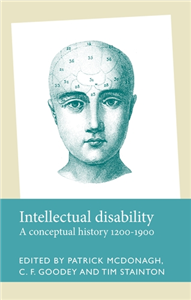
This collection explores the historical origins of our modern concepts of intellectual or learning disability. The essays, from some of the leading historians of ideas of intellectual disability, focus on British and European material from the Middle Ages to the late-nineteenth century and extend across legal, educational, literary, religious, philosophical and psychiatric histories. They investigate how precursor concepts and discourses were shaped by and interacted with their particular social, cultural and intellectual environments, eventually giving rise to contemporary ideas. Intellectual disability is essential reading for scholars interested in the history of intelligence, intellectual disability and related concepts, as well as in disability history generally.
Trusted Partner
Trusted Partner
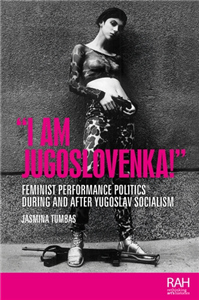
"I am Jugoslovenka" argues that queer-feminist artistic and political resistance were paradoxically enabled by socialist Yugoslavia's unique history of patriarchy and women's emancipation. Spanning performance and conceptual art, video works, film and pop music, lesbian activism and press photos of female snipers in the Yugoslav wars, the book analyses feminist resistance in a range of performative actions that manifest the radical embodiment of Yugoslavia's anti-fascist, transnational and feminist legacies. It covers celebrated and lesser-known artists from the 1970s to today, including Marina Abramovic, Sanja Ivekovic, Vlasta Delimar, Tanja Ostojic, Selma Selman and Helena Janecic, along with music legends Lepa Brena and Esma Redzepova. "I am Jugoslovenka" tells a unique story of women's resistance through the intersection of feminism, socialism and nationalism in East European visual culture.
Trusted Partner


How can nursing concepts and terminology be systematically described, defined, and classified? This essential reference book on nursing classifications and conceptual systems provides an introduction to the conceptual systems in nursing, traces their historical development, and explains their key terms and the principles on which they are based. It clearly explains the definitions and types of classification systems, describes their functions, and outlines their reference classifications. It presents a range of conceptual systems, including nursing diagnoses (NANDA), nursing interventions (NIC), and nursing outcomes (NOC), as well as the international classification for nursing practice (ICNP). These classifications are supplemented by other classification systems related to nursing. The authors describe in detail how these and other classifications were drawn up, what their objectives are, and how they are structured and composed. Target Group: Nursing students, practicing nurses, nursing managers, nursing trainers, software developers
Trusted Partner

Schema therapy is an important further development of cognitive behavioral therapy (CBT) for patients with personality disorders and other chronic mental health problems. In studies, work with the schema mode approach in particular has been shown to be highly effective. In the updated edition of this book, which in particular also reports current findings on the evidence, treatment with the mode model is presented in a practical manner. Numerous case examples illustrate the therapeutic approach. After an introduction to the core concepts of schema therapy, diagnostic and case conceptualization are addressed. Subsequently, the therapeutic procedure for each mode type is explained. Important emphasis is placed on the therapeutic relationship, which is conceptualized as a limited reparenting, and emotion-focusing techniques, such as chair dialogues and imaginative techniques. In these two respects, schema therapy differs particularly from classical CBT. Typical pitfalls and problems in schema therapy as well as possible variations of the approach are also described. Thus, the book offers a compact presentation of work with the schema approach to personality disorders. For:• psychotherapists• psychiatrists• clinical psychologists• students and teachers in psychotherapeutictraining, furthertraining, and continuing education
Trusted Partner

This book presents a socio-legal enquiry into the civic marginalisation of Roma in Europe. Instead of looking only at Roma's position as migrants, an ethnic minority or a socio-economically disadvantage group, it considers them as European citizens, questioning why they are typically used to describe exceptionalities of citizenship in developed liberal democracies rather than as evidence for how problematic the conceptualisation of citizenship is at its core. Developing novel theoretical concepts, such as the fringes of citizenship and the invisible edges of citizenship, the book investigates a variety of topics around citizenship, including migration and free movement, statelessness and school segregation, as well as how marginalised minorities respond to such predicaments. It argues that while Roma are unique as a minority, the treatment that marginalises them is not. This is demonstrated by comparing their position to that of other marginalised minorities around the globe.
Trusted Partner

Since the end of the Cold War, and particularly in the post-9/11 international environment, neutrality has been conceptualised as a problematic subject. With the end of bipolarity, neutrality as a foreign and security policy lost much of its justification, and in the ongoing 'War on Terror', no state, according to the Bush Administration, can be neutral. However, much of this debate has gone unnoticed in IR literature. This book, newly available in paperback, examines the conceptualisation of neutrality from the Peloponnesian War to the present day, uncovering how neutrality has been a neglected and misunderstood subject in IR theory and politics. By rethinking neutrality through constructivism, this book argues that neutrality is intrinsically linked to identity. Using Sweden as a case study, it links identity, sovereignty, internationalism and solidarity to the debates about Swedish neutrality today and how neutrality has been central to Swedish identity and its world-view. ;
Trusted Partner

Is there a tension between the normative fundamentals and strategic objectives of European Neighbourhood Policy (ENP)? Is 'values versus security' an unavoidable choice to be made by the EU and its neighbours or, rather, a false dichotomy? The book argues that what is often considered a fundamental dilemma of EU foreign policy - a choice between the EU's values and its quest for security - misrepresents a much more complex reality in which values and security interplay to shape the EU's external positions. The book proposes an original conceptual framework for examining the complex interaction between values and security and situates the ENP in the broader conceptual debate about European Foreign Policy. In this way, it goes beyond the early scholarship on ENP, mainly inspired by the EU enlargement literature. The book examines the EU's evolving relations with its immediate neighbours in areas such as democracy promotion, Common Foreign and Security Policy, conflict management and resolution and soft security issues such as energy or immigration policy. By covering the whole range of EU external relations policies, the contributions to the volume provide a very unique opportunity to compare the complex interplay between values and security and its impacts across the wide policy spectrum of ENP. ;
Trusted Partner
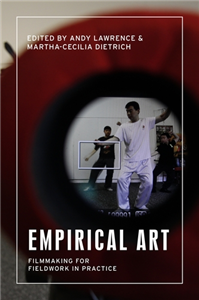
Empirical art: Filmmaking for fieldwork in practice is an insightful exploration of what the craft of filmmaking brings to social science research. Providing creative avenues on how to narrate encounters, relationships, and experiences during fieldwork, this comprehensive volume offers a rich tapestry of theoretical explorations and explorative methodologies. Skilfully connecting the worlds of ethnography, art and cinema, the contributors in this book act as a compass for filmmakers and researchers venturing to use a camera and microphone to relate and narrate their research collaborations and fieldsites. Drawing from the authors' extensive experience in disciplines like social anthropology, environmental humanities, and political science, "Empirical Art" breaks down the intricate process of crafting ethnographic films that departs from the researcher's subjectivity. Covering aspects of filmmaking from conceptualisation to production and distribution, readers are equipped with a treasure trove of collaborative techniques, innovative approaches, and ethical considerations necessary to generate and examine storytelling practices in contemporary fields of study. The authors discuss the significance of the multiple roles that technologies of filmmaking play in reflecting on cultural practices, social dynamics, and (beyond) human storytelling and their transformative potentials. Whether a seasoned filmmaker, an aspiring ethnographer, or an academic seeking new dimensions for their research, Empirical Art serves as a guide to integrating visual storytelling, cinema craft and empirical research.



